Beyond Plastic: Rediscovering Screen-Free, Eco-Friendly Toys for a Child’s Holistic Development
Introduction
In an age dominated by glowing screens and mass‑produced plastic, the humble toy has undergone a quiet but profound transformation—or rather, a return to its roots. Parents today face an overwhelming array of choices: brightly coloured plastic action figures that beep and flash, digital tablets preloaded with educational apps, and plush characters linked to media franchises. Yet a growing body of research, coupled with a rising environmental awareness, is prompting many families to reconsider what truly serves a child’s developmental needs. Plastic toys, while convenient and often cheap, come with hidden costs: they contribute to microplastic pollution, often contain endocrine‑disrupting chemicals such as phthalates and BPA, and, perhaps most importantly, they frequently offer only passive, short‑lived engagement. Meanwhile, screen‑based play—whether on a smartphone or a dedicated children’s tablet—has been linked to reduced attention spans, lower creativity, and delays in social‑emotional skills.
The antidote lies not in banning all modern playthings, but in rediscovering screen‑free alternatives that are made from natural, sustainable materials. These alternatives are not nostalgic relics; they are carefully designed tools that foster open‑ended imagination, fine‑motor skills, problem‑solving, and a deep connection with the physical world. This article explores five categories of screen‑free, eco‑conscious toy alternatives to plastic, explaining why each is beneficial and how they can be integrated into a child’s daily life. From wooden building blocks to nature‑based loose parts, these options prove that the best toys are often the simplest—and that play can enrich the planet as much as it enriches the child.
—
1. Wooden Toys: Timeless, Sensory, and Built to Last
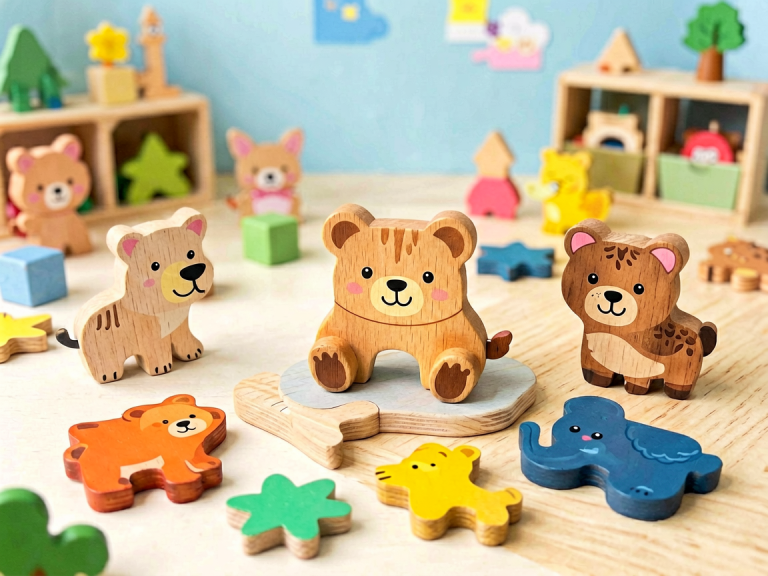
Wooden toys are perhaps the most obvious and widely embraced alternative to plastic. Unlike plastic, which is made from non‑renewable petroleum and can take centuries to decompose, wood is a renewable resource that can be sustainably harvested. Premium toy manufacturers now use FSC‑certified (Forest Stewardship Council) hardwoods, finished with non‑toxic paints or natural oils, ensuring safety for little mouths that still explore the world through taste.
Why wooden toys stand out
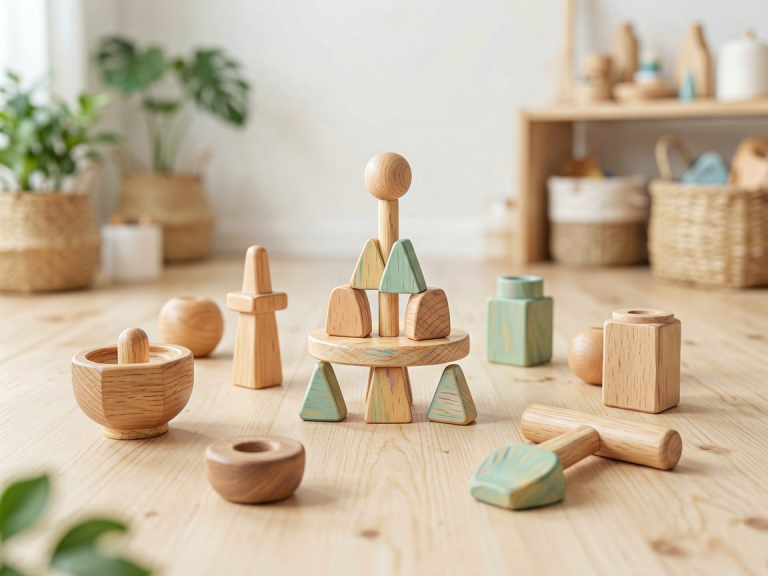
Wood offers a unique sensory experience: its weight, texture, and subtle grain patterns engage a child’s tactile senses in ways that smooth, uniform plastic cannot. A simple set of wooden blocks, for example, can be stacked, balanced, arranged, and knocked down in countless ways. There are no pre‑programmed sounds or flashing lights to dictate the narrative; the child must invent the story. This open‑ended nature is crucial for cognitive development. According to early‑childhood specialists, open‑ended toys that can be used in multiple ways encourage divergent thinking—the ability to generate many solutions to a single problem. A plastic fire truck may be a fire truck and nothing else; a wooden wedge can become a ramp for a marble, a roof for a house, or a piece of a bridge.
Practical considerations
While wooden toys can be more expensive upfront, their durability often makes them more economical over time. A well‑made wooden train set can be passed from sibling to sibling and even to the next generation. They also minimise clutter: instead of bins of tiny plastic parts that break or get lost, a few quality wooden pieces can provide months of engagement. Brands such as Grimms, PlanToys, and Melii offer beautiful, child‑safe options, but even simple unpainted blocks from a local craft store work wonderfully. To keep toys screen‑free, simply avoid those that incorporate batteries or electronic components—the charm of wood lies in its silence.
—
2. Fabric and Stuffed Toys: Comfort, Imagination, and Sustainability
Soft toys are a staple of childhood, but the conventional ones are often stuffed with polyester fibres and covered in synthetic fleece—both derived from plastic. These materials shed microplastics in the wash and are difficult to recycle. Screen‑free, eco‑conscious alternatives focus on natural fibres: organic cotton, wool, hemp, or even bamboo. Handcrafted dolls and animals made from these materials not only reduce a child’s exposure to synthetic chemicals but also encourage more nurturing, imaginative play.
Why natural‑fibre soft toys matter
A fabric toy made from organic cotton or untreated wool carries a different feel—warmer, breathable, and slightly irregular—that invites cuddling and care. When a child dresses a cloth doll, wraps it in a blanket, or feeds it (with imaginary food), they are practicing empathy, language, and social roles. These activities are screen‑free by definition: they require the child to generate the scenario, not follow a pre‑recorded prompt. Moreover, high‑quality fabric toys often emphasise hand‑made details—embroidered faces instead of plastic button eyes (a choking hazard), and removable clothing that helps develop fine‑motor skills.
Choosing wisely
Look for toys labelled GOTS (Global Organic Textile Standard) or OEKO‑TEX, which ensure the absence of harmful chemicals. Many small artisans and fair‑trade companies produce exquisite knitted dolls, fabric mats for play scenes, or wooden‑frame puppets with natural‑fabric costumes. For example, a simple felt play mat representing a meadow can become the backdrop for a hundred different adventures with a few small wooden animals. The key is to avoid toys that are essentially digital—those with recorded voices or interactive chips. A true fabric toy is silent, demanding the child’s voice to bring it to life.
—
3. Loose Parts and Nature‑Based Play: The Ultimate Open‑Ended Resource
One of the most powerful screen‑free alternatives to plastic toys is not a product at all—it is a collection of everyday items known as “loose parts.” This concept, originally developed by architect Simon Nicholson, suggests that play materials that can be moved, combined, redesigned, and taken apart in endless ways foster the highest levels of creativity and problem‑solving. Loose parts can include pinecones, stones, acorns, shells, sticks, fabric scraps, corks, metal rings, wool balls, and wooden slices. They are free (or almost free), completely biodegradable, and entirely analogue.
Why loose parts outperform plastic
A plastic playset—say, a kitchen set with pre‑moulded plastic food—limits a child to scripted roles. In contrast, a collection of real acorns and a few small bowls can become soup, treasure, coins, or counting chips. A stick can be a magic wand, a fishing rod, or a bridge. There are no instructions, no right or wrong way to use them, and no screen to distract. This type of play builds executive function—the ability to plan, self‑regulate, and adapt—because the child must constantly invent rules and narratives. Furthermore, loose parts connect children to nature. Handling leaves, bark, and stones teaches them about texture, weight, and the natural world in a tactile, unhurried way. Studies have shown that children who engage in nature‑based loose‑part play develop stronger observation skills and a greater sense of environmental stewardship.
How to implement
You don’t need to buy anything. A “treasure basket” for a toddler might contain a coconut shell, a loofah, a wooden spoon, and large cotton pom‑poms. For older children, a “creation corner” with wooden blocks, lengths of wool yarn, pebbles, and empty spools encourages engineering and art. Safety note: always supervise young children to avoid choking hazards, and choose items that are large enough not to fit in a mouth. The beauty of loose parts is that they evolve with the child—today’s tower of stones becomes tomorrow’s border for a fairy garden.
—
4. DIY and Upcycled Craft Kits: Creativity Without Screens or Plastic
Another excellent category of screen‑free alternatives involves hands‑on making: arts and crafts that use natural or upcycled materials rather than plastic‑based kits. Many commercial craft kits rely on plastic beads, synthetic glue, and flimsy plastic moulds. A better approach is to provide tools and materials that let the child construct something from scratch. Think of beeswax crayons (instead of plastic‑coated ones), water‑based paints, clay, paper from recycled sources, and fabric scraps. These materials encourage fine‑motor development and patience—qualities often eroded by the instant gratification of screens.
Why DIY beats store‑bought
When a child makes a toy, they experience the full cycle of creation: planning, trial and error, problem‑solving, and pride in the finished object. A simple cardboard box, for instance, can be transformed into a car, a castle, or a spaceship with nothing more than scissors, tape, and markers. This process is inherently screen‑free because the child is physically manipulating materials, not swiping a touchscreen. It also teaches resourcefulness: instead of throwing away a cardboard tube, the child learns to see it as a telescope or a marble run. Upcycling household waste into toys reduces the demand for new plastic and reinforces ecological values.
Ideas to start
Provide a “maker basket” with plain wooden clothespins, yarn, scrap fabric, buttons (sewn securely), and natural glue. Show the child how to make a simple doll or a puppet. For older children, a set of air‑dry clay or natural modelling beeswax (not plasticine) allows sculpting without synthetic chemicals. Paper mache using newspaper and flour paste is another classic. The goal is to prioritise the act of making over the finished product—the process is the real play.
—
5. Books, Puzzles, and Board Games: Classic Screen‑Free Engagement
Finally, we must not overlook the power of the written word and structured analog games. While many modern toys try to mimic the interactivity of screens, real books and non‑digital puzzles offer something screens cannot: a fixed, quiet, deep engagement. Wooden puzzles (made from plywood or solid wood) train spatial reasoning and hand‑eye coordination without the lure of a glowing screen. Board games, from simple matching games for toddlers to strategic games for older children, teach turn‑taking, patience, and social interaction—skills that are often diminished when children play solo on a tablet.
Why analog still wins
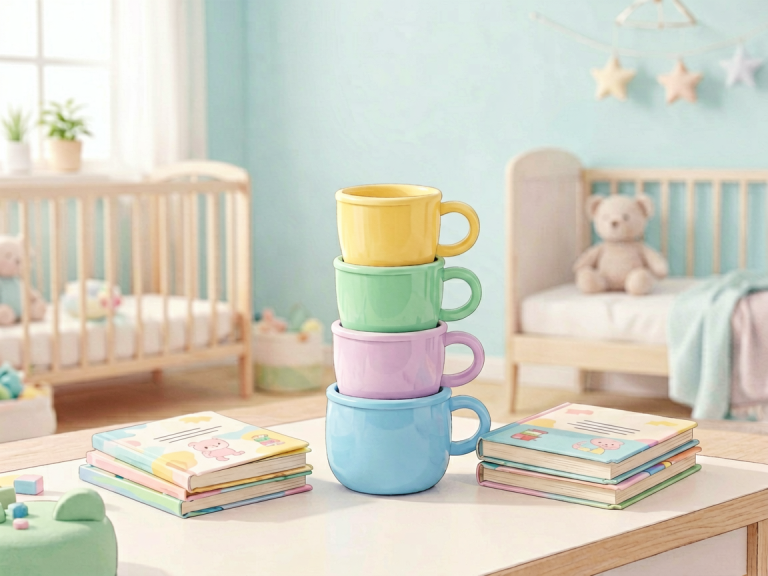
A puzzle piece does not provide instant feedback; the child must work to find the correct fit. This delayed gratification builds frustration tolerance and perseverance. Similarly, a picture book that a parent reads aloud creates a shared, screen‑free experience that strengthens language development and emotional bonding. Unlike an animated video that moves at its own pace, a book allows a child to linger on an illustration, ask questions, and connect the story to their own life. Many children’s books now use recycled paper and soy‑based inks, making them environmentally friendly too.
Choosing the right ones
Look for puzzles made from natural wood or recycled cardboard, with non‑toxic paints. Board games should have minimal plastic pieces—choose ones with wooden tokens, cloth bags, and paper boards. Classic games like “Memory” (using hand‑drawn cards), “Hoot Owl Hoot!” (a cooperative game), or “Labyrinth” encourage screen‑free social play. Even a simple deck of cards offers endless games from Go Fish to Crazy Eights, requiring no electricity and producing no waste.
—
Conclusion
The shift away from plastic toys and screens is not about deprivation; it is about abundance—an abundance of texture, imagination, and connection. Screen‑free alternatives invite children to slow down, to use their hands and minds, and to discover the joy of open‑ended possibility. A wooden block, a cloth doll, a pinecone, a cardboard box, and a book are not just toys; they are invitations to create a world. By choosing these materials, parents not only reduce their ecological footprint but also nurture deeper cognitive, emotional, and social skills in their children. The next time you consider a plaything, ask yourself: does it require the child to act, or merely to react? Does it spark creativity or consumption? The answer, more often than not, points away from plastic—and toward a richer, quieter, and far more sustainable kind of play.