Beyond the Numbers: Why Ignoring Age Labels When Buying Toys Unleashes True Play Potential
Introduction
Every year, millions of parents, grandparents, and gift-givers walk into toy stores or scroll through online marketplaces, eyes scanning the small print on the box: “Ages 3–5,” “Ages 8+,” or “Not suitable for children under 36 months.” These age labels, mandated by safety regulations and marketing strategies, have become the de facto guide for toy selection. Yet, a growing body of developmental research, combined with real-world observations from educators and experienced parents, suggests that rigid adherence to age labels may actually hinder a child’s growth, creativity, and joy. In this article, we will explore why ignoring age labels when buying toys is not only permissible but often preferable. By shifting focus from chronological age to individual interests, developmental readiness, and play complexity, we can select toys that truly resonate with a child’s unique journey.
The Purpose and Pitfalls of Age Labels
Age labels were originally introduced to serve two primary purposes: safety and developmental appropriateness. For example, small parts that pose choking hazards must be clearly marked for older children, and toys with complex mechanisms are often designed for certain cognitive stages. This regulatory framework has undoubtedly prevented many accidents. However, the modern toy industry has expanded these labels into marketing tools, often overgeneralizing or even misrepresenting a toy’s suitability. A “3+” puzzle might be too simple for a gifted two-year-old, while a “10+” science kit could fascinate a curious six-year-old with the right guidance. The pitfall lies in treating age as a uniform benchmark, ignoring the wide spectrum of individual variation. As any parent of two children knows, siblings raised in the same household can develop motor skills, language abilities, and problem-solving strategies at dramatically different paces. When we rely solely on the box’s number, we risk underestimating or overestimating a child’s capabilities, potentially stifling their natural curiosity.
Why Age Labels Can Be Misleading
One of the most common misconceptions is that age labels reflect a child’s ability to use a toy safely and effectively. In reality, many toys are labeled conservatively to minimize liability or to appeal to a broader market segment. For instance, a building set marked “8+” may contain complex instructions, but a four-year-old might enjoy simply stacking the blocks without following the blueprint. Conversely, a “2+” push toy may be perfectly engaging for a three-year-old who still enjoys sensory exploration. The mismatch between label and actual use becomes especially evident with open-ended toys such as LEGO bricks, Play-Doh, or art supplies. These toys can be adapted across ages: a toddler can squish and roll Play-Doh, while a school-age child can sculpt intricate figures. Similarly, a board game labeled “6+” might be played with simplified rules by a four-year-old under adult guidance. The label, therefore, says more about the manufacturer’s target demographic than about the toy’s ultimate potential.
Furthermore, cognitive development does not follow a linear, age-based progression. Jean Piaget’s stages of cognitive development provide broad frameworks, but modern neuroscientific research reveals that children’s brains are highly plastic and can benefit from “zone of proximal development” experiences—tasks that are slightly beyond their current ability but achievable with support. Age labels ignore this crucial zone. A child who is fascinated by dinosaurs may be ready for a factual book with vocabulary above their age level, while another child of the same age who is not interested will find it frustrating. By ignoring age labels, we allow interest and motivation to guide the choice, which is far more predictive of successful learning and engagement.
Focus on Developmental Needs and Interests Instead
So, what should we look at when the number on the box is disregarded? The answer lies in observing the individual child. Three key factors outrank any generic age range: developmental stage (not age), current interests, and the toy’s play potential.
Developmental Stage vs. Chronological Age
A child’s developmental stage encompasses fine motor skills, gross motor skills, language comprehension, social-emotional maturity, and logical thinking. For example, a two-year-old who can already assemble large puzzle pieces may be ready for a more complex 24-piece puzzle typically recommended for four-year-olds. Conversely, a four-year-old with delayed fine motor skills might enjoy a larger set of Duplo blocks labeled for younger children. Watch how the child interacts with everyday objects: do they enjoy sorting? Building? Pretend play? Music? Each preference suggests a different type of toy, regardless of the number on the box.
Passions and Obsessions
Children often develop intense fascinations with specific topics—dinosaurs, space, vehicles, animals, princesses, trains. A toy that aligns with these interests will hold attention longer and promote deeper learning, even if the recommended age seems too high or too low. A three-year-old obsessed with trucks will benefit from a simple dump truck designed for toddlers, but might also enjoy a more detailed toy with moving parts labeled for five-year-olds, provided adult supervision prevents frustration. Ignoring age labels in favor of passion is a surefire way to spark joy.
Open-Endedness and Adaptability
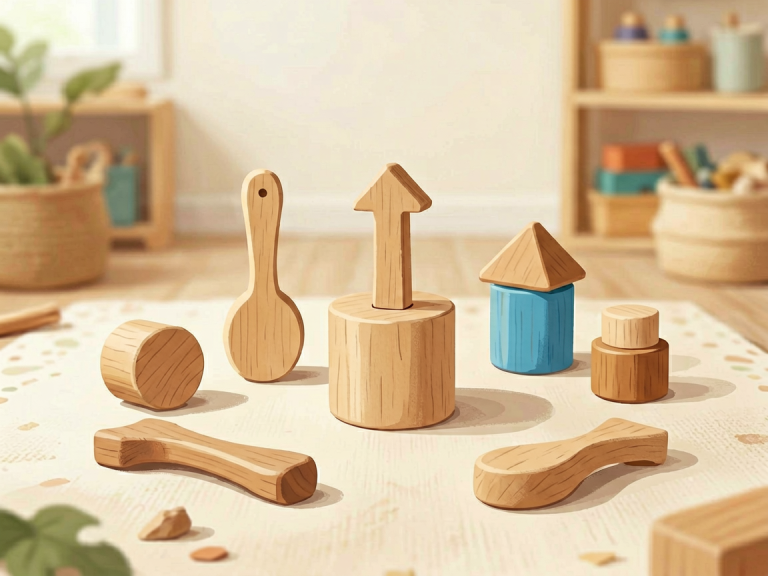
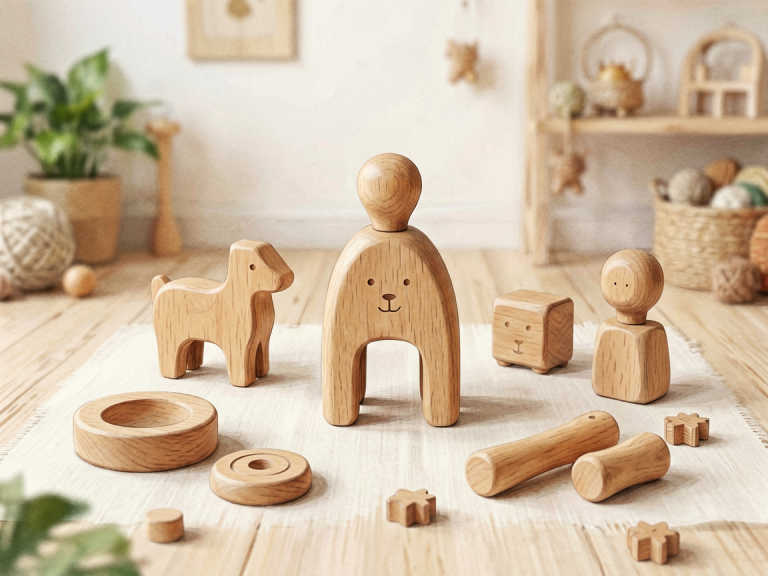
The best toys are those that grow with the child. Building blocks, magnetic tiles, art supplies, dress-up costumes, and simple board games can be used in increasingly sophisticated ways. A set of wooden blocks carries no age label because its potential is infinite. When shopping, prioritize toys that encourage multiple forms of play—construction, storytelling, experimentation—over those that dictate a single, age-specific outcome.
The Benefits of Ignoring Age Labels
Adopting a label-free approach to toy shopping yields several tangible benefits for children and families.
Fostering a Growth Mindset
When children are given toys that challenge them slightly, they learn to persist through difficulty. A puzzle that is “too hard” for their age becomes a rewarding achievement when solved with help. This builds resilience and a belief that effort leads to improvement. Conversely, toys that are too easy lead to boredom and disengagement.
Encouraging Mixed-Age Play
In many families, siblings of different ages play together. Ignoring age labels allows toys to serve everyone. A science kit labeled “10+” might fascinate a seven-year-old and a twelve-year-old at different levels, promoting collaboration rather than exclusion. This enriches social skills and teaches older children patience and teaching.
Saving Money and Reducing Waste
Toys labeled for narrow age ranges are often outgrown quickly. By choosing toys that transcend age boundaries, parents invest in longer-lasting playthings. A high-quality wooden train set can enchant a toddler and still be used for inventive layouts by a ten-year-old. This is both economical and environmentally friendly.
Boosting Creativity
When a toy is not limited by a preset instruction booklet or age-specific design, children are free to invent their own uses. A set of colorful plastic cups labeled for stacking can become a tea party, a drum set, or a counting tool. The absence of an age constraint opens the door to limitless imagination.
Practical Tips for Choosing Toys Without Age Labels
To successfully navigate the toy aisle without relying on the numbered tag, consider the following strategies:
- Observe first, buy later. Watch how the child plays with other toys. Do they prefer solitary or group play? Do they enjoy fine motor tasks or energetic movement? Use these clues to select a toy that matches their current behavior.
- Look for “supervised play” possibilities. Many toys labeled for older children can be used by younger ones with adult guidance. If the toy is safe (no small detachable parts, no sharp edges), consider introducing it during playtime together.
- Read reviews from other parents and educators. Online reviews often mention real-world age ranges that differ from the manufacturer’s. A parent might write, “My three-year-old loves this, even though it says 5+,” providing helpful insight.
- Prioritize adjustable difficulty. Seek toys with multiple levels or expandable sets. Magnetic tiles, for example, allow simple towers for a two-year-old and complex structures for a ten-year-old. Similarly, board games with rule variations can be adapted.
- Remember safety first, but don’t over-panic. Safety labels for choking hazards (e.g., “Not for children under 3”) should be respected for small parts, but even then, a toy with large, safe pieces labeled for older kids might be perfectly fine. Always supervise.
Conclusion
Age labels on toys are a convenient but often misleading shortcut. They simplify a complex reality in which every child develops at their own pace, driven by unique interests and abilities. By choosing to ignore these numbers—while staying mindful of safety—we open the door to a richer, more responsive approach to play. We allow a child to surprise us with their capabilities, to grow through challenge, and to find joy in toys that truly speak to them. So next time you pick up a box, glance at the label, then set it aside. Look at the toy itself, imagine the child’s hands and mind, and trust your understanding of that individual. In the end, the best toy isn’t the one that matches a number—it’s the one that matches a heart.