Beyond the Glow: Why Screen-Free Toys Are the Best Investment for Your Child’s Growth
Introduction
In an era where toddlers swipe before they speak and preschoolers master YouTube before they can tie their shoelaces, the debate over screen time has become a defining concern for modern parents. Yet amid the avalanche of glowing tablets, flashing apps, and endless digital subscriptions, a quieter, more enduring category of playthings continues to prove its worth: screen-free toys. These are not nostalgic relics from a pre-digital past; they are carefully designed tools that engage a child’s mind, body, and imagination in ways no pixel ever could. This article explores why investing in screen-free toys is not just a retro choice but a forward-thinking one, and it highlights specific categories that deliver lasting developmental benefits.
—
The Science Behind Unplugged Play
Before diving into product recommendations, it is essential to understand *why* screen-free toys matter. Numerous studies in child development and neuroscience underscore that hands-on, open-ended play stimulates neural pathways that passive screen consumption cannot. When a child stacks wooden blocks, the act involves fine motor coordination, spatial reasoning, trial-and-error problem solving, and proprioceptive feedback—all at once. A screen-based building app, by contrast, often reduces this complexity to a tap or a drag, robbing the child of sensory-rich feedback.
Moreover, screen-free toys encourage sustained attention. Unlike fast-paced digital media that constantly rewards novelty with quick dopamine hits, physical toys require a child to slow down, repeat actions, and persist through frustration. This process builds executive function skills—self-regulation, working memory, and cognitive flexibility—that are the bedrock of academic and life success. A 2020 study published in *JAMA Pediatrics* found that children who engaged in more unstructured, non-digital play exhibited better emotional regulation and lower rates of anxiety. The toy itself becomes a medium, not a message—a blank canvas for the child’s own narrative.
—
Top Categories of Screen-Free Toys That Deliver Real Value
1. Building and Construction Sets: The Architects of Imagination
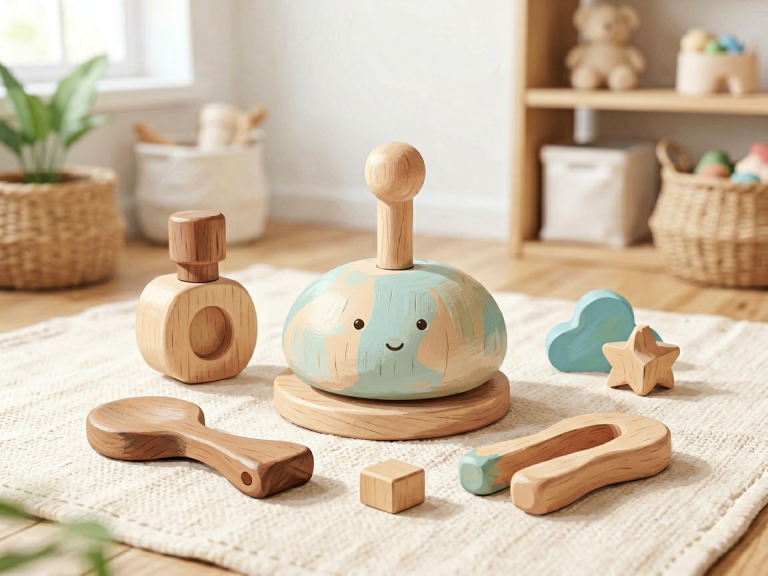
Few toys rival the open-ended potential of a quality building set. Classic wooden blocks—whether from brands like Melissa & Doug, Grimm’s, or handcrafted by local artisans—offer infinite combinations. Unlike kits with pre-determined instructions, a set of 100 simple blocks can become a castle, a spaceship, a pet hospital, or a bridge for toy cars. The learning here is organic: a child who tries to make a tall tower without a wide base learns about gravity and stability through direct experience, not through a pop-up message saying “Try again.”
Why they’re worth buying: They grow with the child. A two-year-old stacks; a five-year-old builds symmetrical structures; an eight-year-old engineers complex mechanisms with ramps and pulleys. These toys never become obsolete—they just inspire more sophisticated play.
2. Open-Ended Art Supplies: Creativity Without Batteries
Art supplies might seem obvious, but the difference between a “screen-free” art toy and a digital drawing app is profound. A set of non-toxic watercolor paints, a pad of thick paper, and a pack of real brushes invite sensory exploration: the smell of paint, the feel of wet bristles, the unpredictable mixing of colors. Digital drawing apps simulate these experiences but remove tactile feedback, which is critical for the development of hand muscles and neural mapping.
More importantly, open-ended art teaches tolerance for imperfection. A smeared painting is not a “mistake” to be erased but an opportunity to discover a new technique. Brands like Crayola, Eco-Kids, and Djeco offer high-quality, non-toxic materials that encourage children to experiment freely. Investing in a mess mat, a sturdy easel, and washable paints may require cleanup effort, but the cognitive and emotional dividends—creativity, confidence, and fine motor control—are immeasurable.
3. Wooden Puzzles and Manipulatives: Quiet Focus for Growing Minds
Puzzles are the unsung heroes of screen-free toy collections. Unlike the flashy “brain-training” apps that bombard children with timed challenges, a wooden jigsaw puzzle demands patience, visual-spatial analysis, and hand-eye coordination. The act of rotating a piece, feeling for its fit, and celebrating the *click* when it locks into place provides a sense of accomplishment that a glowing “You Win!” animation cannot replicate.
Beyond jigsaws, consider pattern blocks, tangrams, and lacing boards. These manipulatives strengthen dexterity and pre-math skills. A child who arranges pattern blocks into a hexagon is internalizing geometric relationships without a single worksheet. Brands such as Hape, PlanToys, and Uncle Goose produce beautifully finished wooden puzzles with nontoxic dyes—safe for toddlers who still mouth objects.
4. Imaginative Role-Play Kits: The Social-Emotional Gymnasium
Dolls, action figures, play kitchens, doctor kits, and dress-up trunks are perhaps the most powerful screen-free toys for social-emotional development. Through pretend play, children rehearse life scenarios: sharing, negotiating, caring for a “sick” teddy bear, or role-playing a family dinner. These activities build empathy, language skills, and conflict resolution.
Screen-based role-play games, however, often come with pre-scripted dialogues and limited outcomes. A real wooden play kitchen, stocked with pots, play food (preferably wooden or fabric), and utensils, allows a child to invent their own recipes, make mistakes, and try again. The social aspect is key: when two children negotiate who is the “cook” and who is the “customer,” they practice turn-taking and perspective-taking. Brands like KidKraft, Le Toy Van, and tiny oak offer sturdy, non-toxic role-play sets that withstand years of use and sibling battles.
5. Musical Instruments (Acoustic): Rhythms That Resonate
Digital music toys often come with preset melodies and auto-play features, which can actually hinder musical creativity. A simple wooden xylophone, a hand drum, a set of egg shakers, or a child-sized ukulele (with soft non-toxic finishes) allow children to explore pitch, rhythm, and volume on their own terms.
Making music with real instruments engages multiple senses: the vibration of a drum against the palm, the different tones produced by striking a xylophone bar at different angles, the collaborative beat of a sibling shaking a maraca. Research from the University of Southern California’s Brain and Creativity Institute shows that early musical training—even unstructured—enhances auditory processing and memory.
6. Outdoor and Active Play Toys: Moving Bodies, Growing Brains
Screen-free toys are not confined to the living room floor. High-quality outdoor toys—like sturdy tricycles, balance bikes, jump ropes, sandpit sets, and garden tools—encourage physical activity that is essential for gross motor development, cardiovascular health, and sensory integration.
A balance bike, for example, teaches a child the fundamental principles of steering and balance without the need for training wheels. It builds confidence and spatial awareness in a way that a stationary exercise app cannot. Similarly, a classic set of wooden gardening tools (a trowel, a watering can, a small rake) transforms the backyard into a laboratory for biology and responsibility. Watching a seed sprout because you watered it every day is a lesson in cause-and-effect far more powerful than any animated simulation.
—
How to Choose Quality Over Quantity
Not all screen-free toys are created equal. To avoid waste and ensure lasting value, follow these guidelines:
- Prioritize open-endedness. The best toys have no single “right” way to play. A train track that can be rearranged, a set of felt food that can be “cooked” into any meal—these foster creativity.
- Check materials. Choose solid wood (preferably FSC-certified), organic fabrics, and water-based, non-toxic paints. Avoid cheap plastic toys that break easily and may contain harmful chemicals like phthalates or BPA.
- Look for multi-generational appeal. A set of high-quality wooden blocks can be passed from child to child, even to grandchildren. Investment now saves money and landfill space later.
- Limit the total number. Too many toys—even screen-free ones—can overwhelm a child. Rotate a curated selection of 10–15 high-quality items every few weeks to maintain novelty and deep engagement.
—
Conclusion: The Joy of Real-World Play
The screen-free toys worth buying are not just objects; they are invitations to be human. They invite children to touch, smell, build, fail, collaborate, and triumph. They leave room for boredom, which is itself the birthplace of invention. In a world that increasingly monetizes every second of a child’s attention through screens, choosing a handful of wooden blocks, a set of watercolors, or a sturdy puzzle is a quiet act of rebellion—and an investment in a childhood rich with genuine exploration.
When your child finally builds a block tower that reaches their own height and lets out a triumphant giggle, you will know why these simple tools are worth every penny. They don’t just pass time; they build a foundation for a lifetime of learning, connection, and wonder. So take a step away from the glowing screens, and step into the messy, joyful, hands-on world that every child deserves.