Beyond the Buzzwords: A Parent’s Guide to Choosing Meaningful STEM Toys
Introduction
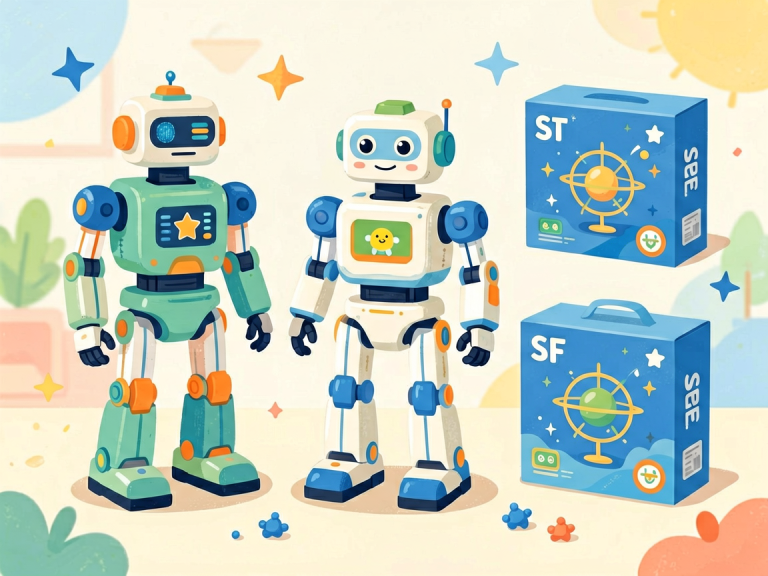
In recent years, the acronym STEM—science, technology, engineering, and mathematics—has become a marketing goldmine. Walk into any toy store, and you will see shelves lined with boxes boasting “STEM toy” labels, from coding robots and chemistry sets to building blocks and electrical circuit kits. Yet behind the bright packaging and bold claims, many products offer little more than a superficial nod to educational value. For parents and educators who genuinely want to nurture a child’s curiosity, critical thinking, and problem-solving skills, the challenge is not finding a STEM toy but identifying one that truly delivers on its promise.
Selecting the right STEM toy requires more than looking at the recommended age range or the number of glowing online reviews. It demands a careful evaluation of the toy’s design philosophy, its capacity for open-ended exploration, the depth of its engagement, and its alignment with a child’s developmental stage. This article outlines the key criteria to consider when evaluating STEM toys, helping you cut through the noise and choose tools that inspire genuine learning and lasting fascination.
—
Age Appropriateness: Matching Complexity to Cognitive Development
One of the most common mistakes in selecting STEM toys is ignoring the child’s developmental readiness. A toy that is too advanced can frustrate and discourage, while one that is too simple fails to challenge. The best STEM toys are designed with a clear understanding of age-specific abilities.
For preschoolers (ages 3–5), the focus should be on foundational concepts: cause and effect, pattern recognition, and basic physics through play. Simple stacking blocks, magnetic tiles, or water-play kits allow young children to experiment without needing to read or follow complex instructions. At this stage, the toy should encourage sensory exploration and fine motor development.
For elementary-aged children (ages 6–10), more structured yet still flexible kits are appropriate. Building sets with gears, pulleys, and levers introduce mechanical principles. Simple circuit kits with snap-together components teach basic electricity. The key is that the toy offers a clear “aha” moment—when the child sees a light bulb glow or a bridge hold weight—while still allowing room for trial and error.
For preteens and teenagers (ages 11+), the toys should transition from guided experimentation to independent problem-solving. Robotics kits with programmable microcontrollers, chemistry sets with real (but safe) reagents, or advanced engineering kits that require planning and iteration are ideal. At this level, the toy should mimic real-world engineering processes: design, test, fail, redesign.
Always check the manufacturer’s recommended age, but also observe the child’s own interests and patience level. A toy that can be used in multiple ways over several years—such as a modular building system—often provides the best return on investment.
—
Open-Ended Play: The Power of Multiple Solutions
A toy that has only one correct answer or one fixed outcome is essentially a puzzle, not a true STEM tool. Real science and engineering thrive on ambiguity, iteration, and creativity. The most valuable STEM toys are those that support open-ended play—meaning they can be used in countless ways, with no single “right” result.
Consider the difference between a pre-assembled plastic model of a solar system and a set of gears and motors that a child can use to build their own moving contraption. The former is static; the latter invites experimentation. Open-ended toys encourage children to ask questions like, “What if I add another gear?” or “Can I make this car go faster by changing the wheel size?” These are the questions that fuel scientific thinking.
Examples of high-quality open-ended STEM toys include wooden blocks (which teach physics and spatial reasoning), magnetic construction sets, building systems like LEGO Technic or K’Nex, and programmable robot kits that allow for custom coding. Even a simple bag of marbles and a ramp can lead to hours of hypothesis testing about speed, angle, and friction.
Avoid toys that are essentially one-time crafts—like a pre-printed circuit board that only lights up in one pattern. Look instead for products that include extra parts, expansion packs, or online communities where children can share their creations. The best toys grow with the child, offering new challenges as skills improve.
—
Hands-On Engagement: Learning Through Doing, Not Watching
STEM is fundamentally a hands-on discipline. While digital apps and videos can introduce concepts, true understanding comes from physical manipulation and direct experience. A child who builds a bridge from popsicle sticks and watches it collapse learns more about structural integrity than one who watches a cartoon about bridges.
When evaluating a STEM toy, ask: Does the child actively construct, assemble, test, or modify something? Or is the child primarily pushing buttons and watching pre-programmed outcomes? The former builds neural pathways; the latter is passive entertainment.
For example, a toy that teaches coding through tangible blocks or physical programming cards (like the “Coding Critters” or “Botley” series) is far more effective than a screen-based app where children simply drag code blocks. Physical interaction engages multiple senses, reinforces fine motor skills, and helps children internalize abstract concepts.
Similarly, chemistry sets that require mixing real substances (under supervision) provide a richer learning experience than virtual lab simulations. The smell, color change, and temperature sensation create memorable, concrete links to scientific principles.
Beware of toys that claim to teach STEM but are essentially remote-controlled cars with a few sensors. While they may be fun, they rarely encourage deeper inquiry unless the child can modify or rebuild them.
—
Real-World Relevance: Connecting Abstract Concepts to Everyday Life
Children learn best when they can see the relevance of what they are doing. A STEM toy that mimics real-world technologies—such as a simple hydraulic arm, a wind turbine model, or a solar-powered car—helps children understand how science and engineering solve everyday problems.
Look for toys that incorporate principles that children encounter in the world around them. A kit that demonstrates how gears work in a bicycle, how circuits power a flashlight, or how levers make lifting heavy objects easier provides a bridge between classroom theory and practical application.
Moreover, toys that encourage children to solve real problems—like designing a water filter, building a bridge that can hold weight, or creating a simple alarm system—are far more engaging than abstract puzzles. They foster a sense of purpose and accomplishment.
Parents can enhance this relevance by discussing the toy’s application in daily life. For instance, while playing with a pulley system, ask, “Have you ever seen a construction crane? How do you think it lifts heavy steel beams?” This contextual learning cements the concept.
—
Safety and Quality: Non-Negotiable Foundations
STEM toys often involve small parts, batteries, moving components, or chemical substances. Safety must be the top priority. Always check for non-toxic materials, rounded edges, and age-appropriate warnings. Look for certifications such as ASTM (American Society for Testing and Materials) or CE (Conformité Européenne) marks.
Quality matters for more than just safety. Cheaply made toys with flimsy parts break easily, leading to frustration and wasted money. A well-constructed building set, for example, uses tight-fitting pieces that stay together during play. Poor-quality magnets in a construction toy can lose their strength quickly, making the toy useless.
Investing in reputable brands known for durability and educational value—such as LEGO, Magna-Tiles, Snap Circuits, Thames & Kosmos, or littleBits—often pays off in the long run. These companies also typically provide replacement parts, online resources, and expansion sets.
Additionally, consider the toy’s environmental impact. Durable, long-lasting toys reduce waste, and wooden toys (if sustainably sourced) are a greener alternative to plastic.
—
Encouraging Problem-Solving and Resilience
Perhaps the most important hidden benefit of a great STEM toy is its ability to teach resilience. In STEM, failure is not a dead end; it is a stepping stone. A toy that allows (and even encourages) repeated failure and redesign is far more valuable than one that guarantees success every time.
Look for toys that include challenges—like “build a tower that can withstand an earthquake” or “create a vehicle that travels the farthest.” These tasks force children to hypothesize, test, observe, and adjust. When the tower falls, the child must analyze why and try a different approach. This iterative cycle is the essence of the scientific method.
Parents can support this process by reframing failure positively. Instead of saying, “That didn’t work,” try, “What did you learn from that? What could you change?” The toy itself should provide enough feedback—through visible results, sound, or movement—to guide the child’s next attempt.
Avoid toys that have “correct” answers and no room for variation. A circuit kit that only works when wired exactly according to the manual teaches obedience, not problem-solving. Instead, choose kits that offer multiple project ideas or allow free-form experimentation.
—
Conclusion: The Real Measure of a STEM Toy
In the end, the best STEM toy is not the one with the most features, the flashiest packaging, or the highest price tag. It is the one that sparks curiosity, invites exploration, and grows with the child. It provides enough structure to guide learning but enough freedom to inspire creativity. It makes the invisible world of science visible—through lights, motion, and reactions—and it turns the child from a passive consumer into an active creator.
As you browse the aisles or scroll through online listings, keep these criteria in mind: age fit, open-endedness, hands-on engagement, real-world connection, safety, and the capacity to teach resilience. A toy that meets these standards will do more than entertain; it will plant the seeds of lifelong learning, critical thinking, and a genuine passion for understanding how the world works. That is the true return on investment—and the ultimate goal of any STEM toy worth its label.