Beyond the Brick: Smart, Less Clutter Alternatives to LEGO-Style Building Toys
Introduction: The Hidden Cost of Classic Plastic Bricks
For decades, LEGO-style bricks have reigned supreme as the gold standard of creative construction toys. Their interlocking precision, endless possibilities, and nostalgic appeal are undeniable. Yet any parent, teacher, or minimalist enthusiast will quietly admit the same nagging truth: these tiny, ubiquitous pieces are a clutter machine. They scatter under sofas, lurk in vacuum cleaners, and spawn chaotic piles that seem to multiply overnight. The sheer volume of small parts required to build anything substantial means that even a modest collection quickly overtakes shelves, bins, and floor space. Worse, the visual noise of multicolored plastic fragments can make a room feel perpetually messy, undermining the calm environment that many families crave. This article does not intend to disparage LEGO—its educational value is real—but rather to offer practical, lower-clutter alternatives that preserve the joy of construction while drastically reducing the chaos. From magnetic tiles to digital building apps, these options provide equal or greater creative freedom with far less physical footprint, easier storage, and a cleaner aesthetic.
Magnetic Construction Sets: Clean Geometry and Instant Stability
One of the most compelling alternatives to traditional bricks is magnetic construction systems, such as Magna-Tiles, Picasso Tiles, or Geomag. These sets replace tiny stud-and-tube connections with powerful magnets embedded in plastic or metal shapes. The results are transformative for clutter control. First, magnetic pieces tend to be much larger and flatter than LEGO bricks—a typical square tile measures about 3 inches across. This means far fewer pieces are needed to build a stable structure. A castle that might require 200 LEGO bricks can often be constructed with 30 to 40 magnetic tiles. Fewer pieces translate directly to less mess, faster cleanup, and a reduced risk of losing critical components. Moreover, magnetic tiles stack neatly like plates, so storage becomes a matter of stacking them in a slim box or even a drawer, rather than sorting thousands of tiny pegs into compartmentalized bins. The magnetic connection also eliminates the need for constant pressure to click pieces together, making them ideal for younger children who might struggle with traditional bricks. Visually, these tiles offer translucent colors and clean lines, which look far more elegant on a shelf than a bin of chunky plastic. For families seeking a minimalist aesthetic, magnetic sets are a triumph.
Wooden Unit Blocks: Timeless Simplicity and Bulk Storage
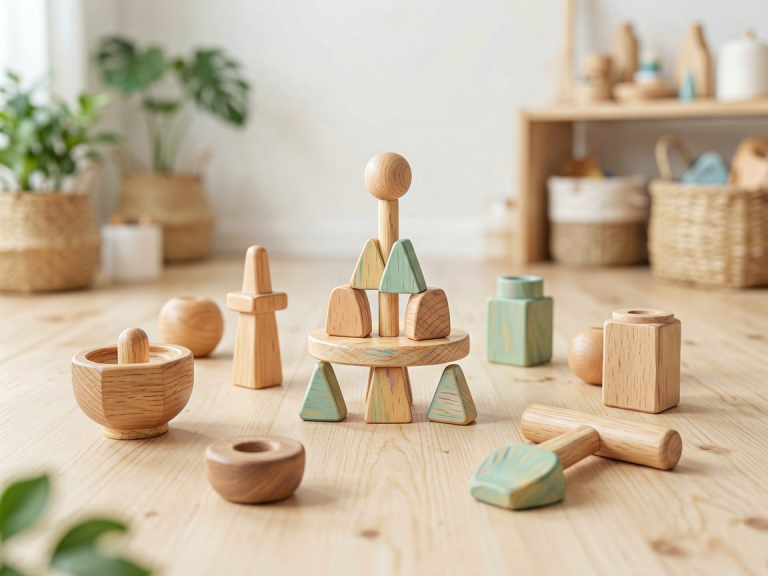
Another powerful alternative is the classic wooden unit block set. Unlike the chaotic rainbow of LEGO, wooden blocks are typically finished in natural wood tones or a few muted colors. Their unchanging shape—rectangular prisms, cylinders, arches, and triangles—encourages open-ended building without the distraction of themed minifigures or specialized pieces. Why is this a less-clutter solution? Because wooden blocks are inherently large and heavy. A standard set of 100 blocks might take up the same cubic footage as 3,000 LEGO bricks, yet the blocks can be stacked quickly and stored in a single, sturdy wooden crate or canvas bag. There are no tiny wheels, antennas, or weapons to lose. Furthermore, wooden blocks do not interlock; they rely on balance and gravity, which means they naturally collapse into a tidy pile rather than scattering like self-assembling puzzle pieces. This encourages a different kind of building—one that values process over permanence—and reduces the frustration of stepping on a stray brick. From a visual standpoint, the warm earth tones of unfinished wood blend far more harmoniously into a living room or playroom than bright primary-colored plastic. Many modern wooden block sets also come with storage boxes that double as display shelves, reinforcing a clutter-free ethos. For parents who want to encourage spatial reasoning, physics understanding, and creativity without the visual noise, wooden unit blocks are a timeless choice.
Giant Foam or Cardboard Building Blocks: Oversized and Safe
For those who dream of building forts, towers, or life-sized structures, giant building blocks offer an exhilarating alternative that virtually eliminates small-part clutter. These oversized blocks, often made of lightweight foam (like the popular "Soft Blocks") or reinforced cardboard (like "Cardboard Construction Kits"), can be up to 12 inches in size. Because each block is enormous, you need only a handful to create impressive structures. A child can build a chair, a desk, or a playhouse with fewer than 20 pieces. Cleanup involves simply tossing them into a corner or stacking them against a wall—no sorting, no tiny compartments. Many foam blocks are also modular and can be nested together for compact storage. Cardboard versions are often flat-packed and can be disassembled and stored in a thin portfolio. The sheer scale of these blocks means they are impossible to lose under furniture, and they pose no choking hazard for younger siblings. Additionally, the texture and softness make them safer for active play, encouraging tumbling and knocking down without sharp edges. While they lack the fine-motor precision of LEGO, they more than compensate with their ability to engage gross motor skills, collaboration, and large-scale imagination. For families who want to minimize visual clutter, a stack of five or six giant foam blocks is far less intrusive than a bin of 3,000 LEGO pieces.
Digital Building Platforms: Zero Physical Clutter, Infinite Creativity
Perhaps the most radical departure from physical bricks is the digital construction environment. Apps and software such as "Minecraft (Creative Mode)," "Roblox Studio," "LEGO Builder" (the official digital app), or "Block Craft 3D" allow users to build elaborate structures with no physical materials at all. The clutter is literally zero—no pieces to clean up, no bins to organize, no lost accessories. A tablet or computer becomes the entire playspace. While some worry that screen time is not a perfect substitute for hands-on play, research shows that digital building platforms develop many of the same cognitive skills: spatial reasoning, planning, creativity, and even collaboration in multiplayer modes. Moreover, they offer unlimited resources: you never run out of bricks, you can undo mistakes instantly, and you can save creations forever without taking up shelf space. For families who are inundated with physical toys, shifting even a portion of building play to digital platforms can dramatically reduce household clutter. The key is to use these tools intentionally—setting screen time limits, and treating them as complementary rather than replacement. Many children find digital building equally satisfying, and some even prefer it because they can build on a grand scale without the mess. Modern apps also allow for real-time sharing and printing of digital designs, which can later be recreated physically using fewer, carefully curated bricks. This hybrid approach is the ultimate clutter hack for building enthusiasts.
Modular and Transformable Construction Toys: Fewer Pieces, More Functions
A final category worth exploring is modular construction systems that are designed specifically to minimize piece count while maximizing build options. Examples include "K'NEX" (which uses rod-and-connector systems with fewer total pieces), "TinkerToys" (wooden rods and connectors), or "FlexiBlocks" (silicone-like interlocking bricks that are larger and easier to store). These systems operate on the principle that a smaller number of versatile components can replicate the structural variety of thousands of bricks. For instance, a single TinkerToy connector can join four rods at different angles, replacing the need for dozens of specialized LEGO hinge pieces. The pieces are typically larger and chunkier, so they are less likely to roll away or hide. Many of these sets also come with reusable storage cases that have designated slots, making organization simple. Additionally, some modular toys are designed to be transformable—they can fold into a compact shape or disassemble into a flat pack. For example, "Magnetic Sticks and Balls" allow for building complex geometric shapes with only 2 types of pieces: sticks and magnetic balls. The result is a tool set that feels more like a construction system than a collection of trinkets. For adults who enjoy building models but resent the clutter, these modular alternatives are a godsend.
Conclusion: Rethinking Play Without the Chaos
Choosing a less-clutter alternative to LEGO-style bricks does not mean sacrificing creativity, learning, or fun. It means embracing designs that prioritize efficiency of form, ease of storage, and visual tranquility. Magnetic tiles offer sleek, minimal building with fewer pieces. Wooden blocks bring timeless warmth and bulk stability. Giant foam blocks enable large-scale play without tiny hazards. Digital platforms eliminate physical stuff altogether. And modular systems prove that fewer pieces can actually unlock more possibilities. The most important step is to assess your own space and values. Do you crave a calm, minimalist home? Consider wooden blocks and digital apps. Do you have a child who builds elaborate structures daily? Try a modular system with a high piece-to-output ratio. Remember that the goal is not to banish construction play, but to curate it thoughtfully. A small collection of well-chosen, high-quality building toys will yield more joy, less mess, and a cleaner environment—proof that sometimes less really is more.