Beyond the Box: The Best Alternatives to Science Kits for 7-Year-Olds
Introduction: Why Move Beyond Pre-Packaged Science Kits?
At age seven, children are natural explorers. Their curiosity is boundless, their questions relentless, and their attention spans—though still short—are capable of deep focus when something truly captivates them. Standard science kits, with their glossy boxes, plastic test tubes, and pre-measured ingredients, can be both a blessing and a limitation. While they offer convenience and structure, they often strip away the very essence of scientific discovery: improvisation, failure, and open-ended inquiry. A seven-year-old who follows a kit’s step‑by‑step instructions to create a “volcano” learns that mixing baking soda and vinegar produces a fizzy reaction, but she may miss the thrill of asking, “What happens if I use lemon juice instead? Or what if I add dish soap?” The best alternatives to science kits are those that place the child in the driver’s seat, encouraging messy, creative, and deeply personal explorations of how the world works. Below, I present eight powerful, engaging, and cost‑effective alternatives that will ignite a lasting love for science—far beyond any cardboard box.
1. The Kitchen Laboratory: Everyday Chemistry and Physics
The family kitchen is arguably the most versatile science laboratory a seven-year-old can access. Far more flexible than a kit, it offers real-world materials with immediate relevance.
*Subsection: Edible Experiments and States of Matter*
Invite your child to make homemade ice cream in a bag. Fill a small zip‑top bag with half‑and‑half, sugar, and vanilla extract, then seal it inside a larger bag filled with ice and rock salt. Shake vigorously for five minutes. The child experiences the freezing‑point depression of salt firsthand—and gets a delicious reward. This is not a pre‑packaged experiment; it’s a real kitchen task that can lead to further questions: “Why does the salt melt the ice? Can we use sugar instead? What if we use a different kind of milk?” Similarly, melting chocolate over warm water, observing butter solidifying in the fridge, or watching a piece of bread toast are all experiments in heat transfer and chemical change. The kitchen is also perfect for simple pH testing: red cabbage juice turns pink in acid (vinegar, lemon juice) and blue‑green in base (baking soda, soapy water). No kit needed—just cabbage and pantry staples.
*Subsection: Physics Through Cooking*
Cooking itself is applied physics. Rolling out dough teaches force and area; whisking egg whites introduces air incorporation and foam formation; baking a cake demonstrates the expansion of gases. A seven-year-old can help measure ingredients, observing how different amounts affect the outcome. This builds intuitive understanding of ratios and reactions. The key difference from a kit: the child can tweak the recipe, make mistakes, and learn from them—a process far more educational than following a script.
2. Nature’s Classroom: Outdoor Observation and Collection
Nothing rivals the depth and variety of the natural world. A science kit might contain a plastic magnifying glass and a picture card of a leaf; the outdoors offers endless real specimens, dynamic changes, and the thrill of the unexpected.
*Subsection: The Backyard Biologist*
Equip your seven-year-old with a simple notebook, a pencil, and perhaps a low‑cost magnifying lens (or even a clear plastic cup with water—a surprisingly effective magnifier). Go on a “tiny world” walk. Lift a rock and observe the ants, pill bugs, and earthworms. Ask questions: “Why do worms come up when it rains? How many legs does this insect have? What do you think it eats?” Keep a “scientist’s journal” where the child draws what she sees and writes one or two observations each day. Over a week, compare entries. This builds pattern recognition, record‑keeping, and a sense of wonder—none of which a kit can replicate.
*Subsection: Weather and Sky Watching*
Seven-year-olds are fascinated by clouds, rain, and wind. Instead of a store‑bought weather station kit, create your own. Hang a ribbon outside to measure wind direction. Place a rain gauge (a simple jar with markings) in the yard. Observe cloud shapes each afternoon and try to predict the next day’s weather. Record the temperature with an outdoor thermometer. This ongoing project teaches data collection and hypothesis testing. It also connects science to the child’s daily life in a meaningful way.
3. Building and Engineering with Loose Parts
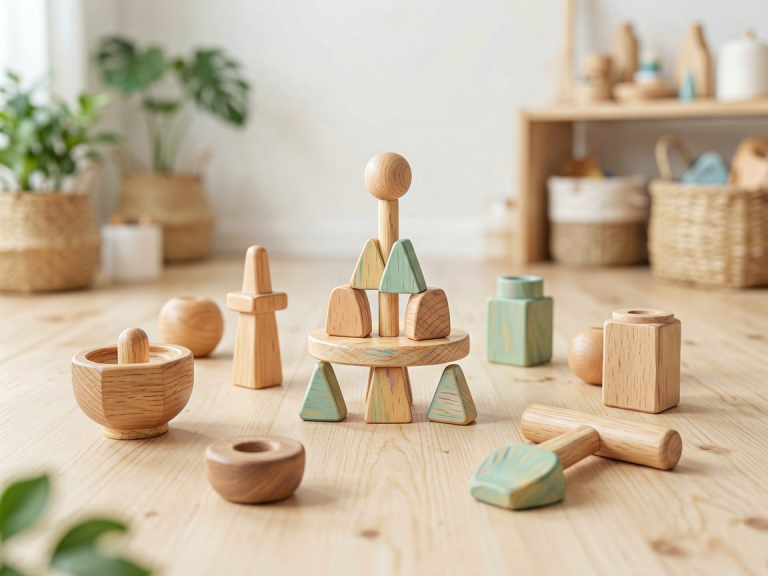
Science is not just about liquids and reactions; it is about structures, forces, and design. The best engineering alternatives to Lego‑style kits are everyday objects with no defined purpose—so‑called “loose parts.”
*Subsection: Cardboard, Straws, and Tape Engineering*
A pile of cardboard boxes, empty paper towel rolls, plastic straws, string, and masking tape is a far more powerful engineering kit than any packaged set. Challenge your seven-year-old to build a bridge that can hold a small toy car, a tower as tall as her own waist, or a marble run that carries a ball from the sofa to the floor. There are no instructions, so the child must experiment, fail, and redesign. This develops spatial reasoning, problem‑solving, and resilience. Unlike a kit that limits parts, loose parts invite infinite creativity.
*Subsection: Simple Machines from Household Items*
Introduce levers, pulleys, and inclined planes using everyday items. A ruler balanced on a pencil becomes a lever. A spool of thread, a string, and a bucket of toys creates a pulley. A stack of books forms an inclined plane. Ask the child to move a heavy book using a lever versus lifting it directly. Measure how much easier it is. This hands‑on understanding of mechanical advantage is more memorable than reading about it.
4. Digital Exploration Without Screens (or With Purposeful Screens)
While many parents worry about screen time, the right digital tools can complement hands‑on exploration. However, the alternative to a science kit here is not a tablet game that passively entertains, but a tool that demands action.
*Subsection: Photography as Scientific Documentation*
Give a seven-year-old a simple digital camera (or even a smartphone on airplane mode) and ask her to document patterns in nature: spirals in shells, symmetry in leaves, textures in bark. Then print the photos and arrange them as a “scientific collection.” This builds observation skills and a visual vocabulary for scientific concepts like symmetry, pattern, and texture. It also teaches the value of documentation—a core scientific practice—without relying on a single-use kit.
*Subsection: Purposeful Coding with Physical Results*
If you choose a digital tool, opt for one that connects to the real world. For example, the ScratchJr app (free) lets children program simple animations by snapping blocks together. Even better, combine it with a low‑cost programmable toy such as a Bee‑Bot (often available at libraries) or a simple robot that can be built from a kit but is more open‑ended. This approach teaches sequencing, logic, and debugging—essentially the scientific method applied to code. It far surpasses the limited “science of slime” kits in teaching transferable skills.
5. Art‑Integrated Science: The STEAM Approach
Science and art are not opposites; they share the same spirit of experimentation. Alternatives to science kits can incorporate drawing, painting, and sculpture to explore scientific principles deeply.
*Subsection: Chromatography and Color Mixing*
Instead of a prepackaged color‑mixing kit, try coffee‑filter chromatography. Draw a ring with a black water‑based marker near the bottom of a coffee filter, then dip the edge into a shallow dish of water. Watch as the water climbs and separates the marker’s pigments into blues, yellows, and pinks. This is a real analytical chemistry technique. Then challenge the child to create a “rainbow” using only three primary colors of paint. The process of mixing to create green, orange, and purple teaches subtractive color theory and the science of light absorption.
*Subsection: Shadow Art and Light*
Place a lamp behind a sheet of paper and explore how moving an object changes its shadow. Trace shadows at different times of the day on a sunny sidewalk. Create a sundial using a stick and stones. These activities teach the geometry of light, the rotation of the Earth, and the concept of time—all through drawing and play.
6. The Power of Questions: Unstructured Inquiry
Ultimately, the most important alternative to any kit is the skill of asking good questions. A science kit typically answers one question: “What happens?” But real science asks, “Why? And what else?”
*Subsection: Create a “Wonder Wall”*
Dedicate a wall in your home or a large sheet of paper on the refrigerator. Every time your seven-year-old asks a question (“Why is the sky blue?” “How do birds fly?” “Where does the water go when it rains?”), write it down on a sticky note and add it to the wall. Then, once a week, pick one question and try to find the answer together—through an experiment, a library book, a YouTube video from a trusted science channel, or a conversation with a knowledgeable adult. This process teaches that science is not about finding answers in a box, but about pursuing curiosity.
*Subsection: The Messy Play of Hypothesis Testing*
Encourage “what if” games. What if we put a toy car at the top of a ramp made from a book? What if we change the angle? What if we put sandpaper on the ramp? Let the child make predictions, test, and record results. The only materials needed are a car, a book, and various surfaces. This simple, repeatable activity builds the core of scientific reasoning.
Conclusion: The Real Science Is Everywhere
The best alternatives to science kits for seven-year-olds share one crucial attribute: they invite the child to be the author of her own investigation. They replace the script with a blank page, the plastic pieces with real‑world materials, and the single correct outcome with a thousand possible discoveries. Whether in the kitchen, the backyard, the craft table, or the digital realm, these approaches foster the very habits that define a scientist: curiosity, persistence, creativity, and a willingness to be surprised. The most powerful science education does not come in a box. It comes from a world that is already full of wonder, waiting for a child to ask, “I wonder what happens if I…”