Beyond the Block: Top Alternatives to Wooden Blocks for 6-Year-Olds
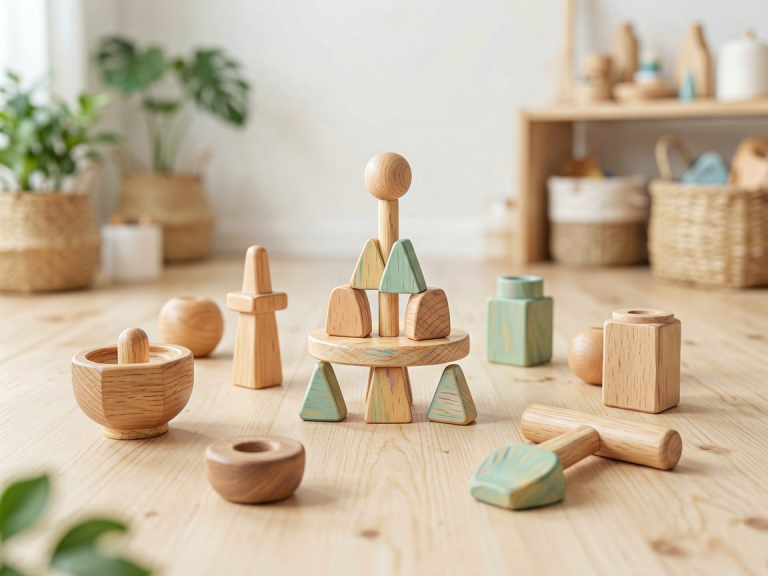
Wooden blocks have long been a staple in early childhood development, cherished for their simplicity, durability, and open-ended play value. They encourage spatial reasoning, creativity, and fine motor skills. However, by the time a child reaches six years old, their cognitive abilities, attention span, and desire for complexity often outgrow what basic wooden blocks can offer. A six-year-old is typically entering a phase where they crave more structured challenges, greater interactivity, and opportunities for imaginative storytelling and problem-solving. While wooden blocks remain a wonderful tool, parents and educators may find enormous benefits in introducing alternative building and construction toys that align better with a six-year-old’s developmental stage. These alternatives not only preserve the core benefits of hands-on construction but also add layers of engineering, magnetism, mechanization, and even digital integration. This article explores the best alternatives to wooden blocks for six-year-olds, examining each option’s unique advantages, potential drawbacks, and suitability for fostering creativity, logic, and persistence. Each alternative is presented with a clear rationale, practical tips for selection, and safety considerations, ensuring that you can make an informed choice for your child’s playroom.
Magnetic Tiles: The Geometrical Gateway
Magnetic tiles, such as Magna-Tiles or PicassoTiles, have skyrocketed in popularity over the past decade, and for good reason. Unlike wooden blocks, which rely purely on gravity and friction for stacking, magnetic tiles use embedded magnets along their edges to create stable, self-supporting structures. For a six-year-old, this is a game-changer. They can build towers, bridges, castles, and geometric shapes that would be impossible with wooden cubes and rectangles. The magnetic connection provides instant feedback—a satisfying click—and allows children to focus on design rather than balance.
Moreover, magnetic tiles come in transparent, colored plastic, introducing concepts of light, color mixing, and symmetry. Six-year-olds are naturally curious about why colors blend when tiles overlap, and the translucent surfaces make for beautiful light-play when placed near a window or a flashlight. The tiles are typically large (around 3 inches square), making them safe and easy for small hands to manipulate, and they pose no choking hazard like smaller building bricks might.
From an educational perspective, magnetic tiles are excellent for developing spatial awareness and early geometry. Children learn about 2D shapes (squares, triangles, rectangles) and see how those shapes combine to form 3D structures. They also practice symmetry and pattern recognition. Many sets include tiles with wheels or special connectors, allowing the creation of vehicles and moving objects—something wooden blocks cannot easily accommodate.
However, one limitation is that magnetic tiles generally cannot support extremely heavy loads or intricate mechanical functions. They are best for architectural and artistic builds. For a six-year-old who loves constructing elaborate castles or spaceships, magnetic tiles are an ideal alternative that feels fresh and modern while still providing the open-ended creativity of wooden blocks.
LEGO DUPLO and Standard LEGO: The Precision Builders
While LEGO DUPLO (the larger version of LEGO bricks) is often recommended for toddlers, many six-year-olds are ready for standard LEGO bricks, which offer a much wider range of possibilities. The interlocking stud-and-tube system provides a level of stability and precision that wooden blocks simply cannot match. With wooden blocks, a tower can topple with a slight nudge; with LEGO bricks, the connection is firm until intentionally pulled apart. This allows children to build complex, detailed structures—houses with roofs, vehicles with wheels, even working mechanisms using gears and axles.
For a six-year-old, LEGO sets can be purchased as themed kits (e.g., city, space, pirates) that include step-by-step instructions. Following these instructions teaches sequencing, patience, and reading comprehension. But equally important is free-form building, where children use loose bricks to invent their own creations. The diversity of LEGO pieces—plates, bricks, slopes, windows, doors, hinges, and minifigures—encourages storytelling and role-play. A six-year-old can build a fire station, then act out rescue scenarios with the minifigures. This kind of narrative play is crucial for language development and social-emotional skills.
Furthermore, LEGO bricks are made of durable ABS plastic, which is non-toxic and easy to clean. The only downside for some families is the small size of standard LEGO bricks: pieces smaller than 1 inch can be a choking hazard for younger siblings, so if you have a toddler in the house, you may need to keep LEGO play separate. Also, stepping on a stray LEGO brick is famously painful. Nevertheless, for a six-year-old, LEGO is arguably the most versatile and long-lasting alternative to wooden blocks. It grows with the child: there are even robotics kits (LEGO Boost or LEGO SPIKE) that introduce coding and motors, making it a toy that can last well into the teenage years.
Foam Building Blocks: Soft, Safe, and Spatial
Not all alternatives need to be hard or high-tech. Foam building blocks, often made from EVA foam or polyurethane, offer a completely different tactile experience. They are soft, lightweight, and quiet—perfect for indoor play where you want to minimize noise and avoid injuries from falling blocks. For a six-year-old who is still developing gross motor control or who tends to knock things over in excitement, foam blocks provide a forgiving environment.
These blocks come in various shapes: cubes, rectangles, cylinders, arches, and even half-spheres. Some sets are textured or have contrasting colors to aid visual discrimination. While they lack the precision of LEGO or the magnetism of tiles, foam blocks excel in large-scale construction. A six-year-old can build a fort big enough to crawl into, or a castle wall as tall as themselves. This kind of gross-motor building is excellent for core strength, balance, and spatial planning—skills that wooden blocks (which are often small) do not fully address.
Foam blocks also double as seating, stepping stones, or props for imaginative play (pretending they are rocks in a river, or cushions for a picnic). They are safe for rough play, and because they are soft, they can be used in group settings without risk of injury. The main drawback is that they are not as precise: foam compresses, so you cannot achieve the same structural stability as with rigid materials. Also, high-quality foam blocks can be expensive and may eventually tear or lose shape. Still, for a six-year-old who loves physical play and building life-sized structures, foam blocks are a wonderful alternative that encourages cooperative play and large-muscle development.
Interlocking Construction Sets: K’NEX, Plus-Plus, and Beyond
Moving beyond simple stacking, interlocking construction sets offer unique building systems that challenge a six-year-old’s engineering mindset. Two prominent examples are K’NEX and Plus-Plus. K’NEX consists of plastic rods and connectors that snap together to create frames, wheels, and moving parts. Unlike wooden blocks, which are solid and static, K’NEX pieces allow children to build working models such as ferris wheels, cars, and even simple machines with gears and pulleys. This introduces principles of mechanics and physics in a hands-on way. For a six-year-old, following K’NEX instructions to build a moving model is immensely satisfying and teaches cause-and-effect relationships.
Plus-Plus, on the other hand, uses a single, simple shape—a small, double-ended “plus” sign made of soft plastic. These pieces interlock on all sides, allowing children to build flat mosaics or 3D structures. Because each piece is identical, the creative possibilities are endless, and the building process is meditative and repetitive, which can be calming for energetic children. Plus-Plus is particularly good for fine motor development because the pieces require precise alignment. They are also dishwasher-safe and made from non-toxic materials.
What makes interlocking sets a strong alternative to wooden blocks is their emphasis on connection and movement. Wooden blocks are best for static stacking; interlocking sets are designed for dynamic, articulated structures. A six-year-old who loves figuring out how things work—who asks “why does this gear turn that gear?”—will thrive with K’NEX. Meanwhile, a child who enjoys pattern-making and building flat, colorful designs might prefer Plus-Plus. These sets are relatively compact, making them great for travel, and they store easily in bins. The only caution is that some sets have small pieces, so ensure they are age-appropriate and that younger siblings are supervised.
Electronic Building Kits: Snap Circuits and LittleBits
For the six-year-old who is already showing an interest in science and technology, electronic building kits are a fantastic alternative to traditional wooden blocks. Snap Circuits, for example, uses plastic pieces that “snap” together on a base grid to create working electrical circuits. Children can build a simple light switch, a fan that spins, or a doorbell that rings—all without soldering or wires. The components are large, color-coded, and clearly labeled, making them safe and intuitive for young children.
LittleBits offers a similar concept but with magnetic connections. Each Bit is a small module with a specific function (power, sensor, output) that snaps together magnetically. Children can build a night-light that turns on when it gets dark, or a sound-activated toy. The magnet system ensures correct polarity, so there is no frustration with wrong connections.
These kits teach the fundamentals of electricity, logic, and problem-solving. They also encourage experimentation: if a circuit does not work, the child must trace the path and find the error. This kind of troubleshooting is invaluable for building perseverance and analytical thinking. Moreover, electronic kits add a sensory element—lights, sounds, and motion—that wooden blocks cannot offer. For a six-year-old, the thrill of making something “come alive” is deeply engaging.
The main consideration is that electronic kits are more guided than open-ended. While you can free-build within certain parameters, the pieces are designed for specific functions. Also, they require batteries (often included) and may have a higher upfront cost. However, for parents looking to spark an early interest in STEM, Snap Circuits or LittleBits are unparalleled alternatives that complement rather than replace the fundamental skill of building.
Cardboard Construction Tools: Makedo and Imagination
Sometimes the best alternative is not a toy at all, but a tool to transform everyday materials. Makedo is a construction system that uses safe plastic saws, screws, and connectors to turn cardboard boxes into elaborate creations. For a six-year-old, this is the ultimate open-ended building experience. They can collect shipping boxes, cereal cartons, and tubes, then use the Makedo tools to cut, join, and reinforce them into forts, costumes, vehicles, or robots.
What makes this a powerful alternative to wooden blocks is that it bridges the gap between construction and recycling. It teaches resourcefulness, environmental awareness, and the idea that anything can become building material. The physical act of sawing cardboard (with a safe, serrated tool) builds hand strength and coordination. The screws and connectors allow children to build large, sturdy structures that can actually be played in—a cardboard rocket ship they can climb inside, or a castle with a drawbridge.
Unlike wooden blocks, which are limited to small, tabletop builds, cardboard construction is limited only by the supply of boxes. Children learn to plan, measure, and adapt when their design fails. Makedo kits are durable and reusable, and the cardboard can be recycled when the project is done. The only downside is the mess: cardboard dust and tape scraps can accumulate, but this is a small price to pay for such rich, imaginative play.
Conclusion: Choosing the Right Alternative for Your Six-Year-Old
Wooden blocks are a classic for a reason, but they are not the only game in town. At age six, children’s cognitive and motor skills have advanced to a point where they can benefit from more complex, interactive, and purpose-driven building experiences. The best alternatives—magnetic tiles, LEGO bricks, foam blocks, interlocking sets, electronic kits, and cardboard construction tools—each offer unique strengths that address different aspects of development.
When selecting an alternative, consider your child’s current interests. Do they love building towers and castles? Magnetic tiles or foam blocks might be ideal. Are they fascinated by how machines work? K’NEX or Snap Circuits will captivate them. Do they enjoy detailed, minifigure-driven stories? LEGO is unmatched. And if you want to encourage sustainability and large-scale creativity, Makedo opens up a world of possibilities.
No single toy should completely replace wooden blocks, but rather, these alternatives can supplement and expand a child’s play experience. Rotating between different types of construction toys keeps the learning fresh and challenges different skill sets. Remember that the goal is not just to build—it’s to think, create, problem-solve, and have fun. By offering a variety of high-quality alternatives, you are giving your six-year-old the tools to become a confident, curious builder of their own world.