Article Title
The Toy Tipping Point: Why Buying Too Many Toys for 8-Year-Olds Does More Harm Than Good
—
Introduction: A Modern Parenting Dilemma
Walk into any toy store, and you will be greeted by an explosion of colors, sounds, and packaging promises. For a parent of an 8-year-old, the pressure to provide the latest action figure, the most sophisticated Lego set, or the trending electronic gadget is immense. Birthdays, holidays, “just because” rewards—each occasion seems to call for a new addition to the toy collection. Yet, in this frenzy of consumption, a critical question often goes unasked: *How many toys are too many?*
For an 8-year-old, the line between abundance and overload is thin. At this age, children are developing crucial cognitive, social, and emotional skills. They are no longer toddlers who explore solely through tactile stimulation, nor are they adolescents who can fully articulate their needs. They are in a delicate transition stage where their environment—including the quantity and variety of their toys—can deeply shape their habits, attention spans, and values. This article explores why buying too many toys for 8-year-olds is not just a clutter problem but a developmental concern, and offers practical guidance for parents who want to raise mindful, creative, and content children.
—
The Hidden Costs of Toy Overabundance
1. Cognitive Overload and Reduced Attention Span
One of the most immediate consequences of an excessive toy collection is cognitive overload. An 8-year-old’s brain is still learning to filter stimuli and sustain focus. When a child is surrounded by dozens of toys, each vying for attention, the constant switching between activities prevents deep engagement. Research in child psychology suggests that children who have fewer toys tend to play more creatively and for longer periods. They invent narratives, solve problems, and immerse themselves in a single activity. In contrast, a child with an overflowing toy box often flits from one item to the next, never truly committing to any.
This pattern mirrors what happens in adult multitasking: shallow involvement in many tasks yields poor results. For an 8-year-old, the consequence is a weakened ability to concentrate—a skill that directly impacts academic performance and later life success. When every new toy promises novelty, the child’s dopamine-driven reward system becomes desensitized, making ordinary activities (like reading or drawing) feel boring. The result? A child who constantly seeks the next “hit” of novelty, rather than finding joy in sustained play.
2. Undermining Creativity and Imagination
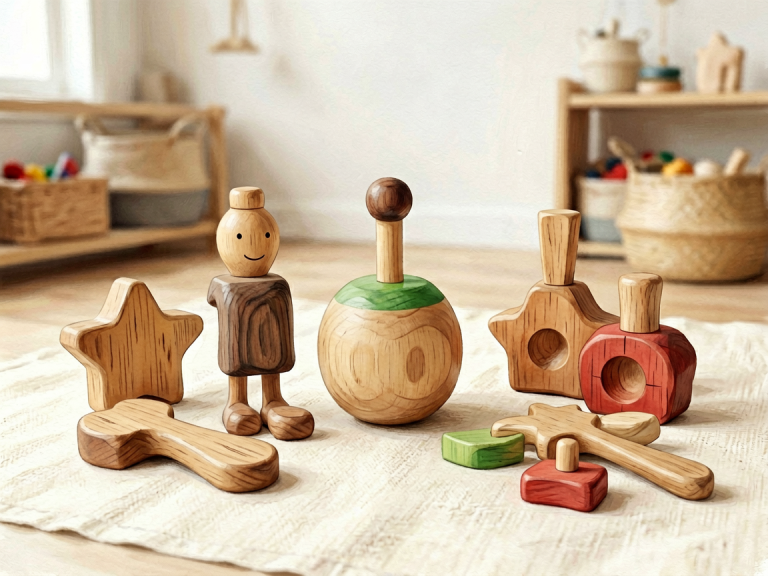
Paradoxically, having too many toys can stifle creativity. An 8-year-old’s imagination flourishes when given open-ended materials: blocks, art supplies, simple dolls, or a cardboard box. These items require the child to invent uses, construct narratives, and impose structure. But when a toy comes with a specific script—a video-game character that only shoots lasers, a playset with predetermined scenes—the child’s role shifts from creator to consumer.
A closet full of branded, licensed toys restricts imaginative play. Instead of transforming a wooden block into a castle, the child is handed a pre-made plastic fortress. Instead of inventing a new game with a handful of marbles, the child reaches for an electronic toy that dictates the rules. Over time, the child loses the muscle of imagination. For an 8-year-old, whose brain is at a peak of fantasy and storytelling, this loss is particularly damaging. Creative play is not just fun; it is the foundation of problem-solving, empathy, and innovation.
3. Teaching the Wrong Lessons About Value and Gratitude
When toys arrive in a steady stream, children internalize the message that material goods are abundant and replaceable. An 8-year-old who receives a new toy every week rarely learns to cherish anything. The shiny new item quickly becomes “old news,” and the cycle of wanting escalates. This creates a dangerous precursor to materialism in adolescence and adulthood.
Moreover, the sheer volume of toys makes it difficult for a child to truly appreciate any single one. A special doll gifted by a grandparent loses its meaning when it is tossed into a bin with twenty other dolls. The act of giving itself becomes devalued. Parents often assume that more gifts equal more love, but for an 8-year-old, the opposite can be true: a few thoughtful, high-quality toys are more likely to be treasured, cared for, and remembered. The lesson of gratitude is best learned in scarcity, not surplus.
—
Why Parents Keep Buying: The Psychology Behind the Habit
1. Guilt, Love, and Social Pressure
Many parents over-purchase toys as a proxy for love or time. A parent who works long hours may buy a new toy to ease the guilt of absence. Others fall into the trap of comparing their child’s toy collection to that of friends or classmates. The “keeping up with the Joneses” mentality extends to the playroom: if Liam has the latest gaming console, surely my child must have it too. This social pressure is amplified by targeted advertising and peer influence, even at age eight.
Furthermore, parents often project their own childhood desires onto their children. A father who wanted a certain model train when he was young may buy every available version for his son, without realizing that his son’s interests may be entirely different. The result is a collection that serves the parent’s nostalgia, not the child’s developmental needs.
2. Misunderstanding the Role of Toys in Development
There is a widespread belief that more toys equal more learning. Educational toy companies capitalize on this, marketing products as “brain-boosting” or “essential for STEM.” While high-quality educational toys certainly have value, an excess of them leads to the same problem: fragmented attention and shallow learning. An 8-year-old does not need a dozen science kits; they need time and space to explore one deeply.
Parents also underestimate the power of boredom. In the age of constant entertainment, we rush to fill every quiet moment with a toy, a screen, or an activity. But boredom is the mother of invention. When a child has fewer toys, they are forced to look inward, to daydream, to rearrange furniture, to draw, or to engage in unstructured outdoor play. These moments are far more valuable than any store-bought toy.
—
Practical Steps Toward a Healthier Toy Environment
1. Adopt the “One In, One Out” Rule
A simple but effective strategy is to limit the total number of toys. When a new toy enters the home, an old one must leave—either donated, sold, or recycled. This teaches the child that possessions have a lifecycle and that letting go is part of owning things. It also ensures that the toy collection remains manageable and that each item gets used.
2. Curate, Don’t Accumulate
Instead of buying toys impulsively, parents should curate a small selection based on the child’s genuine interests and developmental stage. For an 8-year-old, this might include: a few construction sets (e.g., Lego, magnetic tiles), art supplies, a board game that encourages family interaction, books, and outdoor gear (a bike, a ball). Avoid duplicates and overly specific playsets that have a narrow use. Rotate toys every few weeks to renew interest without adding new purchases.
3. Reframe Gifts and Celebrations
Talk to grandparents and friends about the family’s philosophy. Suggest experience-based gifts instead of toys: a trip to a museum, a cooking class, a subscription to a magazine, or a donation to a cause the child cares about. For birthdays, consider a “no toy” party where guests bring books, art supplies, or contributions to a charity. This shifts the focus from accumulation to connection.
4. Teach Conscious Consumption
Engage the 8-year-old in conversations about where toys come from, how they are made, and where they go when discarded. Involve them in sorting and donating toys they no longer use. This builds empathy and environmental awareness. When a child helps pack a box of toys for a local shelter, they learn that their actions can bring joy to others—a far more valuable lesson than any toy can teach.
—
Conclusion: Less Is Truly More
The goal of parenting is not to fill a child’s room with possessions, but to fill their mind with curiosity, their heart with gratitude, and their days with meaningful experiences. For an 8-year-old, the right number of toys is not “as many as possible,” but “enough to inspire without overwhelming.” By stepping back from the cycle of endless buying, parents can give their children a gift far greater than any plastic figure: the gift of focused play, genuine creativity, and the ability to find joy in simplicity.
Let the toy box be small, but let the world outside it be vast. That is the true prescription for a happy, well-adjusted 8-year-old.
*(Word count: approximately 1,150 words)*