The Art of Choosing Toys for Baby Language Development: A Parent’s Guide
From the moment a baby enters the world, every coo, gurgle, and babble is a step toward mastering the most complex human skill: language. As parents, we instinctively want to nurture this journey, and one of the most powerful tools at our disposal is the humble toy. But with shelves overflowing with blinking, beeping, and singing gadgets, how do we separate genuine language‑boosting tools from mere distractions? This article explores the science and art of selecting toys that actively support a baby’s language development, offering evidence‑based guidance for every stage of the first two years.
The Foundational Link Between Play and Language
Language is not learned in isolation; it emerges through social interaction, sensory exploration, and repeated opportunities to hear and produce sounds. Play is the natural laboratory where babies experiment with cause and effect, turn‑taking, and symbolic thinking—all precursors to spoken language. A well‑chosen toy does not “teach” words; it creates a context in which meaningful communication happens. For example, a simple wooden rattle invites an adult to shake it, pause, and say “shake shake,” prompting the baby to mimic or respond. This back‑and‑forth, known as serve‑and‑return interaction, is the neural bedrock of language acquisition. Therefore, the best toys are those that foster engagement between caregiver and child, rather than those that entertain the baby in isolation.
Age‑Appropriate Toy Selection: A Stage‑by‑Stage Blueprint
0–6 Months: Sensory Exploration and Sound Recognition
During the first half‑year, babies are absorbing the rhythms and phonemes of their native language. Their vision is blurry, but their hearing is acute. Toys at this stage should stimulate the senses and encourage vocalization. Look for:
- High‑contrast soft books and black‑and‑white cards – These help focus vision, but you can also narrate the images: “Look, a big black circle! Boing‑boing!” The adult’s voice becomes the primary language lesson.
- Soft rattles with varied textures – Shake a rattle, then pause. When the baby coos or reaches, shake it again. This teaches the concept of cause and effect and vocal turn‑taking.
- Unbreakable mirrors – Place a baby‑safe mirror where the infant can see their own face. Point to their reflection and say “Baby!” This early self‑recognition, combined with your labeling, builds the foundation of vocabulary.
Avoid electronic toys that produce sounds automatically; they remove the need for human interaction, which is critical at this age.
6–12 Months: Babbling, Imitation, and Object Permanence
As babies begin to sit up, crawl, and babble consonants like “ba‑ba” and “da‑da,” they are ready for toys that reward imitation and introduce simple word‑object associations.
- Stacking rings or nesting cups – As you stack a ring, say “up, up, up!” When it falls, say “boom!” The repetitive language accompanying a visible action strengthens the connection between words and events.
- Simple push‑and‑pull toys – A wooden car or a pull‑along animal encourages the baby to move, and you can narrate: “The doggy goes woof‑woof! Follow the doggy!” The motor activity engages multiple brain regions, reinforcing the language input.
- Board books with one object per page – Choose books with real photographs (e.g., a ball, a cat, a shoe). Point and say the word clearly, then pause for the baby to attempt a sound. Repetition across days builds recognition.
- Sound‑making toys that require activation – A drum that only sounds when the baby hits it, or a bell inside a rattle, encourages the baby to produce sound and then look to you for a reaction. Your delighted “Wow, you made a noise!” provides immediate linguistic feedback.
Avoid toys with too many buttons or multiple flashing lights—they overwhelm the baby’s attention and reduce the opportunity for focused human interaction.
12–24 Months: First Words, Two‑Word Phrases, and Pretend Play
Toddlers are now combining gestures, single words, and limited sentences. Toys should support vocabulary expansion, storytelling, and social scripts.
- Realistic animal figurines and playsets – A set of farm animals, for example, lets you model “The cow says moo. Where is the cow? Put the cow in the barn.” As the child plays, you can follow their lead and expand: “You put the cow in the barn. The cow is sleepy. Goodnight, cow!” This technique, called “expansion,” is proven to accelerate grammar.
- Simple puzzles with large knobs – As the child fits a piece into the puzzle, name the shape or animal: “That’s the circle. Round and round. You did it!” The physical act of matching strengthens the cognitive link between the word and the object.
- Play telephones (non‑electronic) – A toy phone encourages “conversations.” Hold it to your ear and say “Hello? Who is it? Is it Grandma?” Then hand it to the child. This role‑playing develops turn‑taking and narrative skills.
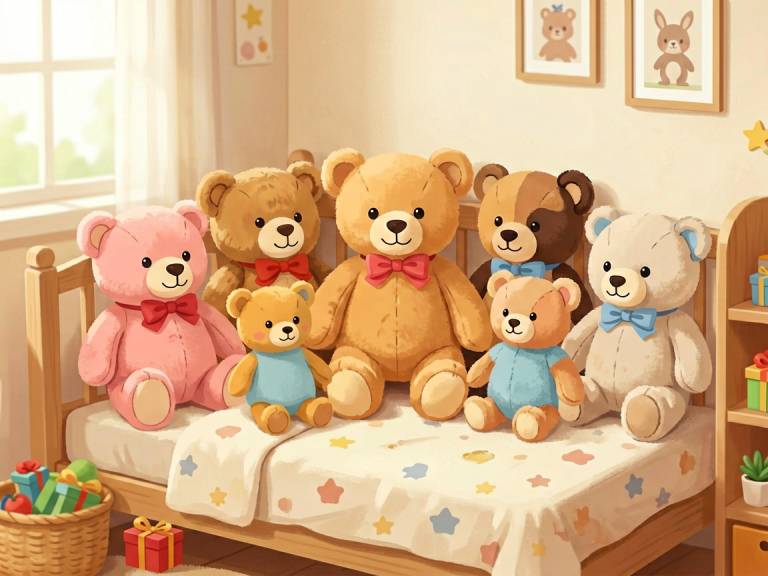
- Dolls or stuffed animals with removable clothing – Dressing and undressing a doll allows you to talk about body parts, colors, and actions: “Let’s put the blue shirt on the bear. Arm through, then the other arm. Now button up!” These everyday routines, recreated with toys, provide rich vocabulary in context.
At this stage, avoid toys that talk for the child (e.g., “Say apple” or “Repeat after me”). They create passive listening, not active communication. Instead, opt for open‑ended materials like blocks, play dough, or sand—tools that require the child to initiate and you to respond.
Key Features to Look for in Language‑Boosting Toys
Beyond age guidelines, specific toy attributes consistently support language development:
1. Interactivity That Demands Human Partnership
The toy should be a catalyst for interaction, not a replacement for it. When a toy plays a song by itself, the adult’s role shrinks. When a toy requires a shake, a push, or a word to activate—and the adult responds—the linguistic loop remains intact. A classic example is a “talking” toy that only works when a child presses a button and then an adult says, “You pressed the red button! Good job!” Even simple toys like a ball rolled back and forth elicit “Ready, set, go!” and “Catch!”
2. Open‑Endedness and Multiple Uses
Toys that can be used in many ways (blocks, scarves, empty cardboard boxes) invite creative language. A single block can become a “car,” a “house,” or a “cookie.” Each transformation demands new vocabulary and storytelling. In contrast, a toy that only does one thing (e.g., a plastic car that only rolls forward) limits the language opportunities.
3. Clear Sensory Feedback Without Overstimulation
A toy that produces one or two distinct sounds (a clack, a ring, a squeak) helps a baby associate cause and effect with specific words. Overly loud, multi‑toned electronic toys can desensitize a baby to human speech. The best feedback is natural—wooden blocks clunking, cloth rustling, bells jingling softly.
4. Cultural and Personal Relevance
Toys should reflect the baby’s daily life. If the child often sees a dog at home, a stuffed dog is more meaningful than a stuffed giraffe. Labeling familiar objects (“That’s Spot! Spot the dog!”) creates a personalized vocabulary that sticks. Similarly, toys representing family roles (a doll with a hat like Daddy’s) encourage storytelling about real experiences.
Practical Tips for Parents and Caregivers
Choosing the right toy is only half the equation. How you play with it determines its language‑boosting power:
- Get down on the floor – Sit at the baby’s eye level so they can see your face, lips, and expressions. This visual support is crucial for learning speech sounds.
- Follow the baby’s lead – If the baby picks up the red car and rolls it, join that play instead of redirecting to the blue truck. Narrate what the baby is doing: “You are rolling the red car. Vroom vroom! Where is it going?”
- Use “parentese” – The high‑pitched, exaggerated speech style that naturally slows down and repeats words has been shown to boost language learning. Say “You found the ball! Ba‑a‑a‑ll!” with clear, stretched vowels.
- Limit screen‑based toys – The American Academy of Pediatrics recommends no screen time for children under 18 months (except video chatting). Even “educational” apps on tablets fail to provide the real‑time, contingent feedback that living in‑person interaction offers.
- Rotate toys, don’t flood – Keep only a few toys available at a time. Too many choices can overwhelm a baby and reduce focused adult‑child interaction. Rotating every week keeps novelty alive without sensory overload.
- Narrate everything, but keep it simple – You don’t need to give a lecture. Short, repetitive phrases like “Big block. Little block. Stack up! Uh‑oh, fall down!” are perfect. The repetition helps the brain build neural pathways for those sounds and meanings.
Common Pitfalls to Avoid
Even well‑intentioned parents can fall into traps. Here are a few to watch out for:
- Over‑reliance on “educational” marketing – A toy labeled “language development” is often just a speaker that says 20 words. True language development comes from human interaction, not from the toy’s built‑in vocabulary.
- Passive electronic toys – Any toy that keeps the baby entertained without requiring a human partner can actually delay language milestones. Research shows that babies who spend more time with electronic toys hear fewer adult words and produce fewer vocalizations.
- Toys that are too advanced – A board book with complex sentences for a 9‑month‑old is frustrating, not educational. The toy should be just above the baby’s current ability—something they can almost do with your help.
- Ignoring the child’s interests – If the baby is fascinated by the kitchen spatula, let them play with it (under supervision). The most powerful learning happens when a child is intrinsically motivated. A “perfect” toy ignored is worthless; a spatula that sparks delight is golden.
Conclusion: Less Is More, Presence Is Everything
Choosing toys for language development is not about buying the most expensive or high‑tech gadgets. It is about selecting simple, open‑ended, human‑centered tools that invite conversation. A cardboard box can become a rocket ship, a cave, or a house, each time generating new words and narratives. A set of plastic cups can teach “in,” “out,” “full,” “empty,” “stack,” and “fall.” The true magic lies not in the toy itself, but in the loving adult who kneels down, makes eye contact, and says, “Look what you did! Tell me about it.”
As you walk through the toy store, remember this: the best toy for your baby’s language development is the one that makes you sit down and play together. When you choose wisely, every rattle, block, and book becomes a stepping stone toward a lifetime of confident communication. So embrace the mess, cherish the babble, and know that each moment of shared play is building the vocabulary of love.