The Toy Overload: Why Buying Too Many Toys Is a Mistake Parents Often Make
Introduction
Walk into any modern family home, and you are likely to find a cascade of colorful plastic, plush animals, building blocks, action figures, and battery-powered gadgets spilling from bins, overflowing shelves, and littering every corner of the living room. In the name of love, joy, and childhood enrichment, parents have turned their children’s bedrooms into miniature toy stores. The intention is pure: we want our children to be happy, stimulated, and never bored. Yet a growing body of developmental psychology, neuroscience, and family dynamics research reveals a counterintuitive truth: buying too many toys is one of the most common and damaging mistakes parents make. Far from boosting a child’s creativity, focus, or gratitude, an overabundance of playthings can actually impede healthy development, increase stress, and diminish the very joy we hope to provide. This article explores why parents fall into this trap, the hidden costs of toy clutter, and how a shift toward mindful, minimalistic play can transform childhood for the better.
—
The Allure of Abundance: Why Parents Overbuy Toys
The first step to understanding the mistake is to examine the powerful forces that drive parents to accumulate toys. It is rarely a simple case of indulging a child’s whim. Instead, a complex interplay of emotional, social, and commercial pressures conspires to fill our shopping carts.
Parental Emotions and Guilt. Many parents work long hours and feel a nagging sense of guilt about the time they cannot spend with their children. A new toy becomes a tangible substitute for presence—a way to say “I love you” or “I’m sorry I missed your school play.” Buying a toy provides an immediate dopamine hit for the parent, a fleeting sense of being a good provider. Additionally, parents often project their own childhood wishes onto their children, buying the elaborate dollhouse or remote-control car they themselves always wanted but never had. This emotional substitution mistakes material objects for genuine connection.
Social Comparison and Peer Pressure. In the age of social media, parenting has become a competitive exhibition. Birthday parties, playdates, and Instagram feeds showcase the latest must-have items—from the Montessori climbing frame to the complete set of magnetic tiles. Parents fear that if their child does not possess the trendy toy of the moment, they will be left out or disadvantaged. This fear of missing out (FOMO) is amplified by advertising algorithms that target parents with precision, showing them exactly what their child’s “friends” are playing with. The result is a relentless acquisition cycle that equates love with accumulation.
Misguided Beliefs about Learning. Another driver is the well-meaning but flawed idea that more toys equal more learning. Parents are bombarded with marketing that claims each toy develops a specific skill: this rattle improves fine motor skills, that puzzle enhances spatial reasoning, this tablet teaches Mandarin. The implicit message is that a child without a vast arsenal of educational toys will fall behind. In reality, a few open-ended, high-quality toys offer far more cognitive benefit than a sea of single-purpose gadgets. But the marketing has done its job, convincing parents that deprivation is dangerous and abundance is beneficial.
—
The Hidden Costs of Toy Overload
When a child is surrounded by dozens or even hundreds of toys, the consequences are not merely about a messy room. The costs are developmental, emotional, and financial.
Overstimulation and Attention Fragmentation. Children’s brains are wired to explore, but they are also easily overwhelmed. A room overflowing with toys presents an environment of constant sensory noise. Neuroscientific research shows that when children have too many choices, their attention scatters. They flit from one toy to the next, never truly engaging with any of them for more than a few seconds. This shallow play pattern undermines the development of sustained focus—a skill critical for later academic success and self-regulation. Instead of deep, immersive play, the child experiences a kind of “museum fatigue,” wandering aimlessly among stimuli that fail to capture genuine interest.
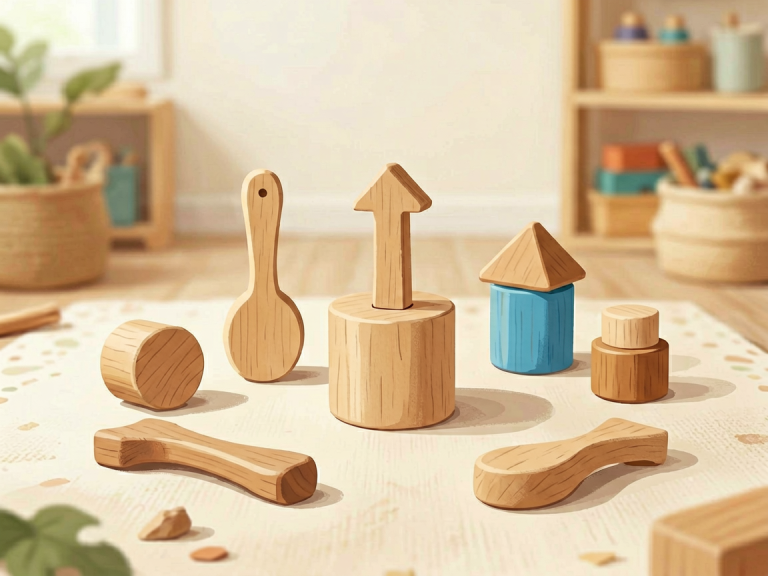
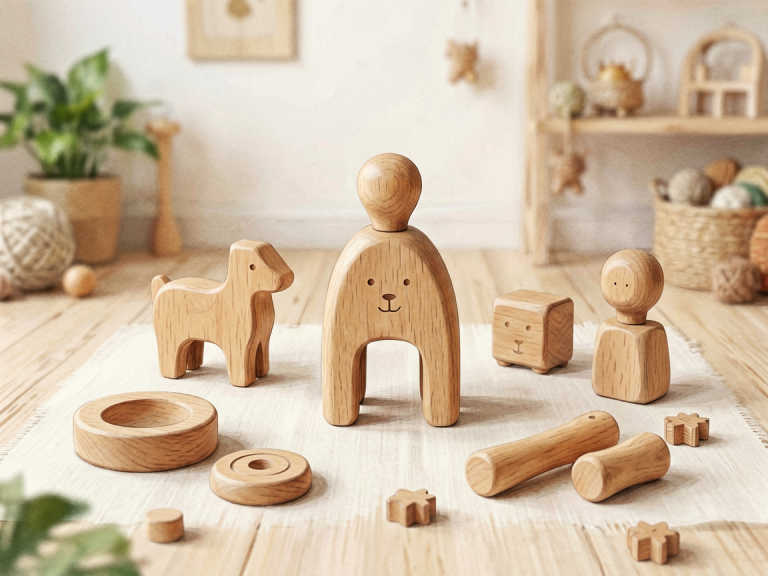
Reduced Creativity and Imagination. Paradoxically, abundance stifles creativity. When a child has only a few simple toys—a set of wooden blocks, a blanket, a few dolls—they are forced to invent uses, create narratives, and imagine new worlds. A cardboard box becomes a spaceship; a stick becomes a magic wand. But when every possible scenario is already represented by a toy (a plastic fire truck that makes realistic sounds, a talking robot that repeats pre-programmed phrases), the child’s imaginative muscles atrophy. They become passive consumers of pre-designed play rather than active creators. A study by the University of Toledo found that toddlers with fewer toys engaged in longer, more creative play sessions than those with many toys.
Overwhelm and Lack of Gratitude. An excessive number of toys also teaches children a dangerous lesson: possessions are disposable. When a new toy arrives with dismaying regularity, the old ones lose their value quickly. Children become accustomed to novelty, and their gratitude erodes. They are less likely to care for their belongings, more likely to complain about boredom, and paradoxically, they may feel less happy. Research on the psychology of abundance shows that humans adapt rapidly to material wealth; the initial joy of a new toy fades within days, leaving the child hungry for the next purchase. This cycle breeds a sense of entitlement and dissatisfaction that can persist into adulthood.
Financial Strain and Domestic Stress. On the parental side, the cost of toy accumulation is significant. The average American family spends over $500 per child on toys each year. Beyond the direct expense, there is the hidden price of storage—bins, shelves, organizers—and the time spent cleaning, sorting, and decluttering. The clutter itself becomes a source of stress for the entire household. Parents who are already exhausted find themselves arguing with children about tidying up, nagging about broken pieces, and feeling guilty about the waste. The home, which should be a sanctuary, becomes a chaotic warehouse.
—
The Paradox of Choice: How Too Many Toys Hinder Child Development
The phenomenon of “choice overload” is well-documented in adult consumer behavior, but it applies even more powerfully to children. Psychologist Barry Schwartz famously described how an abundance of options leads to anxiety, dissatisfaction, and paralysis. For children, the effect is magnified because their executive functions—decision-making, impulse control, and goal-setting—are still developing.
Decision Fatigue and Frustration. Imagine a child standing before a mountain of toys. They want to play, but where to start? The sheer number of possibilities creates a cognitive burden. Many children respond by becoming indecisive, whining, or simply dumping all the toys onto the floor in a vain attempt to find something that captures their attention. This can lead to tantrums and frustration, which parents often misinterpret as boredom that a new toy will cure. In fact, the cure is less, not more.
Undermining Mastery and Deep Play. True developmental benefits come from repetition and mastery. A child learning to build a stable tower with blocks practices trial and error, develops resilience, and experiences the satisfaction of achievement. But when dozens of different toys compete for attention, the child is constantly switching contexts. They never stay with a single activity long enough to enter a state of “flow”—the optimal experience of deep engagement. The result is a superficial level of play that does not build concentration, problem-solving, or emotional regulation.
Impact on Social Skills. Toy abundance can also affect peer interactions. When a child has everything, they have little incentive to negotiate, share, or collaborate. At playdates, children with too many toys often guard their possessions possessively or become overwhelmed by the presence of others. In contrast, children who are accustomed to fewer toys learn to create joint narratives, share resources, and take turns—essential social skills that foster empathy and cooperation.
—
Fostering Mindfulness and Quality over Quantity: A Parent’s Path Forward
Acknowledging the mistake is only the first step. How can parents break the cycle and create a play environment that truly serves their child’s development? The answer lies in a mindful, intentional approach to toys.
Implement a Rotation System. One of the most effective strategies is to reduce the number of toys available at any given time. Store the majority out of sight and rotate them every few weeks. This restores novelty without adding new purchases. Children rediscover old toys with fresh enthusiasm, and the reduced clutter allows for deeper, more focused play. A simple rule of thumb: no more than a dozen or so well-chosen toys should be accessible at once.
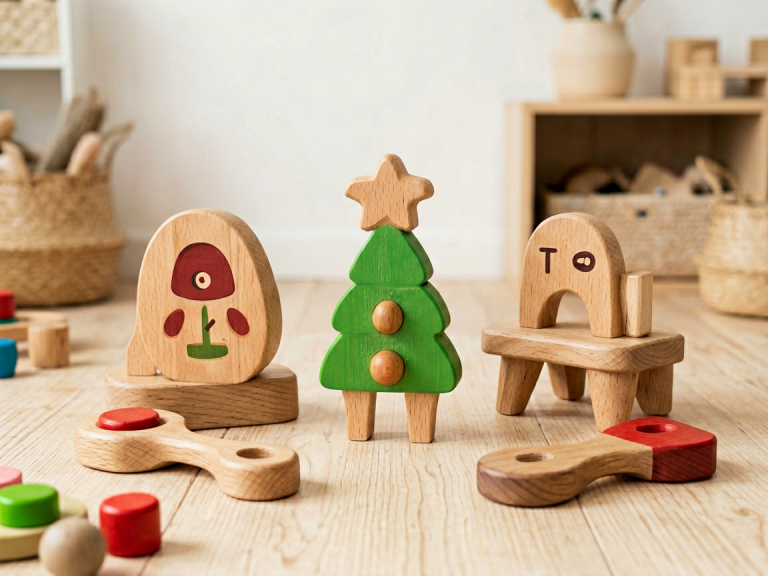
Choose Open-Ended, High-Quality Toys. Avoid single-purpose, electronic, or highly themed toys that dictate how the child should play. Instead, invest in open-ended materials that encourage creativity: wooden blocks, art supplies, play silks, dolls, simple vehicles, and basic construction sets. These toys grow with the child and can be used in endless variations. The quality of the toy matters far more than the quantity.
Prioritize Experiences over Objects. Research consistently shows that experiences—trips to the park, museum visits, nature walks, baking together, and storytelling—bring more lasting happiness than material possessions. Parents can shift their gift-giving mindset from “buying things” to “creating memories.” For birthdays and holidays, consider giving an experience voucher or a subscription to a hands-on class rather than another plastic toy.
Model Gratitude and Decluttering. Children learn by watching their parents. If parents regularly declutter, donate unused toys, and express gratitude for what they have, children will internalize these values. Involve the child in the process of giving away gently used toys to a local charity, explaining that other children will be thrilled to have them. This teaches empathy and detaches the child’s sense of worth from ownership.
Set Boundaries and Resist Marketing. Parents must consciously resist the pressure from advertisements, peers, and their own impulses. Establish family rules around toy purchases: no impulse buys in the checkout line; a waiting period of at least a week before buying a requested toy; and a limit on the number of gifts from each holiday. By setting clear boundaries, parents regain control and send a powerful message that love is not measured in possessions.
—
Conclusion
The mistake of buying too many toys is not born from neglect or malice; it is a well-intentioned error fueled by love, commercial manipulation, and social anxiety. Yet its consequences are real: overstimulation, diminished creativity, financial waste, and a generation of children who struggle to focus, appreciate, and imagine. The solution is not to deprive children of play—quite the opposite. It is to restore the richness of play by removing the noise. By choosing fewer, better toys, rotating them thoughtfully, and prioritizing experiences over objects, parents can give their children the greatest gift of all: the freedom to dive deep into the world of imagination, to savor each item, and to discover that the most valuable playthings are often the simplest. In a culture that screams “more,” choosing “less” is a radical act of love—one that cultivates joy, resilience, and genuine happiness in childhood and beyond.