The Hidden Perils of Play: 6 Critical Toy Safety Mistakes Every Parent Must Avoid
Toys are the building blocks of childhood—they stimulate creativity, develop motor skills, and foster social bonds. Yet behind the colorful packaging and cheerful advertisements lurk hazards that can turn a moment of laughter into a trip to the emergency room. According to the U.S. Consumer Product Safety Commission, over 200,000 toy-related injuries are treated in emergency departments each year, and a significant portion of these incidents are entirely preventable. The problem is not that dangerous toys flood the market—though some do—but that well-intentioned parents and caregivers repeatedly make the same safety mistakes. This article shines a light on six of the most common toy safety errors, offering practical guidance to ensure that the joy of play never comes at the cost of a child’s well-being.
Mistake #1: Ignoring Age Recommendations on the Packaging
One of the most pervasive mistakes is treating age labels as mere suggestions rather than safety guidelines. A toy labeled “for ages 3+” is not a marketing gimmick; it reflects critical developmental and safety thresholds. For instance, toys containing small parts are dangerous for children under three because they pose a choking hazard. Many parents buy advanced construction sets or science kits for a precocious two-year-old, assuming their child is “smart enough” to handle them. But intelligence does not protect against the irresistible urge to put a tiny wheel or battery into the mouth. Choking remains the leading cause of toy-related fatalities among infants and toddlers. Always check the age recommendation—and be honest about your child’s tendencies. A child who still mouths objects belongs strictly in the “no small parts” zone, regardless of how bright they seem.
Mistake #2: Overlooking the Danger of Small Magnets and Button Batteries
Modern toys increasingly incorporate powerful rare-earth magnets and small coin-style batteries. While these components enable interactive features, they also pose life-threatening risks if swallowed. Two or more magnets can attract each other across intestinal walls, causing perforations, sepsis, or even death. Button batteries, meanwhile, can generate a current that burns through tissue in just two hours, leading to severe internal injuries. Parents often assume toys with secure battery compartments are safe, but they forget to check that the screw or latch is actually tightened. Worse, they may replace dead batteries with household spares that lack child-resistant packaging. Every home should treat these items as toxic hazards—store spare batteries out of reach, and immediately dispose of any toy whose battery compartment is damaged or loose. If a child swallows a magnet or battery, do not wait for symptoms; go to an emergency room immediately.
Mistake #3: Neglecting to Inspect Toys Regularly for Wear and Tear
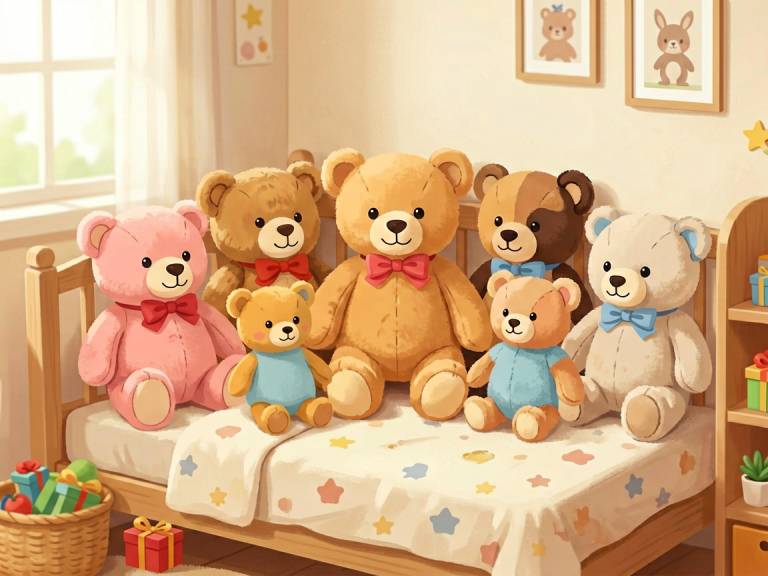
Children play hard, and toys endure relentless pulling, dropping, chewing, and stepping on. But most parents only inspect a toy when it breaks visibly. The real danger lies in damage that is not immediately obvious—cracks in plastic that create sharp edges, frayed cords that can strangle, or loose seams that release stuffing. A stuffed bear can become a suffocation hazard if its internal fiberfill escapes and a toddler inhales it. A riding toy with a cracked wheel can suddenly tip over. Make it a habit to examine all toys at least once a month. Run your fingers along seams, tug on small attached parts like eyes or buttons, check that wheels spin freely without wobbling, and ensure that electronic toys’ wires are not exposed. If a toy shows signs of deterioration, repair it immediately or throw it away. “It was their favorite” is not a valid reason to keep a dangerous object in the playroom.
Mistake #4: Choosing Toys with Toxic Materials or Strong Chemical Odors
In recent years, independent testing has repeatedly found lead, phthalates, BPA, and other hazardous chemicals in cheap toys imported from unregulated markets. These substances can leach from plastic into a child’s mouth during teething or sweat, accumulating over time and causing developmental delays, hormonal disruption, or even organ damage. Many parents mistakenly believe that if a toy smells like a new car or plastic, it must be “normal.” It is not. A strong chemical odor is a red flag that indicates volatile organic compounds—the very compounds regulations are designed to limit. Always buy toys from reputable brands or retailers that comply with safety standards such as ASTM F963 (USA) or EN 71 (Europe). For wooden toys, ensure they are painted with non-toxic, water-based paints. For plastic toys, look for labels such as “BPA-free” and “phthalate-free.” When in doubt, sniff the toy. If it smells like a hardware store, put it back on the shelf.
Mistake #5: Allowing Outdoor or Riding Toys on Unsafe Surfaces
Outdoor play is essential, but the environment matters as much as the toy itself. Many parents purchase trampolines, scooters, or bicycles but set them up on concrete, asphalt, or uneven grass. A fall from even a low platform can result in a fractured skull, broken arm, or spinal injury. Helmets are mandatory for bikes, skateboards, and scooters—yet countless children ride without one because “it’s just a short ride.” Another overlooked hazard is the trampoline. The American Academy of Pediatrics strongly discourages home trampolines, but if you have one, never allow more than one child on it at a time. Nets and padding reduce some risks but do not eliminate them. Always place riding toys on soft, level surfaces such as grass or a rubberized play mat. Teach children the rules of the road, even in the driveway—cars backing out cause devastating injuries. Supervision is non-negotiable.
Mistake #6: Failing to Supervise “Safe” Toys in Social Settings
Even the safest toy can become dangerous when children play together without adult oversight. A classic example is a ball pit. While soft plastic balls seem harmless, toddlers can climb into the pit, fall asleep, and suffocate if they become trapped beneath the balls. Or consider a toy kitchen set—small plastic foods look cute, but bits can chip off and be swallowed. A group of children sharing a large dollhouse may accidentally pry off a miniature doorknob and put it in an infant’s mouth. Parents often relax supervision when the toys are age-appropriate and the children are occupied. But accidents happen in seconds. Stay within arm’s reach of children under three in any toy environment, and periodically scan the scene: Are any pieces missing? Is a child chewing on a broken part? Are older siblings handing small parts to a younger one? Vigilance is not paranoia—it is the single most effective prevention measure.
Conclusion: Play Safe, Play Smart, Play Together
Avoiding these six mistakes does not require expensive equipment or constant fear. It requires awareness, routine checks, and honest conversations with other caregivers. Toy safety is not about wrapping children in bubble wrap—it is about giving them the freedom to explore, imagine, and fall down without serious harm. By selecting age-appropriate toys, inspecting them regularly, rejecting toxic materials, enforcing proper surfaces, and staying engaged during play, parents can dramatically reduce the risk of injury. The goal is not to eliminate every playground scrape—those are part of growing up—but to prevent the catastrophic events that break bones, poison systems, or end lives. So next time you unwrap a new toy, pause for a moment. Read the label. Feel the edges. Smell the plastic. Watch your child with open eyes. The best gift you can give your child is not the latest gadget, but the safe, watchful presence that allows them to play without fear.