Are Open-Ended Toys Worth It? Unlocking the Hidden Value of Unstructured Play
In an era where flashy electronic gadgets and pre-programmed learning devices dominate toy aisles, a quieter movement has been gaining momentum among parents, educators, and child development experts. Open-ended toys—simple, versatile objects like wooden blocks, magnetic tiles, fabric scraps, and loose parts—are being hailed as the antidote to overstimulation and passive entertainment. But with their minimalistic appearance and often higher price tags, a pressing question lingers: are open-ended toys truly worth the investment? This article delves into the multifaceted world of open-ended play, examining the psychological, educational, and practical arguments to help you decide whether these humble playthings deserve a place in your child’s life.
What Exactly Are Open-Ended Toys?
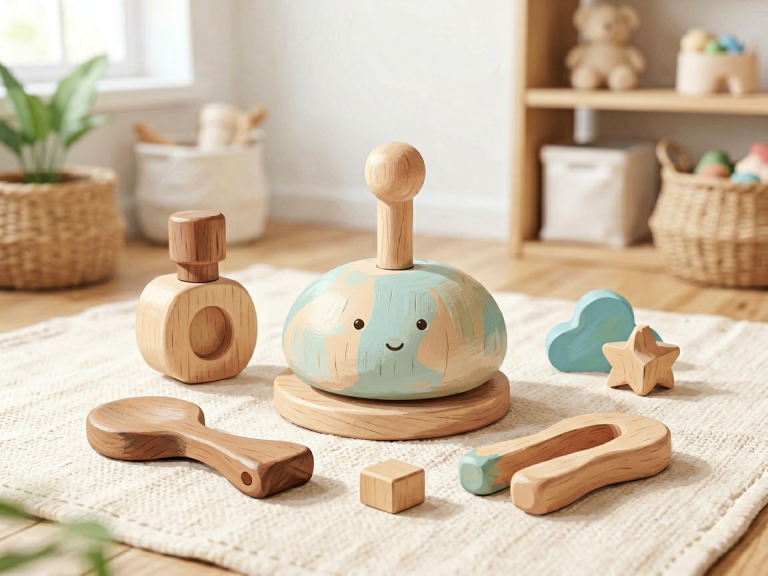
Before weighing their worth, we must first define what open-ended toys are—and more importantly, what they are not. Open-ended toys are play materials that lack a fixed purpose, predetermined outcome, or single correct way to use them. A set of wooden blocks can become a castle, a spaceship, a bridge, or a simple tower; a pile of silk scarves can transform into a river, a magical cape, or a hiding spot. In contrast, closed-ended toys—like a battery-operated robot that only walks forward and recites the alphabet, or a puzzle with one correct solution—direct children toward a specific goal.
The beauty of open-ended toys lies in their ambiguity. They invite children to impose their own narratives, experiment with cause and effect, and rewrite the rules of play on the fly. This lack of prescription is not a design flaw but a deliberate feature that mirrors the unpredictable nature of real-world problem-solving. From simple wooden rings and stacking cups to sophisticated magnetic construction sets, the spectrum of open-ended toys is vast, yet they all share one core principle: the child is the director, not the follower.
The Cognitive and Creative Advantages of Unstructured Play
Proponents of open-ended toys often cite profound benefits in cognitive development and creative thinking. When a child engages with a closed-ended toy, the challenge is finite—once the puzzle is solved or the button is pressed, the play cycle ends. Open-ended toys, however, present infinite possibilities, requiring the child to engage in what psychologists call divergent thinking: the ability to generate multiple solutions to a single problem. For instance, a child given a set of building planks must decide whether to build a stable tower, a long bridge, or a symmetrical pattern. Each attempt involves hypothesis testing, spatial reasoning, and failure tolerance—skills that are foundational to mathematics, engineering, and creative arts.
Moreover, open-ended play nurtures executive function, the brain’s mental command center responsible for self-regulation, working memory, and cognitive flexibility. When children play with loose parts, they must plan a sequence of actions, inhibit impulsive moves, and adapt when their structure collapses. This self-directed trial and error builds resilience and a growth mindset, as children learn that mistakes are stepping stones rather than dead ends. A child who knocks down a block tower learns to rebuild it with a stronger base—a lesson far more profound than any pre-programmed praise from a talking toy.
Language development also flourishes in open-ended play. Unlike toys that narrate stories for children, open-ended materials require children to create their own narratives. A simple bowl can become a soup pot, a drum, a hat, or a spaceship’s control panel. As children describe their creations, they expand vocabulary, practice storytelling structure, and engage in symbolic thinking—the ability to use one object to represent another, a critical cognitive milestone.
Social and Emotional Growth Through Collaborative Play
Beyond individual cognition, open-ended toys excel at fostering social dynamics and emotional intelligence. When multiple children engage with the same set of blocks or craft materials, they must negotiate, share, compromise, and collaborate. Unlike competitive board games with fixed rules, open-ended play is inherently cooperative: one child might suggest building a castle while another wants to build a farm. Resolving this conflict requires empathy, perspective-taking, and verbal negotiation—skills that are increasingly rare in our screen-saturated world.
In classrooms and homes where open-ended toys are available, children often develop deeper friendships because the play is not about winning or losing but about shared creation. A large cardboard box can become a spaceship, a boat, or a time machine, and the journey of deciding together builds bonds. Furthermore, these toys accommodate a wide range of developmental levels. A two-year-old might simply stack a few blocks, while a six-year-old can create intricate mechanical systems. This flexibility reduces frustration and promotes inclusive play, as children of different ages and abilities can participate meaningfully.
Emotionally, open-ended toys empower children by giving them control. In a world where adults dictate schedules, rules, and boundaries, the play space becomes a sanctuary where children are the authority. They decide when to abandon a project, how to modify a design, and whether to play alone or with others. This autonomy builds self-confidence and reduces anxiety, as children learn that they can shape their environment rather than passively consume it.
Practical Considerations: Cost, Clutter, and Parental Involvement
No discussion of open-ended toys would be complete without addressing practical drawbacks. Critics point out that high-quality open-ended toys—such as solid wooden blocks, natural wool play silks, or large sets of magnetic tiles—can be expensive. A single set of premium building blocks may cost $50-$100, whereas a plastic TV-learning toy might retail for $20. However, proponents argue that open-ended toys offer a better return on investment because they do not become obsolete. While a toy that sings the alphabet is outgrown once a child knows the letters, a set of blocks remains engaging from toddlerhood through early adolescence, often passing down to siblings.
Another common concern is clutter. Open-ended toys often come in dozens of pieces that scatter across floors and under furniture. Without a systematic storage solution, they can overwhelm a home. Yet many parents find that children actually engage more deeply with fewer, high-quality pieces than with a mountain of plastic. The key is mindful curation: rotating toys in and out of storage, and choosing materials that can be combined in multiple ways.
Parental involvement is another factor. Open-ended toys do not come with instruction manuals or pre-set activities. This can be intimidating for parents who feel they need to “teach” their children. However, experts emphasize that the best role for an adult is that of a quiet observer or a playful collaborator. You don’t need to instruct; you simply need to provide the materials and the time. In fact, too much adult direction can undermine the very autonomy that makes open-ended play valuable. For parents with limited time, this may be a relief: you do not have to spend minutes setting up elaborate activities. Just dump out some blocks and let your child lead.
The Verdict: Are They Worth It?
After weighing the evidence, the answer is a nuanced yes—but with important caveats. Open-ended toys are unquestionably worth the investment for families who prioritize creativity, cognitive flexibility, and social development over immediate entertainment value. They support a style of play that cultivates lifelong skills: problem-solving, resilience, collaboration, and intrinsic motivation. In a world that increasingly demands adaptability, these are not just luxuries but necessities.
However, open-ended toys are not a magic bullet. They require a supportive environment: ample time for unstructured play, a safe space to make messes, and possibly a shift in the adult’s mindset away from constant productivity. For some families, a mix of open-ended and closed-ended toys might be optimal. A child might love completing a puzzle and then using the pieces as loose parts for a new game. The goal is not to purge all button-pressing toys but to ensure that the majority of play experiences invite imagination.
Ultimately, the value of open-ended toys cannot be measured in dollars per play hour. It is measured in the quiet moments when a child stares at a pile of wooden rings and announces, “This is my robot’s shield,” or when two siblings spend an afternoon constructing a cardboard city together. Those are the moments that build not just skyscrapers but character. And that, by any measure, is worth it.