A Parents Guide to Age-Appropriate Play: Nurturing Growth Through Every Stage
Introduction
Play is the language of childhood. It is not merely a way to pass time; it is the primary engine through which children learn, explore emotions, develop social skills, and build cognitive and physical abilities. As a parent, understanding what kind of play suits your child’s developmental stage can transform everyday moments into powerful learning opportunities. Yet, with the endless stream of toys, apps, and advice, it is easy to feel overwhelmed. This guide offers clear, research-backed tips for age-appropriate play, helping you choose activities that challenge without frustrating, engage without overwhelming, and, most importantly, bring joy to your child’s world. From the first coos of infancy to the complex social dramas of adolescence, here is how you can support your child’s growth through the magic of play.
—
1. Infants (0–12 Months): Sensory Exploration and Bonding
During the first year, babies are discovering the world through their senses. Their play is about cause and effect, physical comfort, and building secure attachments. At this stage, the parent is the most important “toy.”
Tips for parents:
- Focus on face-to-face interaction. Hold your baby close, make eye contact, and imitate their sounds and expressions. This “serve and return” play builds neural connections and a sense of safety.
- Provide safe, textured objects. Soft cloth books, rattles, wooden rings, and crinkly fabric encourage grasping, mouthing, and visual tracking. Rotate toys every few days to maintain novelty.
- Introduce tummy time with mirrors. Place a unbreakable mirror in front of your baby during tummy time. They will be fascinated by their own reflection, strengthening neck and shoulder muscles while developing self-awareness.
- Sing and talk during diaper changes and bath time. The rhythm of your voice, combined with gentle touch, creates a multisensory experience that soothes and stimulates language development.
- Let them explore mouth-safe items. For babies under 6 months, the mouth is a primary sensory organ. Offer clean, large, non-choking objects (e.g., a silicone teether) to satisfy that natural urge.
Avoid: Overstimulation from flashing lights or loud electronic toys. Babies need calm, predictable interactions to regulate their nervous system.
—
2. Toddlers (1–3 Years): Movement, Imagination, and Independence
Toddlers are on the move. They are driven by a fierce desire to do things “myself,” and their play reflects a growing need for autonomy. At this stage, play is messy, loud, and wonderfully repetitive.
Tips for parents:
- Create a safe space for gross motor play. Use soft mats, low climbing structures (like a small indoor slide or a sturdy box), and push toys such as a wooden cart. Encourage running, jumping, and balancing—even if it means a few bumps.
- Pretend play begins now. Provide simple props: a toy phone, a doll, a set of plastic bowls and spoons. Let your toddler “feed” you or “talk” to the dog. This symbolic play is the foundation of empathy and problem-solving.
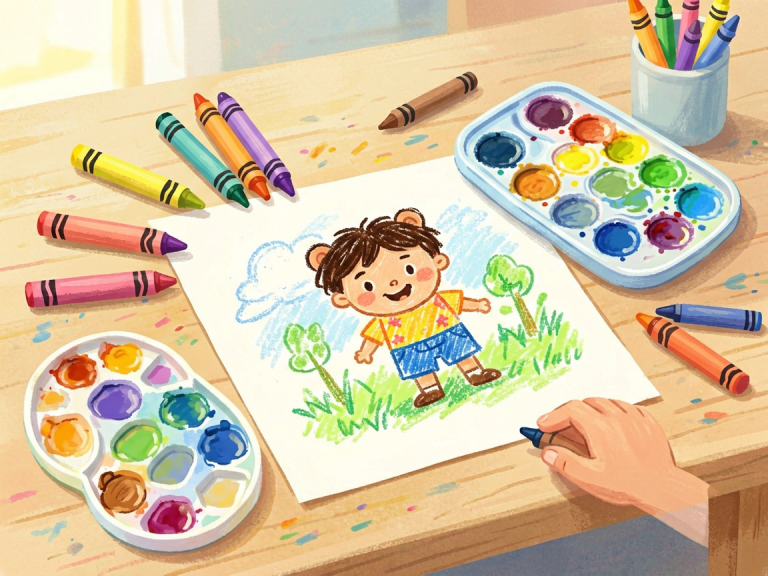
- Embrace process art. Forget perfect crafts. Offer large crayons, washable finger paints, and playdough. The goal is the squishing, smearing, and scribbling—not a finished product. Label the activity (“We are making red dots!”) to build vocabulary.
- Practice simple turn-taking games. Roll a ball back and forth, stack blocks together, or play peek-a-boo with a blanket. These games teach patience and the joy of shared attention.
- Involve them in “real” chores. Let them “help” by wiping a low table, putting socks in a basket, or watering a plant with a tiny cup. Toddlers crave purposeful play that mimics adult activities.
Avoid: Asking too many questions (“What color is that?”) during free play. Instead, narrate what they are doing (“You are pushing the car under the chair!”). This supports language without pressuring performance.
—
3. Preschoolers (3–5 Years): Creative Play and Social Skills
Preschoolers have vivid imaginations and are beginning to understand social rules. Their play often involves elaborate stories, role-play, and early cooperation—though conflicts over toys are still normal.
Tips for parents:
- Encourage dramatic play with open-ended materials. A cardboard box becomes a spaceship, a castle, or a car. Provide dress-up clothes (old hats, scarves, bags) and let the narrative unfold. Join in when invited, but follow their lead.
- Introduce simple board games. Games like Candy Land or Memory require taking turns, following directions, and handling minor disappointment. Start with cooperative games (e.g., “We all work together to feed the monster”) to reduce competition anxiety.
- Offer constructive building toys. Large wooden blocks, Duplo or Mega Bloks, and magnetic tiles allow children to experiment with balance, symmetry, and gravity. Ask open-ended questions: “How can we make the tower taller?”
- Set up a “yes” space. Designate an area where your child can play without hearing “no”—perhaps a corner with a low table, washable markers, and containers for organizing loose parts (pom-poms, bottle caps, pinecones). This fosters independent decision-making.
- Facilitate peer play, but keep it short. Playdates of one hour or less work well. Provide two of the same popular toys to minimize sharing conflicts. Coach your child on simple phrases like “My turn next” or “Can I have that when you’re done?”
Avoid: Over-structuring their play. Preschoolers learn best when they have long, uninterrupted periods of free play—not a schedule of planned activities. Resist the urge to “teach” every moment; let them discover.
—
4. School-Age Children (6–12 Years): Structured Play and Cognitive Challenges
As children enter school, play becomes more rule-based, competitive, and social. They are capable of complex reasoning, teamwork, and long-term projects. This is the age of clubs, sports, and hobbies, but free play remains crucial.
Tips for parents:
- Support organized sports and clubs, but watch for burnout. Let your child choose one or two activities per season. Emphasize effort and fun over winning. After a game, avoid analyzing mistakes; instead, ask “What was the best part?”
- Introduce strategy games. Chess, checkers, Settlers of Catan (junior version), and card games like Uno sharpen logical thinking and patience. Play as a family to model good sportsmanship.
- Promote hands-on STEM play. Build a simple circuit, create a volcano with baking soda and vinegar, or use a magnifying glass to examine leaves. Kits for coding robots or building marble runs are excellent for this age.
- Encourage reading-based play. Start a family book club where everyone reads the same short chapter book and then acts out scenes or draws maps of the story world. This deepens comprehension and imagination.
- Allow for unstructured outdoor time. School-age children need the freedom to climb trees, build forts, and invent games with neighborhood friends. This type of play develops risk assessment, negotiation, and physical courage.
Avoid: Comparing your child’s abilities with peers, especially in competitive settings. School-age children are acutely aware of comparisons; focus on their personal growth. Also, limit screen-based play to ensure a balance of physical and offline activities.
—
5. Teens (13+): Balancing Independence and Connection
Teenage play looks different—it often involves digital worlds, deep conversations, and athletic or artistic pursuits. Yet the need for safe, joyful, unstructured play remains. Adolescents use play to explore identity, test boundaries, and relieve stress.
Tips for parents:
- Respect their digital play. Online gaming, social media, and creative apps (like digital drawing or music production) are powerful forms of social connection and self-expression. Set reasonable time limits, but show interest in their digital worlds. Ask, “What’s your favorite game right now? Can you teach me?”
- Encourage physical activity that isn’t competitive. Hiking, skateboarding, dancing, yoga, or simply kicking a soccer ball in the backyard—activities without a scoreboard allow teens to move for joy, not for a trophy.
- Foster creative outlets. Provide quality instruments, art supplies, or a journal. Attend their performances or exhibitions. Do not critique their work unless asked; instead, comment on the process: “I can see you spent a lot of time on that shading.”
- Create opportunities for “grown-up” play. Cook a complex recipe together, work on a home improvement project, or plan a family trip. Teens thrive when they are treated as capable partners. The play is in the shared problem-solving.
- Maintain family game nights or movie marathons. Even if they act disinterested, rituals of low-pressure family fun build a sense of belonging. Let them choose the game or snack, and avoid heavy topics during these times.
Avoid: Dismissing their interests as “childish.” A teenager’s passion for anime, fantasy novels, or a particular sport is as legitimate as any adult hobby. Pressuring them to stop playing in favor of “productive” activities can damage your relationship.
—
Conclusion
Age-appropriate play is not about buying the right toy or following a strict curriculum. It is about observing your child, meeting them where they are, and offering the space, materials, and emotional support they need to explore. A baby needs your face, a toddler needs your patience, a preschooler needs your imagination, a school-age child needs your encouragement, and a teen needs your respect. Through every stage, remember that the most valuable “toy” you can provide is your presence—unhurried, curious, and playful. When you join your child’s world of play, you are not just entertaining them; you are building a foundation of trust, creativity, and resilience that will last a lifetime. So put down the phone, get on the floor, and ask, “What shall we play today?”