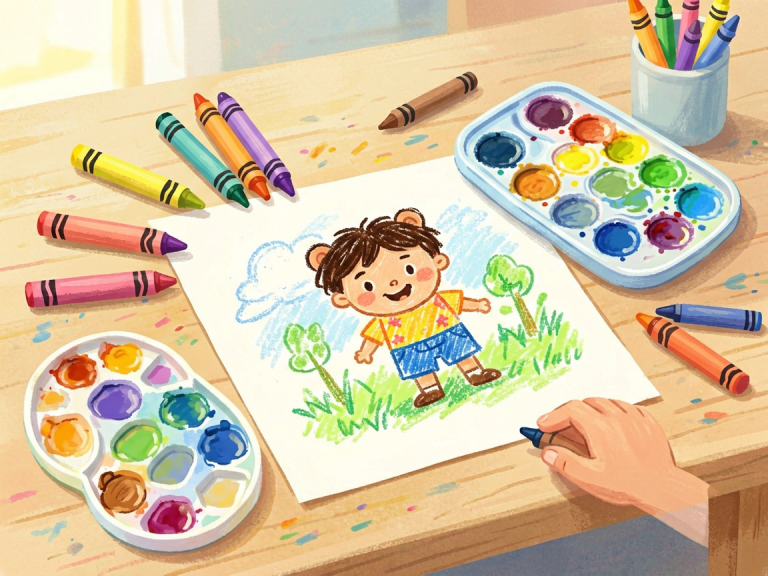
How to Manage Age-Appropriate Play: A Comprehensive Guide for Parents and Educators
Play is the universal language of childhood, yet its meaning evolves dramatically from infancy to adolescence. What fascinates a six-month-old—a dangling toy that makes a sound—will bore a six-year-old, who craves rule-based games and imaginative quests. Managing age-appropriate play is not merely about keeping children occupied; it is a delicate art of fostering cognitive, social, emotional, and physical development in a safe, engaging, and challenging environment. This article offers a structured roadmap for parents, caregivers, and educators to navigate the intricate landscape of play across different ages, ensuring that every child’s playtime is both joyful and developmental sound.
—
Understanding the Core Principles of Age-Appropriate Play
Before diving into specific age groups, it is essential to grasp the foundational concepts that underpin age-appropriate play management. At its heart, this practice involves three interrelated tasks: matching the play activity to the child’s developmental stage, adjusting the level of adult involvement, and creating a physical and emotional environment that supports exploration. A common pitfall is either over-directing play (robbing children of autonomy) or abandoning them entirely (leaving them frustrated or unsafe). The sweet spot lies in what developmental psychologist Lev Vygotsky called the “zone of proximal development”—activities that are slightly beyond a child’s current ability but achievable with gentle guidance. Managing this zone requires constant observation, flexibility, and a willingness to step back or step in as needed.
—
Infants (0–12 Months): Sensory Exploration and Secure Bonding
For infants, play is not separate from caregiving—it is intertwined with feeding, changing, and soothing. The primary goal at this stage is sensory stimulation and the formation of secure attachments. Babies learn about the world through their senses: sight, sound, touch, taste, and smell. Age-appropriate play management here means providing safe, contrasting, and responsive materials.
Recommended Activities and Materials
Offer black-and-white patterned cards for visual tracking, soft rattles with varied textures, unbreakable mirrors for self-discovery, and simple mobiles that move gently with air currents. Importantly, the most powerful “toy” for an infant is a responsive adult—making faces, singing, and mimicking baby sounds. Tummy time can be enhanced with low-lying textured mats and small toys within reach.
Management Strategies
- Observe cues closely: If a baby turns away or becomes fussy, the sensory input is too intense. Remove stimulation and offer calm, one-on-one interaction.
- Supervise at all times: Infants explore by mouthing objects, so ensure all items are large enough to avoid choking and are free of toxic materials.
- Rotate toys every few days: Babies quickly habituate to familiar stimuli; rotating a small selection of three to four items maintains novelty without overwhelming.
- Incorporate movement: Gentle rocking, swaying, and carrying during “play” builds vestibular sense and trust.
—
Toddlers (1–3 Years): The Age of Active Discovery and Simple Problem-Solving
Toddlers are driven by a fierce desire to move, manipulate, and assert independence. Their play is typically parallel—playing alongside, not with, others—and revolves around cause-and-effect experiments. Managing play for this age requires balancing the need for safe risk-taking with firm boundaries.
Recommended Activities and Materials
Push-and-pull toys (wagons, wooden carts), stacking blocks, shape sorters, large puzzles with few pieces, chunky crayons and paper for scribbling, water and sand tables (with close supervision), and simple pretend-play items like toy phones and plastic cups. Outdoor play should include low climbing structures, tunnels, and balls of varying sizes.
Management Strategies
- Childproof the environment thoroughly: Toddlers explore with their whole bodies; ensure sharp corners are covered, toxic substances are locked away, and electric outlets are protected.
- Set a few clear, consistent limits: For example, “Blocks stay on the floor, not in the mouth” or “We sit when we play with crayons.” Use positive language (“Let’s keep the sand in the table”) rather than constant “No.”
- Provide two to three choices: This satisfies the toddler’s need for control. Instead of asking, “What do you want to play?” offer, “Do you want to play with the blocks or the cars?”
- Allow messy play with containment: Use a large plastic sheet under a sand table, or take finger-painting outdoors. Expect mess and embrace it as learning.
- Model simple social skills: Narrate what you see: “You are rolling the ball to me. Now I roll it back to you.” This builds the foundation for later turn-taking.
—
Preschoolers (3–5 Years): Imagination, Social Play, and Early Rules
Preschoolers burst into a world of fantasy, cooperative play, and increasingly complex language. They begin to engage in dramatic play with peers, negotiate roles, and follow simple game rules. Managing age-appropriate play at this stage means encouraging creativity while gently guiding social skills.
Recommended Activities and Materials
Dress-up clothes and props (hats, scarves, kitchen sets), building sets (Lego Duplo, wooden train tracks), art supplies (safety scissors, glue, play dough), simple board games (Candy Land, memory matching), nature exploration kits (magnifying glass, bug catcher), and ride-on toys (tricycles, scooters with helmets). Outdoor play should include climbing structures with varied levels, slides, and open space for running and tag.
Management Strategies
- Embrace unstructured time: Avoid over-scheduling. The richest pretend play often emerges when children have a long block of unscheduled time (45 minutes to an hour) and minimal adult direction.
- Facilitate conflict resolution without resolving it: When two preschoolers argue over a toy dragon, guide them: “How can you both play with the dragon? What ideas do you have?” Step in only if there is physical danger.
- Introduce simple cooperative games: Games like “Duck, Duck, Goose” or “Red Light, Green Light” teach turn-taking and following rules while keeping the focus on fun, not winning.
- Provide open-ended materials: A cardboard box can become a spaceship, a castle, or a car. Resist the urge to buy expensive single-purpose toys that stifle imagination.
- Engage in parallel storytelling: Sit on the floor and talk about what the child’s doll or action figure is doing. This validates their imagination and expands vocabulary.
—
School-Age Children (6–12 Years): Rules, Strategy, and Skill-Building
As children enter formal schooling, their play becomes more structured, rule-driven, and social. They develop preferences for team sports, board games with complex strategies, collectible card games, and elaborate pretend worlds inspired by books or movies. Managing play now involves balancing competition with enjoyment, fostering perseverance, and ensuring physical safety.
Recommended Activities and Materials
Sports equipment (basketballs, jump ropes, soccer goals), board games (Monopoly, chess, Settlers of Catan), construction sets (Lego Technic, K’Nex), science kits, art projects that require multiple steps (weaving, pottery), coding apps or simple programmable robots, and outdoor adventures (bike riding, hiking, scavenger hunts).
Management Strategies
- Emphasize effort over outcome: When children lose a game or fail a physical challenge, praise their persistence, strategy, or teamwork rather than the final result. This builds a growth mindset.
- Set clear limits on screen-based play: Digital games (including educational apps and Minecraft) have a place, but enforce time limits and prioritize active, in-person play. A good rule is a 1:1 ratio—one hour of outdoor or creative play for every hour of screen time.
- Teach basic game etiquette: Model how to shake hands after a game, say “good game” even after losing, and take turns being the referee. Use play as a laboratory for emotional regulation.
- Encourage non-competitive activities: Not all children thrive on competition. Offer cooperative games (team obstacle courses, building a fort together), individual skill-building (juggling, yo-yo tricks), and creative outlets.
- Respect growing autonomy but maintain safety: School-age children often want to play without direct supervision. Establish clear boundaries: known play areas, check-in times, and a rule that they must tell an adult where they are going.
- Adapt the environment for evolving interests: A 6-year-old might love a simple soccer goal; a 10-year-old may want to organize a tournament with rules and referees. Stay attuned and provide increasingly complex materials.
—
Adolescents (13+ Years): Social Connection, Identity, and Risk-Taking
Play in adolescence transforms into a vehicle for identity formation, social bonding, and exploration of independence. While teenagers may resist the label “play,” they engage in activities that serve the same developmental functions: video games with online communities, team sports, drama clubs, creative writing, or building things from scratch.
Recommended Activities and Materials
Sports leagues, music lessons or bands, coding camps, maker spaces (3D printers, woodworking tools), strategy games (Dungeons & Dragons, Settlers of Catan), escape room puzzles, outdoor adventure (rock climbing, kayaking), and social media or video creation (with guidance).
Management Strategies
- Shift from director to consultant: Instead of planning play, offer resources and ask open-ended questions: “What kind of game are you interested in trying? How can I support you?”
- Respect the need for peer space: Adolescents crave time with friends away from adults. Provide a supervised but non-intrusive environment—a basement game room, a backyard fire pit, a garage converted to a hangout.
- Balance risk with safety: Teenagers need to test limits. Instead of banning all risky play (e.g., building a ramp for skateboarding), teach them how to assess risks, wear protective gear, and have a spotter.
- Monitor digital play without over-policing: Many teens find community and self-expression through online games. Learn about the games they play, set reasonable limits, and discuss issues like cyberbullying and screen addiction.
- Encourage intergenerational play: Playing a board game with a parent or teaching a younger sibling a card game can strengthen family bonds and model positive social behavior.
—
Common Pitfalls and How to Avoid Them
Even with age-specific knowledge, three recurring mistakes can undermine effective play management. First, over-structuring—filling every minute with lessons, classes, and planned activities. Children need boredom to spark creativity. Second, under-investing in the environment—a cluttered, unsafe, or uninviting space discourages self-directed play. Third, imposing adult goals—using play purely for academic readiness (e.g., drilling letters through “fun” apps) robs play of its intrinsic joy.
To avoid these, adopt a reflective mindset: ask yourself regularly, “Is this activity driven by the child’s genuine curiosity, or by my anxiety about achievement?” Trust that a child who spends a whole afternoon building a lopsided tower or pretending to be a dragon is gaining far more than one who completes a workbook page.
—
Conclusion: The Art of Letting Go and Showing Up
Managing age-appropriate play is not a rigid formula but a dance between guidance and freedom. It requires knowing when to introduce a new challenge—like handing a toddler a slightly larger puzzle piece—and when to step back to watch a preschooler negotiate a conflict on her own. It calls for designing environments that are safe yet stimulating, and for recognizing that a teenager’s Minecraft marathon may be a legitimate form of social bonding, not just screen time.
Ultimately, the goal is not to “manage” play into a perfect schedule, but to become a thoughtful steward of play. By observing each child’s unique rhythms, adapting materials and expectations to their developmental stage, and trusting the process, we gift them with the most powerful learning tool of all: the freedom to play in a way that makes sense for who they are, right now.