Beyond the Glowing Rectangle: A Practical Guide to Avoiding Screen-Based Toys for Your Child
—
Introduction: The Screen Invasion in the Playroom
In an era where digital devices have become the default pacifiers, educators, child development experts, and even tech executives themselves are raising urgent alarms about the overabundance of screen-based toys. Touchscreen tablets, app-driven robotic pets, and glowing plastic gadgets that substitute imagination with pre-programmed responses have infiltrated toy boxes worldwide. The American Academy of Pediatrics has long warned that excessive screen time impairs language development, reduces attention span, and hinders the critical social-emotional skills nurtured through unstructured play. Yet, the market aggressively markets these “smart” toys, promising educational value that often amounts to little more than passive absorption of flashing lights and repetitive sounds.
This article is not a Luddite manifesto. It is a clear, research-backed, and actionable strategy for parents and caregivers who want to reclaim the richness of open-ended, screen-free play. By understanding the psychology of toy marketing, redefining what constitutes valuable play, and building a practical arsenal of alternatives, you can confidently steer your household away from the glowing rectangle and toward a world of wooden blocks, mud pies, and boundless imagination. Let us dive into the core question: how to avoid buying screen-based toys, even when the pressure is relentless.
—
The Hidden Costs of “Smart” Toys
Before we discuss avoidance strategies, it is essential to understand exactly what we are avoiding—and why the choice matters beyond simple preference.
Screen-based toys are not merely neutral objects. They are engineered to maximize engagement through variable rewards (the slot-machine effect), bright colors, and sound cues that trigger dopamine release in the developing brain. This design hijacks the child’s natural curiosity and replaces it with a dependency on external stimuli. A simple wooden train set requires the child to invent a narrative, solve a problem (how to connect the tracks), and exercise fine motor skills. A screen-based train app, on the other hand, merely requires the child to tap a button; the app produces the sounds and movements, and the cognitive demand is dramatically lower.
Moreover, screen-based toys often inhibit joint attention—the shared focus between a child and caregiver that is foundational for language acquisition. When a child plays alone with a digital toy, the parent is less likely to engage in the rich, back-and-forth dialogue that occurs during analog play. Research published in *JAMA Pediatrics* found that every 30-minute increase in daily screen time at age one was associated with a 49% increased risk of expressive speech delay at age two. Avoiding screen-based toys, therefore, is not a preference; it is a developmental intervention.
—
Part I: Reshaping Your Mindset – The Foundation of Avoidance
The most effective strategy for avoiding screen-based toys begins not in the store but inside your own head. If you believe that digital toys are a necessary evil for keeping your child entertained or that they offer unique learning opportunities that analog toys cannot replicate, you will constantly be fighting an uphill battle.
1. Redefine “Educational”
The toy industry has masterfully co-opted the word “educational.” In reality, most screen-based toys teach only one skill: how to follow a digital interface. They do not teach resilience, creativity, social negotiation, or physical coordination—the very competencies that predict long-term success. Replace your internal definition of educational with *skill-oriented*. A toy is educational if it requires the child to adapt, imagine, collaborate, or physically manipulate the environment. A pile of leaves, a cardboard box, a set of measuring cups—these are profoundly educational. An alphabet app that repeats letters while a cartoon character dances is not.
2. Understand the Marketing Trap
Toy companies spend millions on research that exploits children’s natural attraction to bright, moving, noisy objects. They also exploit parental guilt. The message is subtle but powerful: “If you don’t buy this interactive robot, your child will fall behind.” Recognize this manipulation for what it is. The real competitive advantage in the 21st century is not early exposure to screens but early exposure to open-ended problem solving. When you see an advertisement for a new “learning tablet,” pause and ask: “What does this toy really require? Does it require my child to think, or does it require my child to watch?”
3. Embrace Boredom as a Gift
Many parents buy screen-based toys out of a genuine desire to prevent their children from being bored. But boredom is the mother of invention. When a child has nothing to do, they are forced to create their own entertainment—and that is where deep play begins. If you can reframe boredom as a valuable state of mind, you will no longer feel the need to fill the toy box with battery-operated distractions.
—
Part II: Practical Strategies for the Shopping Trip
Even with a strong mindset, the moment you step into a store or scroll through an online marketplace, you are bombarded with temptations. The following strategies will help you execute your decision in real time.
1. Adopt the “Touch-It, Build-It, Move-It” Rule
Before purchasing any toy, apply the three-point test: Can the child physically touch it with their hands? Can the child build or modify it in some way? Does the toy encourage movement (pushing, pulling, climbing, throwing)? Screen-based toys fail all three tests. A touchscreen is touched, but the feedback is controlled by software. There is no building—only selecting from pre-set options. And movement is reduced to a finger swipe. If a toy does not pass all three points, put it back on the shelf.
2. Create a Pre-Shopping List of Approved Categories
Instead of shopping reactively, shop proactively. Keep a mental or written list of toy categories that are inherently screen-free:
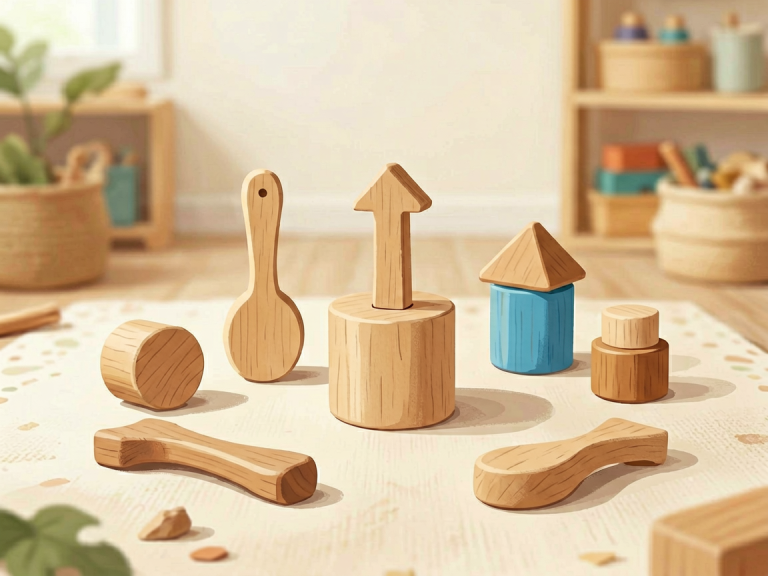
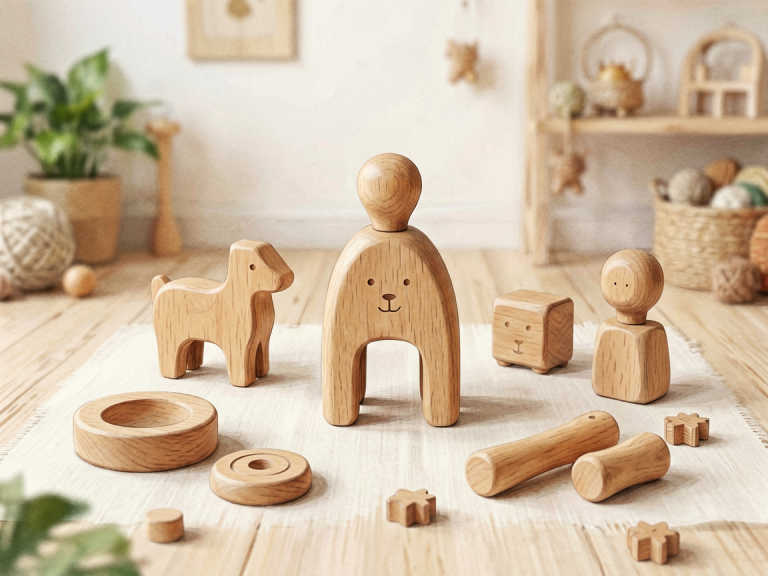
- Construction toys: magnetic tiles, wooden blocks, LEGO (without the companion app), Kapla planks, marble runs.
- Pretend play items: play kitchens, dollhouses, dress-up clothes, puppets, doctor kits.
- Outdoor equipment: bicycles, scooters, sandbox tools, water tables, jump ropes.
- Art supplies: modeling clay, crayons, finger paints, playdough, recycled materials for collage.
- Board games and puzzles: age-appropriate games that require strategy, turn-taking, and patience.
When you are in a store, search for items that fit these categories. If the toy does not belong, do not even examine it.
3. Master the Art of the Neutral “No”
When your child points to a flashy screen-based toy at Target, your instinct may be to explain, justify, or negotiate. Instead, develop a calm, neutral response that does not invite debate. For example: “We don’t buy toys with screens. Let’s see what they have in the wooden toy aisle.” No lengthy explanation, no guilt. Over time, your child will internalize this rule as a family norm rather than a point of conflict.
4. Use the “Wait 24 Hours” Rule
Impulse purchases are the nemesis of screen-free parenting. If you see a toy that claims to be screen-based but you are tempted by its “educational” features, force yourself to wait 24 hours. During that time, research the toy. Read independent reviews from child development experts (not just the five-star reviews from parents who just bought it). More often than not, the appeal will fade, and you will realize it is not worth the cognitive cost.
—
Part III: Navigating Social Pressure and Gift-Giving Scenarios
Even if you have perfect control over your own purchases, relatives, friends, and birthday party guests will bring screen-based toys into your home. This is perhaps the trickiest obstacle.
1. Establish a Family Gift Policy (Politely)
Before birthdays or holidays, have a private conversation with close relatives. You can say: “We are trying to keep our home screen-free to support [child’s name]’s development. We would love it if gifts were things they can build, create, or move with—like puzzles, art supplies, or outdoor toys. Here is a wish list we put together.” Most relatives will comply if the request is framed as a positive choice rather than a criticism of their previous gifts.
2. Handle Unwanted Gifts with Grace (Then Rehome)
Despite your best efforts, a well-meaning grandparent will inevitably present a singing, flashing robot. Do not make a scene. Smile, thank them, and later set the toy aside. Do not let it enter the playroom rotation. Instead, donate it to a school or charity that may not have the same restrictions, or regift it (unopened) at a toy swap. Explain to your child: “Sometimes people give us toys that don’t fit our home. We are thankful for their love, but we can let someone else enjoy that toy.” This teaches gratitude without capitulation.
3. Prepare Your Child for Peer Pressure
As children grow older, they will see friends playing with tablets and gaming consoles. It is unrealistic to ban all screens forever, but you can teach them why your family makes different choices. Frame it as empowerment rather than deprivation. “You have more fun because you get to use your imagination. Their toy does the work for them—boring, right?” Studies show that children who understand the reasoning behind family limits are more likely to internalize them and less likely to rebel in the long run.
4. Host Screen-Free Playdates
One of the most powerful ways to normalize screen-free play is to invite friends over and ensure the environment offers irresistibly engaging alternatives. Set up a cardboard fort, a sensory bin filled with rice and scoops, or a large floor puzzle. When other children experience the joy of collaborative, unscripted play, they will ask their own parents for those same experiences. You become an ambassador for a healthier childhood, one playdate at a time.
—
Part IV: Building a Rich Screen-Free Environment at Home
Avoiding screen-based toys is not just about saying no; it is about saying yes to an environment that offers depth, complexity, and delight.
1. Rotate Toys to Maintain Novelty
A common complaint is that children grow bored with analog toys quickly. The solution is not to buy more; it is to rotate. Keep only one-third of the toys available at any time. Store the rest in opaque bins and bring them out every few weeks. The “new” boxes will feel like Christmas morning, and the child will re-engage with their old train set or dollhouse with fresh enthusiasm. This practice radically reduces the urge to buy new toys—screen-based or otherwise.
2. Prioritize Loose Parts
Loose parts are open-ended materials that can be used in unlimited ways. Think: wooden beads, fabric scraps, bottle caps, sticks, stones, corks, and ribbons. Montessori philosophy and the work of architect Simon Nicholson emphasize that loose parts foster divergent thinking—the ability to generate many solutions to a single problem. A box of loose parts can entertain a child for longer than any app, and it costs almost nothing. Collect them from nature walks and recycling bins.
3. Model Screen-Free Behavior
Children mimic what they see. If you are constantly scrolling on your phone while they play with wooden blocks, they will value the screen over the blocks. Designate screen-free zones in your home (the dining table, the playroom, the car) and screen-free times (mealtimes, the first hour after school). Let your child see you reading a physical book, cooking, gardening, or engaged in a hands-on hobby. The strongest counterweight to a screen-based culture is your own presence.
4. Invest in Quality Analog Toys That Grow with the Child
When you do buy toys, choose ones that are “recurrent”—they offer new challenges as the child matures. For example, a set of Unit blocks can be used at age two for simple stacking and at age eight for building complex structures with mathematical ratios. A simple wooden abacus teaches counting at three and multiplication strategies at seven. These toys are more expensive upfront but far cheaper in the long run, and they never need software updates.
—
Conclusion: The Gift of Uninterrupted Childhood
Avoiding screen-based toys is not a form of deprivation. It is the single most generous gift you can offer your child: the freedom to be bored, the permission to create, and the space to develop the inner resources that no algorithm can replicate. The world of childhood is being rapidly colonized by glowing rectangles that deliver passive entertainment at the cost of active imagination. But you, as a parent or caregiver, have the power to draw a boundary.
Every time you choose a set of wooden blocks over a learning tablet, you cast a vote for a different kind of childhood—one where children learn to negotiate, to fail and try again, to build worlds out of nothing, and to find companionship not in a device but in the eyes of another person. The strategies outlined here are simple, but they require courage and consistency. You will face pushback from marketing, from relatives, and even from your own moments of exhaustion when a screen seems like the easy way out.
But remember: the easy way out is rarely the meaningful way in. The 1,200 words you have just read are a roadmap, but the journey belongs to you and your child. Start today. Clear one shelf of battery-operated gadgets. Replace them with a pile of cardboard tubes and a roll of tape. Then watch, and be amazed at what happens when the screens go dark and the real light begins to shine.
—
*Word count: 1,684*