The Ultimate Guide to Choosing Travel Toys: Keeping Little Explorers Engaged on the Go
Introduction: Why Travel Toys Matter
Traveling with children can be a thrilling adventure—until the inevitable boredom strikes. Whether you are embarking on a long-haul flight, a cross-country road trip, or a weekend train journey, the right travel toys can transform a potentially stressful experience into a harmonious and even joyful one. Toys are not mere distractions; they are tools for learning, comfort, and connection. However, choosing the right toys for travel requires careful thought. The wrong choice can lead to clutter, lost pieces, or frustrated children who quickly lose interest. This guide will walk you through the key considerations, age-specific recommendations, and practical tips to help you select travel toys that are compact, engaging, and appropriate for your child’s developmental stage. By the end, you will have a clear framework to make informed decisions that benefit both your child and your peace of mind.
The Core Principles of Travel Toy Selection
Before diving into specific toy categories, it is essential to understand the three pillars of effective travel toys: portability, engagement, and adaptability.
Portability is non-negotiable. Travel toys must fit into carry-on luggage, diaper bags, or even your child’s own small backpack. They should be lightweight, compact, and preferably quiet to avoid disturbing other passengers. Avoid bulky items that take up half your suitcase; instead, look for toys that collapse, fold, or serve multiple purposes.
Engagement refers to the toy’s ability to hold a child’s attention for extended periods. Travel environments are filled with novel stimuli—new sights, sounds, and smells—so toys must compete effectively. The best travel toys are open-ended, meaning they can be used in multiple ways, or they offer a clear goal that encourages focused play. A toy that is too simple may be quickly abandoned, while one that is too complex may cause frustration.
Adaptability means the toy can be used in various settings—on a plane, in a car, at a hotel, or at a restaurant. It should be easy to clean and durable enough to withstand drops and rough handling. Additionally, consider toys that grow with your child or that can be used by siblings of different ages.
Age-Based Toy Recommendations
Children’s developmental needs change rapidly, so tailoring your selection to their age is crucial. Below are specific suggestions for key age groups.
Infants (0–12 months): Sensory and Comfort Toys
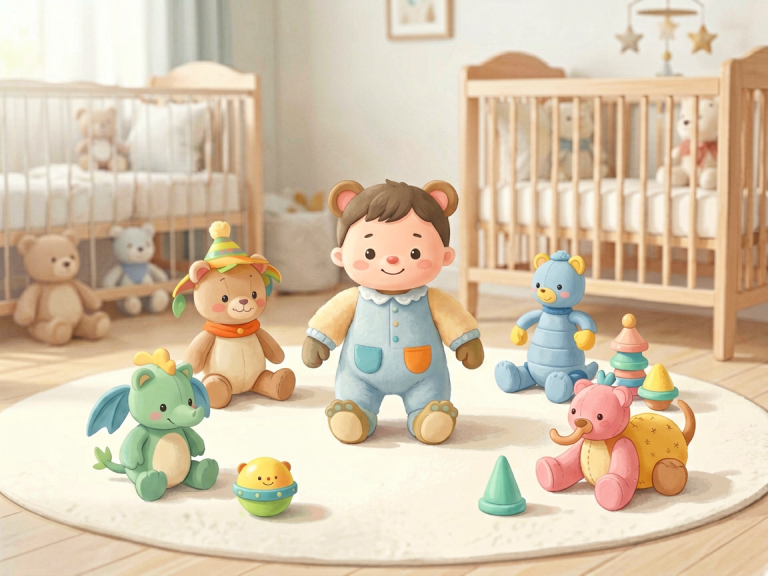
For babies, travel toys serve two primary purposes: sensory stimulation and comfort. During travel, infants can become overstimulated or fussy due to changes in routine and environment. Soft, textured toys that can be easily grasped and chewed are ideal. Look for items like silicone teething rings, crinkly fabric books, or small plush toys with contrasting colors. A favorite lovey or a small security blanket can provide immense comfort during takeoff or in unfamiliar hotel rooms. Avoid toys with small parts that could be a choking hazard. One excellent option is a travel-sized activity gym that attaches to the car seat or stroller—it provides visual and tactile stimulation without taking up much space.
Toddlers (1–3 years): Interactive and Quiet Play
Toddlers are notoriously active and curious, making travel challenging. They need toys that channel their energy into focused, hands-on activities. Magnetic drawing boards are a classic choice—mess-free and endlessly reusable. Stacking cups or nesting blocks can be used for building, sorting, and even counting games. Simple puzzles with large pieces (preferably magnetic or in a zippered bag) are great for fine motor skills. For car rides, consider a steering wheel toy that mimics driving, giving toddlers a sense of control. Busy boards with latches, zippers, and buttons are also highly effective. The key is to avoid toys that make loud noises or require batteries, as they can quickly become annoying to everyone in the vehicle.
Preschoolers (3–5 years): Imaginative and Educational Toys
Preschoolers thrive on imaginative play and early learning. Travel is an opportunity to introduce new stories and concepts. Sticker books with reusable stickers are a standout—they are lightweight, compact, and allow children to create their own scenes. Look for themed sets like animals, vehicles, or fairy tales. Travel-sized board games, such as “Count Your Chickens” or simple memory games, can be played with an adult or sibling. Audio books and story podcasts on a tablet or phone (with headphones) are also excellent, especially for long stretches of quiet time. If your child is learning letters or numbers, consider a small erasable writing tablet or a lacing card set. Remember to pack a few surprises—new toys that are revealed gradually can extend engagement.
School-Age Children (6 years and up): Creative and Logic-Based Toys
Older children can handle more complex toys that challenge their creativity and critical thinking. Travel-friendly board games like “Guess Who?” card games, or “Rush Hour” (a logic puzzle with a small grid) are popular. Origami paper and instruction books provide hours of quiet, creative fun. Art supplies in a compact pouch—colored pencils, a small sketchbook, and a pencil sharpener—allow children to draw their travel experiences. For tech-savvy kids, a tablet preloaded with educational apps (Khan Academy Kids, Duolingo, or puzzle games) can be a lifesaver, but set screen-time limits. Puzzle books with crosswords, mazes, and word searches are also great. The key is to choose toys that are self-contained and do not require many additional pieces.
Practical Tips for Choosing and Packing Travel Toys
Even the best toy is useless if it is lost, broken, or forgotten. Here are strategic tips to maximize your travel toy experience.
1. Test Toys Before You Go
Introduce new toys a few days before departure. This allows your child to familiarize themselves with the item and ensures it works properly. You can also gauge whether it holds their interest.
2. Rotate Toys During the Trip
Pack more toys than you think you need, but only bring a few out at a time. Keep a “secret stash” of new toys or ones that have been out of rotation for a while. When boredom strikes, reveal one as a surprise. This method prevents overstimulation and extends the novelty.
3. Use Activity Pouches and Bags
Organize toys in clear, zippered pouches or small mesh bags. This makes it easy for children to find what they want without dumping everything. Label pouches by theme: “art,” “puzzles,” “sensory,” etc. For younger children, use a single large pouch with a few toys to avoid decision fatigue.
4. Involve Your Child in the Selection Process
Give your child a small amount of autonomy by letting them choose two or three toys from a pre-approved selection. When children feel invested, they are more likely to play with the toys. However, keep final authority with you to ensure practicality.
5. Prioritize Quiet and Clean Options
Travel spaces are shared. Choose toys that are quiet—avoid clicky, beeping, or rattling items unless you are on a private car. Also, avoid toys that create a mess: no loose glitter, small beads, or markers that could stain upholstery. Crayons are better than washable markers because they do not dry out and are less likely to roll away.
6. Consider Multi-Use Items
Some everyday items double as travel toys. For example, a snack container with a screw-on lid can become a stacking toy for a toddler. A set of plastic measuring cups can be used for stacking, scooping, and pretend play. Think creatively—sometimes the best toys are not from the toy store.
7. Plan for Digital Backup
While screen time should be limited, having a tablet with downloaded movies, games, and apps is a realistic backup. Invest in child-safe headphones and a durable case. Use airplane mode to avoid distractions from notifications.
The Role of Parents: Engaging with the Toy
No toy can replace parental interaction. The most effective travel toys are those that you can engage with together. For example, a pack of cards can be used for traditional games, but also for creating stories or simple math challenges. A small whiteboard can be used for drawing, but also for playing “hangman” or “Pictionary.” When parents model curiosity and creativity, children are more likely to follow suit. Set aside your phone for a few minutes and join your child in their play—it strengthens your bond and reduces their need for constant stimulation.
Conclusion: Pack with Purpose
Choosing travel toys is not about buying the most expensive or the latest gadgets. It is about understanding your child’s temperament, the nature of your trip, and the environments you will encounter. A well-chosen travel toy can be a gateway to learning, a source of comfort, and a tool for creating happy memories. By focusing on portability, engagement, and adaptability, and by tailoring your selections to your child’s age, you can build a travel toy kit that works every time. Remember to test, rotate, and involve your child in the process. And above all, keep a sense of humor—travel will always have its unpredictable moments, but with the right toys, you can turn those moments into opportunities for laughter and connection. Safe travels and happy playing!