Unlocking Learning Through Laughter: Essential Educational Play Tips for Parents
Introduction
In the rush of modern parenting, it is all too easy to equate “learning” with worksheets, flashcards, and structured lessons. Yet decades of developmental research paint a different picture: children learn most deeply when they are actively engaged, curious, and — above all — having fun. Play is not the opposite of learning; it is the engine of it. When children build a tower of blocks, negotiate roles in a pretend game, or chase a bubble in the backyard, they are simultaneously developing cognitive skills, social competencies, emotional resilience, and physical coordination.
But many parents wonder: *How can I turn everyday play into meaningful educational experiences without turning it into a chore?* The answer lies not in scripting every moment, but in being a thoughtful, observant, and playful partner. This article offers practical, evidence-based tips for weaving learning into the fabric of play — without robbing play of its joy. Each tip is designed to respect your child’s natural curiosity while gently stretching their mind and heart.
—
1. Follow the Child’s Lead: Observe Before You Intervene
The most powerful educational play begins when you step back and watch. Children are natural-born investigators. A toddler who obsessively fills a cup with sand and empties it is not wasting time — he is exploring volume, cause and effect, and fine-motor control. A preschooler who lines up toy cars by color is sorting and classifying, a foundational math skill.
*Tip:* Before jumping in with a “lesson,” spend five minutes silently observing what your child is doing. Note what absorbs their attention: Are they fascinated by patterns? By movement? By pretend roles? Then gently extend their interest. For example, if your child is stacking blocks and they keep falling, you might say, “I wonder what would happen if we put the biggest block at the bottom?” This simple question nudges them toward problem-solving without taking over.
*Key principle:* The best learning happens when the child feels in control. Your role is a scaffold, not a director.
—
2. Transform Everyday Chores into Playful Learning Adventures
Household routines are rich, unpaid curricula. Folding laundry becomes a lesson in matching and categorizing. Setting the table practices one-to-one correspondence (one plate, one fork). Cooking together introduces fractions, sequencing, and chemistry (what happens when we add baking soda to vinegar?).
*Tip:* Turn a chore into a game. For example, while sorting socks, challenge your child: “How many pairs can you find in two minutes?” Or, while putting away groceries, ask, “Can you put all the round things on this shelf and all the square things on that shelf?” For older children, ask them to read the recipe aloud (literacy practice) and double the measurements (math). The key is to frame these activities as a shared mission, not a boring task.
*Real-world example:* One parent I know turned cleaning up toys into a “rescue mission” where the stuffed animals had to be saved from the “toy monster” (the toy bin). The child learned organization skills while giggling.
—
3. Use Open-Ended Questions to Spark Critical Thinking
Closed questions (“What color is that?”) test memory. Open-ended questions (“What do you think would happen if…?”) ignite reasoning, creativity, and language development. The best educational play tips for parents involve replacing answers with wonder.
*Tip:* During pretend play, ask questions like: “How do you think the dragon feels right now?” or “What should we build next to keep the castle safe?” During block play: “Why do you think that tower fell? What could we change?” During nature walks: “I wonder why that leaf is shaped differently from that one.” These questions encourage your child to hypothesize, compare, and explain — all higher-order thinking skills.
*Remember:* Don’t expect a perfect answer. The value is in the process of thinking aloud together. If your child says something inaccurate, resist correcting instantly. Instead, ask, “What makes you think that?” This shows respect for their ideas and gently invites deeper reflection.
—
4. Embrace Messy, Sensory Play for Brain Development
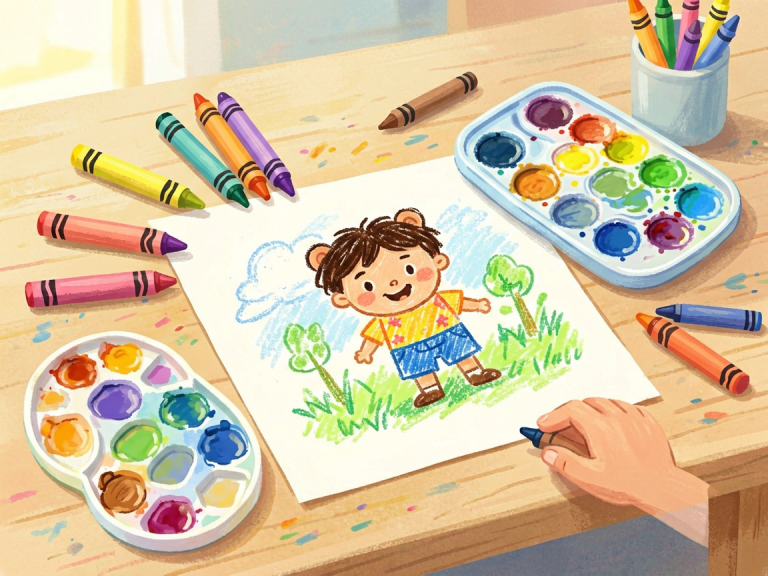
Many parents avoid messy play because of cleanup, but sensory experiences — playing with sand, water, mud, paint, or even dry rice — are neural gold. When children squeeze, pour, smear, and scoop, they build pathways for tactile processing, hand-eye coordination, and even emotional regulation.
*Tip:* Designate a “messy zone” (a tray, a plastic tablecloth, or outside). Provide simple tools: scoops, funnels, brushes, containers. Then let go. For educational value, add a few twists: put a few plastic letters in the sand and ask your child to “rescue” the letter that makes the /b/ sound. Or add food coloring to water and let them mix colors (learning color theory). For older children, freeze small toys in ice cubes and let them experiment with salt and warm water to “free” them (science exploration).
*Key insight:* Messy play is not just about physical development; it also builds perseverance and creativity. When a child has to figure out how to get a toy out of ice, they learn persistence — a trait more predictive of academic success than early reading.
—
5. Incorporate Storytelling and Drama Across All Subjects
Children think in narratives. Stories are how they make sense of the world. Educational play that involves pretending to be a shopkeeper, a doctor, an astronaut, or a dinosaur brings abstract concepts to life.
*Tip:* Set up a “pretend classroom” where your child is the teacher and you are the student. Let them “teach” you about space, animals, or numbers. During this role reversal, you can plant questions that deepen their understanding: “Teacher, why does the moon change shape?” or “Can you show me how to count to twenty in Spanish?”
*For math:* Create a “grocery store” with price tags and play money. Your child practices addition, subtraction, and even estimation.
*For literacy:* Encourage your child to “write” a menu for their restaurant using scribbles or invented spelling. Praise all attempts — this builds phonemic awareness.
*For science:* Pretend you are explorers on a new planet. “What kind of plants do you think we’ll find? How will they get water?”
Storytelling also builds emotional intelligence. When your child acts out a conflict between two toys, they are practicing empathy and problem-solving.
—
6. Balance Screen Time with Interactive, Purposeful Digital Play
Not all screens are harmful. Quality educational apps and programs can reinforce phonics, math, logic, and creativity — but only if used intentionally. The danger comes when screens become a passive babysitter.
*Tip:* Co-view whenever possible. Instead of handing your child a tablet and walking away, sit with them. Ask questions about what they see: “Why did that character jump over the obstacle?” “How many points did you get? Let’s count together.” This turns screen time into a shared learning conversation.
*Choose apps that:*
- Require active problem-solving rather than mindless tapping.
- Encourage creativity (drawing, building, composing music).
- Have no in-app purchases or distracting advertisements.
- Are age-appropriate and limit speed-based challenges that frustrate young children.
Also, balance digital play with physical play. After 20 minutes on a geometry app, invite your child to build shapes with sticks or playdough. This connects the virtual to the tangible.
—
7. Let Boredom Be the Spark for Original Play
In our hyper-scheduled world, we often feel we must entertain our children every moment. Yet boredom can be a gift. When children have nothing to do, their brains are forced to invent, imagine, and create. The greatest educational play often arises from unstructured time.
*Tip:* Resist the urge to immediately provide an activity. Instead, say, “You’re feeling bored. What would you like to invent today?” Keep a “play toolbox” handy — a box with cardboard tubes, string, buttons, tape, fabric scraps, old magazines, and markers. These open-ended materials can become anything: a spaceship, a puppet, a musical instrument, a model of the solar system.
*Why this works:* Building with loose parts requires planning, trial and error, and imagination. A child who constructs a “robot” out of a cereal box and bottle caps is engaged in engineering, design, and storytelling — all far more valuable than any worksheet.
—
8. Model Playfulness Yourself
Children learn more from what you do than from what you say. If you embrace a spirit of curiosity and joy, they will too. When you make a mistake while building a model together, laugh and say, “That didn’t work! Let’s try another way.” When you ask questions you don’t know the answer to, say, “Let’s look it up together!” This teaches that learning is a lifelong adventure, not a test.
*Tip:* Set aside 15–20 minutes each day for “pure play” — no phone, no agenda, just you and your child fully present. During this time, let your child decide the game. Your only job is to follow, narrate, and occasionally ask a wondering question. This daily ritual builds not only cognitive skills but also a deep, trusting bond that is the foundation of all learning.
—
Conclusion
Educational play is not about turning every giggle into a lesson plan. It is about recognizing the profound learning that already exists in every bubble popped, every tower toppled, every story acted out. As a parent, you don’t need a degree in child development — you need only to be present, curious, and willing to see the world through your child’s eyes. By following these tips, you will nurture a love of learning that lasts a lifetime. The best part? You will rediscover the joy of play yourself. After all, play is not just for children; it is the most natural way for humans to grow. So grab a handful of blocks, slip into a costume, or simply lie on the grass and watch the clouds — and know that in those moments, you are giving your child the greatest education of all.
*(Word count: approximately 1,180 words)*