How to Avoid Choosing Messy Toys: A Parent’s Guide to Curating a Peaceful Playroom
Introduction
Every parent has experienced the sinking feeling that comes after unwrapping a new toy: within minutes, the living room floor is carpeted with dozens of tiny plastic pieces, the couch cushions are hiding miniature wheels, and the dining table has become a dumping ground for mismatched accessories. These are the "messy toys" — items that, despite their initial appeal, transform any room into a chaotic landscape that takes twice as long to clean as it did to play. While the term "messy toys" might sound like a judgment against children’s natural inclination to explore, it actually refers to a specific category of playthings that are inherently difficult to organize, clean, or contain. In this article, we will explore practical, research-backed strategies to help parents identify and avoid such toys, ensuring that the playroom remains a space for creativity and joy rather than frustration and clutter. By understanding the key characteristics of messy toys and learning how to evaluate potential purchases, you can build a toy collection that sparks imagination without overwhelming your home.
What Exactly Are "Messy Toys"?
Before we can avoid messy toys, we must first define them. A messy toy is not simply one that gets dirty easily (like playdough or finger paints). Instead, it is a toy whose design, component count, or lack of built-in storage makes it disproportionately difficult to keep organized. Common examples include:
- Toys with dozens of tiny, easily-lost parts – such as building sets with hundreds of identical blocks, craft kits with scattered beads, or board games with small cards and tokens that have no designated home.
- Toys that generate secondary mess – for instance, a toy kitchen that comes with pretend food pieces that inevitably fall behind the fridge, or a dollhouse with furniture that never stays in its designated room.
- Toys with no clear boundaries – such as art supplies without a tray or case, or magnetic tiles that slide under furniture and collect dust.
- Toys that require constant adult intervention – like complex puzzles whose pieces are indistinguishable, or toys that only work when assembled in a specific way that children cannot replicate alone.
Recognizing these patterns is the first step toward making smarter purchasing decisions.
Why Avoiding Messy Toys Matters for Child Development and Family Sanity
Some parents argue that mess is a natural part of childhood and that we should not over-sanitize play experiences. While that sentiment is valid, it misses a critical nuance: the mess itself is not the enemy; the lack of structure is. A well-chosen toy encourages independent play and allows children to participate in cleanup, which builds responsibility and executive function. Messy toys, on the other hand, often lead to:
- Frustration and overstimulation – When a child cannot find the piece they need because it is buried under other pieces, they become upset and may lose interest in the toy entirely.
- Increased parental stress – A constant cycle of cleaning and re-cleaning drains energy that could otherwise be spent engaging with the child in meaningful interaction.
- Resource waste – Toys that are abandoned because they are too messy often end up in landfills, contributing to environmental issues.
- Missed learning opportunities – Instead of learning to categorize and organize, children learn that chaos is acceptable, which can translate into disorganized habits later in life.
By choosing toys that are inherently organized, you are not limiting your child’s creativity; you are providing a framework within which creativity can flourish without descending into chaos.
Principle 1: Evaluate the Component Count and Modularity
When you see a toy in the store or online, ask yourself: How many individual pieces does this toy have? And can those pieces be grouped into meaningful categories? A simple rule of thumb: the number of pieces should be inversely proportional to the child’s ability to keep track of them. For a three-year-old, a set of 10 large wooden blocks is manageable. For a seven-year-old, a 500-piece LEGO set may be fine if it comes with a sorting tray or a dedicated storage box.
However, the real trap lies in toys that appear to have few pieces but actually contain sub-pieces. For example, a “science kit” that claims to have only 5 major items may include 30 small test tubes, 50 chemical powders in tiny bags, and dozens of plastic connectors. Always read reviews that mention cleanup, and look for images of the toy with all its parts displayed. If the picture shows a sea of tiny items, consider it a red flag.
Actionable tip: Before buying, check the manufacturer’s website for a complete parts list. If the list exceeds 20 items for a preschool toy, think twice unless the toy comes with a built-in storage solution (e.g., a containers with dividers or a box with a lid).
Principle 2: Insist on Built-In Storage or Clear Organization Systems
One of the most effective ways to avoid messy toys is to choose toys that come with their own homes. This principle applies not only to the initial purchase but also to how you set up the toy in your home. Look for:
- Puzzles that come with a tray or board – Avoid puzzles whose pieces must be stored in a separate bag or box that can be easily lost.
- Building sets with a carrying case – Many quality brands offer sets where the container doubles as a play surface, such as a toolbox that turns into a truck or a suitcase that unfolds into a dollhouse.
- Art supplies with a stationery box – Crayons, markers, and pencils are infinitely less messy when housed in a partitioned container rather than a cardboard box.
- Magnetic toys with a magnetic board – The board itself acts as a storage surface, preventing pieces from sliding off the table.
If a toy you love does not have built-in storage, consider whether you can provide it separately. For example, you can buy a clear shoebox with a lid for small animal figurines. But be honest: if the storage solution is not immediately obvious and requires your extra effort, the toy might still become messy over time.
Actionable tip: Before purchasing, mentally walk through the cleanup routine. If you cannot visualize your child putting the toy away in under two minutes, it is likely too messy.
Principle 3: Prioritize Open-Ended Toys with Simple Geometries
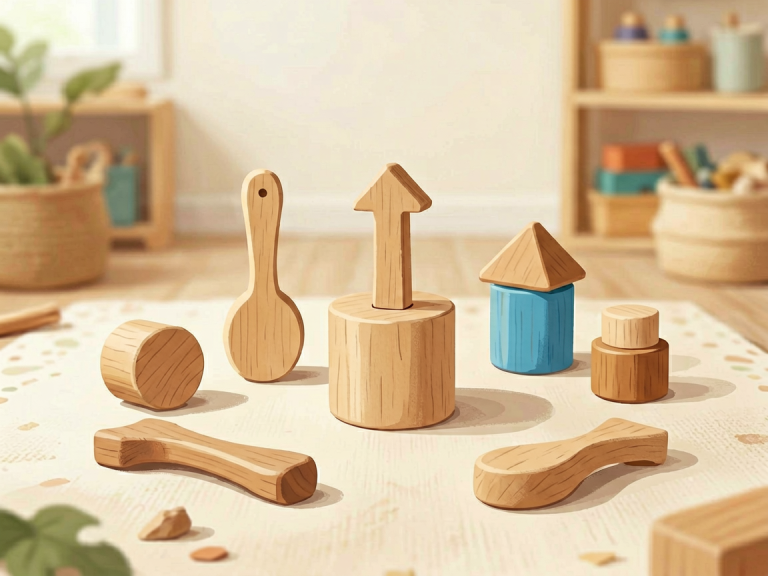
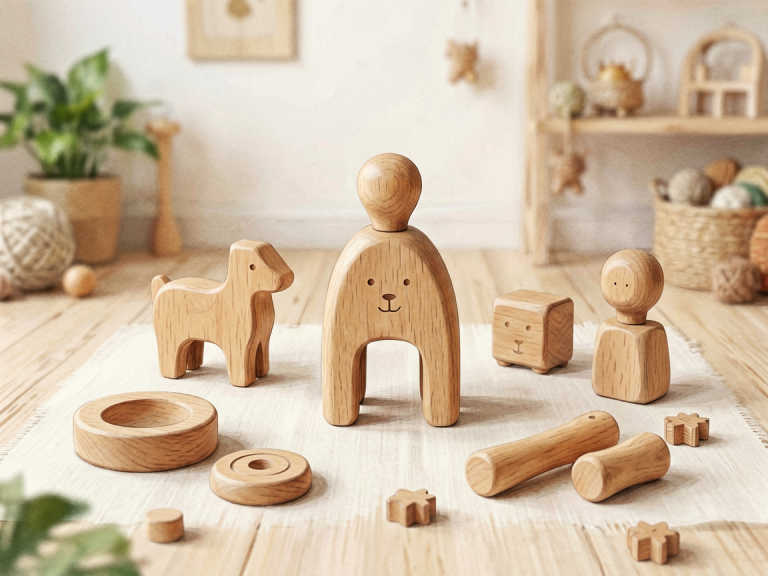
Not all open-ended toys are messy. In fact, the best open-ended toys — such as large wooden blocks, playsilks, or simple animal figures — encourage creativity without generating clutter. The problem arises when open-ended toys have too many identical or similar pieces that are hard to distinguish. For instance, a set of 100 colorful magnetic tiles is wonderful, but if they are all the same shape and color, children will struggle to find the right ones during play and will scatter them everywhere during cleanup.
Instead, look for open-ended toys that have:
- Distinct shapes and colors – So children can quickly identify and categorize.
- Natural boundaries – For example, a play silk is a single piece; a set of felt food items can be stored in a simple basket.
- Moderate quantity – A set of 30 unit blocks for a toddler is better than a set of 200 for the same age.
Actionable tip: When considering a “loose parts” play set, limit the number of parts to what fits in a single container that the child can carry independently. If you need two boxes, consider whether you really need all those pieces.
Principle 4: Assess the Cleanup Time Ratio
A practical metric for evaluating any toy is the cleanup time to playtime ratio. Ask yourself: For every hour of play, how many minutes of cleanup are required? A good toy should have a ratio of less than 1:10, meaning less than 6 minutes of cleanup for an hour of play. Messy toys often have a ratio of 1:5 or even 1:2, where 30 minutes of play creates 15 minutes of cleanup.
How do you estimate this? Read online reviews specifically searching for words like “cleanup,” “messy,” or “parts.” Parents are usually very vocal about toys that require excessive tidying. Also, watch unboxing videos on YouTube; they often show the full extent of the toy’s components.
Actionable tip: Create a mental checklist: (1) Does the toy have compartments or a box? (2) Are the pieces large enough to be gripped easily? (3) Can the toy be put away in one trip? If you answer “no” to any of these, the cleanup ratio is likely unfavorable.
Principle 5: Choose Toys That Teach Orderliness
The ultimate goal is not just to avoid messy toys, but to select toys that actively teach children how to organize. Some toys are designed with organization as part of the play experience. For example:
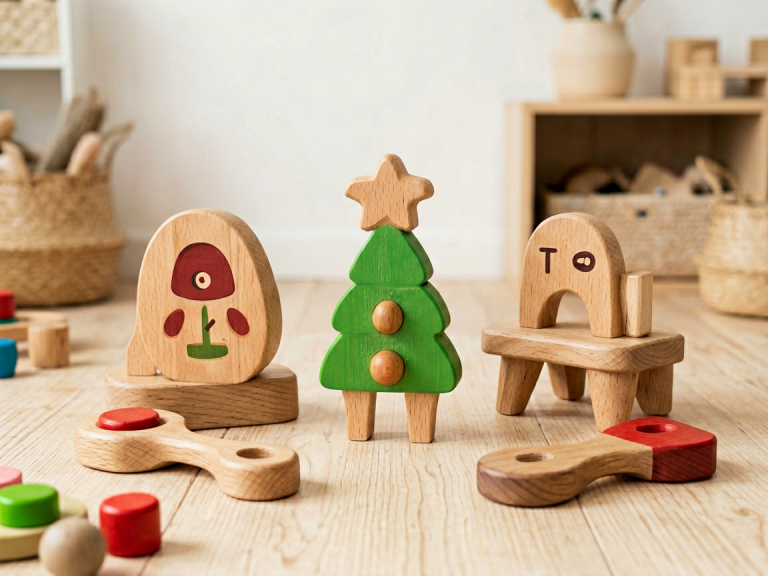
- Montessori-style puzzles where each piece has a specific place on a tray (e.g., geometric shape insets). The child learns that each item belongs somewhere.
- Sorting games that require grouping pieces by color, size, or type. These build classification skills that translate into tidy habits.
- Toys with clear beginning and end points – Like a train set that can be assembled into a circle and then disassembled and stored in a bag. The child knows when the play session is “over.”
Actionable tip: Rotate toys rather than keeping everything out. A smaller number of well-chosen, orderly toys will lead to better play habits than a mountain of messy options.
Conclusion
Avoiding messy toys is not about being a rigid minimalist or denying children the joy of creative play. It is about being an intentional curator of your child’s environment. By applying the principles outlined — evaluating component count, insisting on built-in storage, prioritizing open-ended toys with simple geometries, assessing cleanup time ratios, and choosing toys that teach order — you can dramatically reduce the clutter in your home while still providing rich, engaging play experiences. Remember that the best toy is one that empowers your child to play independently and clean up without frustration. In a world where toys are marketed with flashy colors and endless pieces, it takes a conscious effort to step back and ask: *Will this toy bring more joy than mess?* The answer will guide you toward a peaceful, orderly playroom where imagination can truly thrive.