Engineering Kits for Kindergarteners: A Worthwhile Investment or an Overpriced Gimmick?
In recent years, the educational toy market has exploded with products promising to turn young children into little engineers, coders, and problem-solvers. Among these, engineering kits designed specifically for kindergarteners have gained remarkable popularity. These kits typically include colorful blocks, gears, connectors, wheels, and sometimes simple electronic components that allow children to build structures, vehicles, or machines. But as parents and educators face an ever-growing array of options, a pressing question emerges: are engineering kits worth it for kindergarteners? On one hand, advocates argue that these toys cultivate critical thinking, creativity, and early STEM skills. On the other hand, skeptics question whether such structured kits are developmentally appropriate for five- and six-year-olds, especially given their often steep price tags. This article explores the benefits, limitations, and overall value of engineering kits for kindergarteners, drawing on developmental psychology, educational research, and practical parenting perspectives. By examining the cognitive, social, and economic dimensions, we aim to provide a balanced answer that helps families and schools make informed decisions.
The Promise of Early STEM Education: Why Engineering Kits Appeal to Parents and Educators
The push for STEM (Science, Technology, Engineering, and Mathematics) education has filtered down to the earliest grades, and engineering kits are a tangible manifestation of this trend. Proponents claim that these kits introduce foundational concepts like cause and effect, spatial reasoning, and simple mechanical principles in a hands-on, engaging way. For a kindergartener, learning through play is not merely beneficial—it is essential. Engineering kits capitalize on young children's natural curiosity about how things work. When a child connects two gears and observes them turning together, or builds a tower that eventually topples, they are not just playing; they are conducting mini-experiments. Such experiences can lay the groundwork for later scientific thinking, fostering a mindset of inquiry and iteration.
Moreover, engineering kits often align with educational standards for early childhood. Many kits are designed to support fine motor skill development—snapping pieces together requires dexterity and hand-eye coordination. They also encourage perseverance: a structure that collapses can be rebuilt, teaching resilience and problem-solving. In group settings, these kits promote collaboration, as children negotiate roles, share ideas, and learn to communicate their designs. For teachers in kindergarten classrooms, well-designed engineering kits can serve as powerful tools for integrated learning, linking math (counting, patterning) with literacy (describing creations) and social studies (understanding how tools and machines help people). This multidisciplinary appeal makes them attractive to both parents seeking educational toys and schools aiming to modernize their curricula.
However, the promise of engineering kits must be weighed against the developmental realities of kindergarteners. At this age, children are still developing the ability to follow multi-step instructions, regulate their impulses, and sustain attention on a single task for extended periods. A kit with too many pieces or overly complex assembly sequences may frustrate rather than educate. Some kits marketed for ages 4+ assume a level of patience and fine motor control that many kindergarteners have not yet attained. When children become frustrated, they may abandon the kit altogether, negating any potential benefits. Thus, the key lies not in the existence of engineering kits, but in their design and the context in which they are used.
Cognitive and Developmental Benefits: What Research Actually Says
To evaluate whether engineering kits are truly beneficial for kindergarteners, we must look beyond promotional claims and examine empirical evidence. Studies on construction play—building with blocks, Legos, or similar materials—have consistently shown positive effects on spatial ability, mathematical thinking, and problem-solving skills. For instance, a landmark study by Wolfgang, Stannard, and Jones (2001) found that the complexity of block play in preschool predicted later mathematics achievement in middle school. More recent research using engineering-specific kits, such as those involving gears and pulleys, has demonstrated that young children can grasp concepts like rotational motion and mechanical advantage when given concrete, manipulative experiences. These findings suggest that well-designed engineering kits do offer genuine cognitive benefits.
Beyond spatial and mathematical reasoning, engineering kits can enhance executive functions—the cognitive processes that enable self-control, working memory, and cognitive flexibility. When a kindergartener plans a structure, holds multiple pieces in mind while searching for another, or adapts a design that fails, they are exercising these crucial skills. Moreover, open-ended engineering kits (those without a single correct outcome) encourage divergent thinking and creativity. Unlike puzzles with predetermined solutions, many engineering kits allow children to invent their own creations, from a wobbly robot to a car with mismatched wheels. This freedom supports the development of a growth mindset, where effort and strategy are valued over innate ability.
Yet, the research also sounds a cautionary note. Not all engineering kits are created equal. Kits that are overly prescriptive—with step-by-step instruction manuals and a single "correct" model—can stifle creativity and reduce the child’s sense of agency. A kindergartener may simply follow pictures without understanding the underlying principles, turning the experience into a rote assembly task rather than a learning opportunity. Furthermore, the benefits of engineering kits depend heavily on adult facilitation. A parent or teacher who asks open-ended questions ("What do you think will happen if we add another gear?" or "How could you make the bridge stronger?") can amplify the learning. Without such guidance, the kit may become just another toy quickly discarded. Therefore, the worth of an engineering kit is not intrinsic to the product itself but is co-created by the child, the adult, and the context.
Potential Drawbacks: When Engineering Kits Fall Short
Despite the rosy picture painted by marketers, there are legitimate concerns about the widespread use of engineering kits for kindergarteners. One major issue is cost. High-quality engineering kits from reputable brands like LEGO Education, K’NEX, or Learning Resources can range from $30 to well over $100. For a single kit, this may be a reasonable investment for a family, but many kits require additional sets or expansion packs to provide lasting engagement. In classrooms, equipping an entire kindergarten class with sufficient kits can be prohibitively expensive, especially for underfunded schools. The financial burden raises the question of opportunity cost: could the same money be better spent on simpler, open-ended materials like wooden blocks, cardboard boxes, or recycled items, which also promote engineering thinking at a fraction of the price?
Another drawback is the potential for gender and socioeconomic biases. Engineering kits are often marketed with stereotypically masculine imagery—robots, trucks, and construction—which may inadvertently discourage girls or children from non-technical backgrounds. While many companies have made efforts to diversify their marketing, the implicit message persists. Additionally, children from low-income households may lack access to these kits at home, widening the equity gap in STEM readiness. Even in classrooms, if engineering kits are only used during designated "center time," children who struggle with fine motor skills or attention may be disproportionately excluded or frustrated, leading to negative associations with engineering.
There is also the concern of screen time and overstimulation. Some modern engineering kits incorporate electronic components, lights, or even Bluetooth connectivity to tablets. While these features may seem cutting-edge, they can overwhelm young children and distract from the hands-on, physical exploration that is most valuable at this age. A kindergartener’s brain is wired for sensorimotor learning—touching, stacking, falling, and rebuilding. Adding digital layers may shift the focus away from the concrete experience toward a more passive, app-guided interaction. This risks undermining the very benefits that engineering kits are supposed to provide.
Cost vs. Value: A Practical Framework for Parents and Educators
So, are engineering kits worth it? The answer is not a simple yes or no, but rather a conditional "it depends." To make an informed decision, parents and educators can use a practical framework that weighs the specific kit’s design against the child’s developmental stage, interests, and the available support system. First, consider the kit’s openness. Look for kits that offer multiple ways to build and encourage experimentation rather than following a script. Sets that come with a starter idea but no strict instructions, or that allow for hybrid creations (e.g., combining blocks with craft materials), tend to offer higher long-term value. Second, evaluate the durability and versatility. A kit made of flimsy plastic that breaks easily will quickly lose its appeal, while sturdy interlocking pieces that can be reused in countless ways provide years of play. Third, think about the adult role. If you are a parent willing to sit with your child and ask probing questions, even a simple kit can be transformative. If you expect the kit to entertain your child independently, you may be disappointed.
For schools, the question of worth often comes down to scalability and teacher training. A single engineering kit used in a small group with a trained instructor can be far more valuable than a classroom set of tablets with pre-loaded apps. However, if teachers are not comfortable with the concepts or lack time to facilitate the play, the kits may gather dust on shelves. In such cases, investing in professional development for teachers might be a better use of funds than purchasing more kits. Alternatively, schools can adopt a low-cost approach using loose parts—items like PVC pipe connectors, cardboard tubes, string, and bottle caps—that offer similar engineering challenges without the price tag.
Alternatives to Commercial Engineering Kits: Maximizing Learning on a Budget
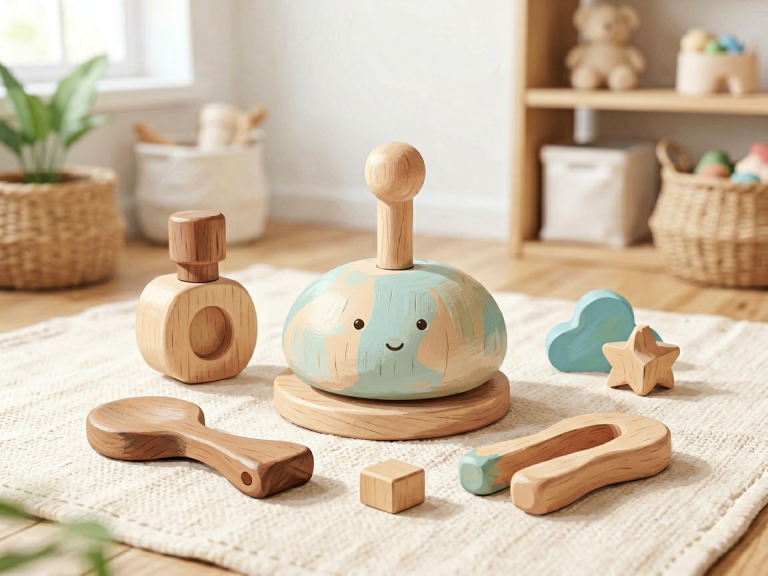
It is important to recognize that the core benefits of engineering kits—problem-solving, creativity, spatial reasoning—can be achieved through many low-cost or free activities. Cardboard box constructions, for example, allow children to design forts, vehicles, or simple machines using tape and scissors. Building with wooden unit blocks, which have been a staple of early childhood classrooms for decades, provides rich opportunities for balance, geometry, and structural thinking. Simple household items like clothespins, craft sticks, and rubber bands can be combined to create bridges, catapults, or marble runs. Even outdoor play—digging in sand, building with sticks, or rolling balls down slopes—nurtures the same engineering instincts.
Moreover, these alternative materials often surpass commercial kits in one crucial aspect: they are truly open-ended. A cardboard box can become a spaceship today and a castle tomorrow, whereas a specialized gear set may have a limited range of possible configurations. Loose parts also encourage divergent thinking because there are no "wrong" ways to use them. For kindergarteners, the process of inventing a solution from scratch—without the scaffolding of pre-designed pieces—can be even more powerful for developing creative problem-solving skills. That said, commercial kits do offer convenience and a curated set of parts that may inspire children who would otherwise not engage. The key is to treat them as one tool among many, not as a magic bullet.
Conclusion: A Balanced Verdict
After weighing the evidence, the conclusion is that engineering kits can be worth it for kindergarteners, but only under the right conditions. They are not a necessary or superior tool for early STEM education; rather, they are an option that can be highly effective when chosen thoughtfully and used with intentional adult involvement. For families with the budget and a child who shows strong interest in building and mechanics, a well-designed engineering kit can provide hours of engaging, educational play that compounds learning over time. For classrooms, engineering kits can be a valuable addition to a rich environment filled with diverse materials, but they should not replace the foundational experiences of free play with blocks, sand, and natural objects.
Ultimately, the question of worth extends beyond dollars and cents. It touches on our understanding of how young children learn best—through hands-on exploration, social interaction, and unhurried experimentation. Engineering kits, when used as a springboard for inquiry rather than a scripted curriculum, can indeed foster a love of tinkering and discovery. But the most important “kit” a child can have is a supportive adult who asks questions, celebrates failures, and joins in the joy of building. Without that, even the most expensive engineering kit may fail to deliver on its promise. With it, even a pile of recycled junk can be a powerful engineering education. So, are engineering kits worth it? Yes—if you bring the curiosity, patience, and creativity that no box can contain.