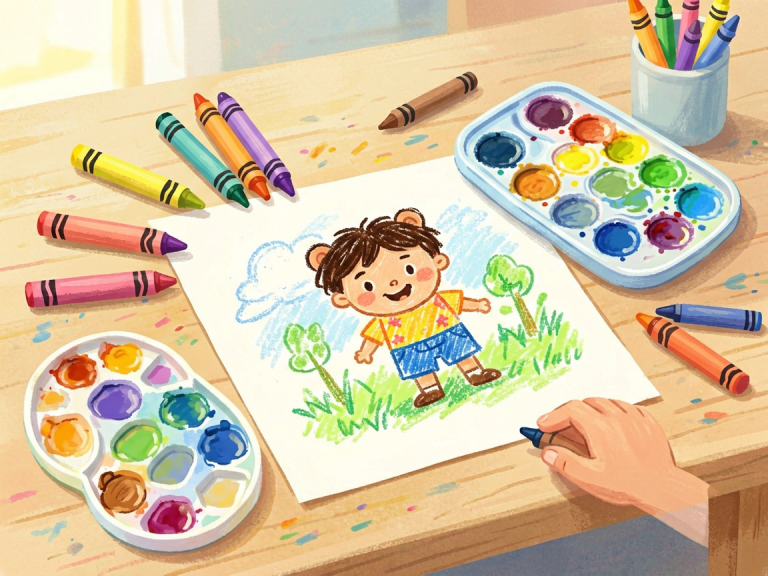
The Ultimate Guide to Independent Play: 10 Critical Mistakes Parents Must Avoid
Independent play is one of the most valuable gifts you can give your child. It fosters creativity, problem-solving skills, emotional regulation, and self-confidence. Yet many parents, despite the best intentions, inadvertently sabotage this magical process. The problem is not a lack of love, but a lack of awareness. We hover, we over-schedule, we jump in at the first whimper, and we mistake our presence for necessity. If you want your child to become a confident, self-directed player, you must first learn what *not* to do. Below are ten critical mistakes to avoid when encouraging independent play—each one more common than you think, and each one fixable with mindful adjustment.
Mistake #1: Intervening Too Quickly When Your Child Gets Frustrated
It is in our parental DNA to rush in and fix things. The block tower topples, the puzzle piece doesn’t fit, the zipper on the dress-up costume gets stuck—and before the child can even take a breath, we are there with a solution. This well-meaning rescue mission is one of the fastest ways to kill independent play. When you intervene too quickly, you send a subtle message: *You cannot handle this on your own.* The child learns to wait for an adult to solve every small problem, rather than developing the persistence to work through frustration themselves.
The key is to practice what child development experts call “active waiting.” Count to ten or twenty before you move. Watch your child’s face. Are they truly stuck, or just processing? Often, the moment of frustration is actually a doorway to a breakthrough. A child who struggles to fit a triangular block into a square hole may, after a few seconds of frowning, rotate it and succeed. That moment of triumph belongs entirely to them—and you would have stolen it if you had jumped in. Only step in if the child is in danger or showing signs of overwhelming distress that lasts more than a minute or two. Otherwise, let them wrestle with the challenge. That wrestling is the work of growing a resilient mind.
Mistake #2: Providing Too Many Toys at Once
Walk into any toy store and you will see the marketing promise: more toys equal more fun. But developmental research tells a different story. When children are surrounded by an overwhelming array of options, their attention scatters like light through a prism. They pick up a toy, drop it, grab another, and never truly engage with any of them. This phenomenon is often called “choice overload.” Instead of deep, sustained play, you get a frantic, superficial grazing that leaves both parent and child feeling unsatisfied.
The fix is simple: rotate toys. Keep only a small selection visible at any given time—say, four to six categories (building blocks, art supplies, a few figurines, a puzzle, a sensory bin). Store the rest in a closet or bin, and swap them out every week or two. This does not deprive your child; it liberates them. With fewer choices, the brain can settle into the kind of focused, imaginative play that builds executive function. You will be amazed at how your child can spend 45 minutes with just a set of wooden blocks and a handful of animal figures when there are no flashing, singing, electronic distractions competing for their attention.
Mistake #3: Expecting Too Much, Too Soon
Independent play is a skill, not a switch that flips on at a certain age. Many parents expect a two-year-old to play alone for 45 minutes, then feel frustrated when they call out after five. The reality is that the ability to play independently develops gradually, in tiny increments. A baby may tolerate only two minutes of solo exploration before needing a caregiver’s reassurance. A toddler might manage ten minutes if the environment is interesting and safe. A preschooler might work up to 30 or 40 minutes, but even that is not guaranteed every day.
The mistake is setting expectations based on a neighbor’s child or a parenting blog post rather than on your own child’s temperament and stage. Start small. If your child can play alone for five minutes, celebrate that. Gradually extend the time by a minute or two each week. Use a timer if it helps—say, “I’m going to sit here and read my book for eight minutes, and you are going to play with your dinosaurs. When the timer goes off, I’ll be ready to play with you again.” This gives the child a clear boundary and a sense of security. Over time, those eight minutes will become fifteen, and then twenty. Patience is the secret ingredient.
Mistake #4: Over-Structuring the Play Space
Have you ever set up an elaborate “invitation to play” with perfect little penguins made of popsicle sticks, only to have your child ignore it completely and instead play with the cardboard box it came in? That is not a failure of your child; it is a sign that you may be over-structuring the play environment. When you present a complete, finished scene—a miniature farm with every animal already in its pen, a train track already assembled—you leave no room for the child’s own imagination. The play becomes about consuming your idea, not creating their own.
An effective independent play space should be open-ended. Provide raw materials rather than finished products. Wooden blocks, fabric scraps, empty containers, Play-Doh, crayons, and paper. Instead of a complete dollhouse, give figures and simple furniture that can be rearranged. Instead of a fully built race track, give ramps and cars and let the child engineer the course. The goal is to offer the *ingredients* for play, not the *recipe*. When children have to invent the story, the layout, and the rules themselves, they are engaging the highest levels of cognitive and creative thinking. You are offering them a stage; let them write the play.
Mistake #5: Ignoring Your Own Presence and Energy
Here is a paradox: independent play does not happen when you completely disappear. It actually happens best when you are nearby but not interfering. The child feels safe knowing you are there, but also feels free because you are not directing them. Many parents make the mistake of either hovering too close (making the child dependent on their attention) or leaving abruptly (creating anxiety that makes play impossible). The sweet spot is “cozy proximity.”
Sit on the floor with your own book or a quiet activity—knitting, journaling, folding laundry. Do not look at your phone; studies show that even a quick glance at a screen makes children feel dismissed. Instead, be a calm, warm presence. Occasionally glance up and offer a soft smile or a nod when the child shows you something, but do not give a long verbal commentary or ask questions like “What are you building?” That kind of questioning pulls the child out of their flow state. A simple “Mm-hmm, I see” is enough. Your quiet, grounded presence is the invisible scaffolding that holds up their independent play tower. When you are fully present but fully hands-off, you give the child permission to explore without performance pressure.
Mistake #6: Relying on Screens as a Substitute for Independent Play
It is tempting to hand a toddler a tablet so you can get dinner ready, but screen time is not independent play. Independent play requires active engagement of the child’s body and mind—manipulating objects, creating narratives, solving physical problems, using fine motor skills, and regulating their own impulses. A screen offers passive entertainment. While a child watching a show may appear “independent,” they are not developing the same neural pathways. In fact, over-reliance on screens has been linked to shorter attention spans, reduced imaginative play, and difficulties with emotional self-regulation.
This does not mean screens are evil; they have their place in moderation. But if you find that your child cannot entertain themselves for even five minutes without a screen, that is a red flag. The mistake is treating the screen as the default solution for “I need to do something.” Instead, build a daily rhythm where screens are limited to specific times, and independent play is the alternative. Keep a basket of open-ended toys accessible in the kitchen or living room so that when you need to cook, your child can reach for blocks or a sensory bin without your help. Over time, you will train their brain to see the real world, not the virtual one, as the source of endless fun.
Mistake #7: Forcing Play That Mirrors Your Own Ideas of Fun
Your child’s independent play may not look like what you imagined. You might envision a peaceful scene of your daughter happily coloring inside the lines, but instead she is dumping all the crayons into a bucket, filling it with water, and watching them float. Or you may hope for your son to quietly assemble a Lego castle, but instead he is using the bricks as missiles to knock down the tower his sister built. This can be unsettling. Many parents make the mistake of redirecting the play toward more “productive” or “appropriate” forms.
Resist this urge. Independent play belongs to the child. If they are not hurting anyone or anything, let their bizarre, messy, seemingly pointless play unfold. Dumping, mixing, banging, and reassembling are all valuable forms of sensory exploration and scientific experimentation. The child is learning about physics, cause and effect, volume, and texture. They are also learning to follow their own curiosity, which is the foundation of lifelong learning. If you constantly steer them toward what you consider “good” play, you are subtly training them to seek your approval rather than their own interests. The result is a child who may eventually become afraid to try new things or who loses the spark of intrinsic motivation. So take a deep breath, step back, and let them be weird. The mess can be cleaned up; the curiosity cannot.
Mistake #8: Being Inconsistent with Routines and Boundaries
Children thrive on predictability. Independent play is much more likely to flourish when it is embedded in a consistent daily routine. If one day you expect 30 minutes of solo play, and the next day you interrupt constantly because you need to get out the door, the child becomes confused and less willing to engage. The mistake is being inconsistent with both the *when* and the *how*.
Set a daily “independent play time” at the same time each day—for example, after breakfast or during the afternoon slump when everyone needs a break. Make it a non-negotiable part of the schedule, just like meals and naps. Explain it calmly: “Every day after lunch, we have quiet play time. You can play in your room or in the living room, and I’ll be right here reading my book. If you need me, you can come get me, but we try to play on our own for a little while.” Consistency builds security. Also, stick to the boundaries you set. If you say “ten minutes,” use a timer and do not cave after three minutes because the child is whining. Whining is a habit; it will diminish when the child realizes you mean what you say. Consistency is the bridge between chaos and competence.
Mistake #9: Over-Praising or Analyzing the Play
When a child finishes a block tower and runs to show you, it is natural to want to cheer: “Wow! That’s amazing! You are such a genius builder!” But excessive or overly evaluative praise can actually undermine independent play. The child may begin to play not for the joy of it, but to earn your applause. They may stop taking risks if they fear you will not approve of the result. And they may become dependent on external validation instead of internal satisfaction.
Instead of praise, use simple, descriptive observations. “I see you stacked the red block on top of the blue one. That tower is very tall.” Or, “You worked on that puzzle for a long time and you didn’t give up.” This acknowledges their effort without judging its value. If the child asks, “Do you like it?” you can say, “I like that you made it yourself. What do you think of it?” This shifts the focus back to the child’s own experience. The goal is to cultivate a child who plays for themselves, not for the audience. Descriptive feedback keeps the spotlight on the child’s process, not on your opinion.
Mistake #10: Neglecting to Model Independent Play Yourself
Finally, the most powerful teacher is example. If you want your child to engage in independent play, they need to see you doing it too. Many parents feel guilty about taking time for themselves, so they fill every spare moment with chores, emails, or scrolling through social media. But when your child sees you always “busy” with tasks that involve them or demanding your attention, they learn that being alone is not valuable. Worse, they may interpret your busyness as rejection.
Set aside a short period each day when you engage in your own independent activity right alongside your child. You could water plants, doodle in a sketchbook, do a crossword puzzle, or simply sit and look out the window with a cup of tea. Let your child see you absorbed in something that does not involve them—and enjoying it. This models that being alone is safe, pleasant, and normal. It also removes the pressure on the child to entertain you. Over time, they will internalize the habit. The child who sees a parent knitting quietly on the couch while they build with blocks will grow up knowing that independence is not abandonment; it is simply part of a balanced life.
Conclusion: The Art of Stepping Back
Independent play is not a luxury; it is a critical developmental practice that builds the mental muscles your child will need for the rest of their life—focus, creativity, resilience, and self-reliance. Avoiding these ten mistakes requires awareness and sometimes a bit of discomfort as you unlearn deeply ingrained habits of hovering and fixing. But each time you step back, you give your child a gift: the chance to discover what they can do all by themselves. And that discovery is the foundation of a confident, capable human being.
Start today. Put away the extra toys. Set a timer. Sit nearby with your own book. Bite your tongue when the tower falls. And watch quietly as your child’s mind begins to unfurl in the beautiful, messy, glorious space you have created for them. The mistakes are easy to make, but the corrections are even easier—and far more rewarding.