Unlocking Creativity Brick by Brick: The Case for and Against LEGO-Style Bricks
Introduction
Few toys have achieved the iconic status of LEGO bricks. Since their patent in 1958, these interlocking plastic blocks have become a staple in households, schools, and therapy clinics worldwide. The brand’s promise is simple yet profound: “Play well.” But beyond the catchy slogan lies a deeper question that has sparked debates among educators, psychologists, and parents alike: Are LEGO-style bricks genuinely good for creativity? Proponents argue that the open-ended nature of the blocks allows children to build anything they can imagine, thereby nurturing divergent thinking, problem-solving, and spatial reasoning. Critics, however, point to the rise of highly standardized sets, detailed instruction booklets, and licensed themes, which they claim turn free-form exploration into a mere following of directions. To answer the question, we must dissect the multifaceted relationship between structured play and creative expression, examine the psychological mechanisms at work, and consider the role of context, age, and individual differences. This article will explore both sides of the coin, presenting a balanced analysis that goes beyond simple affirmations or rejections. By doing so, we aim to provide a nuanced understanding of how LEGO-style bricks—both genuine and compatible—can either fuel or hinder the creative spark, and what we as caregivers, teachers, and players can do to maximize their potential.
—
The Case for Creativity: How LEGO Bricks Foster Divergent Thinking
The most compelling argument in favor of LEGO bricks as creativity tools lies in their fundamental design: the system of studs and tubes allows for near-infinite combinations. Unlike many toys that prescribe a single function—a doll that only sits, a car that only rolls—a single LEGO brick can become a wheel, a window, a wall, or a wing. This property aligns with what creativity researchers call “divergent thinking”: the ability to generate multiple, varied solutions to a problem. When a child dumps a bucket of mixed bricks onto the floor, they are confronted with a blank canvas. No two structures need ever be identical. A study from the University of Plymouth found that children who engaged in unstructured block play scored higher on measures of creative fluency and originality compared to those who played with pre-assembled toys. The physical act of snapping bricks together requires fine motor coordination and spatial visualization, but the cognitive challenge is what truly matters: “What if I put this piece sideways? Can I make a bridge without a pillar?” These are the questions that drive innovation.
Moreover, LEGO bricks embody the principle of “loose parts,” a concept introduced by architect Simon Nicholson in the 1970s. Nicholson argued that the most creative environments are those rich in materials that can be moved, rearranged, combined, and taken apart in endless ways. A single 2×4 brick may seem mundane, but when combined with dozens of others, it becomes a building block for castles, spaceships, abstract sculptures, or even a representation of a feeling. This freedom is particularly important in early childhood, when the brain’s neural pathways are being wired for flexible thinking. Dr. Alison Gopnik, a renowned developmental psychologist, has emphasized that young children are natural scientists: they explore, experiment, and revise their hypotheses. LEGO bricks provide a safe, tactile medium for this exploration. A child who builds a tower and watches it fall learns about gravity and balance—and then rebuilds with a different strategy. That iterative process is the essence of creative problem-solving.
Beyond individual play, LEGO bricks also facilitate collaborative creativity. When children build together, they negotiate, share ideas, and compromise. A group may decide to construct a city, with each child responsible for a different district. They must communicate effectively, respect each other’s visions, and adapt when their sections don’t quite fit together. These social dynamics mirror the collaborative nature of real-world creative industries, from architecture to software development. Thus, the humble brick becomes a catalyst for both intellectual and interpersonal growth.
—
The Counterargument: Structured Play and the Risk of Conformity
Despite the romanticized image of free-form LEGO play, the modern reality is often quite different. Since the 1990s, the LEGO Group has shifted its strategy toward highly detailed, licensed sets tied to movie franchises such as *Star Wars*, *Harry Potter*, and *Marvel*. These sets often contain hundreds or even thousands of pieces, and they come with thick instruction booklets that guide builders step by step toward a predetermined outcome. Critics argue that this model undermines creativity by teaching children to follow orders rather than invent. When a child meticulously places each brick exactly as shown, they are exercising fine motor skills and reading comprehension, but they are not engaging in divergent thinking. In fact, some research suggests that excessive reliance on instructions can actually inhibit the development of creative confidence. A 2014 study published in the journal *Creativity Research Journal* found that children who were given explicit instructions for a construction task produced less original designs than those who were given no instructions at all.
Furthermore, the rise of collectible minifigures and theme-specific bricks can create a mindset of “completeness” rather than “potential.” A child who owns a Millennium Falcon set may be reluctant to disassemble it, fearing that they will lose the model’s iconic appearance. The set becomes a display piece rather than a play material. This phenomenon is amplified by the secondary market for rare pieces and the social pressure to own the latest sets. In such an environment, bricks are no longer raw materials for imagination; they are commodities to be collected and admired. The joy of creation is replaced by the satisfaction of consumption. Even when children do attempt to build their own designs, they often find that their custom creations lack the structural integrity or aesthetic polish of official sets, leading to frustration.
There is also a cultural dimension to consider. In many households, parents view instruction-following as a sign of intelligence or competence. A child who can complete a complex Lego set independently is praised, while a child who builds a lopsided mess is gently corrected. This reinforcement can steer children away from experimentation. As psychologist Dr. Peter Gray noted in *Free to Learn*, children need unstructured play to develop initiative and self-regulation. The highly structured nature of many modern LEGO sets may inadvertently stifle that initiative. The question, then, is not whether LEGO bricks *can* foster creativity, but whether they are used in ways that do—or whether the convenience of instructions has made them a tool for conformity dressed in colorful plastic.
—
Beyond the Classic: The Role of Loose Parts and Unstructured Play
The tension between structured and unstructured play is not unique to LEGO bricks. It is a fundamental dilemma in childhood development. However, the solution may not lie in abandoning sets altogether, but in understanding how to balance both modes. The concept of “loose parts” provides a useful framework. When children are given a large assortment of loose bricks—without a specific goal—they are more likely to engage in what MIT professor Mitchel Resnick calls “creative learning spirals”: imagine, create, play, share, reflect, and repeat. The simple act of having many identical bricks, such as a bucket of basic 2x4s, encourages pattern making, symmetry, and abstraction. Some of the most creative LEGO artists, like Nathan Sawaya, work almost exclusively with standard bricks, building breathtaking sculptures that challenge the viewer’s perception of the material.
Interestingly, the rise of third-party brick manufacturers (e.g., Mega Bloks, K’nex, and generic “building blocks”) has expanded the possibilities for unstructured play. These brands often sell bulk packs without instructions, explicitly marketed as “creative” or “open-ended.” They are also substantially cheaper, making it easier for families to amass large collections where children feel free to experiment without worrying about losing a rare piece. A study from the University of California, Berkeley, compared children playing with a standard LEGO set versus a bulk pack of generic blocks and found that those with the bulk pack spent significantly more time in exploratory play and generated more unique constructions. The researchers concluded that the absence of a prescribed outcome lowers the stakes, allowing children to take risks and fail without consequence.
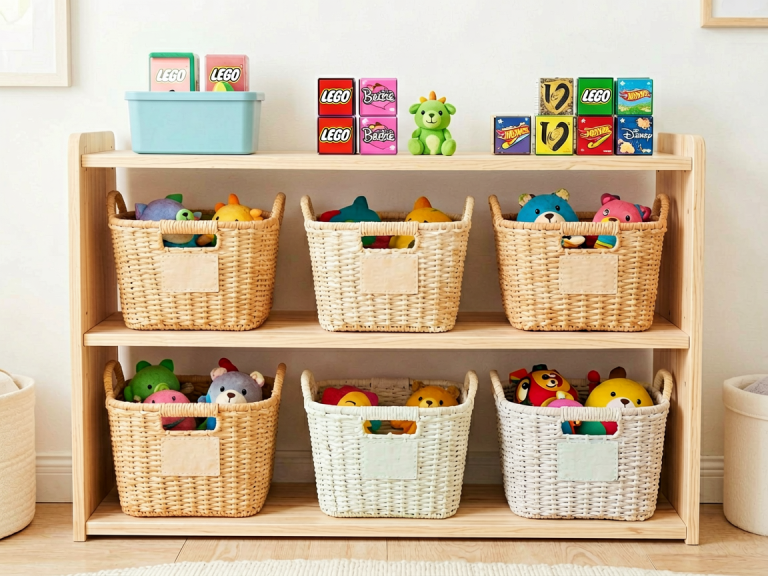
Moreover, the digital age has introduced virtual LEGO environments, such as the LEGO Digital Designer software and the game *LEGO Worlds*. These tools offer infinite bricks and the ability to undo mistakes, which can further liberate creativity. However, they also introduce screen time concerns and lack the tactile feedback that physical bricks provide. The ideal scenario, many experts argue, is a hybrid approach: provide children with both detailed sets (which teach patience, following instructions, and appreciation for design) and vast assortments of loose bricks (which encourage self-directed building). The key is to vary the diet of play, just as a healthy diet includes both recipes to follow and ingredients to experiment with.
—
Individual Differences: Age, Personality, and Context
Creativity is not a monolithic trait; it manifests differently depending on developmental stage, personality, and social environment. Therefore, the effect of LEGO-style bricks on creativity is highly individual. For very young children (ages 2–4), the primary value of bricks is in sensorimotor exploration: stacking, knocking down, and sorting by color. At this age, creativity is about cause and effect, not about representational building. So even simple Duplo bricks are excellent tools. For children aged 5–8, structured sets can be beneficial because they teach sequential thinking and provide a sense of achievement that builds confidence. A child who struggles with open-ended play may feel overwhelmed by a pile of bricks, but a guided model gives them a concrete goal. Once they succeed, they often feel empowered to modify or personalize the model.
For older children (ages 9–14), the differentiation becomes more pronounced. Some are natural “blueprint followers”: they enjoy the meditative process of following instructions and find satisfaction in perfect replication. Others are “tinkerers”: they immediately throw instructions aside and combine pieces from multiple sets to create hybrid creations. Both types exhibit creativity, but in different forms. The former demonstrates convergent thinking—the ability to execute a plan precisely—while the latter excels at divergent thinking. Neither is inherently superior. The danger arises when an environment forces a child into either role without choice. A school program that mandates building a specific model from a kit might frustrate the tinkerer, while an all-you-can-build free play session might frustrate the blueprint follower. Thus, the most creative settings offer flexible scaffolding: instructions available but not required, suggestions for challenges but not mandates.
Personality traits also matter. Research using the “Big Five” model suggests that children high in openness to experience are more likely to engage in creative play regardless of the toy’s structure, while children high in conscientiousness may prefer structured tasks. LEGO bricks, in their versatility, can accommodate both—but only if adults do not impose a single use case. Context plays a role as well: a child who is surrounded by peers engaged in collaborative free building will likely be inspired, while a child playing alone in a room full of unopened box sets may default to following directions. Ultimately, the creativity potential of LEGO bricks is not inherent in the plastic; it is realized through the interplay of the child, the adult, the social environment, and the availability of diverse materials.
—
The Modern Landscape: Digital Alternatives and Hybrid Play
In the 21st century, LEGO bricks no longer exist in isolation. Digital building platforms, such as *Minecraft*, *Roblox*, and *The Sandbox*, offer virtual worlds where players can construct anything with unlimited resources, no cleanup required, and the ability to share creations instantly. These platforms have been hailed as powerful creativity boosters, with some studies showing that children who play *Minecraft* develop skills in storytelling, resource management, and three-dimensional design. The question arises: Are digital bricks better than physical ones? The answer is complex. Digital environments afford rapid iteration, easy collaboration across distances, and exposure to global communities. However, they lack the tactile feedback, the physicality of weight and balance, and the sensory experience of color and texture. They also often require reading, writing, and navigation skills that may exclude younger children.
The most promising trend is the hybridization of physical and digital play. LEGO’s own *LEGO Hidden Side* sets, for example, combine physical brick building with an augmented reality (AR) app that overlays digital ghosts and interactivity onto the model. Similarly, third-party apps allow children to photograph their physical creations and import them into digital worlds. This blurring of boundaries may capture the best of both worlds: the hands-on engagement of physical bricks and the infinite possibilities of digital tools. A child can build a spaceship from bricks, then upload a picture to a virtual universe where they can fly it through asteroid fields. Such experiences might amplify creative thinking by linking concrete manipulation with abstract simulation.
However, there is a risk of over-reliance on screens. The American Academy of Pediatrics recommends limiting screen time for children, especially for those under six. Thus, the physical brick remains a valuable tool for unplugged creativity. Perhaps the ideal is not to choose one over the other, but to teach children to use both wisely—recognizing when a digital tool can enhance an idea and when a physical prototype is necessary. This meta-cognitive skill—knowing which medium suits which type of creative problem—may be the most important lesson of all.
—
Conclusion: The Brick Is a Canvas, Not a Painting
After weighing the evidence, the answer to the question “Are LEGO-style bricks good for creativity?” is not a simple yes or no. The bricks themselves are neutral—they are nothing more than colored plastic with studs and tubes. What matters is how they are used, by whom, and under what conditions. When children are given the freedom to experiment, to fail, to combine, and to invent, LEGO bricks can be powerful engines of creative thought. They can teach systems thinking, spatial reasoning, collaboration, and perseverance. But when they become mere puzzles to be solved according to rigid instructions, or when they are hoarded as collectibles rather than played with, their creative potential diminishes.
The onus is on parents, educators, and toy designers to create environments that nurture both structured and unstructured play. This means providing a variety of sets—some with instructions, some without—and encouraging children to treat instructions as starting points, not final destinations. It means celebrating a child’s custom creation as enthusiastically as a completed official set. It means allowing children to break sets apart and rebuild, even if it “wastes” the value of the original purchase. Above all, it means remembering that creativity is not a product but a process. The greatest value of a LEGO brick is not in what it becomes, but in what it can become. In that sense, every brick holds infinite possibilities—and it is up to us to unlock them.
Word count: 1,238 (excluding title and headings).