The Ultimate Screen-Free Play Guide for Parents: Rediscovering the Joy of Unplugged Childhood
Introduction
In an era where screens dominate nearly every aspect of daily life, from education to entertainment, parents often find themselves wrestling with a familiar dilemma: how much screen time is too much? While digital devices offer convenience and learning opportunities, the growing body of research on the negative effects of excessive screen exposure—ranging from reduced attention spans to impaired social skills—has prompted a renewed interest in screen-free play. But stepping away from tablets and television does not mean stepping into a void of boredom. On the contrary, screen-free play opens the door to a richer, more imaginative, and deeply connected childhood.
This guide is designed to help parents navigate the shift toward unplugged play with confidence and creativity. Whether you are a seasoned advocate of low-tech living or a parent just beginning to question the role of screens in your home, you will find practical strategies, inspiring ideas, and a clear understanding of why this matters. Screen-free play is not a punishment; it is a gift—one that nurtures resilience, curiosity, and the kind of joy that only comes from hands-on exploration.
—
Why Screen-Free Play Matters
Before diving into the "how," it is essential to understand the "why." Screen-free play is not merely the absence of devices; it is the presence of opportunities for genuine growth.
First, unstructured play—the kind that happens without adult direction or digital prompts—is the natural laboratory of childhood. When children build forts, invent imaginary worlds, or negotiate the rules of a game, they are developing executive function skills such as planning, self-regulation, and problem-solving. Screens, by contrast, often provide pre-packaged solutions that short-circuit this process. A child watching a cartoon about sharing learns passively, but a child negotiating who gets the red block learns actively.
Second, screen-free play strengthens the parent-child bond. When you put down your own phone and join your child in building a pillow fort or digging in the garden, you send a powerful message: *You are more interesting than any app.* This connection builds trust and emotional security, which are the foundations of healthy development.
Third, excessive screen time has been linked to sleep disruption, obesity, and even behavioral issues. The American Academy of Pediatrics recommends limiting screen use for children aged 2 to 5 to one hour per day of high-quality programming, and for older children to ensure that screen time does not interfere with sleep, physical activity, and other behaviors essential to health. A screen-free play routine is a direct way to meet these guidelines without feeling deprived.
—
The Benefits of Unstructured Play
Unstructured play is the unsung hero of childhood development. Unlike structured activities such as sports practice or music lessons, unstructured play has no fixed outcome. This freedom allows children to explore their own interests, test boundaries, and learn from failure in a low-stakes environment.
Consider the difference between a child playing a math app and a child playing with a set of wooden blocks. The app rewards correct answers with bells and stars, but the blocks reward curiosity. The child might build a tower that falls, then rebuild it with a wider base. That trial-and-error process teaches engineering principles, patience, and resilience—all without a single pixel.
Moreover, unstructured play is a powerful antidote to the anxiety that many children experience in our achievement-oriented culture. When play is screen-free and self-directed, the pressure to perform disappears. A child can spend an entire afternoon pretending to be a dragon without worrying about winning or losing. This kind of immersion is deeply calming and fosters a sense of agency.
For parents, the challenge is to resist the urge to "manage" unstructured play. It can be tempting to step in with suggestions or corrections, but the magic happens when adults trust the process. Provide the raw materials—cardboard boxes, art supplies, outdoor space—and let the children lead.
—
Practical Tips for Screen-Free Play at Home
Creating a screen-free play environment does not require a complete home renovation or a budget for expensive toys. In fact, the most engaging play often comes from the simplest materials. Here are actionable tips for every room of the house.
1. Designate a "Yes Space."
Choose a corner of the living room or a child’s bedroom where almost anything is allowed—within reason. Cover the floor with a washable rug or mat, and stock it with open-ended toys: building blocks, fabric scraps, play dough, costumes, and art supplies. The goal is to create a space where children can make messes, invent, and explore without constant reminders to "be careful."
2. Curate, Don’t Clutter.
Too many toys can overwhelm children and actually reduce creative play. Follow the principle of "less is more." Rotate toys every few weeks to keep interest fresh. A child who has ten blocks will build a tower; a child who has one hundred blocks may build a city. But a child surrounded by hundreds of plastic gadgets may simply bounce from one to the next without deep engagement.
3. Embrace the Cardboard Box.
The humble cardboard box is perhaps the most versatile plaything ever invented. It can become a rocket ship, a castle, a car, or a time machine. Keep a stack of boxes of various sizes, along with child-safe scissors, tape, and markers. Encourage your child to decorate and modify the box. This activity combines fine motor skills, creativity, and dramatic play—all for the cost of a delivery package.
4. Build a Reading Fort.
Reading together is a screen-free activity that also strengthens literacy. But instead of reading on a couch, build a fort using blankets, pillows, and chairs. Bring a flashlight and a stack of picture books. The novelty of the setting makes the experience magical, and the cozy environment encourages longer reading sessions.
—
Outdoor Adventures and Nature Play
Nature is the ultimate screen-free playground. Unlike indoor environments, the outdoors offers ever-changing stimuli—wind, clouds, insects, textures—that engage all the senses. Research shows that time in nature reduces stress, improves mood, and enhances cognitive function in children.
1. Go on a "Listening Walk."
Instead of a walk with a destination, try a listening walk. Ask your child to close their eyes every few minutes and identify the sounds they hear: birds, rustling leaves, a distant lawnmower. This practice builds auditory discrimination and mindfulness. You can also bring a notebook to draw or write about the sounds.
2. Create a Nature Scavenger Hunt.
Before heading outside, make a simple list of items to find: a feather, a smooth stone, a yellow leaf, something that makes a sound, something that smells good. Tailor the list to your environment and your child’s age. For older children, you can add challenges like "find something that was once alive" or "find three different shapes."
3. Build a Fort or Shelter Outdoors.
If you have access to a backyard or a park, gather fallen branches, leaves, and stones to build a small shelter. This activity combines engineering, teamwork, and gross motor skills. Even if the fort collapses, the process of problem-solving is invaluable.
4. Plant Something Together.
Gardening is screen-free play that yields long-term rewards. Let your child choose a fast-growing plant like beans or sunflowers. They will learn about responsibility, patience, and biology. Watering the plant, pulling weeds, and watching it grow become daily rituals that anchor the child in the natural world.
—
Creative Arts and Crafts
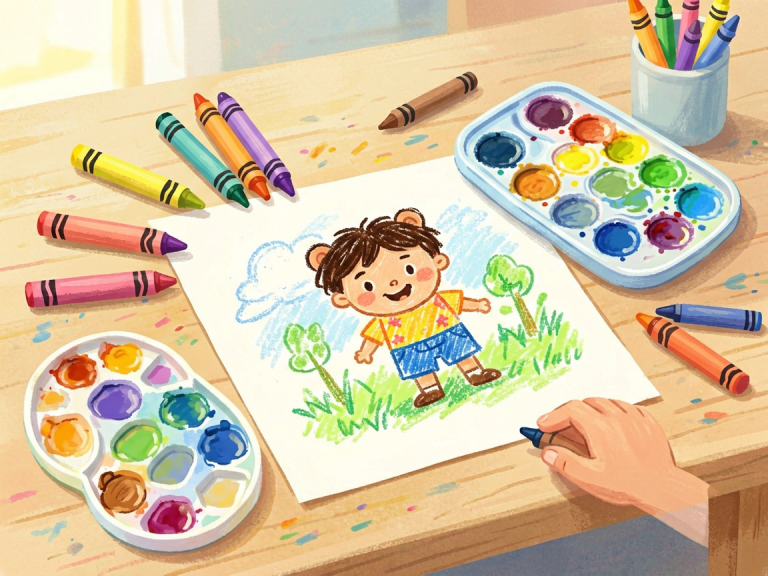
Artistic expression is a cornerstone of screen-free play. It allows children to process emotions, experiment with color and texture, and develop fine motor skills. The key is to focus on process, not product. Avoid asking "What is that?" and instead say "Tell me about your drawing."
1. The "Junk Box" Collage.
Save bottle caps, old buttons, fabric scraps, cardboard tubes, and magazine cutouts in a box. Provide glue, scissors, and a large sheet of paper. Let your child create a collage without any instructions. This activity encourages compositional thinking and recycling.
2. Homemade Play Dough.
Making play dough from scratch is an activity in itself. Use a simple recipe (flour, salt, cream of tartar, oil, water, and food coloring). Kneading the dough is a sensory experience, and adding scents like cinnamon or lavender can engage the olfactory sense. Once the dough is ready, provide cookie cutters, rolling pins, and plastic knives for open-ended sculpting.
3. Story Stones.
Collect smooth, flat stones. Let your child paint simple images on them—a tree, a sun, a fish, a house. Then use the stones to tell stories. For example, place the tree stone and the fish stone together and ask, "What happens when a fish climbs a tree?" This stimulates narrative thinking and oral language skills.
4. Shadow Puppet Theater.
On a sunny day or with a flashlight, create shadow puppets using hands or cut-out shapes on sticks. Hang a white sheet and let your child perform a play. This combines art, storytelling, and physics (light and shadow).
—
Building with Blocks and Loose Parts
Blocks and loose parts are the quintessential screen-free toys because they have no predetermined function. A wooden block can be a brick, a phone, a car, or a piece of cake. The child’s imagination determines its use.
1. Invest in Simple Blocks.
You do not need a massive set. A small set of wooden unit blocks (squares, rectangles, triangles, cylinders) can provide years of play. Add other natural loose parts like pinecones, pebbles, and slices of wood. The variety of textures and shapes invites complex constructions.
2. Introduce "Loose Parts" Play.
Loose parts are materials that can be moved, combined, and transformed. Examples include corks, string, bottle caps, plastic lids, fabric strips, and buttons. Spread them on a tray and let your child experiment. Loose parts play supports creativity, problem-solving, and mathematical thinking (sorting, counting, balancing).
3. Set Building Challenges.
To add a spark of structure without stifling creativity, occasionally offer a challenge: "Can you build a tower that is taller than a chair?" or "Can you build a bridge that a toy car can drive under?" These prompts encourage planning and persistence.
—
Role-Playing and Imaginative Play
Dramatic play is how children make sense of the world. By pretending to be a doctor, a chef, a parent, or a superhero, they practice social roles, language, and empathy. Screens often show children what to think, but role-playing lets them think for themselves.
1. Create a Dress-Up Box.
Collect old clothes, hats, scarves, shoes, and accessories. Include items like a stethoscope (toy or real), a chef’s apron, a doctor’s coat, a construction helmet, and a cape. Let your child freely combine items and invent characters. The more diverse the collection, the richer the play.
2. Set Up a "Small World."
Use a shallow tray or a cardboard box lid to create a miniature scene. Add small figurines, toy animals, wooden blocks, and natural materials like moss, sticks, and sand. The child can create a farm, a jungle, a city, or a fantasy realm. This type of play can last for hours and evolves as the child adds details.
3. Play Restaurant.
Pretend to be customers at a restaurant. Your child can be the chef and server. Use play food or real ingredients (like a bowl of cereal and plastic bowls). Take orders, write menus, and "pay" with toy money. This activity practices counting, writing, and social interaction.
—
Incorporating Screen-Free Play into Daily Routines
One common barrier to screen-free play is the perception that it requires huge blocks of time. In reality, small moments throughout the day can be reclaimed from screens.
Morning: Instead of turning on cartoons during breakfast, play a listening game. "I spy with my little eye something that is yellow." Or put on music and dance while eating.
After School: Before homework or screens, offer a 20-minute "reset" activity: building with blocks, drawing, or playing outside. This helps children decompress and transition.
Evening: Replace the after-dinner screen with a family board game, a round of charades, or reading a chapter book aloud. This creates a calm rhythm that promotes better sleep.
Weekends: Designate one screen-free day per week. Plan a hike, a picnic, a craft marathon, or a family "invention" project where everyone works together to build something from recycled materials.
—
Overcoming Challenges
Of course, shifting to more screen-free play is not always easy. Children accustomed to the instant gratification of screens may initially resist. Here are strategies for common hurdles.
1. The "I’m bored" Protest.
Boredom is not an emergency. It is the soil in which creativity grows. When your child complains of boredom, offer a short list of screen-free options: "You can draw, build with blocks, or go outside. Let me know what you decide." Then step back. The first few times may be rocky, but children quickly learn to entertain themselves.
2. Parental Guilt and Fatigue.
Parents are often exhausted, and handing a child a tablet can feel like a survival tactic. That is understandable. The goal is not perfection but progress. Start with one 30-minute screen-free window per day. Use that time to connect or simply to sit together while your child plays. You do not have to plan elaborate activities; sometimes your presence is enough.
3. Peer Pressure.
If other families rely heavily on screens, your child may feel left out. Explain your family’s values in a positive way: "We like to play in ways that let our imaginations do the work." Invite friends over for screen-free playdates and model the fun yourself. Often, once children experience the joy of unplugged play, they prefer it.
—
Conclusion
Screen-free play is not a return to a nostalgic past; it is a forward-looking choice for a healthier, more connected childhood. It invites children to engage with the real world—to feel the texture of mud, to hear the crunch of leaves, to invent a story from scratch, to look into another person’s eyes during a shared game. It is a gift that keeps giving, long after the screens are turned off.
As parents, we have the power to shape our children’s relationship with technology. By prioritizing screen-free play, we are not depriving them; we are giving them something far more valuable: the confidence to create, the resilience to fail, and the joy of being fully alive in the present moment. Start small. Put down your own phone. Pick up a block. And watch the magic unfold.
Start with the complete guide: Beyond the Screen: Why Screen-Free Toys Are Winning the Battle for Child Development.