Safe Alternatives for Toys with Sharp Edges: Prioritizing Child Safety Without Sacrificing Fun
Introduction
Every parent, caregiver, or educator understands the instinctive fear that arises when a child reaches for a toy with a visibly dangerous edge. Sharp corners, jagged plastic flashing, or poorly designed metal components can turn a joyful play session into a trip to the emergency room. According to the U.S. Consumer Product Safety Commission, thousands of toy-related injuries occur each year, with lacerations and puncture wounds from sharp edges accounting for a significant portion of these incidents. The good news is that the modern toy industry, driven by rigorous safety standards and innovative manufacturing techniques, has developed a wide array of safe alternatives that eliminate the risks associated with sharp edges while preserving—and often enhancing—the play value. This article explores the dangers of sharp-edged toys, examines material and design innovations that provide safer options, and offers practical guidance for selecting age-appropriate alternatives that protect children without diminishing their developmental experiences.
The Dangers of Sharp-Edged Toys: Why Safety Matters
To understand the importance of safe alternatives, we must first recognize the specific hazards posed by toys with sharp edges. Young children, especially those under three years of age, have developing motor skills and limited understanding of danger. They may fall while carrying a toy, or they might put a sharp-edged object in their mouths, leading to cuts, choking hazards, or internal injuries. Even older children can be injured during rough play or when using toys in unintended ways. Sharp edges are often hidden in seemingly harmless toys—plastic dollhouses with poorly finished window frames, wooden blocks that have splintered at the corners, or action figures with jagged weapon accessories. The consequences range from minor scratches to serious wounds that require stitches, and in rare cases, infections or permanent scarring. Furthermore, sharp edges can damage furniture, walls, and flooring, creating additional safety risks in the home environment. This is why regulatory bodies such as ASTM International (formerly American Society for Testing and Materials) and the European Union’s EN 71 standard mandate that all toys intended for children under eight years old must be free of sharp points and edges. However, compliance with these standards is not always uniform, especially for imported or second-hand toys. Therefore, understanding safe alternatives empowers consumers to make informed choices.
Material Innovations for Safer Play
One of the most effective ways to eliminate sharp edges is through careful material selection. Traditional toy materials like hard plastics, untreated wood, and metal are inherently prone to developing sharp edges during manufacturing or after wear and tear. Today, manufacturers have turned to a variety of safer alternatives that combine durability with softness.
Soft and Flexible Polymers
Thermoplastic elastomers (TPE) and silicone have become staples in the production of teething toys, bath toys, and building blocks. These materials are inherently non-toxic, BPA-free, and remarkably resistant to cracking or splintering. When molded, they can be designed with rounded contours that are impossible to create with rigid plastics. For example, silicone teething rings often feature textured surfaces that soothe gums without any sharp protrusions. Similarly, flexible plastic building blocks, such as those from the brand “Mega Bloks” or certain “Duplo” sets, use a softer polyethylene formulation that bends rather than breaks, ensuring that any fractured piece will have dull, rounded edges rather than sharp shards.
Natural and Sustainable Materials
Wooden toys remain popular for their aesthetic and tactile qualities, but sharp corners on wooden blocks or train sets can be dangerous. The solution lies in precision manufacturing and finishing techniques. High-quality wooden toys are sanded multiple times with increasingly fine grit sandpaper, then coated with a non-toxic, water-based lacquer that seals the surface and prevents splintering. Some manufacturers now use bamboo, which is naturally smoother and less prone to splintering than conventional hardwoods. Additionally, natural rubber (from the hevea tree) is an excellent alternative for chew toys and soft building sets. Unlike latex, natural rubber can be molded into seamless shapes without any seams that might produce sharp edges.
Foam and Fabric-Based Composites
For larger play structures, such as foam climbing blocks or soft play mats, closed-cell polyethylene foam (EVA foam) offers an ideal combination of rigidity and cushioning. EVA foam can be die-cut into complex shapes like castle turrets or puzzle pieces, and every cut edge is heat-sealed to create a smooth, rounded finish. Fabric-based alternatives, such as plush dolls with embroidered details, eliminate sharp edges entirely because all components are sewn within soft textile layers. However, care must be taken to ensure that buttons, eyes, and other embellishments are securely attached and do not become choking hazards.
Design Principles to Eliminate Sharp Edges
Beyond material choices, thoughtful design can prevent sharp edges from ever appearing. The principle of “universal design for safety” has influenced many modern toy engineers.
Rounded Corners and Filleted Edges
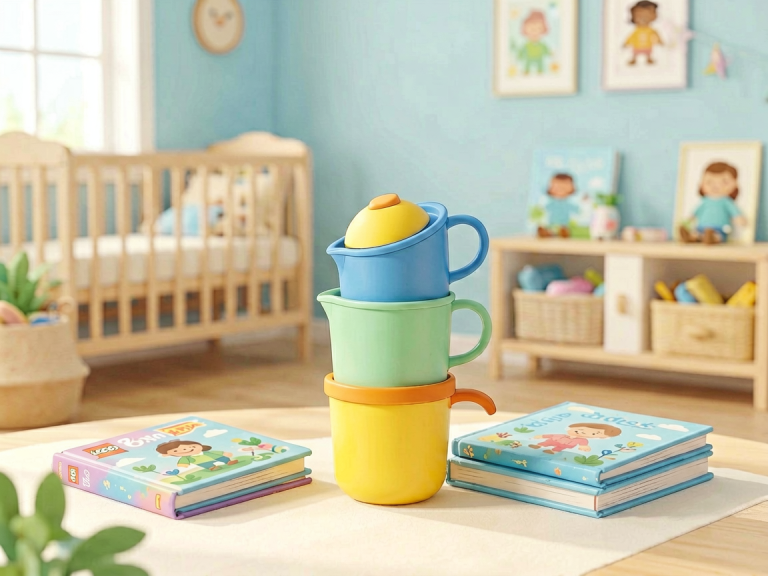
One of the simplest yet most impactful design choices is to replace sharp 90-degree angles with smooth curves. When a toy is designed using computer-aided design (CAD) software, engineers can specify a radius for every corner, typically at least 2–3 millimeters for small toys and larger for larger play equipment. This approach is used in nearly all contemporary plastic toys for children under three, including stacking rings, nesting cups, and simple puzzles. Even for older children, where some sharpness might be acceptable in decorative features (e.g., the spike of a dinosaur), safety regulations require that the tip be blunted or covered with a soft material.
Seamless Molding and No Assembly Required
Toys that require assembly often have exposed sharp edges where two parts connect. The safest alternatives are those that are injection-molded as a single piece, eliminating joints and seams. For example, a simple toy car that is molded in one piece from flexible plastic has no sharp edges under the chassis, whereas a car made from two attached halves might have a sharp seam. Manufacturers are increasingly using “live hinge” technology, where a thin, flexible piece of plastic connects two parts, allowing articulation without separate hinges that can pinch or cut.
Integrated Safety Features
Some toys incorporate protective barriers that shield children from potentially hazardous areas. For instance, scissors designed for children have rounded tips and plastic blades that can only cut paper, not skin. Toy kitchen sets include knives with serrated plastic edges that are not sharp enough to cause injury. Similarly, toy tools like hammers and screwdrivers are made with soft rubber heads or blunt ends. These integrated safety features allow children to engage in imaginative play that mimics adult activities without the corresponding danger.
Age-Appropriate Alternatives for Different Developmental Stages
Selecting safe alternatives for toys with sharp edges also depends on the child’s age and developmental milestones. The following categories provide guidance based on typical risk profiles.
Infants (0–12 Months)
For infants who explore the world primarily through mouthing and grasping, any sharp edge is unacceptable. Safe alternatives include soft fabric books with crinkle pages, wooden teethers that are certified smooth (look for ASTM F963 compliance), and silicone stacking rings. Be wary of toys that have small parts pushed through fabric, as the attachment points can create sharp plastic edges if the fabric tears. One excellent product category is the “Oball” series—a lattice of soft, flexible plastic tubes that are completely devoid of sharp corners and can be easily cleaned.
Toddlers (1–3 Years)
Toddlers are mobile and curious, often throwing toys or crashing them into surfaces. Sharp edges can appear when toys break. The safest alternatives for this age group are large, chunky puzzles made from thick, rounded wood or foam, and building blocks that are large enough not to be swallowed. Melissa & Doug’s “Chunky Puzzle” line is a good example: each piece is a thick wooden shape with heavily sanded edges. Another alternative is magnetic building sets (like Magna-Tiles), where the tiles are made of durable plastic with completely smooth edges and no exposed magnets. The magnets are enclosed in the plastic, eliminating any sharp metal edges.
Preschoolers and Older Children (3–8 Years)
As children engage in more complex pretend play, they may want toys that resemble real objects. Safe alternatives to toy tools with sharp edges include those made entirely from plastic or foam. For example, a toy kitchen knife set from Learning Resources uses a plastic knife with a wavy, serrated edge that can slice a play dough banana but will not cut skin. Another safe alternative is the “LEGO Duplo” line, which has larger, rounded bricks that are easier for small hands to manipulate and are free of sharp corners. For arts and crafts, safety scissors with blunt tips and plastic blades (like the “Snipper” scissors) allow cutting paper without risk.
Outdoor and Active Play
Sharp edges on outdoor toys—such as plastic slides, playhouses, or ride-on vehicles—can be particularly dangerous because falls are common. Safe alternatives include inflatable bounce houses (which have no hard edges), playground slides made from rotationally molded polyethylene with rounded edges, and ride-on cars made from plastic with hollow, flexible bumpers. Many modern outdoor playsets use recycled plastic lumber that is splinter-proof and has rounded ends.
Case Studies: Successful Safe Toy Designs
To illustrate the practical application of these principles, consider a few notable products that have successfully replaced sharp-edged toys with safer alternatives.
The Svan Moon Rocker
Traditional rocking horses often have sharp metal springs or wooden edges that can pinch fingers. The Svan Moon Rocker is a modern alternative made from a single piece of molded, high-density polyethylene with rounded, soft curves. No sharp edges exist anywhere because the rocker’s entire surface is smooth and seamless. It also lacks any protruding parts that could cause injury.
Hape’s “Happy Sand” Sand Toys
Sand toys like plastic shovels and buckets often have sharp seams from the injection molding process. Hape’s sand toys are made from biodegradable plant-based plastics and feature a unique “soft-touch” surface with rounded edges. The shovel’s blade is intentionally dull, yet it is effective for scooping sand because the design maximizes surface area rather than sharpness.
Skip Hop’s “Explore & More” Activity Walker
Walking toys designed for babies often have sharp corners where the wheels attach to the body. Skip Hop’s activity walker uses a triangular, rubberized base with no exposed axles. The entire body is covered in soft, textured silicone, and the wheels are housed within a protective bumper so that little fingers cannot reach any moving parts.
Conclusion
The transition to safe alternatives for toys with sharp edges is not merely a regulatory requirement but a moral imperative for manufacturers, retailers, and caregivers. By understanding the dangers posed by sharp edges—from minor cuts to severe lacerations—and by embracing innovative materials like silicone, EVA foam, and precision-sanded wood, we can create play environments that foster curiosity and development without compromising safety. Thoughtful design, including rounded corners, seamless molding, and integrated safety features, further reduces risks. Moreover, age-appropriate selection ensures that infants, toddlers, and older children each benefit from toys that match their physical capabilities and play behaviors.
Parents and educators should make it a habit to inspect toys regularly for signs of wear that might expose sharp edges, and they should choose products from reputable brands that prioritize safety certifications. When in doubt, opting for toys made entirely from soft materials—such as fabric, silicone, or foam—provides the highest level of protection. As the toy industry continues to evolve, we can look forward to even more creative, sustainable, and safe alternatives that allow children to explore the world with joy and confidence, free from the fear of sharp edges. In the end, the best toys are those that inspire imagination, encourage movement, and keep little hands safe.