Wooden Blocks for Tweens: An Unexpected Investment in Cognitive and Emotional Growth
Introduction
As children transition from the playgrounds of early childhood into the complex social and academic world of the tween years (roughly ages 8 to 12), parents often find themselves navigating a minefield of consumer choices. Electronics, video games, and social media platforms dominate the wish lists, while classic toys like wooden blocks are frequently dismissed as relics of a bygone era. Yet, before you relegate those simple maple cubes to the donation bin, consider this: wooden blocks may be one of the most powerful, underappreciated tools for supporting the specific developmental challenges of the tween stage. The question “Should I buy wooden blocks for my tween?” is not merely nostalgic; it is a question about whether we are willing to prioritize deep cognitive engagement, collaborative problem-solving, and unstructured creativity over passive entertainment. This article makes a compelling case that for many tweens, wooden blocks are not just a purchase worth considering, but an investment in their future learning and emotional resilience.
—
1. Cognitive Benefits: Beyond Simple Stacking
Many adults associate wooden blocks with toddlers learning to balance and sort. However, for a tween brain that is rapidly developing executive functions, blocks offer a level of complexity that matches their growing capacity for abstract reasoning.
Spatial Reasoning and Mathematical Thinking
Tweens are at a prime age to benefit from activities that enhance spatial visualization—a skill strongly linked to success in STEM fields. Building a sturdy tower, a cantilevered bridge, or a multi-level castle requires understanding of geometry, symmetry, and structural physics. Unlike digital building games, physical blocks force the child to confront real-world constraints: gravity, weight distribution, and friction. When a tween tries to replicate a complex architectural photo or design a self-supporting arch, they engage in trial-and-error problem solving that strengthens neural pathways related to calculus and engineering. Research in developmental psychology consistently shows that children who engage with construction play have higher scores on spatial tests, even when controlling for parental education and socioeconomic status.
Planning and Executive Function
Tweens are often taught to plan in school—for projects, essays, or exams—but these are externally imposed deadlines. Blocks provide an organic, self-directed context for planning. A tween who decides to build a "modular city" must think sequentially: which blocks form the base? How tall can the skyscraper go before it needs reinforcement? This kind of forward-thinking, along with the ability to adjust plans when a structure collapses, hones cognitive flexibility and impulse control. In a world where instant gratification is the norm (video games reward quick reflexes), the slow, deliberate process of block-building teaches patience and deferred gratification—a skill that predicts academic success and emotional well-being.
Divergent Thinking
Unlike puzzles with a single correct answer, wooden blocks are an open-ended medium. A tween can use the same set to build a spaceship one day and a medieval fortress the next. This divergent thinking—generating multiple solutions to a problem—is the bedrock of creativity. Schools often emphasize convergent thinking (one right answer), but life rewards the ability to think around obstacles. Blocks encourage tweens to ask "What if?" What if I turn this rectangle on its side? What if I layer blocks to create a roof overhang? This kind of flexible cognition helps tweens approach homework, social conflicts, and future careers with innovative mindsets.
—
2. Social and Emotional Growth: A Screen-Free Bridge
The tween years are notoriously volatile. Friendships shift, emotions run high, and social pressure intensifies. Wooden blocks, surprisingly, can serve as a low-stakes arena for practicing emotional regulation and cooperative skills.
Collaboration Without Competition
Many popular tween activities—sports, video games, academic competitions—are inherently adversarial. Someone wins, someone loses. Blocks, by contrast, are non-competitive. When two or three tweens work together on a large structure, they must negotiate: Who places the next block? What if two people have different visions? They learn to listen, compromise, and accept failure as a collective experience. When the tower falls (and it will), they must cope with disappointment and frustration together. This shared emotional journey builds empathy and conflict-resolution skills far more effectively than a structured lesson on "being nice."
Mindfulness and Stress Reduction
Tweens today are under tremendous stress: standardized tests, social media comparisons, and overscheduled lives. The tactile, repetitive motion of stacking and sorting blocks has a meditative quality. It forces them to slow down, focus on the present moment, and disconnect from the digital noise. Many occupational therapists use blocks as a calming tool for anxious children. The gentle *clack* of wood, the weight in the hands, and the satisfaction of a perfectly balanced joint provide sensory feedback that screens cannot replicate. For a tween overwhelmed by homework or friendship drama, 20 minutes of block-building can reset their nervous system.
A Safe Space for Autonomy
Tweens crave independence, yet they still need secure boundaries. Blocks offer a complete world where they are the architect, the ruler, and the destroyer. They can make decisions without parental oversight—should I build upward or outward? Should I take apart my old creation to make a new one? This sense of agency is crucial for developing self-confidence. The block structure is a direct, tangible result of their choices; if it wobbles, they know they made a miscalculation, and they own that mistake. This ownership builds a healthy relationship with failure, teaching them that a collapsed tower is not a disaster but a lesson.
—
3. The "Too Babyish" Objection: Reframing the Narrative
Perhaps the biggest hurdle to buying blocks for a tween is the social stigma. "Blocks are for little kids," a tween might protest. But careful framing can overcome this.
Sophisticated Play Possibilities
The key is to present blocks not as toys but as tools. A tween who loves architecture can use blocks to prototype a model house before drawing blueprints. A future engineer can build a functioning pulley system using string and blocks. A storyteller can construct elaborate dioramas for a stop-motion animation project. When blocks are positioned as a creative medium (like clay or paint), their perceived "childishness" evaporates. Additionally, many modern wooden block sets are designed specifically for older children—with complex shapes, arches, cylinders, and connectors that allow for intricate structures far beyond a toddler's ability.
Normalizing Hands-On Hobby
Parents can also leverage the growing "maker movement." Many tweens already enjoy LEGO or Minecraft, which are essentially digital versions of block-building. Wooden blocks offer a screen-free, environmentally sustainable alternative that requires no batteries, no updates, and no Wi-Fi. By introducing blocks as a "maker's essential" or a "design toolkit," you align them with cool, creative pursuits rather than babyish play. Visiting museums with architectural exhibits, or showing YouTube videos of adult block builders (there is a thriving community), can further normalize the activity.
Respect the Tween's Agency
Finally, don't force blocks. A tween who feels pressured to play with "baby toys" will rebel. Instead, leave a set in a common area—on a shelf in the living room or near a desk—and let curiosity take its course. Often, the very act of being told *not* to play with something makes it more attractive. A parent who sits down to build a small tower themselves on a rainy afternoon may find that their tween drifts over, picks up a block, and begins to experiment.
—
4. Practical Considerations: Choosing the Right Set
If you decide to make the purchase, not all block sets are created equal for this age group. Here is what to look for.
Quality and Quantity
Tweens need enough blocks to build substantial structures—a small set of 30 blocks will be frustrating. Aim for at least 100–200 pieces. Hardwood (beech, maple, or birch) is ideal because it is durable, heavy enough to provide stability, and has a satisfying tactile feel. Avoid painted or varnished sets that might chip; natural, unfinished wood is best. Look for blocks with varied geometric shapes: not just cubes and rectangles, but triangles, cylinders, arches, half-circles, and planks. The more variety, the more architectural and engineering challenges.
Storage and Space
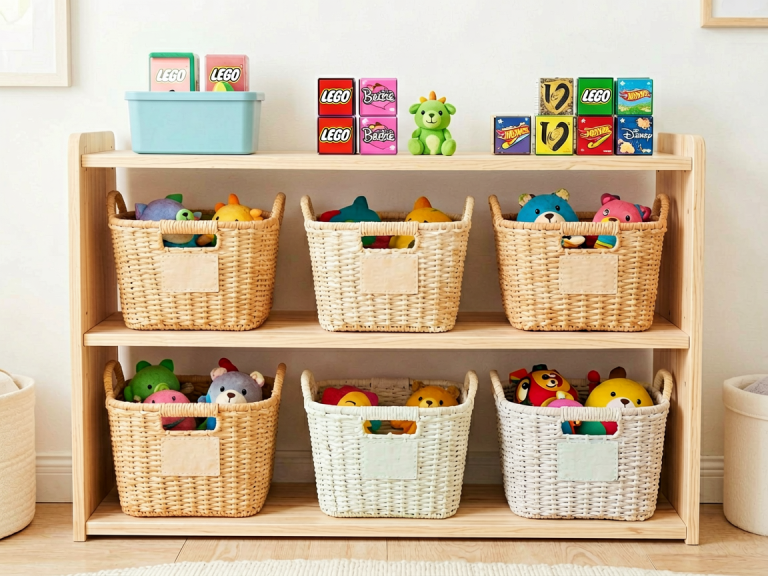
Blocks take up room. Ensure you have a dedicated storage bin (preferably open and accessible) and a large, flat surface for building—a coffee table, a corner of the floor, or a sturdy play table. Accept that the structures may live for days, becoming part of the room's landscape. This permanence actually deepens the tween's engagement; they can return to a project each day, revising and expanding.
Supplementing with Inspirational Material
To spark ideas, consider buying a book of architectural blueprints for children, or printing photographs of famous buildings (e.g., the Taj Mahal, the Sydney Opera House). A simple challenge—"Can you build a bridge that spans 30 centimeters and holds a weight?"—turns block play into a physics experiment. The Internet is full of free building prompts designed for older children.
—
5. Potential Drawbacks and How to Mitigate Them
No purchase is perfect. Let us honestly examine the downsides.
Mess and Clutter
Blocks inevitably end up under couches and in corners. However, this is true of almost any hobby—art supplies, sports equipment, video game controllers. Set clear boundaries: blocks must be picked up before dinner or when guests arrive. Twice a year, do a deep clean and sort. The mess is a small price to pay for the cognitive benefits.
Limited Social Approval
Your tween may face teasing from peers if they mention playing with blocks. To mitigate this, emphasize that it is a "private" activity or a "family tradition." You can also frame it as "engineering practice" rather than "play." Many tweens have private hobbies they keep separate from school social life—collecting rocks, drawing manga, or building model cars. Wooden blocks can be that secret sanctuary.
Cost
A high-quality set of 200 wooden blocks can cost $80–$200, which is comparable to a new video game console or a pair of designer sneakers. Yet blocks last for decades and serve multiple ages. If budget is tight, look for second-hand sets on Facebook Marketplace or at thrift stores; wooden blocks hold up well and can be sanitized easily.
—
Conclusion
So, should you buy wooden blocks for your tween? The answer is a qualified, enthusiastic yes—provided you approach the purchase with the right mindset. These are not toys to placate a toddler; they are sophisticated tools for developing spatial reasoning, executive function, emotional regulation, and collaborative skills during a critical window of brain development. They offer a rare, unhurried space for creativity in a world that constantly demands speed and performance. They teach patience, resilience, and the joy of trial and error—lessons no app can deliver.
Of course, no single purchase guarantees your tween will become an engineer or a mindful adult. But by providing them with an open-ended, tactile, and screen-free medium, you are planting a seed. You are saying: “I value your imagination. I trust your ability to build and rebuild. And I believe in the power of simple things.” In an era of overstimulation, that quiet statement of trust might be the most valuable gift of all.