The Peril of Little Pieces: A Comprehensive Guide to Buying Toys with Small Parts for 3-Year-Olds
Introduction: The Fine Line Between Development and Danger
Walking through the aisles of a modern toy store is a sensory overload. Bright colors, flashing lights, and the promise of endless fun beckon from every shelf. But for parents of a 3-year-old, the most critical question is not “Will this toy make my child smarter?” but “Is this toy safe?” Among the most dangerous categories for children of this age are toys that contain small parts. At three years old, children are explorers, climbers, and—most alarmingly—putters of everything into their mouths. The term “small parts” is not vague; it is a scientifically defined hazard. Any toy or component that can fit entirely inside a standard choke tube (a cylinder with a diameter of 1.25 inches and a depth of 2.25 inches) poses a choking risk. Yet paradoxically, many toys that are developmentally beneficial—building blocks, puzzles, craft kits—often include small pieces. How, then, does a responsible caregiver navigate this minefield? This article will dissect the risks, the regulations, the developmental trade-offs, and the practical strategies for buying toys with small parts for 3-year-olds, ensuring that playtime remains a source of joy rather than a trip to the emergency room.
—
Understanding the Developmental Stage of a 3-Year-Old
Before evaluating any toy, one must understand the child who will play with it. A typical 3-year-old is in a remarkable phase of cognitive and motor development. They are beginning to understand cause and effect, to engage in pretend play, and to manipulate objects with increasing dexterity. Fine motor skills are blossoming: they can stack blocks, turn pages, and use simple tools. However, their impulse control is still embryonic. They may understand a verbal warning not to swallow something, but in the heat of excitement or frustration, that warning evaporates. Moreover, the oral exploration phase is not entirely over. Many 3-year-olds still mouth objects, especially when they are tired, anxious, or teething. This combination of curiosity, lack of forethought, and oral fixation makes small parts a genuine threat. A 3-year-old’s airway is also smaller and more flexible than an adult’s, meaning a lodged object can cause complete obstruction, leading to brain damage or death within minutes. According to the U.S. Consumer Product Safety Commission (CPSC), choking is a leading cause of injury and death among children under four. In 2020 alone, an estimated 12,000 children under five were treated in emergency rooms for choking-related incidents involving toys and other objects. The message is clear: small parts are not a minor inconvenience; they are a leading preventable cause of pediatric fatalities.
—
The Regulatory Landscape: What “Small Parts” Means in Practice
To protect children, governments worldwide have established rigorous testing standards. In the United States, the mandatory standard is ASTM F963, which is enforced by the CPSC. For toys intended for children under three, the rule is simple: no small parts allowed. Any toy labeled “for ages 3+” may contain small parts, but the labeling must be explicit. In Europe, the EN 71 standard applies similar restrictions. It is crucial to understand that these regulations are not suggestions but legal requirements. However, the system is not foolproof. Some manufacturers circumvent rules with vague labeling, such as “for ages 36 months and up,” which technically meets the 3-year threshold but may still contain tiny pieces that a 3-year-old can choke on. Also, secondhand toys, hand-me-downs, and craft supplies (such as buttons, googly eyes, or beads) are not covered by these regulations. Parents must be vigilant even with “safe” products. The safest approach is to rely on the “choke tube test” at home: if a part can pass through a toilet paper roll (which has an inner diameter of roughly 1.5 inches, slightly larger than the official test tube but a good household approximation), it is too small for a 3-year-old. This simple test, applied to every component of a toy before it enters the house, can prevent tragedy.
—
The Developmental Benefits of Small-Part Toys: Why We Can't Simply Ban Them
Given the risks, one might assume that the best policy is to avoid all toys with small parts for 3-year-olds. Yet this blanket restriction would deprive children of some of the most valuable learning tools. Consider building sets like LEGO Duplo—which are specifically designed with larger bricks that are safe for toddlers. But standard LEGO bricks, with their tiny pieces, are intended for age 4+. A 3-year-old who is advanced in fine motor skills might be able to manipulate them, but the risk is real. Other examples include simple jigsaw puzzles with large pieces (safe) versus puzzles with 50 tiny pieces (unsafe), threading beads with chunky strings versus small seed beads, and shape sorters with oversized blocks versus those with tiny pegs. The fine motor development, hand-eye coordination, problem-solving, and spatial reasoning that these activities foster are indispensable. The key is not to avoid small parts entirely, but to select toys where the small parts are large enough or to provide supervised, limited access to certain small-part toys. For instance, a parent can sit with a child and play with a set of 12 large wooden blocks that have small printed letters—the letters are printed, not actual tiny pieces. Alternatively, consider magnetic building tiles (like Magna-Tiles) that are large and easy to grasp yet allow for complex constructions. These alternatives provide the same developmental benefits without the choking hazard.
—
Practical Strategies for Safe Toy Selection
So how does a parent make a smart purchase? Here are actionable steps:
1. Read the Label, Then Ignore It in Favor of Your Own Judgment
Age labels are a starting point, but they are not guarantees. A toy marked “3+” may still contain pieces that are small enough to choke a 3-year-old, especially if the child has a smaller-than-average mouth or is prone to mouthing. Always inspect the toy physically before purchasing. If the packaging is sealed, check online for images showing the components. If you see any piece that looks like it could fit in a child’s mouth, do not buy it.
2. Prioritize Toys with Integrated Small Parts
The safest small-part toys are those where the parts cannot be removed without tools. For example, a toy car with tiny wheels that are permanently attached is safe. A wooden puzzle where the knobs are securely fastened is safe. A musical instrument with small buttons that are embedded in the body is safe. The danger arises when parts are detachable. Squeeze, pull, and twist the toy in the store (if possible) to see if any part comes off easily. If it does, it is unsafe for a 3-year-old.
3. Embrace “Larger Than Life” Versions of Classic Toys
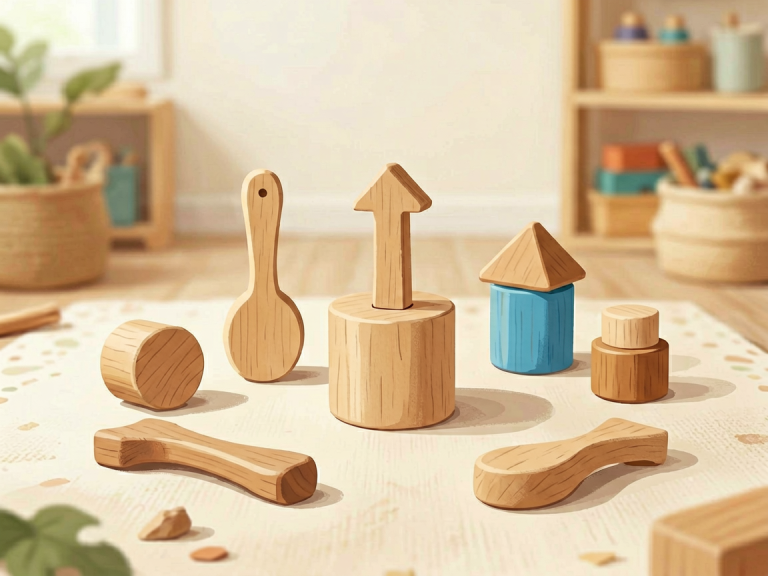
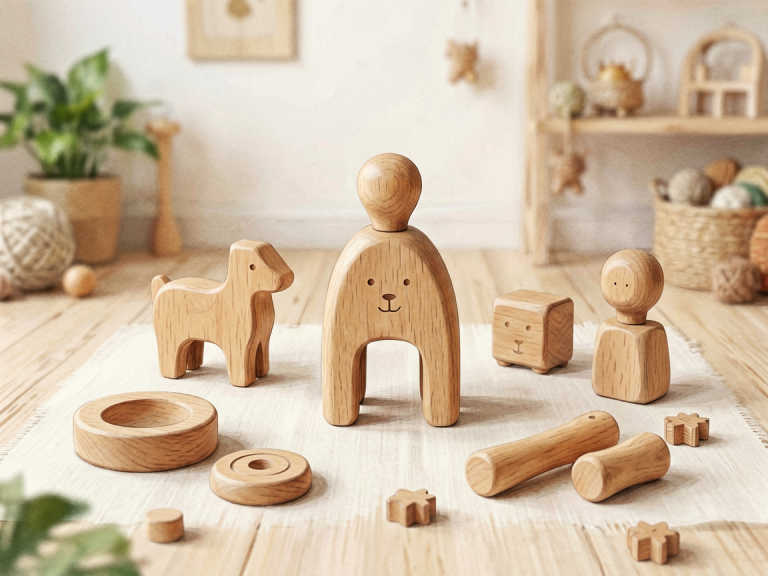
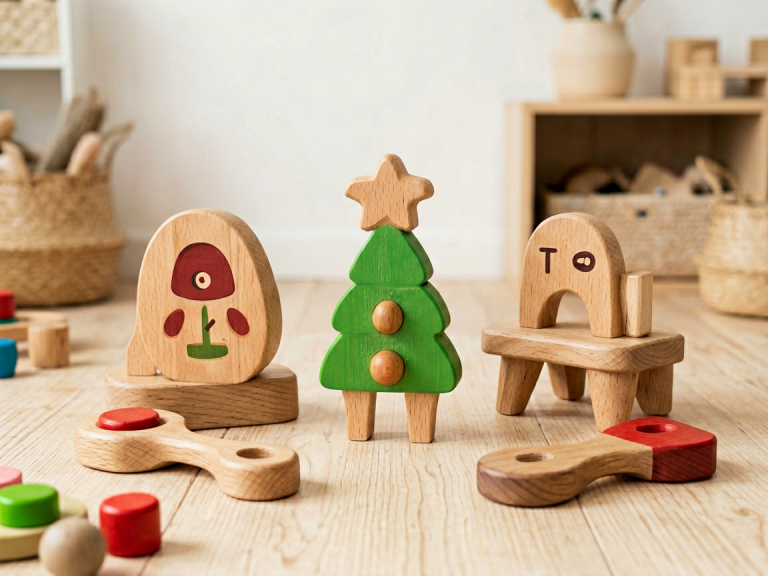
Manufacturers have recognized the demand for safe small-part toys. Look for products like “jumbo” building blocks (e.g., Mega Bloks First Builders), “extra large” puzzles (with pieces as big as a child’s hand), and “chunky” threading beads (at least 1 inch in diameter). These allow the same types of cognitive play without the choking risk. Brands like Melissa & Doug, Hape, and Fat Brain Toys specialize in age-appropriate designs for toddlers.
4. Use Strict Supervision Windows
Some toys are too valuable to skip entirely but are too dangerous for unsupervised play. For example, a set of 24 wooden animal figurines that include a 1-inch mouse might be fine if a parent sits alongside the child, enforces a “no mouth” rule, and puts the toy away immediately after the session. However, a 3-year-old cannot be trusted to follow that rule on their own. The parent must be within arm’s reach, not just in the same room. A 30-second glance at a phone can be enough for a child to pop a piece into their mouth. If you cannot provide that level of supervision, choose a completely safe alternative.
5. Beware of Household Items That Mimic Toys
Often, the most dangerous “toys” are not toys at all. Batteries (especially button batteries), coins, marbles, pen caps, and small screws are common household items that attract a 3-year-old’s curiosity. They can easily be mistaken for playthings. When you consider buying a toy with small parts, evaluate whether the child will encounter similar-looking objects around the house. If you have a 3-year-old, you should already have a rule to keep all small objects out of reach. Toys with small parts blur that boundary and create confusion. To avoid mixed messages, many child safety experts recommend maintaining a strict “no small objects anywhere” policy until the child is at least four.
6. Check for Recalls and Safety Alerts
Before purchasing any toy, especially one with small parts, search the CPSC website or the manufacturer’s site for recalls. Many choking incidents have led to mass recalls of toys that passed initial testing but later proved hazardous. A simple online search can save a life. Also, sign up for recall alerts through sites like SaferProducts.gov.
—
The Role of Siblings and Multi-Age Households
A major challenge arises in families with children of different ages. An older sibling may own LEGO sets, small dollhouse furniture, or board games with tiny pieces. A 3-year-old will inevitably try to access these toys. The solution is not to ban the older child’s toys but to create a physical barrier. Use a high shelf, a locked cabinet, or a dedicated playroom that the 3-year-old cannot enter without supervision. Teach the older child that their small-part toys are “big kid” toys and must be kept away from the toddler. This approach respects the older child’s developmental needs while protecting the younger one. It also teaches responsibility and empathy. However, do not rely on a 3-year-old to understand these boundaries—they will forget in seconds. Environmental controls are essential.
—
What to Do in an Emergency: Choking First Aid for 3-Year-Olds
Despite all precautions, accidents happen. Every parent of a 3-year-old should learn choking first aid. The American Red Cross recommends the following for a conscious choking child: stand behind the child, place one fist just above their belly button, grasp it with the other hand, and perform quick inward and upward thrusts (the Heimlich maneuver) until the object is dislodged or the child becomes unconscious. Do not use finger sweeps unless you can see the object clearly, as you may push it deeper. If the child becomes unconscious, call 911 and begin CPR. Practice this skill on a mannequin or through a certified class. Knowing what to do in the 4 minutes before paramedics arrive can mean the difference between life and death.
—
Conclusion: Vigilance, Not Fear
Buying toys with small parts for a 3-year-old is not an all-or-nothing decision. It requires careful evaluation, consistent supervision, and a willingness to say no to tempting but dangerous products. The benefits of fine motor play, problem-solving, and creativity are real, but they can be achieved through safer alternatives. The toy industry has responded with a plethora of large-part options that still challenge and delight. As a parent, your role is to be the gatekeeper—to inspect, to test, to supervise, and to educate. The 3-year-old brain is a sponge, but its safety net must be built by adults. By following the guidelines in this article, you can ensure that the toys you bring into your home foster growth without courting tragedy. Remember: a toy that ends up in the emergency room is no toy at all. Choose wisely, supervise diligently, and let your child explore the world of play—one safe piece at a time.