The Peril and the Promise: A Guide to Buying Toys with Small Parts for 18-Month-Olds
Introduction
The sight of a toddler’s face lighting up as they grasp a new toy is one of life’s simple joys. For parents, caregivers, and gift-givers, selecting the perfect toy for an 18-month-old feels like a milestone—a celebration of the child’s burgeoning curiosity and motor skills. Yet, woven into this exciting decision is a thread of anxiety, especially when the toy in question contains small parts. At 18 months, a child is no longer a passive infant but an active explorer, driven by an insatiable urge to touch, taste, rattle, and dismantle everything within reach. Their mouths remain primary sensory tools, and their lack of impulse control makes even the most innocent-looking button or bead a potential hazard.
The market is flooded with colorful, enticing toys that boast educational value, musical features, and interactive elements. Many of these toys include small components—from plastic eyes on stuffed animals to detachable wheels on wooden cars. How does a responsible adult navigate this landscape? The key lies in understanding the delicate balance between developmental stimulation and safety. This article delves into the risks, the milestones, and the smart strategies for buying toys with small parts for 18-month-olds, ensuring that playtime remains a source of wonder, not worry.
Understanding the Risks of Small Parts for Toddlers
Choking Hazards: The Most Immediate Threat
The most obvious and urgent danger posed by small parts is choking. According to the American Academy of Pediatrics, choking is a leading cause of injury and death among children under three years old. For an 18-month-old, the trachea is roughly the diameter of a drinking straw. Any object small enough to fit into a standard choke tube (commonly cited as objects smaller than 1.25 inches in diameter) can block the airway completely. But size isn’t the only factor—shape and texture matter too. Round, smooth objects like marbles or beads can lodge more easily than irregular ones. Toys that are marketed for older children often contain small parts that are deadly for toddlers.
Ingestion and Internal Injuries
Even if a small part is not immediately choking, it can be swallowed. While many swallowed objects pass harmlessly through the digestive tract, others can cause serious complications. Button batteries, for example, are a nightmare scenario: they can burn through the esophagus or stomach lining in a matter of hours. Small magnets, especially rare-earth magnets, can attract each other across intestinal walls, causing perforations, sepsis, or death. An 18-month-old’s curiosity does not discriminate—they will happily place a shiny watch battery or a tiny magnetic ball into their mouth before you can blink.
Why 18 Months Is a High-Risk Age
At 18 months, children have developed enough hand-eye coordination to pick up tiny objects but not enough cognitive awareness to understand danger. They are also in the midst of teething; sore gums make chewing on hard objects soothing. Moreover, their pincer grasp—the ability to hold a small item between thumb and forefinger—is just maturing, making them particularly adept at picking up small parts that fall to the floor. This age group is also highly mobile, crawling or walking to explore corners where dropped parts might hide. For all these reasons, 18-month-olds are literally the perfect storm for small-part hazards.
The Developmental Needs of an 18-Month-Old
Play as Learning: What Toys Should Do
An 18-month-old is not just playing; they are building the architecture of their brain. At this age, children are developing fine motor skills, problem-solving abilities, cause-and-effect reasoning, and language comprehension. They are also beginning to understand object permanence—that things continue to exist even when out of sight. Toys that are too simple do not stimulate growth, while toys that are too complex frustrate them. The ideal toy for an 18-month-old encourages exploration without demanding advanced logic. For example, a shape sorter with large, chunky pieces allows the child to experiment with matching, but if the pieces are small enough to be swallowed, the toy becomes a liability.
Small Parts That Are Appropriate: Size and Context
Not all small parts are automatically dangerous. The key is context and design. Many toys for this age group include components that are *considered* small but are actually attached securely, or that are large enough to pass safety tests. For instance, a toy telephone with a detachable receiver that is at least 3 inches long and wide is safe because it cannot be lodged in the throat. Likewise, a large wooden bead that measures over 1.5 inches in diameter can be safely strung on a thick cord (which itself should be short enough to prevent strangulation). The rule of thumb is the “toilet paper roll test”: any object that can fit completely inside a standard toilet paper roll is too small for a child under three. However, for 18-month-olds, even some objects that pass that test should be avoided if they are round, hard, and smooth.
Sensory Stimulation vs. Safety
Toddlers crave sensory input: different textures, sounds, and colors. Toys with small moving parts, like a rattle with internal beads, can be excellent if the beads are enclosed in a sealed, transparent container that cannot be opened. Similarly, busy boards with knobs, latches, and zippers provide rich sensory experiences without removable small pieces. The challenge for buyers is to find toys that deliver the same level of engagement as those with small parts but without the risk. Fortunately, many manufacturers now produce “chunky” versions of classic toys—for instance, large plastic keys instead of tiny metal ones.
Guidelines for Safe Toy Selection
Always Check the Age Label
The most reliable first step is to read the manufacturer’s age recommendation printed on the packaging. For an 18-month-old, toys labeled “18 months+” or “2 years+” are generally safe, but do not assume that a “3+” toy is okay just because your child seems advanced. Age labels are based on comprehensive safety testing, not just complexity. Toys for older children often have small parts that are considered choking hazards for younger ones. Even if your toddler is unusually dexterous, their airway size has not changed.
The “Auntie Test” and Vigilant Inspection
Before buying, physically inspect the toy. If you can remove any part—a button eye, a plastic wheel, a squeaker—with your fingers or your teeth, a toddler can do it faster. Squeeze stuffed animals to check for loose seams. Pull on attached parts. Shake the toy to see if anything rattles loosely inside. Another practical tip is the “sock test”: if you can drop the small part into a clean sock and it creates a noticeable bulge, it is too small. Remember that toys can break over time; parents must also inspect toys regularly for wear and tear.
Avoid Secondhand or Vintage Toys
While thrift stores and garage sales offer bargains, vintage toys often predate modern safety standards. They may contain lead paint, breakable plastics, or small parts that were once considered acceptable but are now known to be dangerous. For an 18-month-old, it is safer to buy new toys that comply with current regulations such as the U.S. Consumer Product Safety Improvement Act (CPSIA) or the European EN71 standard. Wooden toys, in particular, should be checked for splinters and non-toxic finishes.
Recommended Types of Toys for 18-Month-Olds
Stacking and Nesting Toys
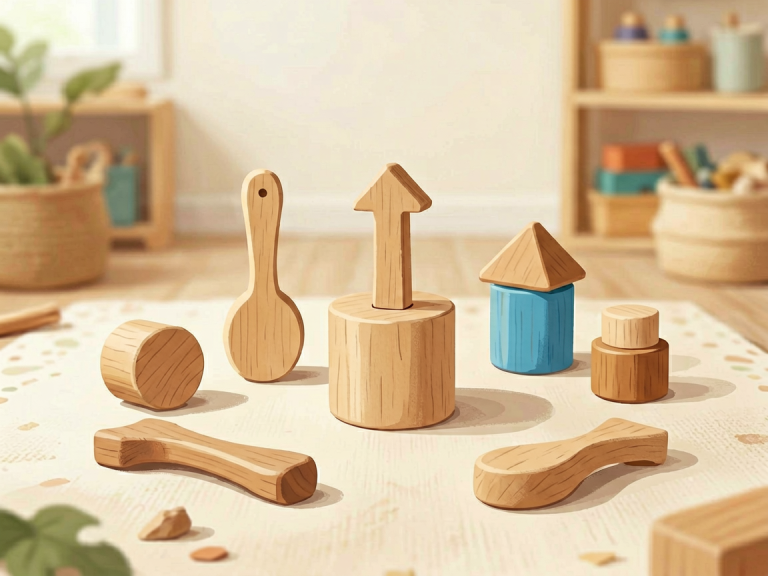
Stacking cups, rings, and blocks are classics for a reason. They have no small parts and promote hand-eye coordination, spatial awareness, and problem-solving. Look for sets with large, lightweight pieces that are easy for small hands to grasp. Some stacking sets come with a single large figure on top; ensure that figure is securely attached or is itself large enough to be safe.
Pull-Along and Push Toys
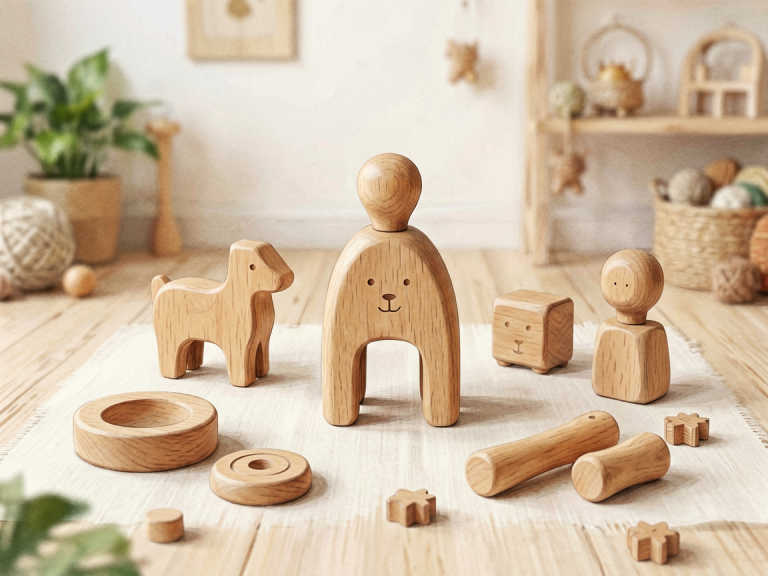
Toys that encourage walking and movement—such as wooden animal pull toys, sturdy push carts, or activity walkers—are excellent. They typically have no removable small parts. However, check the strings on pull toys: the cord should be no longer than 12 inches to prevent strangulation, and the pull piece should be large.
Musical Instruments
Toddlers love noise. Large maracas, tambourines with a single large head, xylophones with attached mallets (the mallet head must be large), and drums are all great choices. Avoid those with tiny beads inside that can be dislodged if the instrument cracks. Also, be wary of plastic eggs containing pellets—if broken, the pellets become choking hazards.
Shape Sorters and Puzzles
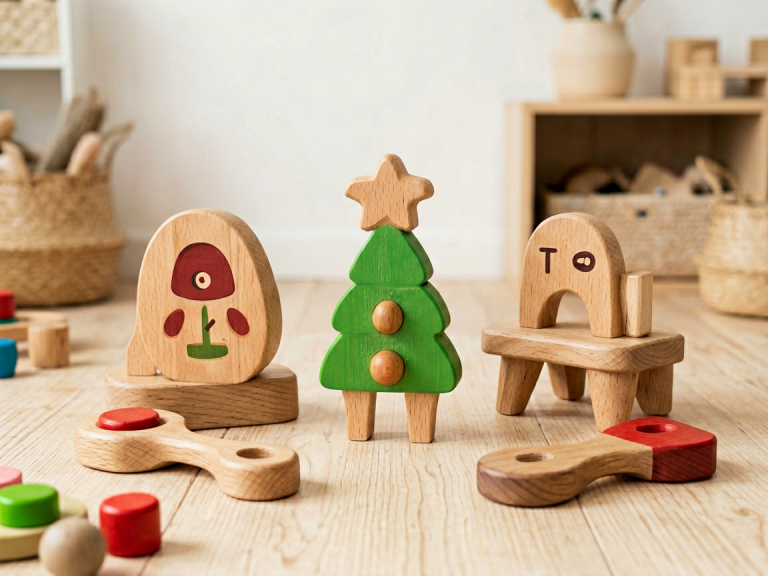
Choose shape sorters with oversized, chunky pieces that are at least 2 inches in any dimension. Floor puzzles with only 2–4 large pieces are ideal. Avoid puzzles with knobs that can be gnawed off—those knobs are often small and round.
Red Flags to Avoid
Toys with Button Batteries
Any toy that requires a coin-cell battery (e.g., singing plush toys, talking books, light-up gadgets) should be treated with extreme caution. The battery compartment must be secured with a screw, not a simple latch. Even so, batteries can sometimes be pried out by a determined toddler. For 18-month-olds, it is safer to avoid such toys altogether unless they are a truly essential developmental tool (and even then, supervise intensely).
Magnetic Toys
Building sets with small magnetic balls or rods are incredibly dangerous. Even if the pieces are large, the magnets inside could be exposed if the casing breaks. A single swallowed magnet is bad; multiple magnets are catastrophic. Do not buy magnetic toys for any child under three.
Cheap Plastic “Cracker” or Surprise Toys
Those inexpensive plastic toys that come in a capsule (like vending machine toys) are notorious for having sharp edges and detachable small parts. They are unregulated and should never be given to an 18-month-old. Similarly, party favor bag toys are often unsafe.
Conclusion
Buying toys for an 18-month-old is an act of love that requires equal parts enthusiasm and caution. Small parts can transform a delightful plaything into a silent threat within seconds. However, by understanding the developmental milestones of toddlers, recognizing the specific risks of choking and ingestion, and applying a rigorous safety checklist when selecting toys, adults can make informed choices. The market offers an abundance of safe, engaging, and educational toys that do not contain dangerous small parts. From chunky wooden puzzles to pull-along animals, the options are plentiful. Always remember: when in doubt, leave it out. A toy that elicits a smile but poses a risk is not worth the anxiety. Instead, opt for toys that spark curiosity without sparking fear—because the best gift you can give a toddler is the freedom to explore safely.