Should I Buy Wooden Blocks for Babies? A Comprehensive Guide for Modern Parents
As a new parent, the aisles of brightly colored toys can feel both exciting and overwhelming. Amid the flashing lights, squeaky sounds, and plastic gadgets, one classic toy stands quietly on the shelf: the humble wooden block. Generations of children have stacked, knocked, and chewed their way through these simple cubes. Yet in today's world of high-tech baby products, you might wonder: *Should I buy wooden blocks for my baby? Is this timeless toy still relevant, or just a nostalgic relic?* In this comprehensive guide, we will explore every angle — from developmental benefits and safety considerations to practical buying tips and alternative comparisons. By the end, you'll have a clear answer tailored to your baby's needs.
The Surprising Science Behind Wooden Blocks
Cognitive Development: More Than Just Stacking
Wooden blocks are often dismissed as "just a pile of wood," but research in early childhood development tells a different story. When a baby grasps a wooden block, their brain is engaging in multiple processes simultaneously. The act of stacking requires spatial reasoning — understanding how objects relate to one another in three-dimensional space. A 2018 study published in *Early Childhood Research Quarterly* found that children who played with blocks regularly performed better on mathematical reasoning tests later in life. Why? Because block play introduces concepts like balance, symmetry, fractions (e.g., using two half-size blocks to equal one whole), and problem-solving. When a tower falls, the baby learns cause and effect: "If I place this block too far to the edge, it will tumble." This iterative trial-and-error builds resilience and critical thinking long before formal education begins.
Fine Motor Skills: The Power of Grasp and Release
For babies aged 6 to 12 months, the world is a gymnasium for their hands. Wooden blocks are ideal for developing fine motor skills. Unlike larger plastic toys that may be too light or too heavy, quality wooden blocks have a satisfying weight — not so heavy that a baby cannot lift them, but substantial enough to provide proprioceptive feedback. Picking up a block requires the pincer grasp (thumb and forefinger), which is a precursor to holding a pencil. Stacking demands control and precision; babies learn to adjust their grip, rotate the block, and release it gently. These small movements strengthen the intrinsic muscles of the hand and improve hand-eye coordination. In contrast, many electronic toys require only a tap or a swipe, offering little resistance or feedback to developing muscles.
Language and Social Skills: Building Conversations
Blocks are also a social toy. When you sit on the floor with your baby and say, "Let's put the blue block on top of the red one," you are modeling language in context. Studies show that block play encourages parent-child interaction more than solitary screen-based toys. Babies learn words like "on," "under," "beside," "tall," and "fall." As they grow older, blocks become a medium for pretend play — a block might become a phone, a car, or a piece of cake. This symbolic thinking is a foundational step in language development. Moreover, when two toddlers play with blocks together (supervised, of course), they learn sharing, negotiation, and cooperation. "No, my tower!" quickly becomes "Let's build a bigger tower together!" — a lesson in social-emotional intelligence.
Safety First: Are Wooden Blocks Safe for Babies?
Material Matters: Solid Wood vs. Composite Wood
One of the main concerns parents have is whether wooden blocks are safe, especially given that babies put everything in their mouths. The answer is: *it depends on the product.* High-quality wooden blocks are made from solid hardwoods like maple, beech, or rubberwood. These woods are naturally durable, splinter-resistant, and free from toxic chemicals. However, cheaper blocks may be made from MDF (medium-density fiberboard) or particleboard, which often contain formaldehyde-based glues. Always look for blocks labeled "solid wood" and certified by safety standards such as ASTM (American Society for Testing and Materials) or EN71 (European safety standard). Additionally, verify that the paint or finish is non-toxic and lead-free — many reputable brands use water-based, food-safe dyes. If the blocks have a strong chemical smell, avoid them.
Choking Hazards and Size Considerations
The American Academy of Pediatrics recommends that toys for children under 3 years old should be larger than 1.25 inches in diameter to prevent choking. Wooden blocks sold for babies typically measure 1.5 to 2 inches on each side, which is safe for most infants. However, be cautious with blocks that have small attachments, like painted-on numbers or letters that might peel off. Also, check for sharp edges or splinters. New, well-sanded blocks are smooth to the touch. If you inherit vintage blocks, inspect them thoroughly — older paints may contain lead, and decades of wear can create rough surfaces.
Cleaning and Hygiene
Unlike plush toys that trap dust and bacteria, wooden blocks are relatively easy to clean. You can wipe them with a damp cloth and mild soap, then air dry. Avoid soaking them in water, as wood can warp or crack. For deeper sanitization, a solution of water and vinegar works well. Some parents worry about germs, but studies show that wooden surfaces are less hospitable to bacteria than plastic surfaces over time, because wood's natural porosity absorbs moisture and traps microbes, reducing their survival. That said, if your baby is immunocompromised, you may prefer occasional sun exposure (UV light naturally disinfects) or using a toy-safe sanitizer spray.
Comparing Wooden Blocks to Other Baby Toys
Wooden Blocks vs. Plastic Stacking Cups
Plastic stacking cups are lightweight, colorful, and often cheaper than wooden blocks. They are excellent for bath time, as they float and drain water. However, plastic cups typically lack the weight and tactile quality of wood. They are also easier for a baby to knock over (less sensory feedback) and can crack or develop sharp edges over time. Moreover, many plastic toys contain BPA, phthalates, or other endocrine disruptors — though most reputable brands are now BPA-free, it's something to check. Wooden blocks, on the other hand, have a longer lifespan and can be passed down through siblings or generations. In terms of open-ended play, blocks offer more variability: you can build, sort, count, and create patterns, while cups are primarily for stacking and nesting.
Wooden Blocks vs. Electronic Learning Toys
Electronic toys that sing songs, light up, and teach letters might seem more "educational," but research suggests the opposite. A 2005 study by Dr. Anna Hohmann at the University of Tennessee found that when children played with electronic toys, they used fewer words and engaged in less creative play compared to when they played with traditional blocks. Electronic toys are often "closed-ended" — they have a set function (press a button, get a response). Blocks are "open-ended" — the only limit is imagination. Furthermore, the constant stimulation from flashing lights and sounds can overstimulate a baby's developing nervous system, potentially leading to shorter attention spans. Blocks offer calm, focused play that encourages deep concentration — a skill increasingly rare in the digital age.
Wooden Blocks vs. Soft Fabric Blocks
Fabric blocks are soft, lightweight, and safe for even the youngest infants. They are great for sensory exploration (different textures, crinkle sounds, squeakers). However, they are almost impossible to stack well — a frustration for older babies who want to build towers. Fabric blocks also absorb spills and saliva, making them harder to clean effectively, and they may harbor mold if not dried thoroughly. For babies under 6 months, fabric blocks can be a good introduction, but from 9 months onward, wooden blocks become more developmentally appropriate.
How to Choose the Right Wooden Blocks for Your Baby
Age-Appropriate Sets
Not all wooden blocks are created equal. For babies 6–12 months, look for a set of 10–20 simple cubes or rectangular blocks without any small parts. Avoid sets with strings, magnets, or detachable pieces at this stage. The blocks should be large enough to grasp but not so large that they are heavy to lift. Natural or primary colors are ideal; high-contrast patterns (like black and white) can also engage young vision.
For toddlers 12–24 months, you can introduce blocks with a few basic shapes — cylinders, triangles, arches — and perhaps a simple wooden tray or carrying bag. At this age, children begin to understand shape sorting and balancing more complex structures. Sets with 30–50 pieces allow for more creative building.
For 2–3 year olds, consider larger sets with 100+ pieces, including unit blocks (standardized sizes that fit together mathematically, like the classic "unit block" system developed by educational pioneers). These are excellent for kindergarten prep.
Finish and Texture: Unfinished, Painted, or Stained?
Unfinished wooden blocks are often the safest choice for babies who mouth them, as there is no paint to chip. However, they can become stained and look less appealing. Painted blocks, if using non-toxic paint, offer visual stimulation and can help teach colors. Stained blocks (using natural oils or waxes) provide a beautiful, smooth finish while still showing the wood grain. Some parents worry about staining being toxic — look for food-grade mineral oil or beeswax finishes. A good rule: if the finish passes the "saliva test" (no color transfer when you lick a block), it's likely safe for baby.
Brand Recommendations (with Caution)
Several trusted brands produce high-quality wooden blocks: Melissa & Doug, Hape, PlanToys, Grimm's, and Uncle Goose. These companies adhere to strict safety standards and use sustainable materials. However, be aware that even well-known brands occasionally have recalls — always check the toy recall database of your country. Also, consider smaller artisan brands that handcraft blocks from local wood; these often have an unmatched quality and uniqueness. Avoid cheap generic blocks from unknown sellers on e-commerce platforms, as they may contain lead paint or formaldehyde glues.
Practical Tips for Introducing Blocks to Your Baby
Setting Up the Play Environment
The first block play should be on a flat, non-slip surface — a rug or foam mat works well. Sit with your baby and model simple actions: stack two blocks, then knock them down with a big smile. Let your baby explore the blocks in their own way. Some babies will want to mouth every block; that's normal and helps them learn about texture and weight. Others will prefer to scatter them across the room like confetti. There is no "wrong" way to play with blocks, as long as it's safe.
Encouraging Progression
As your baby grows, you can introduce challenges. Place one block on top of another and say, "Can you put one more up there?" Celebrate both success and failure — the tower will fall, and that's part of the learning process. When your toddler builds a simple bridge or enclosure, ask open-ended questions: "How can we make this taller?" or "What happens if we put the big block on top?" This encourages creative thinking rather than rote following.
Combining Blocks with Other Toys
Blocks can be integrated into other play. Add a toy animal or a little car to the block world. Use blocks to build a garage for a toy truck, or a castle for a doll. This cross-play enhances dramatic play and narrative skills. You can also use blocks to practice counting, sorting by color or size, and even as a simple balance scale (place blocks on each side of a ruler balanced on a fulcrum).
Frequently Asked Questions (FAQ)
*Q: At what age can I introduce wooden blocks?*
A: Once your baby can sit independently (around 6–8 months), you can offer large, smooth wooden blocks. Always supervise closely.
*Q: Can wooden blocks damage floors or furniture?*
A: Yes, if dropped from a height, blocks can leave dents or scratches. Play on a rug or a foam mat to absorb impact. Some parents place a soft blanket under the play area.
*Q: How do I store wooden blocks?*
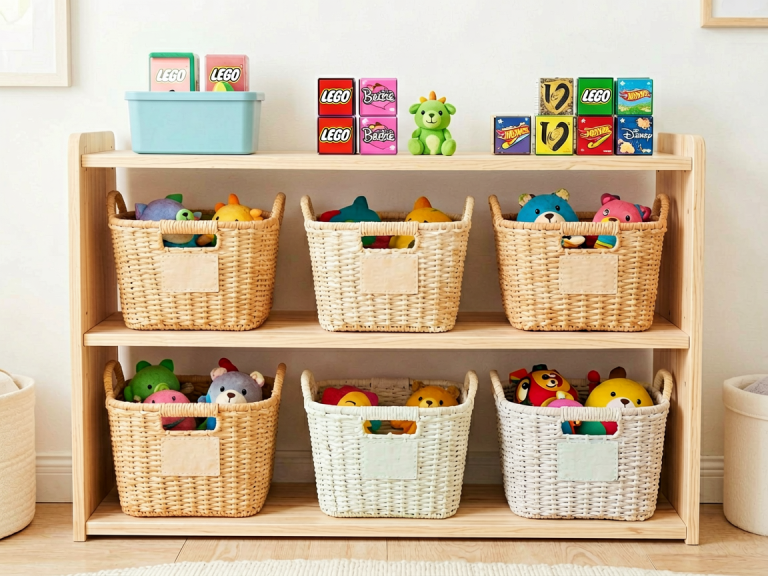
A: A low, open bin or a fabric bag works well. Avoid stacking heavy bins on top of each other. Keeping blocks visible encourages spontaneous play. Rotate block sets with other toys to maintain novelty.
*Q: My baby only wants to chew on the blocks, not stack them. Is that okay?*
A: Absolutely. For young babies, mouthing is a primary mode of exploration. The sensory input from chewing on wood (different from plastic or silicone) is actually beneficial for oral motor development. Just ensure the blocks are clean and splinter-free.
*Q: Are wooden blocks worth the higher price compared to plastic alternatives?*
A: Think of it as an investment. A good set of wooden blocks can last through multiple children and even be passed to grandchildren. Plastic toys often break within months. Plus, the developmental richness of blocks is far greater. Many early childhood educators consider wooden blocks one of the most cost-effective educational purchases you can make.
Conclusion: The Verdict for Modern Parents
So, should you buy wooden blocks for your baby? The evidence overwhelmingly says yes — provided you choose high-quality, safe, age-appropriate blocks. In a world saturated with fleeting digital entertainment, wooden blocks offer something uniquely valuable: a grounding, tactile, and unhurried form of play. They nurture the whole child — mind, body, and spirit. They require no batteries, no screens, and no Wi-Fi. They demand only your presence and your imagination.
Will your baby love them? Not necessarily at first. Some babies need time to warm up to blocks, especially if they are used to flashier toys. But with patient modeling and joint play, most children develop a deep fascination with building, destroying, and rebuilding. And that process — of creating order from chaos, of learning that failure is temporary — is one of the most profound gifts you can give. So clear a spot on the floor, open a bag of wooden blocks, and watch your baby become a builder from the very first wobbling tower.