Are Wooden Blocks Worth It for Language Development? A Comprehensive Exploration
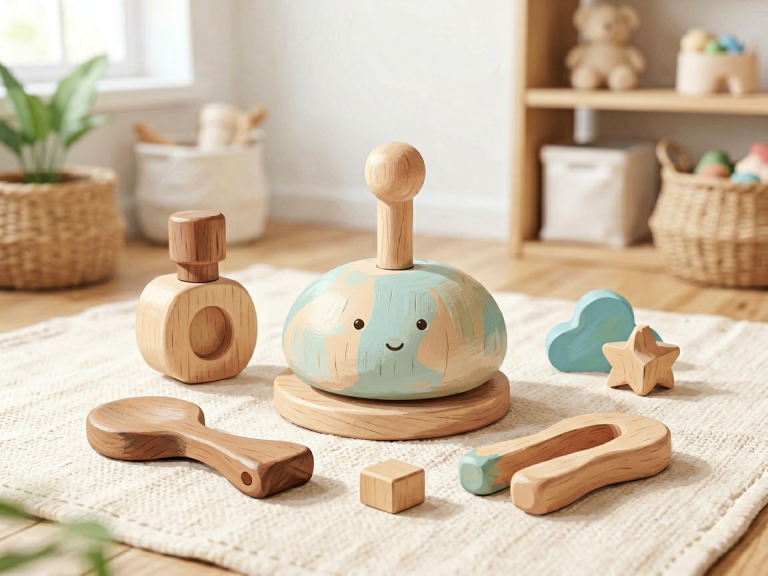
In an age dominated by glowing screens, talking robots, and interactive learning apps, the humble wooden block might seem like a relic of a bygone era. Yet parents, early childhood educators, and developmental psychologists continue to debate its relevance—especially when it comes to language acquisition. The question “Are wooden blocks worth it for language development?” is not merely a nostalgic nod to simpler toys; it is a serious inquiry into how foundational play materials shape a child’s linguistic abilities. This article examines the evidence, the mechanisms, and the practical implications of using wooden blocks to foster language growth, ultimately arguing that they are not only worth it but are essential—provided that adults use them intentionally.
The Cognitive and Linguistic Connection: Why Blocks Matter
To understand whether wooden blocks contribute to language development, we must first look at how language is actually learned. Language is not a separate, isolated skill; it emerges from a rich tapestry of cognitive, social, and motor experiences. Young children build vocabulary, syntax, and narrative skills through hands-on, sensory-rich interactions with their environment. Wooden blocks, being open-ended, manipulable, and physically real, offer a unique platform for this kind of learning.
Research in developmental psychology has consistently shown that constructive play—play that involves building, stacking, and arranging objects—is strongly correlated with later linguistic abilities. A landmark study by Wolfgang, Stannard, and Jones (2001) found that the complexity of block play in preschool predicted mathematical achievement in high school, but more importantly, it also correlated with reading and verbal skills. Why? Because when a child builds a tower or a bridge, they must plan, problem-solve, and communicate—either with themselves or with others. That internal monologue becomes the foundation of language.
Moreover, wooden blocks are inherently multimodal. They engage touch (texture, weight, temperature), sight (shape, color, symmetry), and proprioception (body awareness during stacking). This multisensory input strengthens neural pathways, making language acquisition more robust. A child who has felt the *difference* between a cube and a cylinder is better equipped to understand the words “square” and “round” than a child who has only seen them on a screen.
How Blocks Elicit Language: The Adult's Role
One common misconception is that blocks themselves magically improve language. In reality, the toy is a tool; its value is unlocked through human interaction. When an adult sits on the floor with a child and says, “Let’s build a tower. Can you find the big red block? Now I need a smaller one on top,” they are modeling vocabulary, prepositions, comparative language, and sequential thinking. The child hears and mimics words like “on,” “under,” “next to,” “bigger,” “balance,” and “tall.” These are the building blocks—pun intended—of spatial language, which is a strong predictor of later math and reading achievement (Gentner & Loewenstein, 2002).
Without adult scaffolding, wooden blocks can still be valuable for solitary language development—through private speech. Vygotsky’s concept of private speech suggests that children talk to themselves to regulate their behavior and thinking. A child stacking blocks might mutter, “No, that one falls. Need flat one.” This self-directed speech is a precursor to internal thought and later conversational language. Blocks provide a perfect context for such private speech because the activity is challenging but manageable, requiring planning and self-correction.
The Evidence: What Research Says About Blocks and Language
While anecdotal evidence is plentiful, peer-reviewed research offers more concrete insights. A meta-analysis of play-based learning published in *Child Development* (2020) concluded that constructive play (including block play) had a moderate to strong effect on language outcomes, particularly vocabulary and narrative skills. The effect was even stronger when play was guided by an adult who provided “language-rich commentary.”
Another study, conducted at the University of Delaware, observed toddlers playing with wooden blocks versus electronic toys. The results were striking: children playing with blocks produced significantly more utterances, used more diverse vocabulary, and engaged in longer conversational turns with their parents than those playing with battery-operated, noise-making toys. The reason? Electronic toys tend to “perform” for the child—they light up, sing, and talk—reducing the need for the child to initiate or produce language. Wooden blocks, being silent and static, require the child to *create* the action and the words.
Furthermore, a longitudinal study by the National Institute for Early Education Research found that children who had regular access to block play in preschool showed stronger growth in expressive language (the ability to produce words and sentences) over two years, compared to a control group that had similar play time but with different toys. The researchers attributed this to the problem-solving demands of block construction, which naturally elicits descriptive and procedural language.
However, it is important to note that these studies do not claim that wooden blocks are *superior* to all other toys. Rather, they highlight that blocks are exceptionally effective when used in a supportive environment. A child left alone with a pile of blocks may still benefit, but the language gains are amplified when a caregiver participates, asks open-ended questions (“What should we build next?”), and labels actions (“Look, you balanced the blue block on top of the red one!”).
Practical Applications: Making Wooden Blocks Work for Language Development
Given the evidence, how can parents and educators maximize the language benefits of wooden blocks? Here are several concrete strategies, all grounded in research.
1. Pair Blocks with Books and Stories
Language development thrives on narrative. Before or after block play, read a book about construction, architecture, or a story involving building. Then invite the child to re-create a scene from the book with blocks. This bridges receptive language (listening to the story) with expressive language (describing the building process). Ask questions like, “How tall was the castle in the story? Can you make it that tall? What word describes the color of the queen’s tower?”
2. Introduce Specific Vocabulary
Blocks are a natural vehicle for teaching spatial prepositions (in, on, under, beside, between), comparative adjectives (bigger, smaller, wider, narrower), and action verbs (stack, balance, push, pull, tilt). During play, use “self-talk” (describing what you are doing) and “parallel talk” (describing what the child is doing). For example, “I am putting the triangle block *on top* of the square block. Now it looks like a roof. Your tower is *taller* than mine!”
3. Encourage collaborative building
When two or more children (or a child and an adult) build together, they must negotiate, plan, and describe. This fosters turn-taking in conversation, the use of imperative and question forms (“Can you pass me that block? No, the blue one!”), and the development of social language. Research shows that cooperative block play is particularly effective for children with language delays, as it provides low-pressure opportunities for communication.
4. Use Blocks for Storytelling and Pretend Play
Once a structure is built, it can become a setting for imaginative play. “This castle is for a dragon. What will the dragon say? Oh, the bridge is broken! How will the knight get across?” This kind of play extends language into narrative construction and emotional vocabulary. The blocks themselves become characters or props, facilitating the child’s spontaneous oral language.
5. Incorporate Counting, Comparing, and Math Talk
Language and math are linked. Use blocks to count (“We have five round blocks”), to compare (“Which stack has more?”), and to introduce fractions (“Can you find a block that is half the size of this one?”). This “math talk” has been shown to improve both numerical and verbal skills, creating a synergistic effect.
Potential Pitfalls and Counterarguments
No toy is a magic bullet, and wooden blocks are no exception. Critics might argue that blocks are too simple to compete with the interactivity of tablets and language apps. However, the simplicity is precisely what makes them powerful. A block does not entertain; it invites the child to entertain themselves. In an era of passive consumption, that invitation is rare and precious.
Another counterargument is that children with certain developmental challenges, such as autism spectrum disorder, may not naturally engage in symbolic block play. For these children, explicit teaching and modeling may be needed. Nonetheless, research on using blocks in speech-language therapy shows promising results, particularly when blocks are used as a visual and tactile support for language concepts like sequencing and cause-effect.
Parents may also wonder about the cost. High-quality wooden blocks can be expensive, but compared to the cost of electronic toys or subscription apps, they are a one-time investment that lasts for years—even generations. Moreover, the language benefits do not require an elaborate set. A simple collection of 20–30 blocks in varied shapes and sizes is sufficient.
Conclusion: Worth More Than Their Weight in Words
So, are wooden blocks worth it for language development? The answer is a resounding yes—but with an important caveat. The blocks themselves are only as good as the interaction they inspire. When a caregiver actively uses them as a tool for conversation, vocabulary building, and narrative creation, wooden blocks become a powerhouse of linguistic growth. They offer something that no screen can replicate: a three-dimensional, fully tangible reality that invites a child to think, speak, and create in the moment.
In a world racing toward digital efficiency, wooden blocks remind us that some of the best tools for learning are those that require us to slow down, sit on the floor, and talk to one another. For that reason alone, they are indispensable. Whether you are a parent, a teacher, or a therapist, investing in a set of wooden blocks—and, more importantly, investing time in playing with them—is one of the most effective and joyful ways to nurture a child’s language journey.