The Evolution of Play: Following Toy Trends for 1-Year-Olds in the Modern Era
Introduction
The first year of life is a period of extraordinary cognitive, sensory, and motor development. For parents and caregivers, selecting the right toys for a 1-year-old is not merely a matter of entertainment—it is an investment in foundational learning. In recent years, the toy industry has undergone a quiet revolution, shifting from passive, battery-operated distractions toward toys that promote active engagement, sensory exploration, and developmental milestones. Understanding the latest trends for this specific age group is essential for making informed purchasing decisions that align with both current research and practical parenting needs. This article explores the most significant toy trends shaping the world of 1-year-olds, examining their origins, benefits, and how they reflect broader societal shifts in education, technology, and sustainability.
1. Sensory Exploration and Multisensory Toys
At 12 to 24 months, a child’s world is largely defined by sensory input. The first and most enduring trend in toys for 1-year-olds is the emphasis on multisensory stimulation. Modern toys are no longer content to simply be colorful; they incorporate textures, sounds, weights, and even scents to engage a baby’s developing senses.
One of the standout categories within this trend is sensory bins and tactile mats. These often consist of small containers filled with rice, beans, sand, or water beads, accompanied by scoops, cups, and miniature animals. While traditional sensory play has been a staple for decades, the current wave introduces certified non-toxic materials, hypoallergenic components, and designs that are easier for small hands to manipulate. Brands such as *Lovevery* and *Monti Kids* have popularized subscription-based kits specifically tailored to each month of development, ensuring that the sensory stimuli match the child’s current neurological growth.
Beyond texture, sound-based toys have become more sophisticated. Soft-sounding rattles, wooden rainmakers, and musical instruments designed for tiny grips now incorporate high-contrast colors and safe, antimicrobial coatings. The reasoning is simple: a 1-year-old’s brain is forming neural connections at a rapid pace. Exposure to different auditory tones and rhythms can aid in language acquisition and pattern recognition. According to a 2023 study published in *Infant Behavior and Development*, infants who engage with toys providing varied auditory feedback show enhanced attention spans and earlier vocalization milestones.
Moreover, light and projection toys are emerging as a sub-trend. Rather than harsh flashing LEDs that overstimulate, modern versions use soft, ambient light that moves slowly across walls or ceilings, sometimes accompanied by nursery rhymes. These toys, when used during calm or bedtime routines, help regulate a child’s circadian rhythm while supporting visual tracking skills. The key is that they promote a calm environment rather than an overly excited one—a shift from the “noise and flash” mentality of earlier decades.
2. The Rise of Open-Ended and Montessori-Inspired Toys
Perhaps the most influential trend in early childhood development today is the embrace of open-ended play, heavily influenced by the Montessori philosophy. For 1-year-olds, this means moving away from toys with a single, closed-ended action (like pressing a button to hear a sound) and toward toys that encourage creativity, problem-solving, and repeated use in different ways.
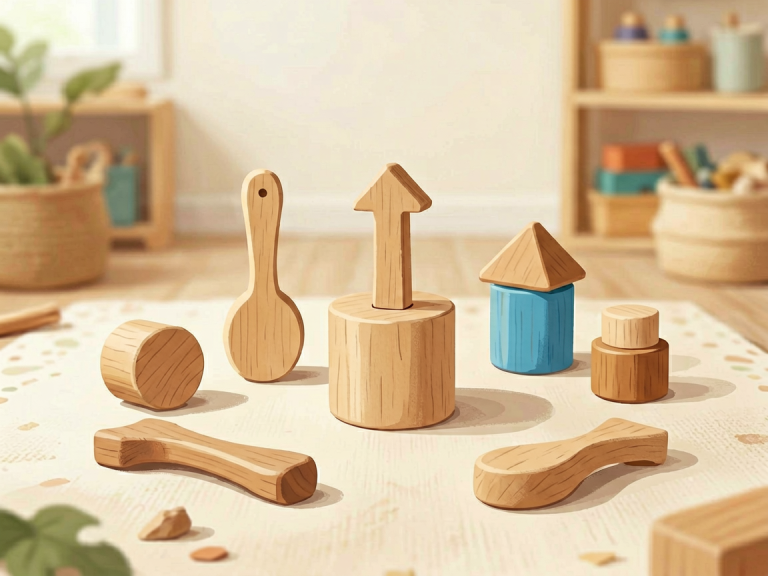
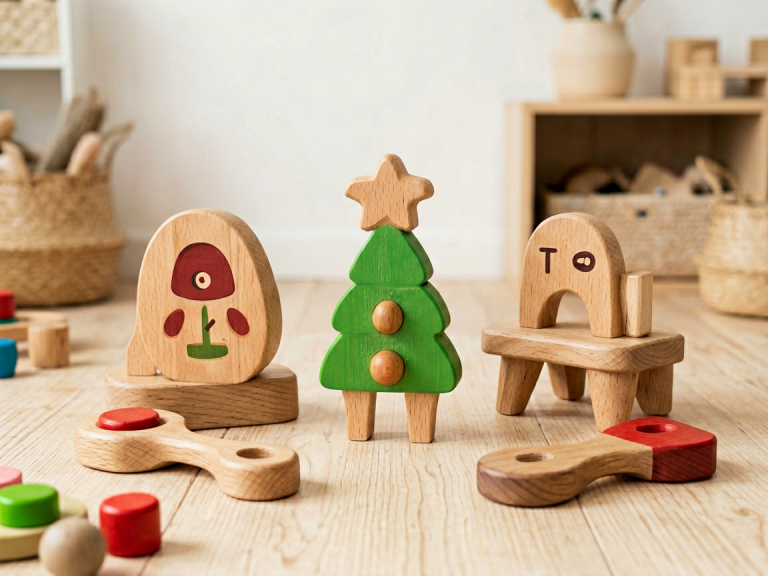
Simple stacking blocks are a classic example. But the modern version includes sets made from sustainably sourced wood with non-toxic, water-based paints. They often feature irregular shapes that challenge a toddler’s fine motor skills while also allowing for sorting, balancing, and even early pattern recognition. The trend extends to nesting cups, shape sorters, and puzzles with knobs that are large enough for 1-year-olds to grasp. The difference today is that these toys are often designed with less distraction—fewer colors, simpler lines—to help the child focus on the task itself.
Another emergent category is magnetic tile sets designed for the very young. While magnetic building blocks have been popular for older toddlers, new versions feature larger, smoother tiles that connect more easily and are free of small magnets that could pose choking hazards. They encourage spatial reasoning and cause-and-effect learning, all without the need for batteries or screens.
The Montessori-inspired trend also emphasizes practical life toys. For a 1-year-old, that might mean a small wooden broom, a toddler-safe knife for cutting soft fruits (under supervision), or a set of containers with lids and latches. These toys mimic real-world activities, giving the child a sense of independence and accomplishment. The underlying philosophy is that a child’s work is their play, and by providing tools that allow them to imitate adult actions, we foster confidence and fine motor dexterity. Toy companies like *PlanToys* and *Guidecraft* are leading this charge, offering beautiful, durable pieces that are as much aesthetic objects as they are learning tools.
3. Technology Integration: Smart Toys with a Purpose
It is impossible to discuss modern toy trends without addressing technology. However, for 1-year-olds, the approach is markedly different from the screens and apps marketed to older children. The trend is toward purposeful, low-interference smart toys that enhance interaction rather than replacing it.
One exciting development is the interactive programmable toy that responds to physical movement. For example, a robotic ball that rolls gently when pushed, or a light-up cube that changes color when turned in a certain way. These toys often use Bluetooth or infrared to connect with a parent’s smartphone app, which can track the child’s play patterns and suggest new ways to engage. However, the screen time for the child remains minimal; the technology is used primarily as a data tool for parents, not as an interface for the baby.
Voice-activated toys are also gaining ground. Small plush animals or simple talking cubes can repeat or mimic sounds made by the child, encouraging early language attempts. Unlike older talking toys that recited pre-recorded phrases regardless of context, these new-generation toys use simple AI to respond to the baby’s own vocalizations. They do not “teach” words in a didactic way but rather engage in a turn-taking conversation, which developmental psychologists argue is crucial for social communication. Research from the *Journal of Child Language* suggests that such interactive, responsive toys can accelerate babbling and early word formation when used in conjunction with caregiver interaction.
Nevertheless, experts caution that technology should never replace human interaction. The trend is therefore toward *assistive* tech: toys that help parents identify developmental delays or that provide gentle prompts, but which always leave the primary role of play to the child and caregiver. The American Academy of Pediatrics recommends that for children under 2, screen time be avoided entirely (except video calls), and these smart toys adhere to that guideline by keeping the screen out of the child’s direct line of sight.
4. Eco-Friendly and Sustainable Materials
Environmental consciousness has permeated the toy industry, and for 1-year-olds, the trend toward sustainability is particularly pronounced. Parents are increasingly scrutinizing the materials used in toys, not only for safety but also for their environmental footprint. The result is a boom in toys made from organic cotton, bamboo, and FSC-certified wood.
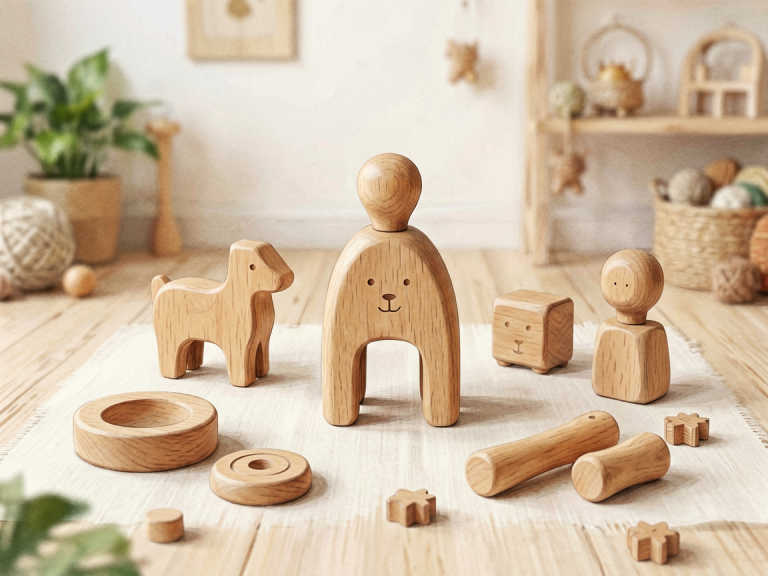
Rubberwood, a byproduct of the latex industry, has become a favorite material because it is durable, renewable, and free of harmful chemicals. Many wooden toys now use water-based dyes that are safe for mouthing—a crucial consideration for 1-year-olds who explore everything with their mouths. The elimination of plastic is not absolute, but where plastic is used, it is often recycled ocean-bound plastic or biodegradable bioplastics. Companies like *Green Toys* manufacture entire product lines from recycled milk jugs, and their stacking cups, bath toys, and pull-along animals are free from BPA, phthalates, and PVC.
Another facet of the sustainability trend is minimal packaging and carbon-neutral shipping. Toy subscription services now often deliver in reusable fabric bags or cardboard boxes that can be repurposed into play structures. Some manufacturers have even begun offering “toy libraries” where parents can rent and return toys as their child outgrows them, reducing waste and cost.
The ethical dimension extends beyond materials to fair labor practices. Many high-end toy brands now highlight their transparent supply chains, ensuring that the toys are not only safe for the child but also for the workers who made them. For the conscious parent, this adds an extra layer of trust and aligns the act of play with global citizenship.
5. Social-Emotional Development through Interactive Play
At one year of age, children are beginning to understand the concept of others—they may wave, point, and show signs of empathy. Toy trends have responded by focusing on social-emotional learning (SEL) even for the youngest age group. This comes in the form of toys designed to encourage parallel play, imitation, and early recognition of emotions.
Dolls and stuffed animals are being redesigned with realistic facial expressions and diverse features. Dolls with different skin tones, hair textures, and clothing representing various cultures are now common. Some even have weighted bodies to provide a calming, heavy “hug” sensation that mimics deep pressure therapy, which can soothe an anxious toddler.
Conversation cards and emotion flashcards adapted for 1-year-olds use large, simple images of happy, sad, and surprised faces. While the child may not yet understand the words, flipping through the cards with a caregiver builds a routine of joint attention—a precursor to later conversational skills. Toy makers also incorporate mirrors into toys, allowing the child to see their own expressions and start the process of self-recognition.
Interactive play mats that feature different “zones” (a kitchen area, a garden, a garage) encourage pretend play with other children or adults. Even at 12 months, infants will mimic feeding a baby doll or pushing a car, and these actions foster social bonds. The trend emphasizes that toys are not merely objects for solitary amusement; they are tools for connection.
6. How Parents Can Navigate the Trends
With so many options and philosophies, parents may feel overwhelmed. The key is to align toy choices with the child’s individual temperament and development, not with marketing hype. Following trends mindfully means understanding that less is often more. The most recommended toys for a 1-year-old remain simple: stacking cups, soft balls, board books, and push toys for walkers. The trends discussed here add value only when they match the child’s current needs.
A practical approach is to rotate toys regularly. Introducing a small set of new toys and then putting others away prevents overstimulation and keeps the child’s interest fresh. Many of the modern subscription services are built upon this principle. Additionally, parents should look for toys that are adaptable—ones that can be used in multiple ways as the child grows, such as a simple wooden block set that can be used for stacking at 12 months and for counting at 3 years.
Finally, the trend toward sustainability and ethical production is a wise long-term investment. High-quality toys, even if more expensive upfront, last longer, can be passed down, and often support better developmental outcomes. Avoiding cheap plastic toys with flashing lights not only reduces waste but also protects the child’s developing nervous system. In short, following toy trends for 1-year-olds is not about chasing the newest gadget; it is about returning to the core principles of childhood—curiosity, creativity, and connection—and choosing toys that honor those principles in a modern, thoughtful way.