are wooden blocks worth it for 13 year olds
Building Beyond Childhood: Do Wooden Blocks Still Have Value for 13-Year-Olds?
Introduction
When we think of wooden blocks, the image that typically springs to mind is a toddler stacking colorful cubes on a nursery floor. So the question “Are wooden blocks worth it for 13-year-olds?” might initially seem absurd. Yet as children grow into early adolescence, their cognitive, emotional, and social needs evolve dramatically. The toys they engage with at age 13 are no longer simple sources of entertainment—they become tools for self‑expression, skill‑building, and even stress relief. In this article, I will explore whether wooden blocks, often dismissed as “baby toys,” can still offer meaningful benefits to a teenager. By examining developmental psychology, comparing modern alternatives, and evaluating the unique properties of natural materials, I aim to provide a balanced answer—one that goes far beyond a simple yes or no.
—
The Developmental Stage of a 13-Year-Old
At thirteen, most young people are in the thick of adolescence. Physically, they experience rapid growth and hormonal changes. Cognitively, they begin to master abstract reasoning, hypothetical thinking, and metacognition—the ability to think about thinking. This is also a time when peer relationships intensify, and the desire for autonomy clashes with lingering childhood comforts.
Because of these shifts, the toys that appeal to a 13-year-old must fulfill new functions. Simple repetition or purely sensory play (like squeezing a soft ball) no longer satisfies. Instead, teenagers seek challenges that require planning, persistence, and a sense of mastery. They also appreciate activities that allow for individual creativity—something that sets them apart from younger siblings or peers.
Wooden blocks, when approached as an “open‑ended” construction system, can actually align beautifully with these developmental needs. Unlike a fixed‑purpose toy (a remote‑control car that can only drive), a set of blocks offers infinite possibilities. A 13-year-old can design a geometrically precise tower, a scale model of a famous building, or an abstract sculpture. The very act of planning, testing, and revising a structure engages the prefrontal cortex—exactly the part of the brain that is maturing during adolescence. Moreover, the lack of instructions or pre‑determined outcomes encourages self‑directed problem‑solving, a skill that is far more valuable than memorizing facts for a test.
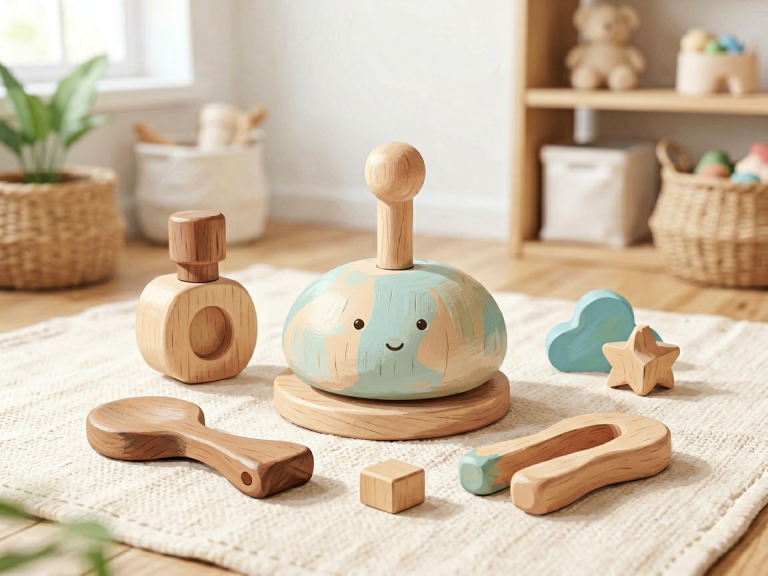
Of course, not all wooden blocks are created equal. A bucket of basic kindergarten cubes will likely bore a teenager within minutes. But more sophisticated wooden construction sets—such as Kapla planks, Tegu magnetic blocks, or precision‑cut architectural kits—present challenges that can captivate even a high‑school student. The key is selecting the right level of complexity.
—
The Unique Appeal of Wooden Blocks
Why choose wood over plastic, metal, or digital screens? One of the most compelling arguments for wooden blocks is their sensory and tactile quality. In an era when teenagers spend an average of seven hours per day on screens, the simple act of handling a smooth, warm block can be surprisingly grounding. Wood has a natural grain, a slight heft, and a gentle scent that plastic cannot replicate. This sensory feedback helps reduce stress and promotes a state of focused calm—similar to the benefits of fidget toys or mindfulness exercises.
Furthermore, wooden blocks are inherently forgiving. A structure that collapses does not break; it simply falls, often with a satisfying clatter. This safe failure‑and‑rebuild cycle teaches resilience without the frustration of permanent damage. For a 13-year-old grappling with academic pressures or social anxiety, the ability to knock down a tower and start over can be a powerful metaphor—and a genuine emotional release.
Another under‑appreciated advantage is the absence of batteries, screens, or subscription fees. Unlike video games that demand constant updates or in‑app purchases, a high‑quality wooden block set lasts for decades. This durability makes it a sustainable choice—both financially and ecologically. Parents concerned about screen time often find that wooden blocks provide a natural “off‑switch” for digital habits. Instead of passive consumption, the teenager becomes an active creator.
Finally, wooden blocks can be a bridge to interdisciplinary learning. Architecture, engineering, art, and even mathematics merge when a teenager tries to build a cantilevered bridge or a spherical dome. They must consider weight distribution, symmetry, and the physics of balance—all without realizing they are “studying.” This stealth learning is particularly valuable for 13-year-olds who may resist formal academic instruction.
—
Comparing Wooden Blocks to Other Play Options
To decide if wooden blocks are “worth it,” we must compare them to the alternatives that compete for a teenager’s attention. The most obvious competitor is the video game or app, especially sandbox games like *Minecraft* or *Roblox*. These digital worlds offer limitless construction opportunities and are immensely popular. However, they come with well‑documented downsides: eye strain, sedentary behavior, and the potential for algorithmic addiction. Wooden blocks provide a physically active alternative that engages fine motor skills and proprioception—the sense of body position. There is also no blue light exposure, no notifications, and no social comparison with other players’ virtual achievements.
Another popular option for 13-year-olds is building with plastic bricks, such as LEGO. LEGO sets are fantastic for following instructions and developing patience, but they often lead to a one‑time build that is then displayed. Once the set is complete, much of the creative challenge is gone unless the builder is willing to disassemble and start from scratch. Wooden blocks, by contrast, are almost never used to follow a prescribed plan. Their uniformity (or specially chosen shapes) forces the builder to think structurally rather than decoratively. For example, a set of identical wooden planks (like Kapla) requires the builder to rely on friction, gravity, and careful alignment—concepts that are less intuitive with interlocking plastic bricks.
There is also the social dimension. Wooden block building can be a solitary or a collaborative activity. Two or three teenagers can work together to design a massive structure, negotiating decisions and sharing tools. This cooperative play is different from multiplayer online gaming, where communication is often mediated by headsets and avatars. Face‑to‑face collaboration on a physical project builds real‑world interpersonal skills.
Of course, wooden blocks are not a universal solution. A 13-year-old who is passionate about robotics, coding, or sports may find little appeal in stacking wood. The worth of any toy depends on the child’s individual interests. The key is to present wooden blocks as one tool among many—not as a replacement for all other activities, but as a valuable addition to a balanced play diet.
—
Factors to Consider Before Investing
Before buying a wooden block set for a 13-year-old, parents and guardians should weigh several practical factors.
Quality and Complexity: Cheap, mass‑produced blocks with rough edges or poor paint will likely be ignored. Look for precision‑cut, sanded‑smooth blocks made of hardwoods like maple, beech, or birch. Sets that include unusual shapes—such as arches, cylinders, and triangles—offer more architectural possibilities. For teenagers, consider larger quantities: a set of 200–400 planks allows for substantial structures. Smaller decorative sets may be too limiting.
Interest Alignment: Does the teenager already enjoy building, drawing, or tinkering? If so, wooden blocks are a natural fit. If the teen is exclusively drawn to digital media, a block set might be perceived as a “boring” gift at first. In that case, it can help to present the blocks as a collaborative project. Build together, or challenge the teen to recreate a famous landmark from a photograph. The initial engagement is crucial.
Storage and Space: Wooden blocks are bulky. A 200‑plank Kapla set takes up considerable floor space when in use, and the blocks must be stored flat to avoid warping. Ensure there is a dedicated area—like a corner of a bedroom or a basement table—where the construction can be left out for days or weeks. If the blocks must be packed away after every session, the teenager may lose motivation.
Cost vs. Longevity: A high‑quality wooden block set can cost anywhere from $50 to $200. At first glance, that seems expensive compared to a $10 app. However, the blocks will not become obsolete, require no electricity, and can be passed down to younger siblings or even future generations. In terms of cost per hour of use, wooden blocks often outperform most electronic gadgets.
Age‑Appropriate Packaging: Many wooden block sets are marketed to preschoolers, which can feel insulting to a 13-year-old. Look for sets with neutral, adult‑friendly packaging—or better yet, buy from brands that specifically target architects, hobbyists, or teachers. Building planks (like Kapla or Citiblocs) come in plain boxes and are used in art schools and engineering classrooms, giving them a “serious” reputation that appeals to older children.
—
Conclusion
So, are wooden blocks worth it for 13-year-olds? The answer is a qualified yes—provided the blocks are of sufficient quality and complexity, and provided the teenager is given the freedom and space to explore them on their own terms. Wooden blocks are not a magical solution that will cure screen addiction or turn every teen into an engineer. But they offer a rare combination of tactile pleasure, open‑ended creativity, and quiet focus that is increasingly scarce in modern adolescent life.
In a world that constantly pushes teens toward passive consumption, instant gratification, and digital validation, wooden blocks stand as a quiet, patient invitation to build something real with one’s own hands. For the 13-year-old who craves a challenge, who enjoys making things, or who simply needs a break from the noise of screens, a set of good wooden blocks can be an unexpectedly valuable companion—one that builds not just towers, but resilience, concentration, and a sense of tangible accomplishment. That, surely, is worth the investment.