Beyond Play: The Transformative Power of Building Blocks and Magnetic Tiles for Seven-Year-Olds
At seven years old, children stand at a remarkable crossroads of cognitive, social, and physical development. They have outgrown the simple clutching and mouthing of infant toys, yet they are not quite ready for the abstract reasoning demanded by middle school curricula. This is the golden age of constructive play—a time when the hands, the mind, and the imagination converge in powerful ways. Among the most effective tools for nurturing this convergence are building blocks and magnetic tiles. These seemingly simple playthings are, in fact, sophisticated developmental instruments that shape a child’s spatial reasoning, creativity, problem-solving abilities, and even their emotional resilience. This article explores why building blocks and magnetic tiles are not just entertaining diversions but essential components of a seven-year-old’s growth, and offers guidance for parents and educators on how to maximize their potential.
The Cognitive Leaps: Spatial Reasoning and Mathematical Thinking
Seven-year-olds are entering what developmental psychologist Jean Piaget called the “concrete operational stage.” Their thinking becomes more logical and organized, but it still relies heavily on tangible, physical experiences. Building blocks and magnetic tiles provide the perfect medium for this kind of learning. When a child stacks wooden blocks to create a tower, they must intuitively grasp concepts of balance, weight distribution, and gravity. When they connect magnetic tiles to form a cube or a geodesic dome, they engage in spatial visualization—mentally rotating shapes and understanding how flat surfaces can enclose volume.
Research in early STEM education consistently shows that children who frequently engage with construction toys outperform their peers in spatial reasoning tests. This skill is a strong predictor of later success in science, technology, engineering, and mathematics. For a seven-year-old, the act of figuring out why a structure collapses or how to make two triangular tiles join to form a square is not mere trial and error; it is the foundation of geometric intuition. Moreover, these toys introduce the concept of symmetry, fractions (a half-block versus a whole block), and even basic algebraic thinking through pattern recognition. A child who builds a repeating pattern of red-blue-red-blue using magnetic tiles is, in effect, learning about sequences and variables.
Fostering Creativity and Divergent Thinking
While traditional toys often prescribe a single use—a doll that must be dressed, a car that must be rolled—building blocks and magnetic tiles are open-ended. This openness is precisely what makes them invaluable for creative development at age seven. Divergent thinking, the ability to generate multiple solutions to a problem, peaks in childhood and can be nurtured or squelched by the types of play children experience. A set of magnetic tiles can become a castle one day, a spaceship the next, and a geometric animal the following week. There are no instructions that must be followed, no correct final product. This freedom encourages children to take intellectual risks.
For seven-year-olds, who are increasingly exposed to performance pressure in school, having a play environment where “mistakes” are simply new designs is liberating. A tower that falls becomes a lesson in engineering, not a failure. A magnetic tile structure that wobbles invites the child to rethink the base. This process of iteration—try, fail, adjust, succeed—mirrors the creative processes of artists, inventors, and scientists. Furthermore, because blocks and tiles are typically made in neutral or primary colors, they do not dictate a theme. Unlike a branded playset that comes with predetermined characters, blocks invite the child to project their own narratives, building stories and worlds from their imagination rather than from a television show.
Developing Fine Motor Skills and Executive Function
Do not underestimate the physical demands of construction play. At seven, children’s hand muscles are still developing, and the precision required to align a magnetic tile perfectly or to balance a wooden block without wobbling strengthens fine motor control and hand-eye coordination. These are the same skills needed for handwriting, typing, and playing musical instruments. But beyond the physical, building blocks and magnetic tiles also train what neuroscientists call executive function—the set of cognitive processes that includes planning, working memory, and self-control.
When a seven-year-old decides to build a multi-story house with a garage and a balcony, they must hold that goal in mind (working memory), suppress the impulse to slap tiles together randomly (inhibitory control), and sequence their actions logically (planning). They must decide which piece to place first, how many tiles they will need, and whether the structure will be stable. This kind of forethought is not innate; it is developed through practice. Construction play provides repeated, low-stakes opportunities to practice executive function. And because the child is intrinsically motivated—they want to see their creation come to life—they remain focused far longer than they would during a structured workbook exercise.
Social and Emotional Benefits: Collaboration and Resilience
Though building blocks and magnetic tiles are often enjoyed alone, they shine in group settings. At seven, children are developing the ability to cooperate, negotiate, and share. A classroom or playdate with a large set of magnetic tiles becomes a laboratory for social interaction. Children must communicate their ideas: “Let’s build a bridge. You make one side, I’ll make the other.” They learn to compromise when their visions clash: “I want it to be a castle, but you want a spaceship—what if we make a castle that can fly?” They experience the joy of collaborative creation, which builds empathy and teamwork.
Crucially, construction play also teaches resilience. Anyone who has watched a seven-year-old build a complex tower only to see it collapse knows the emotional intensity of that moment. But the child who picks up the pieces and tries again is learning a lesson that no worksheet can teach: perseverance in the face of disappointment. With gentle adult guidance, these moments become opportunities to discuss feelings, problem-solving, and the idea that setbacks are part of the process. Over time, children who engage in construction play develop a growth mindset—the belief that ability is not fixed but can be improved through effort.
Choosing the Right Tools: Wooden Blocks vs. Magnetic Tiles
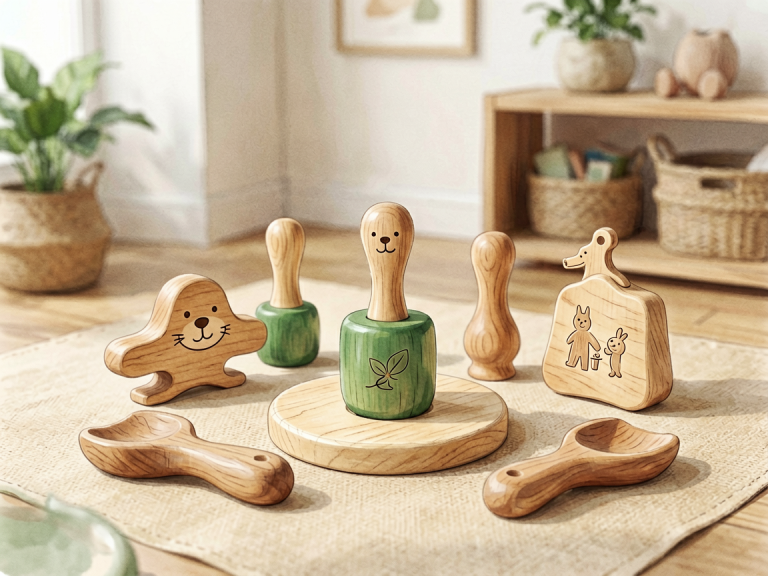
For parents and educators wondering which to invest in, the answer is not either/or. Both building blocks and magnetic tiles offer unique benefits, and the best approach is to provide both. Traditional wooden unit blocks (like those from Melissa & Doug or standard classroom sets) are excellent for gravity-based engineering. They are heavy, stable, and require careful balancing. A seven-year-old can learn about load-bearing walls, arches, and cantilevers using plain wooden blocks. They are also quieter and have a timeless, sensory appeal.
Magnetic tiles (such as Magna-Tiles or PicassoTiles), on the other hand, introduce a different physics: magnetism. They allow for structures that would be impossible with plain blocks—floating walls, bridges that span gaps without support, and complex polyhedral shapes. They are easier to connect, which can reduce frustration for children with less developed fine motor skills, and they are translucent, which adds an element of light and color exploration. For a seven-year-old, magnetic tiles are particularly effective for teaching 3D geometry and symmetry because the pieces snap together with satisfying precision.
When selecting either type, prioritize quality. Cheap plastic tiles may have weak magnets or sharp edges, and low-quality wooden blocks can splinter. Look for sets that are compatible with major brands (Magna-Tiles in particular are known for their durability and strong magnets). For blocks, the classic “unit block” system (where small blocks are exactly half the length of larger ones) promotes mathematical thinking. Also consider adding accessories: small figurines, wheels, or fabric pieces can dramatically extend the play possibilities. A set of 100 magnetic tiles or a substantial wooden block set (100–200 pieces) will serve a seven-year-old for years.
Integrating Construction Play into Daily Life
The challenge for many families is carving out time and space for construction play in a world filled with screens and scheduled activities. Yet the benefits are so profound that it is worth prioritizing. Designate a flat surface—a low table or a clean floor area—where a structure can remain standing for days. This allows the child to return to their creation, modify it, and build upon it, fostering deeper engagement. Avoid the temptation to “fix” a child’s wobbly structure or to show them the “right” way to build. Instead, ask open-ended questions: “What do you think would happen if you added a tile here?” or “How could you make the roof stronger?”
Teachers can incorporate magnetic tiles into math and science lessons. For example, asking students to build a shape with a specific number of sides or to create a structure that can hold a certain weight turns play into inquiry. In a homeschool or after-school setting, construction play can be paired with journaling: have the child draw their creation and write one sentence about what they learned. This bridges the physical and the symbolic, reinforcing literacy and metacognition.
Finally, remember that building blocks and magnetic tiles are not just for seven-year-olds. They can be enjoyed by younger siblings too, under supervision, and even adults find them meditative. A family that builds together—collaborating on a giant castle or a futuristic city—creates shared memories and a sense of accomplishment. In an age of instant gratification, the slow, deliberate process of constructing something tangible with one’s own hands is a gift.
Conclusion: A Foundation for Life
The humble building block and the magnetic tile are far more than toys. They are tools for thinking, creating, and connecting. For a seven-year-old, whose brain is rapidly wiring new neural pathways and whose social world is expanding, these construction materials offer a safe, joyful, and deeply educational experience. They teach physics without textbooks, geometry without formulas, and resilience without lectures. They invite children to be architects of their own imaginings, engineers of their own problems, and collaborators in a shared vision. As parents and educators, we often search for the perfect learning tool—something that is both fun and formative. We need look no further than a box of blocks. The child who builds with blocks today is building the skills for tomorrow, one tile at a time.