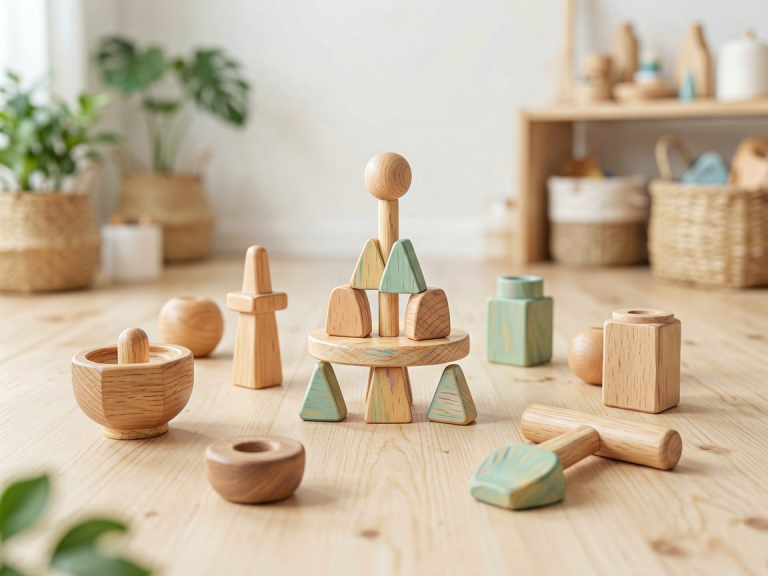
Beyond the Brick: The Best Alternatives to LEGO-Style Building Blocks for 3-Year-Olds
Introduction
For decades, LEGO bricks have been synonymous with creative play, fine motor skill development, and endless hours of construction fun. However, when it comes to toddlers—specifically 3-year-olds—the classic tiny LEGO pieces come with significant drawbacks: choking hazards, frustration from small parts, and a level of dexterity that most three-year-old fingers have not yet mastered. As any parent or early childhood educator knows, the developmental needs of a three-year-old are distinct. They crave large, easy-to-handle components that spark imagination without causing tears or safety scares. Fortunately, the market now offers a rich array of alternatives that replicate the magic of construction play while being perfectly tailored to the budding architect’s age, strength, and cognitive stage.
This article explores the best alternatives to LEGO-style bricks for 3-year-olds, focusing on safety, developmental benefits, durability, and above all, the joy of building. Each alternative has been vetted for its ability to foster fine motor skills, spatial reasoning, problem-solving, and open-ended creativity—all while keeping those tiny hands and mouths safe.
—
1. Mega Bloks: The Oversized Classic
Mega Bloks, produced by Mattel, are perhaps the most direct and widely recognized alternative to LEGO bricks for young children. Unlike standard LEGO bricks, which measure about 1.7 cm in length, Mega Bloks are significantly larger—typically 3 to 5 cm per block. This size makes them ideal for 3-year-olds who are still developing hand-eye coordination and grip strength.
Why they shine for 3-year-olds:
- Safety first: The large size eliminates choking risks. A single Mega Blok cannot fit inside a standard toilet paper roll, meeting stringent safety guidelines for children under three.
- Easy connection: The blocks click together with a satisfying but gentle snap. A toddler’s limited finger strength is enough to connect and separate them without adult assistance.
- Durable and washable: Made from sturdy, non-toxic plastic, Mega Bloks can survive being chewed, dropped, or thrown. They are also dishwasher-friendly (top rack) for quick sanitizing.
- Open-ended play: Much like classic LEGO, Mega Bloks allow for limitless constructions—towers, houses, animals, and imaginary vehicles. The simplicity encourages experimentation rather than rigid instruction-following.
Developmental benefits:
Building with Mega Bloks helps three-year-olds practice bilateral coordination (using both hands together), cause-and-effect understanding (why a tower falls when the base is uneven), and early math concepts such as counting, sorting by color, and comparing sizes.
—
2. Duplo: The LEGO Brand… but Better for Toddlers
Strictly speaking, Duplo is a product line by the LEGO Group, so it is not a “non-LEGO” alternative. However, many parents seek options *other than the standard LEGO brick*, and Duplo perfectly fills that niche. Duplo bricks are twice the size of traditional LEGO bricks—about 2 cm in height and width—making them safe and manageable for 3-year-olds.
What makes Duplo stand out:
- Compatibility with future growth: Duplo bricks are partially compatible with standard LEGO bricks (the larger Duplo studs fit onto regular LEGO plates). This means your child can transition smoothly from Duplo to classic LEGO as they grow.
- Themed sets that engage imagination: Duplo offers a vast range of themed sets—fire stations, farms, trains, Disney characters, and more—which appeal to a toddler’s emergent narrative play.
- Smooth edges and vivid colors: Duplo bricks are designed with rounded corners and a non-toxic finish, ideal for little mouths that still explore the world orally.
- Educational alignment: Many Duplo sets include simple number bricks, animal figures, and everyday objects that help teach vocabulary, counting, and social roles.
Caveat: While Duplo is excellent, it is slightly more expensive than some generic alternatives. Also, the themed sets can be restrictive; some educators prefer purely open-ended blocks for deeper creativity. Nevertheless, Duplo remains a top recommendation for 3-year-olds who show interest in themed play.
—
3. Magnetic Wooden Blocks: Tegu and Its Competitors
Wooden magnetic blocks, such as those made by Tegu, have gained a passionate following among parents who prefer natural materials. Tegu blocks are made from sustainably sourced hardwood and contain hidden magnets inside each piece.
Why these are a brilliant alternative:
- No snapping required: Traditional bricks demand precise alignment and downward pressure, which can frustrate a child with weaker fine motor skills. Magnetic blocks simply click together with a satisfying clink, allowing even the clumsiest toddler to build a stable structure.
- Tactile and sensory appeal: The smooth, warm texture of wood is far more pleasant than plastic. Many 3-year-olds respond with greater focus and calm when using natural materials.
- Encourages creative geometry: Because the magnets allow parts to connect at different angles, children naturally explore 3D shapes, balance, and symmetry in ways that rigid brick systems do not always promote.
- Non-toxic and durable: High-quality brands like Tegu use water-based, non-toxic finishes that pass rigorous international safety standards for children aged 1 and up.
Potential downsides:
Magnetic blocks are more expensive per piece than plastic alternatives. Also, the magnets can be a concern if a child manages to pry them out—though reputable brands design the magnets to be securely embedded. Still, for safety-conscious families who value open-ended, artistic building, magnetic wooden blocks are a top-tier choice.
—
4. Magnetic Tiles (Magna-Tiles and PicassoTiles)
If your 3-year-old loves to build upwards and outwards without the limitation of gravity, magnetic tiles are a revelation. These translucent, colorful squares and triangles contain strong magnets along their edges, allowing children to create towers, houses, domes, and even marble runs.
Why magnetic tiles are perfect for three-year-olds:
- Instant gratification: Instead of struggling to snap bricks together, a child simply brings two tiles near each other and they snap together. This ease reduces frustration and boosts confidence.
- STEM learning in disguise: While playing, children absorb concepts like magnetism, geometry (what shapes form a cube?), balance, and structural integrity. Many sets also come with metal balls and ramps for early physics exploration.
- Light and light-play: The transparent tiles are fantastic for exploring color mixing when held up to a window or flashlight. This sensory element captivates toddlers.
- Safe and lightweight: The largest tiles are about 7.5 cm square, far too large to swallow. They are made from shatter-resistant ABS plastic and contain sealed magnets.
Limitation: Magnetic tiles do not build vertically in the same way as bricks—the construction is more like a skeleton than a solid wall. Some children prefer the “realism” of bricks, but most 3-year-olds are thrilled by the ease and magic of magnetic structures.
—
5. Classic Wooden Unit Blocks (Melissa & Doug, Guidecraft, etc.)
Sometimes the oldest alternative is the best. Classic wooden unit blocks—the simple, unpainted rectangular prisms, cylinders, arches, and triangles—have been a staple of Montessori and progressive preschools for over a century. Brands like Melissa & Doug and Guidecraft produce high-quality sets.
Why they matter for 3-year-olds:
- No assembly frustration: Unlike bricks, unit blocks require no connection mechanism. Children simply stack, balance, and arrange them. This teaches a fundamental lesson: structure depends on gravity and careful placement, not clicking.
- Rich sensory and mathematical experience: The weight, grain, and smoothness of wood give feedback that plastic cannot. Stacking blocks naturally introduces concepts of proportion, symmetry, and weight distribution.
- Encourages collaborative play: Because there is no “correct” way to connect them, children are more likely to work together, negotiate, and create shared worlds.
- Timeless durability: A well-made set of wooden blocks can last for decades and be passed down through siblings.
Safety note: Look for blocks that are sanded smooth with rounded edges and painted with non-toxic, water-based paints (or left natural). Avoid blocks with small loose parts like wheels that could detach.
—
6. Soft Foam Building Blocks (B. Toys, Infantino)
For the most active or youngest 3-year-olds—those who still enjoy knocking things down more than building up—soft foam blocks are a fantastic intermediate option. These are typically made of lightweight, washable EVA foam and come in bright colors with textured surfaces.
Benefits for 3-year-olds:
- Completely silent: No loud clattering when a tower collapses, which can be a relief for parents and sensitive children.
- Safe for rough play: Foam blocks can be thrown, stepped on, or even used as pillows without causing injury.
- Giant sizes: Some sets include blocks as large as a toddler’s torso, encouraging whole-body movement and gross motor development.
- Easy to clean: Foam can be wiped down or machine-washed easily.
Limitation: Foam blocks do not offer the same structural precision as solid plastic or wood. A tower made of foam tends to wobble and fall apart quickly, which can frustrate a child who wants to build something stable. However, for anarchic play and sensory exploration, they are unbeatable.
—
7. Interlocking Plastic Link Systems (Playstix, Strawbees, or Plus-Plus)
While these aren’t traditional bricks, they fall squarely within the construction-toy category and are excellent for developing fine motor skills in 3-year-olds. Plus-Plus, for instance, consists of small, interlocking mushroom-shaped pieces that can be assembled in two-dimensional or three-dimensional patterns. Playstix uses long rods with notches that snap together. Strawbees use flexible connectors and straws.
Why they work for toddlers:
- Unique motor challenges: Instead of pushing down vertically, children twist, slide, or pinch, which strengthens different hand muscles.
- Endless shapes: These systems can create both flat mosaics and 3D structures, including curves and angles that bricks cannot achieve.
- Portability: Many come in compact tubes or boxes, perfect for travel.
Safety check: Ensure the pieces are large enough (e.g., Plus-Plus has a “Mini” and a “Big” size; for 3-year-olds, choose the Big version). Always supervise to prevent mouthing, though most brands now adhere to ASTM and EN71 safety standards.
—
8. Recommendations for Choosing an Alternative
With so many excellent options, how do you choose? Consider the following criteria:
- Fine motor skill level: Is your child still developing grip strength? Then Mega Bloks or magnetic tiles are ideal. If they already enjoy connecting Duplo, try wooden unit blocks for a different challenge.
- Play style: Does your child love following directions and creating specific objects? Duplo’s themed sets will delight them. Do they prefer free-form experimentation? Magna-Tiles or wooden blocks are better.
- Safety and allergies: For children who mouth everything, avoid small parts and choose solid wooden or large foam blocks.
- Budget: Mega Bloks and basic wooden block sets are the most affordable. Magnetic tiles and Tegu blocks are pricier but offer unique benefits.
- Space: Magnetic tiles store flat, while Mega Bloks require a bin. Foam blocks take up considerable volume.
—
Conclusion
The best alternative to LEGO-style bricks for a 3-year-old is not a single product, but a thoughtful selection based on the child’s development, interests, and environment. For most families, a combination of Mega Bloks (for durability and classic stacking), magnetic tiles (for geometric and sensory wonder), and a set of wooden unit blocks (for timeless, imaginative play) provides a well-rounded construction experience.
Remember that the goal at age three is not to create perfect replicas of real-life buildings, but to cultivate curiosity, persistence, and joy in the process of creation. The right building toy will grow with your child, quietly teaching patience, physics, and the thrill of “I did it all by myself.” Whether you choose the familiar snap of Duplo, the magnetic magic of Magna-Tiles, or the natural warmth of carved wood, you are giving your toddler a foundation for creative thinking that will last a lifetime.
So set aside those tiny, anxiety-inducing LEGO bricks for a few more years. Your three-year-old’s hands—and mind—are ready for something bolder, bigger, and more forgiving. And the world of alternatives is richer than ever.