The Hidden Costs of Cheap Plastic Toys for 18-Month-Olds: A Parent’s Guide to Smart Shopping
Introduction
As a parent of an 18-month-old, you are probably familiar with the dizzying array of toys available at discount stores, dollar shops, and online bargain bins. The price tags are tempting—often under five dollars—and the bright colors, flashing lights, and squeaky sounds seem perfectly designed to captivate a toddler’s attention. Buying cheap plastic toys for an 18-month-old feels like a harmless way to keep them entertained without breaking the bank. But is it really that simple?
The truth is that the lowest-priced toys often come with hidden costs that go far beyond the sticker price. From safety hazards and toxic chemicals to missed developmental opportunities and environmental waste, those seemingly innocent purchases can affect your child’s health, learning, and the planet they will inherit. This article will explore the complex landscape of buying cheap plastic toys for 18-month-olds, offering practical advice for parents who want to balance budget constraints with the very best for their growing child.
The Allure of Cheap Plastic Toys: Why We Buy Them
Before diving into the downsides, it is fair to acknowledge why cheap plastic toys are so popular. For many families, money is tight, and a $2 toy feels like a small victory in a world where baby gear can cost hundreds. The low price allows parents to buy multiple toys, rotate them, and replace broken items without guilt. Moreover, 18-month-olds are notorious for losing interest in toys quickly, so the idea of spending a lot on a single toy that may be ignored after ten minutes seems wasteful.
Another factor is convenience. Cheap plastic toys are everywhere—supermarket checkout aisles, gas stations, dollar stores, and online flash sales. You can grab one while buying diapers or milk, and the child’s immediate glee (usually a shriek of delight and a grabby hand) reinforces the purchase. The feedback loop of instant gratification is strong. Unfortunately, this short-term happiness can mask long-term problems that only become visible weeks or months later.
Developmental Needs of an 18-Month-Old: What Toys Should Do
An 18-month-old is at a remarkable stage of development. They are transitioning from babyhood to toddlerhood, gaining mobility, language, and problem-solving skills at breakneck speed. According to child development experts, the best toys for this age encourage sensory exploration, fine motor control, cause-and-effect learning, imaginative play, and safe physical activity.
Cheap plastic toys often fail to meet these criteria. Many are designed to be *passive*—they flash, beep, or move on their own, requiring little more from the child than pressing a button. While a baby may find this entertaining for a few minutes, it does not build the brain connections that come from manipulating objects, stacking blocks, fitting shapes, or pretending. A cardboard box, a wooden spoon, and a set of plastic cups can offer far richer play than a battery-operated singing robot.
Furthermore, cheap toys tend to break easily. A flimsy plastic car that loses its wheels after one drop, or a rattle that cracks and reveals sharp edges, provides zero developmental benefit and can even be dangerous. The frustration of a broken toy—especially for a toddler who does not yet understand why it stopped working—can lead to tears and tantrums, which is the opposite of the joy you intended.
Safety Hazards Lurking in Low-Cost Plastics
The most alarming hidden cost of cheap plastic toys is safety. Mass-produced, ultra-low-cost toys are often made in factories with minimal quality control. They may contain toxic chemicals such as phthalates, lead, cadmium, or BPA (bisphenol-A), all of which are strictly regulated in many developed countries but still common in unmonitored imports.
Phthalates are used to soften plastics and are known endocrine disruptors. When an 18-month-old chews, mouths, or drools on a plastic toy—which they inevitably do—these chemicals can leach into their saliva and be absorbed into their tiny bodies. Studies have linked phthalate exposure to developmental delays, reproductive issues, and respiratory problems. Lead, even at low levels, can impair cognitive development. BPA mimics estrogen and has been associated with behavioral changes.
Beyond chemical risks, cheap toys often have small parts that can detach. A plastic button that pops off, a squeaker that comes loose, or a glued-on eye that falls out becomes a choking hazard. For an 18-month-old, whose airway is roughly the size of a drinking straw, a small part can block breathing within seconds. Batteries, especially button batteries, are another deadly threat: they can cause severe internal burns if swallowed. Cheap toys rarely have secure, screw-locked battery compartments.
There are also physical hazards like sharp edges, points, or pinch points. A cheap plastic dinosaur with a tail that snaps off may leave a jagged edge capable of cutting a finger or a lip. Toys that are not well-balanced can tip over and fall on a toddler. The lack of rigorous testing in the cheapest supply chains means these dangers are far more common than with reputable brands.
Environmental and Health Impacts Beyond Your Child
The problem of cheap plastic toys is not confined to your home. These toys are nearly always single-use in practice: they break, lose their appeal, or become contaminated, and then they are tossed in the trash. Most cheap plastics are not recyclable, or they are not accepted by local recycling programs because they are too small, mixed materials, or contaminated with food residue. Consequently, they end up in landfills, oceans, or incinerators, where they can persist for hundreds of years while releasing microplastics.
Incinerating plastic toys releases toxic fumes, including dioxins, which can travel long distances and affect air quality for entire communities. In the ocean, microplastics are ingested by marine life and eventually enter the human food chain. The cumulative effect of millions of cheap toys discarded annually is a growing environmental crisis that your 18-month-old will inherit.
Moreover, the production of cheap plastic toys relies on fossil fuels—petroleum and natural gas—that contribute to climate change. The carbon footprint of a single $3 toy, from raw material extraction to shipping across the ocean to your door, can be surprisingly large. When multiplied by billions of toys, the impact is substantial. Choosing to buy fewer, higher-quality, or more sustainable toys is one small but meaningful way to reduce your family’s environmental footprint.
How to Make Informed Choices Without Breaking the Bank
Does this mean you should never buy a cheap plastic toy? Not necessarily. Many families operate on tight budgets, and a $2 toy that provides genuine joy for a few weeks can be worthwhile if chosen carefully. The key is to apply a set of simple criteria before every purchase.
- Check for safety certifications. Look for marks like CE (European conformity), ASTM (American Society for Testing and Materials), or the UKCA mark. These indicate that the toy has passed basic safety tests. Avoid toys with no marks at all, especially those sold by unknown online sellers.
- Inspect the toy physically. Before handing it to your child, examine it for small parts, sharp edges, loose components, and strong chemical smells. A strong “plastic” smell is often a red flag for off-gassing of volatile organic compounds.
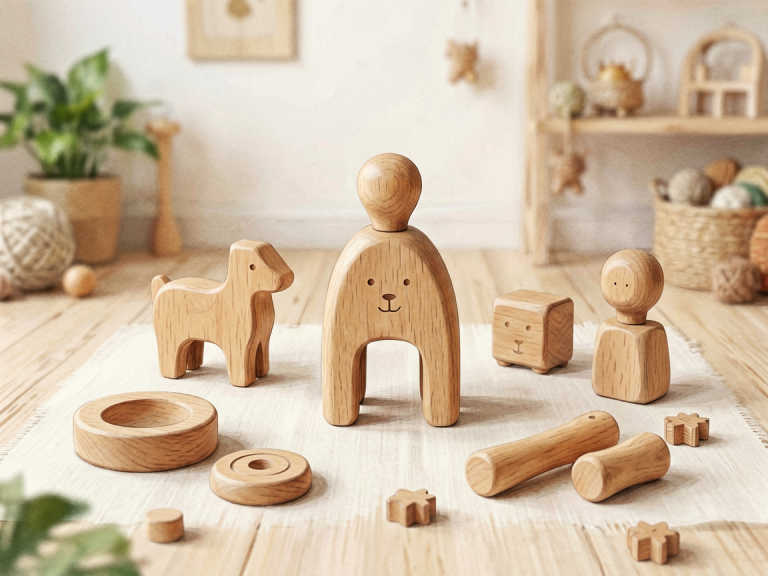
- Prioritize simple, open-ended toys. Instead of a noisy electronic gadget, choose a set of stacking cups, a soft ball, a push-along cart, or a simple shape sorter. These encourage active play and creativity. Many of these can be found in cheap versions at discount stores, but make sure they are made of durable, non-toxic materials.
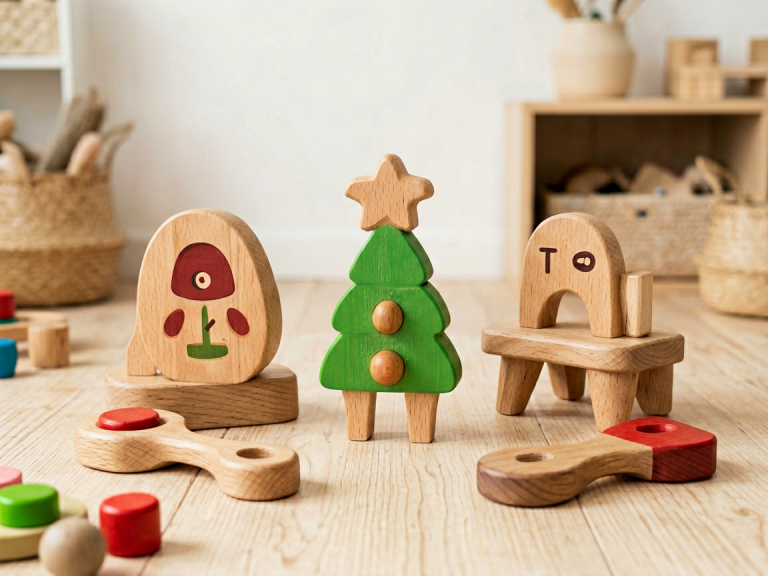
- Consider secondhand. Gently used wooden or high-quality plastic toys from thrift stores, yard sales, or online marketplace are often far more affordable than new cheap toys, and because they have already been used and washed, many chemical residues have gassed off. Just sanitize them thoroughly.
- Set a toy budget and stick to it. Decide how many new toys your 18-month-old truly needs per month (often zero or one is plenty). Rotate toys every week to keep interest high without buying more. When you do buy, allocate that money toward one well-made toy rather than several flimsy ones.
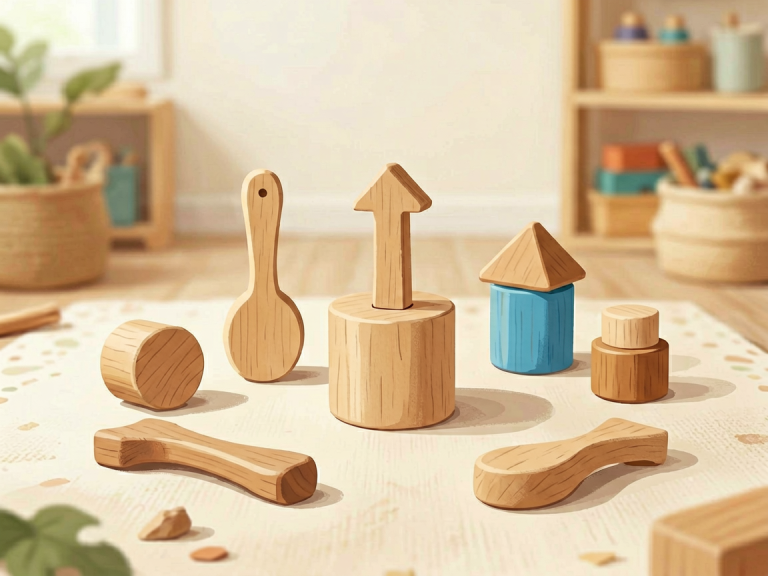
- Think about longevity. A toy for an 18-month-old should also be interesting at 2 or 3 years old. For example, a set of chunky wooden blocks can be used for stacking, sorting, knocking down, and later for pretend building. A cheap plastic “laptop” toy will be boring within weeks.
Conclusion: Investing in Play, Not Plastic
Buying cheap plastic toys for an 18-month-old is not inherently wrong, but it is a decision that deserves careful thought. The low price often masks risks to your child’s health, their development, and the environment. By becoming a more mindful shopper—checking safety marks, prioritizing simple and open-ended play, and choosing quality over quantity—you can give your toddler the tools they need to grow, learn, and explore without compromising their safety or your budget.
Remember that the most valuable “toys” for an 18-month-old are you: your voice, your attention, your hands helping them build and knock down towers. No cheap plastic object can replace that. So, the next time you are tempted by a flashy, five-dollar toy at the checkout line, pause. Ask yourself: will this help my child thrive, or is it just filling a moment of silence? The answer may surprise you—and it will certainly change how you see that cheerful aisle of cheap plastic.