A Parent’s Guide to Choosing Building Blocks for Elementary School Kids
Introduction
Building blocks are more than just toys—they are powerful learning tools that nurture creativity, spatial reasoning, fine motor skills, and even social collaboration. For elementary school kids (ages 6–12), the right set of blocks can transform play into a rich educational experience. However, with a bewildering array of options on the market—from classic wooden cubes to magnetic tiles, interlocking plastic bricks, and themed construction kits—parents often feel overwhelmed. How do you pick the best blocks for your child’s age, interests, and developmental stage? This guide will walk you through the key factors to consider, ensuring that your investment supports both fun and growth.
Safety First: Materials and Size Considerations
Before any other factor, safety must come first. Elementary school children are more coordinated than toddlers, but they are still prone to occasional accidents. Here’s what to look for:
- Non-toxic materials: Choose blocks made from BPA-free plastics, lead-free paints, and natural, untreated wood. Look for certifications like ASTM (American Society for Testing and Materials) or CE (European conformity) marks. Avoid blocks with sharp edges, splinters, or strong chemical odors.
- Size and weight: Blocks should be large enough to prevent choking (a general rule is that any piece smaller than a standard ping-pong ball is a hazard for children under 3, but even older kids may put small pieces in their mouths or up their noses). For elementary schoolers, blocks that are at least 1–2 inches in the smallest dimension are usually safe. Also, heavy wooden blocks can cause injury if thrown; ensure your child understands safe play.
- Durability under stress: Check that the blocks won’t crack or splinter easily. Magnetic blocks should have magnets securely enclosed. If the set includes small connectors or pins, ensure they are firmly attached.
Age Appropriateness: Matching Blocks to Developmental Stages
Elementary school spans a wide age range, so what works for a first grader may not challenge a fifth grader.
- Ages 6–7 (early elementary): At this stage, children are refining fine motor skills and beginning to understand basic engineering concepts. Choose blocks that are easy to handle, such as larger wooden unit blocks, duplo-style bricks (if they are compatible with standard bricks but larger), or simple magnetic tiles. Sets with a few basic shapes—cubes, rectangles, triangles, cylinders—allow open-ended creation without overwhelming them. Avoid sets with hundreds of tiny pieces or complex instruction manuals.
- Ages 8–10 (middle elementary): These kids enjoy more complex builds. Interlocking plastic bricks (e.g., LEGO) with specialized parts like gears, wheels, and hinges are excellent. They can follow multi-step instructions for a car, a castle, or a robot. Magnetic blocks with more shapes (triangular prisms, arches) also work well. At this age, consider themed sets (space, pirate, medieval) that spark imagination and storytelling.
- Ages 11–12 (upper elementary/pre-teen): Pre-teens often seek a challenge. Advanced building sets—like architectural blocks, marble runs, motorized kits, or magnetic building systems with beams and balls—can engage their problem-solving skills. Some children may enjoy programmable block sets (e.g., LEGO Boost or similar) that introduce basic coding. Others prefer highly detailed model kits (e.g., miniature buildings, bridges, or vehicles). The key is to offer complexity without frustration.
Types of Building Blocks: Open-Ended vs. Themed Sets
One of the most important decisions is whether to choose open-ended blocks or themed kits.
- Open-ended blocks: These are simple, unstructured blocks that encourage free-form creativity. Examples include classic wooden unit blocks, magnetic tiles, and basic plastic bricks in neutral colors. Open-ended blocks are versatile—they can become a castle one day and a spaceship the next. They are ideal for fostering divergent thinking, spatial reasoning, and persistence. For elementary schoolers, a large set of open-ended blocks (e.g., 100–200 pieces) can provide years of engagement. The downside? Some children may feel directionless without a model to follow.
- Themed sets: These come with specific pieces designed to build a particular object—a fire station, a pirate ship, a dinosaur. The instructions teach step-by-step construction, which builds patience and following directions. Themed sets are excellent for children who enjoy a clear goal or who are inspired by a certain topic (e.g., dinosaurs, space). However, once built, the set may be played with as a toy, then disassembled and rebuilt only a few times. To maximize value, choose themed sets that allow modifications—for example, a castle set that can be rebuilt into different fortresses.
- Hybrid approach: Many parents find that a combination works best: a base set of open-ended blocks plus a few themed expansion packs. For instance, start with a large tub of basic interlocking bricks, then add a set of wheels and axles, or a set of windows and doors. This way your child has both freedom and inspiration.
Educational Value: STEM, Creativity, and Problem-Solving
Building blocks are natural STEM (Science, Technology, Engineering, Math) toys. When choosing, consider how the set promotes learning:
- Engineering and physics: Blocks that require balancing, stacking, and connecting teach principles of gravity, stability, and load distribution. Look for sets that include wheels, pulleys, or seesaws. Magnetic blocks demonstrate polarity and attraction. Marble runs teach about momentum, slope, and gravity.
- Math skills: Counting pieces, sorting by shape or color, and estimating how many blocks are needed for a structure all enhance numeracy. Some sets include fraction blocks or geometric shapes that introduce angles and symmetry.
- Creativity and imagination: The best blocks have no single “right” way to build. Open-ended sets allow children to create their own worlds, which fosters storytelling, role-play, and emotional expression. Even themed sets can spark creativity if they can be modified. Avoid sets that are too rigid (e.g., only one correct structure with no room for variation).
- Problem-solving and perseverance: Building complex structures almost always involves failure—a tower falls, a bridge collapses. Kids learn to diagnose what went wrong: “The base was too narrow,” or “I need to add more support.” This trial-and-error process builds resilience and critical thinking. Choose sets that are challenging but not impossible—look for age recommendations on the box, but also consider your child’s individual skill level.
Durability and Storage
Elementary school kids are active, and blocks will be dropped, stepped on, and thrown (hopefully not!). Prioritize durability:
- Wooden blocks: Solid hardwood (maple, birch) with non-toxic finishes are very durable. Avoid cheap pine that dents easily. Wooden blocks can last for decades if stored properly.
- Plastic blocks: High-quality ABS plastic (used by LEGO and most major brands) is nearly indestructible. Cheaper plastics may crack or lose their grip over time. Test a few pieces by trying to bend them; they should be stiff.
- Magnetic blocks: Ensure magnets are strong enough to hold structures together but not so strong that they pinch fingers. The plastic casing should be thick and well-sealed to prevent magnets from popping out.
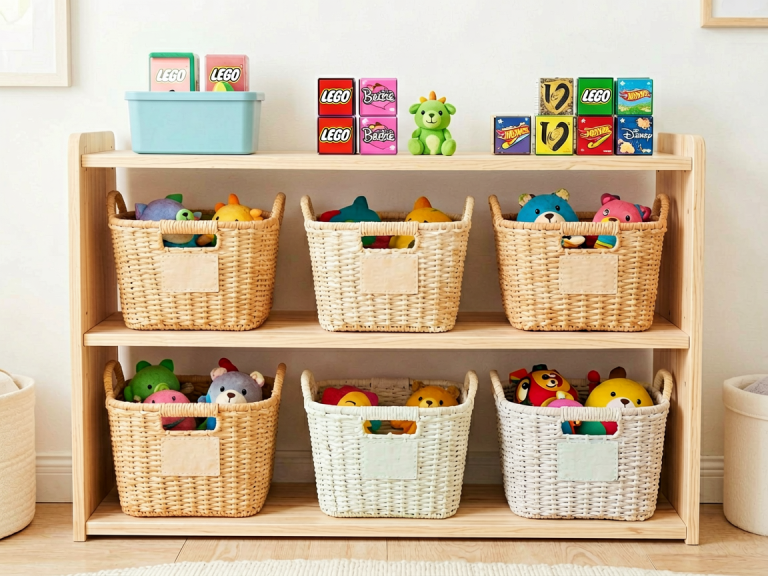
- Storage: A large, shallow bin or a set of stackable trays works best. Avoid deep, narrow bins where small pieces get lost at the bottom. Some parents use a tool chest or a divided craft box for sets with many small parts. Label the storage container so your child can pack up on their own.
Budget and Long-Term Investment
Building blocks can range from $10 for a basic set to several hundred dollars for large collections. Here’s how to spend wisely:
- Start small and expand: For a 6-year-old, a 50–100 piece open-ended set is a good start. If your child shows enthusiasm, you can add more pieces later. Many brands (like LEGO, Magna-Tiles, or wooden unit blocks) are compatible with other sets from the same line, so you can grow the collection gradually.
- Look for used sets: Thrift stores, garage sales, and online marketplaces often have gently used blocks at a fraction of retail price. Just inspect for cracks, missing pieces, or damage. You can also sterilize plastic blocks with warm soapy water.
- Invest in versatile brands: Some brands—like LEGO, Kapla (wooden planks), Magformers (magnetic), or traditional unit blocks from companies like Guidecraft—hold their value and can be resold later. A high-quality set can be passed down to siblings or donated.
- Avoid gimmicky sets: Blocks that require batteries, lights, or sound effects often break quickly and distract from the building experience. Stick to simple, mechanical sets. If your child is interested in electronics, add a separate kit specifically for that purpose.
Final Tips for Selection
To summarize, here are five practical steps to choosing the perfect building blocks for your elementary schooler:
- Observe your child’s play style. Do they like to build from imagination or follow instructions? Do they prefer to create tall towers or intricate vehicles? Match the blocks to their natural inclinations, but also gently push them outside their comfort zone.
- Read reviews from other parents. Look for feedback on durability, safety, and how well the set holds a child’s interest over time. Pay attention to complaints about missing pieces or poor quality.
- Consider the play space. Do you have a dedicated playroom, a small apartment, or a backyard? Large wooden blocks need more floor space; smaller plastic bricks can be played with on a table. If space is tight, magnetic tiles or stackable planks are compact.
- Involve your child in the decision. If possible, let them try a few blocks at a store or a friend’s house. When they feel ownership over the choice, they are more likely to engage deeply.
- Plan for longevity. A great set should grow with your child. For example, LEGO bricks are used by adults for complex hobby models. Wooden unit blocks can become architectural models for older kids. Choose a foundation that can be adapted for years.
Conclusion
Choosing building blocks for elementary school kids isn’t about buying the most expensive or the trendiest set—it’s about finding the right balance of safety, age fit, educational value, and inspiration. A well-chosen collection of blocks will not only provide countless hours of joyful play but also build essential skills like problem-solving, creativity, and collaboration. Whether your child dreams of constructing towering skyscrapers or tiny robots, the perfect set is out there. Take your time, consider your child’s unique personality, and remember: the best block set is the one that your child comes back to again and again, building new worlds with each session. Happy building!