The Real Value of Cheap Wooden Blocks: Are They Worth the Savings?
Introduction
In the world of children’s toys, few items are as timeless and universally recommended as wooden building blocks. They are praised by educators, child psychologists, and parents alike for fostering creativity, problem-solving skills, and fine motor development. Yet when browsing online marketplaces or discount stores, one is often confronted with a bewildering array of options at drastically different price points. A set of beautifully finished, sustainably harvested, handcrafted maple blocks might cost upwards of $80, while a bag of 100 similarly sized blocks in cheap pine or even particleboard can be had for less than $15. The question inevitably arises: *Are cheap wooden blocks worth it?* This article aims to dissect the issue by examining the quality, safety, educational efficacy, durability, and overall value of budget wooden block sets versus their premium counterparts. By the end, parents, teachers, and caregivers should be equipped to make an informed decision that balances budget constraints with the best interests of the child.
The Price-Quality Spectrum: What Are You Actually Paying For?
At first glance, two sets of blocks may look nearly identical in product photos. Both are wooden, both are rectangular or square, and both come in brightly colored or natural finishes. However, the difference in manufacturing processes, materials, and quality control can be vast.
Materials and Finish
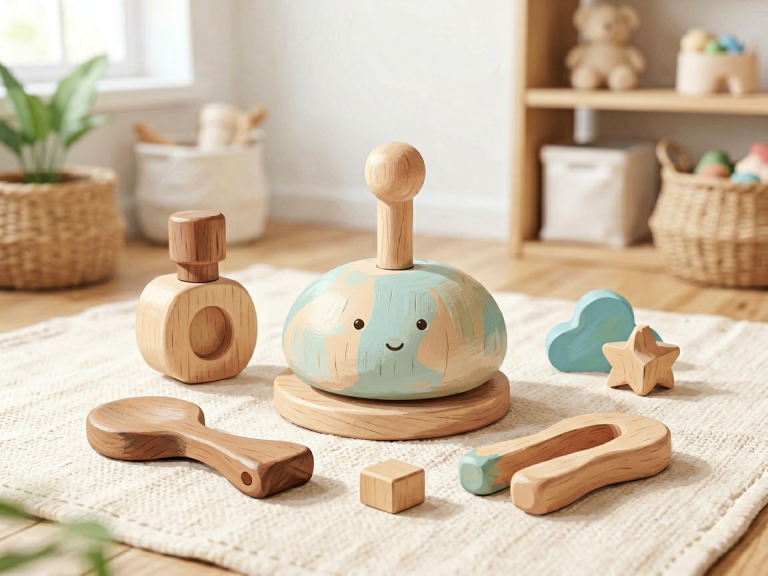
Cheap wooden blocks are often made from softwoods like pine, poplar, or even rubberwood that has been dried quickly and not properly cured. In many cases, budget sets use MDF (medium-density fiberboard) or plywood rather than solid wood. These materials are prone to splintering, chipping, and delamination over time. The finish is frequently a thin layer of paint or varnish that can peel, crack, or wear off with repeated handling. More concerning, low-cost paints may contain higher levels of lead, phthalates, or other harmful chemicals if the manufacturer does not adhere to strict international safety standards. Premium blocks, in contrast, are typically made from hardwoods like maple, beech, or birch, sanded to a smooth, splinter-free surface, and coated with non-toxic, water-based, or food-grade finishes that are both durable and safe.
Precision and Stability
Another hidden cost of cheap blocks lies in their lack of precision. When blocks are not cut to exact tolerances, they do not stack neatly. A child trying to build a tower may find that blocks wobble, slide off, or leave large gaps. This can be frustrating, especially for younger children who are still developing hand-eye coordination and spatial reasoning. Premium blocks are crafted with uniform dimensions, often accurate to within fractions of a millimeter, ensuring that structures stay upright and that the experience is rewarding rather than discouraging. For a child, the difference between a tower that stands and one that constantly collapses can mean the difference between persistent engagement and abandonment of the toy.
Safety Considerations: A Non-Negotiable Factor
When it comes to toys, safety must always be the top priority. Cheap wooden blocks sometimes cut corners in ways that pose real risks.
Toxicity and Chemical Leaching
As mentioned, budget blocks imported from countries with less stringent regulations may contain formaldehyde from glues used in plywood or MDF, or heavy metals in colored paints. While many discount toys sold in major retail chains do undergo basic testing, counterfeit or third-party marketplace items can slip through. Even a tiny amount of lead dust or chemical residue, especially on toys that children inevitably put in their mouths, can have cumulative health effects. Premium manufacturers often proudly advertise certifications such as ASTM F963 (American standard) or EN71 (European standard), and some go further with OEKO-TEX or FSC (Forest Stewardship Council) labeling. For peace of mind, a slightly higher upfront cost can be well worth the assurance that the blocks are completely non-toxic.
Size and Choking Hazards
Another safety aspect is the size and shape of the blocks. Very cheap sets sometimes include pieces that are too small for children under three, or blocks with sharp edges and corners that have not been properly rounded. Reputable brands design blocks with choking-hazard guidelines in mind, ensuring that even the smallest unit in a set is larger than a standard toilet paper roll. Budget blocks may not adhere to these design principles, especially if they are marketed as “educational toys” without age-specific labeling. A parent who purchases a budget set may need to inspect every single block for roughness, splinters, and size appropriateness before giving it to a child.
Educational and Developmental Benefits: Do Cheap Blocks Still Teach?
One might argue that even poorly made blocks still serve the fundamental purpose of stacking, sorting, and building. After all, a child’s imagination is resilient, and any set of physical objects can be used for creative play. However, the quality of the play experience matters for developmental outcomes.
Fine Motor Skills and Sensory Feedback
High-quality wooden blocks provide a tactile and kinesthetic experience that cheap blocks often cannot replicate. The smooth, warm surface of a well-sanded hardwood block offers a satisfying grip. The weight of a solid block gives proprioceptive feedback—the sense of how much force is needed to place it precisely. Cheap blocks may be hollow, lightweight, or have a rough, artificial texture that diminishes this sensory input. For toddlers and preschoolers, fine motor development benefits from consistent, predictable feedback. When blocks slide unnaturally or feel flimsy, children may compensate with improper grip or excessive force, which can hinder the refinement of dexterity.
Spatial Reasoning and Frustration Tolerance
The ability to build stable, complex structures directly correlates with the blocks’ dimensional accuracy. As noted earlier, precariously stacked cheap blocks tend to topple easily. While occasional failure is part of learning, repeated frustration can lead to a child abandoning block play altogether—or developing avoidance behavior. Conversely, blocks that fit perfectly encourage experimentation with balance, symmetry, and engineering principles. A 2021 study published in *Early Childhood Education Journal* found that children who played with precisely manufactured building sets demonstrated higher scores in spatial visualization tests compared to those using irregular, poor-quality blocks. Thus, cheap blocks may inadvertently limit the very cognitive benefits they are intended to promote.
Durability and Long-Term Value
Another angle from which to assess “worth” is the lifespan of the toy. A set of cheap wooden blocks might cost $10, but if it starts falling apart after a few months, the real cost per play session becomes high.
Wear and Tear
Children are not gentle. Blocks are dropped, thrown, chewed, and subjected to the occasional stomp. Cheap blocks made from softwood dent and gouge easily. Paint chips off, and the underlying material may splinter. After six months of regular use, a budget set might look ragged, with many blocks becoming unusable due to broken corners or peeling varnish. Premium hardwood blocks, on the other hand, can survive for decades—even generations. They are often passed down from older siblings to younger ones, or even from parents to children. In fact, many families still own heirloom wooden block sets that were purchased in the 1970s and remain in excellent condition. Over a 10-year period, a $100 premium set provides far more value than buying three or four $15 budget sets that need replacement.
Resale and Sustainability
For environmentally conscious families, the sustainability aspect matters. Buying cheap blocks made from particleboard or unsustainably harvested wood contributes to a throwaway culture. Premium blocks, especially those made from FSC-certified wood, support responsible forestry. Moreover, because they retain their condition, they can be sold second-hand, donated, or passed along. A cheap set that becomes landfill fodder within a year is a poor ecological bargain.
The Aesthetic and Social Dimensions
Beyond the functional and educational aspects, there is a less tangible but still significant value in the aesthetic appeal of quality blocks. Beautifully crafted wooden blocks can become a centerpiece of a playroom, inspiring creative play through their very appearance. They invite children to treat them with care. In contrast, cheap, poorly finished blocks may be regarded as disposable items, and children often mirror that attitude, treating them roughly. The social environment of play—a child’s respect for materials—can be subtly influenced by the quality of the toys they use.
When Cheap Wooden Blocks Might Make Sense
Despite all the arguments for premium blocks, there are scenarios where a budget set can be a reasonable choice. For example, if a family is on an extremely tight budget and cannot afford even a modest premium set, a cheap set is still far better than no blocks at all. Parents can mitigate some of the risks by buying from reputable retailers with clear safety certifications, inspecting blocks thoroughly, and sanding rough edges themselves if necessary. Additionally, for settings where blocks are likely to be lost, broken, or used in a rough group environment (such as a daycare that goes through toys quickly), cheap blocks can serve as a temporary, low-stakes option. Finally, if a child is very young (under 18 months) and tends to put everything in their mouth, a few large, simple budget blocks used only under supervision may tide the family over until the child is old enough for a finer set.
Conclusion: Weighing Worth Beyond the Price Tag
So, are cheap wooden blocks worth it? The answer is nuanced. If value is measured purely by initial cost, then yes—$15 is cheaper than $80. But if value is measured by safety, durability, developmental impact, and long-term cost per use, cheap blocks often fall short. The hidden costs of potential toxins, early wear, inconsistent dimensions, and diminished educational benefits can outweigh the initial savings. For most families with young children, investing in a well-made, certified, and sturdy set of wooden blocks is one of the best toy purchases they can make. Such a set will serve not just one child, but potentially an entire generation of children, all while providing richer, safer, and more rewarding play experiences.
Ultimately, the worth of any toy comes down to the joy and learning it facilitates. A child playing with a high-quality block set is not just stacking wood; they are building the foundation of a lifetime of creative thinking. And for that, it is often worth spending a little more.