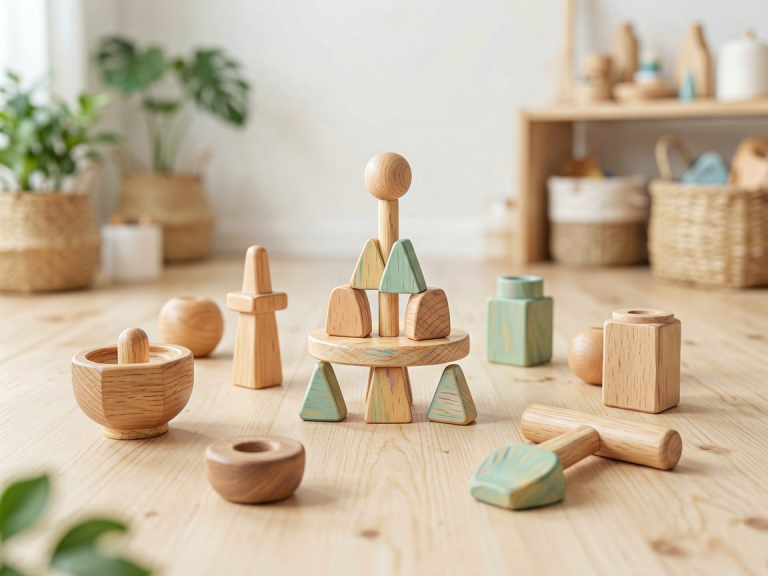
Beyond Wood: The Best Alternatives to Wooden Blocks for 18-Month-Olds
When it comes to early childhood development, few toys are as iconic as wooden blocks. They are durable, natural, and open‑ended, allowing toddlers to stack, knock down, and explore spatial relationships. However, for an 18‑month‑old—a stage marked by intense oral exploration, unsteady motor skills, and a rapidly growing curiosity—traditional wooden blocks may not always be the safest or most engaging choice. Hard wooden corners can cause bruises or scratches if thrown, and the small size of some blocks poses a choking hazard. Moreover, many 18‑month‑olds are still learning to grasp and release objects with control, making softer, lighter, or differently textured alternatives far more forgiving. Fortunately, there is a wide world of excellent alternatives that promote the same developmental benefits—fine motor skills, hand‑eye coordination, creativity, and cognitive growth—while being perfectly tailored to this age. In this article, we will explore the best alternatives to wooden blocks for 18‑month‑olds, each offering unique advantages that support a toddler’s natural drive to explore, build, and play.
Soft Fabric Blocks: Gentle, Safe, and Sensory‑Rich
Soft fabric blocks are often the very first building toy many parents introduce, and for good reason. Made from cotton, velour, or other plush materials, these blocks are completely free of hard edges, making them ideal for an 18‑month‑old who is still prone to falling over or tossing toys across the room. They are lightweight and easy to grasp, even for small hands that are still developing a pincer grip. Many fabric blocks incorporate additional sensory features: crinkly paper inside, squeakers, ribbons, or contrasting patterns. These elements engage a toddler’s auditory and tactile senses, encouraging longer periods of focused play. From a developmental perspective, soft blocks help strengthen the muscles in the hands and wrists as a child squeezes, stacks, and carries them. They also support early cause‑and‑effect learning: when a toddler pushes over a tower of fabric blocks, it makes a soft thud rather than a loud crash, which can be less startling and more predictable for a sensitive child. Furthermore, because fabric blocks are machine‑washable, they are incredibly hygienic for this age group, where drool and food spills are common. Parents can even sew their own blocks at home, filling them with different materials (like rice or beans sealed inside a secondary pouch) to create weighted blocks that provide proprioceptive feedback, though careful supervision is needed to prevent breakage. Overall, soft fabric blocks are the gentlest and most forgiving alternative to wood, making them a staple for any 18‑month‑old’s toy collection.
Foam Building Blocks: Lightweight, Quiet, and Build‑Friendly
Foam building blocks offer a middle ground between the softness of fabric and the stability of wood. Typically made from dense EVA foam or polyurethane, these blocks are lightweight yet firm enough to hold a simple tower shape. For an 18‑month‑old, foam blocks are excellent because they are virtually silent when knocked over—a major plus for parents who value peace and quiet—and they will not damage floors, furniture, or little toes. The large size of most foam block sets (often 4–5 inches per block) ensures that they are far too big to fit into a child’s mouth, eliminating the choking hazard that can exist with smaller wooden cubes. Moreover, the slightly grippy texture of foam prevents blocks from sliding off one another too easily, allowing toddlers to build more successfully than they might with slippery wooden blocks. This sense of achievement is crucial at 18 months, when self‑efficacy is blossoming. Foam blocks also come in a variety of bright colors and sometimes with numbers or letters embossed on them, offering early exposure to symbols without the pressure of formal learning. Some sets include wedge shapes, arches, and half‑circles that encourage creative building beyond simple stacking. One caution: parents should ensure the foam is non‑toxic and free from phthalates, as toddlers will inevitably put them in their mouths. High‑quality, BPA‑free foam blocks are widely available and can be cleaned with a damp cloth. Because they are so light, they are also great for throwing practice—a favorite activity at this age—without any risk of injury. In short, foam building blocks combine the best aspects of wooden blocks (stackability and shape variety) with child‑friendly safety.
Large Interlocking Plastic Blocks (Duplo‑Style)
While traditional LEGO bricks are far too small for an 18‑month‑old, the larger Duplo‑style blocks—approximately twice the size of standard LEGO—are a fantastic alternative to wooden blocks. These plastic blocks are designed to snap together with a satisfying click, but they are also easy for little fingers to pull apart. For an 18‑month‑old, the act of pushing two blocks together strengthens the hand muscles and refines bilateral coordination, as they must use both hands simultaneously. The blocks are smooth, rounded, and large enough to avoid choking risks (Duplo blocks are typically certified for ages 1.5+). They also introduce the concept of constructive play that requires a small amount of force, teaching toddlers that their actions have a tangible effect on the world. Unlike wooden blocks, which rely purely on gravity and balance, interlocking blocks allow for more stable creations, which can be especially rewarding for a child who gets frustrated when a tower falls. Many Duplo sets include special pieces such as wheels, windows, and animal figures, which spark imaginative play—for example, a toddler might put a figure on top of a block tower and say “up!” even if their language is still limited. Additionally, because these blocks are made of plastic, they are easy to sanitize and can be taken into the bath for water play, adding another dimension of sensory exploration. One note of caution: ensure that the blocks are free from sharp mold lines or broken edges. Also, because they are harder than foam or fabric, they can still cause a bump if thrown at someone’s head, so supervised play is recommended. Nevertheless, for building precision and endurance, large interlocking blocks are among the best alternatives to wooden blocks.
Nesting and Stacking Cups: The Simplest Builder
Sometimes the best alternative to wooden blocks is not a block at all. Nesting and stacking cups are a classic toy that every 18‑month‑old should have. Typically made from lightweight plastic or silicone, these cups come in graduated sizes that nest inside one another or can be stacked upside down to form a tower. The beauty of stacking cups lies in their simplicity: a toddler does not need to balance multiple separate objects; instead, they learn about size ordering, spatial relationships, and gravity. For example, when a child tries to stack a large cup on top of a small one, the tower falls, teaching a concrete lesson about size and stability. Nesting cups also encourage problem‑solving as the child figures out which cup fits inside which. Many sets have holes in the bottom, allowing them to double as bath toys or sand molds. The cups are extremely durable, easy to clean, and virtually indestructible. They also support pouring and scooping play, which is excellent for developing hand‑eye coordination and fine motor control. Unlike wooden blocks, stacking cups are often brightly colored and numbered, offering early math concepts in a playful way. Some parents worry that plastic cups are less “natural” than wood, but modern silicone varieties are food‑grade, non‑toxic, and have a satisfying soft‑touch feel. Another advantage is portability: a set of stacking cups can be tossed into a diaper bag and used at restaurants or on trips. For an 18‑month‑old who is fascinated by putting things in and out of containers (a classic schema of this age), nesting cups are a perfect match. They provide all the open‑ended building potential of wooden blocks without the risk of sharp corners or heavy weight.
Cardboard Blocks: Eco‑Friendly and Giant
For parents seeking a sustainable and budget‑friendly alternative, cardboard blocks are a wonderful option. These large, lightweight blocks are typically made from reinforced corrugated cardboard that is surprisingly sturdy, yet completely recyclable. They are often sold in sets of 20–40 pieces that are hollow inside, making them extremely light—a toddler can easily lift and carry a block that is the size of a small suitcase. The large scale of cardboard blocks encourages whole‑body movement: an 18‑month‑old might push a block across the floor, climb on top of it (with supervision), or use it as a seat. This gross motor engagement is something that traditional wooden blocks cannot provide because they are too small and heavy. Cardboard blocks also support cooperative play if a sibling or adult is involved: two people can build a “house” or a “wall” together. Because the blocks are large and have printed patterns (often imitating brick or stone textures), they stimulate visual interest and imaginative play. The major downside is that cardboard blocks are not waterproof and can get crushed or torn if roughly handled, though this is part of the learning process—a toddler learns about the properties of materials. Some high‑end brands use laminated cardboard that is more durable. For an 18‑month‑old who is just beginning to understand object permanence and spatial enclosure, crawling into a hollow cardboard block or knocking down a big tower of them provides intense joy. In terms of safety, cardboard blocks have no sharp edges and are too large to be swallowed. They are also inexpensive enough that parents can replace them when worn out, or even make their own by taping together empty shipping boxes. For families who prioritize eco‑conscious toys, cardboard blocks are an unbeatable choice.
Sensory Blocks with Textures and Inserts
Another innovative alternative is sensory blocks—often made from clear, hard plastic with sealed compartments inside that contain colored water, sand, beads, or glitter. These blocks allow an 18‑month‑old to see and hear the movement of materials as they shake, roll, or stack the blocks. The visual stimulation of glitter swirling in water or beads rattling captures attention and encourages tracking eye movements. Because the blocks are transparent, they also teach cause and effect: when you tip the block, the contents move. This type of block is excellent for children who are highly sensory‑seeking, as they provide a rich auditory and visual experience without being overwhelming. Some sensory blocks also have raised textures on the outside (bumpy, smooth, ridged) that add a tactile dimension. For an 18‑month‑old, exploring these textures with fingers and mouth (provided the materials are safe) builds neural connections. The blocks are typically sealed shut with ultrasonic welding or screws, making them difficult to open—essential for safety. However, parents should inspect them regularly for cracks. Sensory blocks are often smaller than soft blocks, so they must be carefully chosen to ensure they are not a choking hazard. Look for sets that are marketed for ages 18 months+ with large dimensions. These blocks are less about building tall towers and more about exploration and discovery. They can be used alongside other building toys to add variety. For a toddler who is easily bored with plain shapes, sensory blocks offer a constantly changing visual experience that keeps them engaged longer.
Silicone Blocks: Chewable, Flexible, and Safe
Silicone blocks are a relatively new but increasingly popular alternative to wooden blocks, especially for 18‑month‑olds who are still teething. Made from 100% food‑grade silicone, these blocks are soft, flexible, and completely non‑toxic. They are designed to be chewed on without losing shape or releasing harmful chemicals. For a toddler who puts everything in their mouth, silicone blocks are a dream—they can be gnawed, bent, and squeezed without damage. The blocks often have raised nubs or ridges that massage sore gums, making them dual‑purpose as teething toys. In terms of building, silicone blocks provide enough structure to stack a few pieces, but they will not create a rigid tower like wood or foam. Instead, they wobble and slide, which actually teaches a toddler about balance and flexibility in a low‑stakes way. The blocks are also very easy to clean—just run them through the dishwasher or boil them. Many silicone block sets come in pastel or bright colors and include numbers or animal faces. One disadvantage is that silicone blocks can be more expensive than plastic or foam, and they tend to attract lint and dust (a quick rinse solves that). But for a child who mouths everything, they are arguably the safest building toy on the market. They also double as bath toys because silicone is waterproof and dries quickly. Overall, silicone blocks combine the sensory appeal of teething toys with the constructive play of blocks, making them a superb alternative for the 18‑month‑old stage.
Conclusion: Choosing What Works for Your Child
While wooden blocks remain a classic for good reason, they are not always the best fit for an 18‑month‑old’s developmental stage and safety needs. The alternatives discussed above—soft fabric blocks, foam blocks, large interlocking Duplo‑style blocks, nesting cups, cardboard blocks, sensory blocks, and silicone blocks—each offer unique benefits that cater to a toddler’s curiosity, motor development, and safety requirements. When selecting an alternative, consider your child’s current abilities: are they still mouthing everything? Choose silicone or large foam. Do they love to knock things down? Lightweight cardboard or foam blocks are perfect. Are they beginning to show interest in pretend play? Duplo blocks with figurines may ignite their imagination. Remember that the best toy for an 18‑month‑old is one that is safe, engaging, and allows for open‑ended exploration. You can even rotate different types of blocks to keep play fresh. Ultimately, the goal is not to replace wooden blocks entirely, but to expand the building experience with materials that are more forgiving and age‑appropriate. By doing so, you support your child’s physical, cognitive, and sensory growth while ensuring hours of happy, safe play.