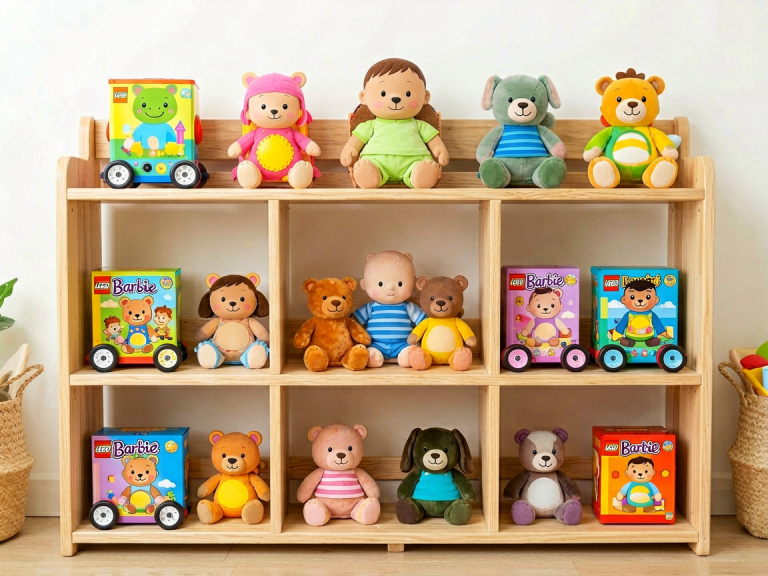
Are Building Blocks Worth It? Unlocking the Potential for Critical Thinking Development
Introduction
In the landscape of childhood development and lifelong learning, few tools are as universally recognized and nostalgic as building blocks. From simple wooden cubes to intricate plastic interlocking systems like LEGO, these objects have occupied playrooms, classrooms, and even offices for generations. Yet in an age dominated by digital screens, structured extracurriculars, and an ever-present pressure to optimize every minute for measurable outcomes, a pressing question arises: Are building blocks truly worth the investment of time, money, and space when it comes to cultivating critical thinking skills? Critical thinking—the ability to analyze information, evaluate evidence, question assumptions, and arrive at reasoned conclusions—is widely touted as one of the most essential competencies for the 21st century. Proponents argue that building blocks offer a unique, hands-on environment for developing precisely these faculties. Skeptics, meanwhile, wonder whether the free-form play of blocks can compete with more deliberate, curriculum-based approaches to logic and reasoning. This article will explore the multifaceted relationship between building blocks and critical thinking, examining cognitive, social, and psychological dimensions to determine whether these humble toys truly deliver on their promise—or whether they are merely nostalgic distractions.
The Cognitive Mechanics of Construction Play
To understand whether building blocks are worth it for critical thinking, one must first consider how the brain engages with them. When a child or an adult picks up a block, they are not merely stacking objects; they are engaging in a complex cognitive dance. Spatial reasoning, for instance, is activated immediately: the mind must estimate where one block should rest relative to another, how weight distributes, and whether the base is stable. These mental calculations mirror the foundational steps of critical thinking—analyzing constraints, predicting outcomes, and testing hypotheses.
Research in developmental psychology has long demonstrated that construction play strengthens executive functions, including planning, working memory, and cognitive flexibility. A 2017 study published in *Frontiers in Psychology* found that children who engaged in regular block play showed significant improvements in spatial visualization and mental rotation tasks—skills that correlate strongly with later success in STEM fields and, crucially, with the logical reasoning central to critical thought. When a tower topples because a base block was slightly off-center, the builder must diagnose the failure: Was the placement faulty? Was the weight distribution uneven? This reflective process, often called "metacognition," is a cornerstone of critical thinking. The blocks, in effect, become physical algorithms, forcing the mind to iterate and correct.
Moreover, building blocks offer immediate, tangible feedback. Unlike abstract problems in a textbook, where the consequences of a wrong assumption may only be revealed at the end of a calculation, block play provides real-time results. This low-stakes environment encourages risk-taking and experimentation—two behaviors that are often stifled in formal educational settings but are vital for developing a robust critical approach. Through trial and error, builders learn that failure is not a final verdict but a stepping stone to a better solution. Thus, the cognitive mechanics alone suggest that building blocks are not merely "worth it," but are arguably ideal for fostering the iterative, hypothesis-driven mindset that characterizes critical thinking.
Problem-Solving and Hypothesis Testing: The Core of Critical Thinking
At its heart, critical thinking is a process of structured problem-solving. It involves identifying a problem, generating possible solutions, evaluating their feasibility, and implementing the most promising one. Building blocks provide a natural arena for this cycle. Consider a child tasked with constructing a bridge that can support a toy car. The child must first define the problem: the bridge must span a gap, remain stable, and bear weight. Next, hypotheses emerge: "If I use a flat base, it will be stronger," or "If I add support pillars, it won't sag." Each hypothesis is then tested by building and observing the outcome. When the bridge collapses, the child must analyze why: Was the arch too wide? Were the pillars misaligned? This constant process of hypothesis generation, testing, and revision mirrors the scientific method and the core of critical reasoning.
This is not simply a theoretical claim. A longitudinal study conducted by the University of Cambridge followed 150 children from preschool through early adolescence and found that those who had high levels of block play demonstrated superior problem-solving abilities years later, even after controlling for socioeconomic status and general intelligence. The researchers attributed this to the fact that block play encourages "executive-loaded" problem-solving—a term that refers to the integration of multiple cognitive processes, such as inhibiting impulsive stacking (self-regulation), holding a goal in mind (working memory), and shifting strategies when one fails (cognitive flexibility). All of these are essential components of critical thinking.
Furthermore, building blocks allow for open-ended complexity. Unlike puzzles with a single correct solution, blocks present infinite possibilities. A builder can choose to construct a fortress, a spaceship, or an abstract sculpture. Each project presents its own set of constraints and requires a unique approach to problem-solving. This variety trains the mind to adapt, to recognize that there is rarely one "right" answer—a fundamental lesson of critical thinking. In a world where many challenges are ill-defined and require nuanced judgment, the ability to navigate ambiguity is priceless. Building blocks, precisely because they offer a blank slate, cultivate this adaptive intelligence.
Beyond the Manual: Creativity and Divergent Thinking
Critical thinking is often mistakenly conflated with cold logic, but true critical thinkers are also creative. They can generate novel ideas, see connections where others see none, and think outside prescribed frameworks. This is where building blocks shine particularly brightly. While following a manual teaches the discipline of sequential reasoning, free-form block play nurtures divergent thinking—the ability to produce multiple, varied solutions to a single prompt.
Consider a simple pile of blocks. One person may build a tower; another may create a spiral; a third might build a maze for a marble. This diversity of output is not random—it reflects different mental models and problem-framing strategies. In the process of generating these alternatives, the builder engages in "what if" thinking: "What if I turn the block sideways? What if I leave a gap? What if I combine two different colors to form a pattern?" These questions are the seeds of critical evaluation. The builder must then judge which alternative is most satisfying, structurally sound, or aesthetically pleasing. This evaluative step is the essence of critical thinking—assessing evidence and making a reasoned choice.
Research on creativity and play confirms that the unstructured nature of block play fosters "associative thinking," where unrelated ideas are connected to form new concepts. A 2020 study in *Thinking Skills and Creativity* found that adolescents who had frequent access to construction toys scored higher on measures of both convergent thinking (finding the single best answer) and divergent thinking. The researchers noted that building blocks uniquely bridge the gap between logical structure and creative freedom, making them a powerful tool for holistic cognitive development.
In an educational climate that increasingly emphasizes standardized tests and rote memorization, the creative dimension of building blocks cannot be overstated. Critical thinking is not just about tearing down flawed arguments; it is also about building up new possibilities. Blocks teach that construction and deconstruction are two sides of the same coin—and both are necessary for rigorous thought.
Social and Collaborative Dimensions
Critical thinking is rarely a solitary endeavor. In professional and personal life, we often need to collaborate, debate, and synthesize perspectives. Building blocks, especially in group settings, offer a microcosm of this social intellectual process. When two children build together, they must communicate their ideas, negotiate design decisions, and argue for why a certain approach is superior. "I think we should make the base wider so it doesn't fall," one child might say. "No, we need more weight on the bottom," another might counter. These exchanges require each participant to listen, evaluate the merits of the other's argument, and articulate their own reasoning—classroom exercises in verbalized critical thinking.
Moreover, collaborative block play introduces the concept of shared mental models—the ability to align one's thinking with others to achieve a common goal. This skill is directly applicable to group problem-solving in any domain. A study from the *Journal of Research in Childhood Education* demonstrated that preschoolers who engaged in cooperative block play showed significant gains in perspective-taking and argumentation skills compared to those who played alone. The researchers concluded that the social negotiation inherent in building together forces children to move beyond egocentric thinking and consider alternative viewpoints—a hallmark of mature critical thought.
Even in solitary play, building blocks create an internal dialogue. The builder must weigh the pros and cons of each move, simulating future states of the structure. This internal argumentation hones the precision of one's reasoning. Thus, whether used alone or with others, building blocks serve as a catalyst for practicing the art of reasoned debate—with oneself or with peers.
Limitations and Considerations: When Blocks Fall Short
Despite these compelling arguments, it would be disingenuous to claim that building blocks are a panacea for critical thinking development. Critics rightly point out that the mere presence of blocks does not guarantee cognitive growth. The quality of engagement matters enormously. A child who mindlessly stacks blocks without reflection may gain little more than fine motor skills. Without guided questioning from an adult—"Why do you think it fell? What could you try differently?"—the metacognitive benefits may remain dormant.
Furthermore, not all building blocks are created equal. Simple wooden blocks may offer more open-ended possibilities than sets with highly specific instructions, but they also lack the structural constraints that force creative problem-solving. Conversely, highly themed sets (e.g., LEGO castles or spaceships) can limit imagination if the builder merely follows the manual. The ideal balance likely lies in a mix: some structured instruction to teach principles of symmetry, balance, and load-bearing, and ample free play to encourage experimentation.
Another limitation is the question of transferability. While research shows that block play improves spatial reasoning and problem-solving within the context of construction, the extent to which these skills transfer to abstract domains—such as mathematical theorem proving or ethical reasoning—is debated. Some cognitive scientists argue that learning is often domain-specific, meaning that being a skilled block builder does not automatically make one a skilled critical thinker in other areas. To bridge this gap, adults and educators must actively draw connections between the concrete experiences of block play and abstract critical thinking concepts.
Finally, there is the matter of accessibility. High-quality building blocks—particularly interlocking systems like LEGO—can be expensive, potentially reinforcing socioeconomic disparities. However, alternatives exist: recycled cardboard pieces, clay, and even digital block simulations can provide similar cognitive benefits at a lower cost. The key is not the material but the mindset of exploration and reflection.
Conclusion: Weighing the Evidence
So, are building blocks worth it for critical thinking? The evidence, drawn from cognitive science, developmental psychology, and educational practice, suggests a resounding yes—but with important caveats. Building blocks are not a magical solution that will automatically transform a child into a rational savant. They are a tool, and like any tool, their effectiveness depends on how they are used. When combined with guided reflection, social collaboration, and opportunities for open-ended exploration, building blocks offer an unparalleled environment for practicing the core components of critical thinking: hypothesis testing, problem-solving, creative ideation, and reasoned argumentation.
The worth of building blocks extends beyond the immediate joy of stacking and knocking down. They are a training ground for intellectual habits that last a lifetime. In a world that demands critical thinkers capable of navigating complexity, ambiguity, and constant change, the humble building block remains one of the most accessible, engaging, and effective instruments available. Whether you are a parent considering a new toy, an educator designing a classroom activity, or an adult seeking to sharpen your own cognitive toolkit, the answer is clear: building blocks are not only worth it—they are foundational.