The Ultimate Guide to Choosing Building Blocks for 5-Year-Olds
Building blocks are more than just toys—they are tools for imagination, cognitive development, and early engineering. At age five, children enter a critical period of fine motor skill refinement, spatial reasoning growth, and social play. The right set of building blocks can foster creativity, problem-solving, and even basic math and physics concepts. However, with countless options on the market—from classic wooden cubes to magnetic tiles and interlocking plastic bricks—parents often feel overwhelmed. This guide will help you navigate the key factors in choosing building blocks for a five-year-old, ensuring a safe, engaging, and developmentally appropriate play experience.
Safety First: Materials, Size, and Durability
Before considering aesthetics or educational value, safety must be the top priority. Children at five are still prone to putting small objects in their mouths, though less so than toddlers. Nevertheless, choking hazards remain a real concern. Always check the manufacturer’s age recommendation—blocks labeled for ages 3+ typically avoid small parts, but some sets for older children include tiny pieces that can be dangerous for a five-year-old if unsupervised. Look for blocks that are at least 1.25 inches (about 3 cm) in their smallest dimension to prevent swallowing. For magnetic blocks, ensure the magnets are securely enclosed and cannot be removed, as swallowed magnets can cause severe internal injuries.
Material quality matters. Wooden blocks should be made from solid, sustainably sourced wood (like beech or maple) with non-toxic, water-based paints or stains. Avoid blocks with sharp edges, splinters, or peeling finishes. Plastic blocks (such as those made by LEGO Duplo or Mega Bloks) should be free of BPA, phthalates, and lead. Many reputable brands comply with ASTM or EN71 safety standards—look for those certifications on the packaging. Additionally, consider durability: five-year-olds can be rough. A set that cracks or breaks easily creates sharp fragments. Magnetic blocks with thin plastic shells may crack if dropped, while high-quality versions use reinforced materials. Finally, avoid blocks with small decorative elements (like glued-on eyes or stickers) that can be pried off and become choking hazards.
Types of Building Blocks: Pros and Cons for Five-Year-Olds
Not all building blocks are created equal. The best choice depends on your child’s interests, attention span, and existing skill level. Here are the main categories, evaluated specifically for a five-year-old.
Classic Wooden Blocks
These timeless sets typically consist of smooth, unpainted or lightly painted wooden cubes, cylinders, arches, and planks. They are excellent for open-ended play, encouraging children to explore balance, gravity, and symmetry. Wooden blocks are quiet, heavy enough to create stable structures, and require no batteries or instructions. For five-year-olds, a set of at least 50 to 100 pieces in various shapes allows for complex castles, bridges, and towers. The drawback? They lack the interlocking mechanism of plastic bricks, so structures can topple easily, which may frustrate some children. However, this very instability teaches patience and trial-and-error problem solving.
Interlocking Plastic Bricks (e.g., LEGO Duplo, Mega Bloks)
LEGO Duplo is specifically designed for ages 1½ to 5, with larger bricks that are easy for small hands to connect and separate. By age five, many children can follow simple picture instructions to build models like houses, vehicles, and animals. Duplo sets often include fun characters (people, animals) and themed accessories (wheels, windows, flowers). The pros: they develop fine motor skills, hand-eye coordination, and the ability to follow sequential directions. The cons: themed sets can be expensive, and some children become fixated on building the exact model from the instructions rather than creating freely. To mitigate this, buy a large basic brick box in addition to a themed set. Also note that after age five, many children transition to standard LEGO (with smaller bricks), so Duplo may have a short remaining shelf life.
Magnetic Building Blocks (e.g., Magna-Tiles, Magformers, PicassoTiles)
Magnetic tiles have exploded in popularity, and for good reason. They consist of translucent plastic squares, triangles, and other shapes with strong magnets embedded in the edges. The magnets snap together effortlessly, allowing even young children to build 3D structures like cubes, pyramids, and houses quickly. For a five-year-old, magnetic blocks are ideal because they require minimal force, reduce frustration, and produce satisfying results. They also teach basic geometry and magnetism. Many sets include wheels, arches, and window pieces. One caveat: some cheaper magnetic blocks have weak magnets or magnets that can dislodge. Stick with reputable brands that have sealed magnets and thick plastic. Also, magnetic tiles are relatively expensive per piece, and building tall towers may be unstable due to the magnetic connection.
Soft Foam Blocks
Large, lightweight foam blocks are perfect for younger preschoolers, but by age five, children often outgrow them. Foam blocks are great for safe, soft play (ideal for building forts or obstacle courses) but lack the precision needed for more advanced construction. They can still be fun for imaginative play, especially if combined with other types. However, they are not the best primary choice for a five-year-old unless the child has special needs or you are looking for a large-scale construction set.
Connector and Rod Systems (e.g., K’NEX, Tinkertoy)
These systems use rods, connectors, and sometimes gears to create structures that move. While they are excellent for older kids (ages 7+), some simpler sets are marketed for ages 5+. The challenge is that the pieces can be small and fiddly, and the assembly requires more dexterity. For a five-year-old, a set with larger pieces and a limited number of shapes might work, but many children will need adult assistance. If your child has strong fine motor skills and enjoys mechanical building, a starter K’NEX or similar set could be a good investment, but it’s often better to wait a year or two.
Educational and Developmental Considerations
At age five, children are in a stage of rapid cognitive growth. Building blocks can support several key developmental areas simultaneously.
Fine Motor Skills: Connecting and disconnecting interlocking bricks, stacking wooden blocks, or aligning magnetic tiles all require precise hand movements. Choose blocks that are large enough to grasp but small enough to challenge dexterity. For instance, LEGO Duplo is ideal; standard LEGO (with minifigures and small bricks) is usually recommended for ages 4–7, but many five-year-olds can handle them with supervision. However, frustration may arise if the pieces are too small.
Spatial Reasoning and Geometry: Building three-dimensional structures helps children understand concepts like shape, symmetry, balance, and stability. Magnetic tiles are especially effective because their transparent nature allows children to see the interior of a structure, reinforcing understanding of volume and geometry. Wooden blocks, with their various shapes (half-circles, triangles, rectangular prisms), also promote spatial vocabulary (e.g., “arch,” “cylinder”).
Creativity and Open-Ended Play: The best building blocks for five-year-olds are those that invite multiple interpretations. A set with a single locked-in design (like a pre-sculpted castle) offers less creative value. Instead, choose sets that allow for endless combinations. Open-ended wooden blocks score highest here, followed by magnetic tiles and basic brick boxes. Themed sets (e.g., a fire station or farm) can spark imaginative narratives, but they should include enough generic pieces for free play.
Problem-Solving and Persistence: When a tower falls, a five-year-old learns to adjust the base or try a different approach. Blocks that require planning—like interlocking bricks that need to be aligned properly—teach trial and error. Avoid sets that are too easy (e.g., snap-together with no thought) or too hard (e.g., requiring fine motor skills beyond the child’s age). The “just right” challenge is key.
Social and Language Skills: Building with siblings or friends encourages cooperation, negotiation, and shared storytelling. Consider sets that are large enough for multiple children to play simultaneously. A set of 100+ blocks is usually sufficient for two to three children.
Practical Factors: Budget, Storage, and Expandability
Building blocks can be a significant investment, especially if you buy multiple sets. Here are practical tips to maximize value.
Budget: For a starter set, expect to spend $20–$40 for a basic set of wooden blocks (e.g., Melissa & Doug 100-piece set) or around $50–$70 for a decent magnetic tile set (e.g., Magna-Tiles 32-piece). LEGO Duplo basic bricks boxes cost about $30–$40 for 80 pieces, while themed sets range from $20 to $60. You don’t need to buy everything at once. Start with a versatile set and add more pieces later—children often appreciate getting “expansions” as gifts.
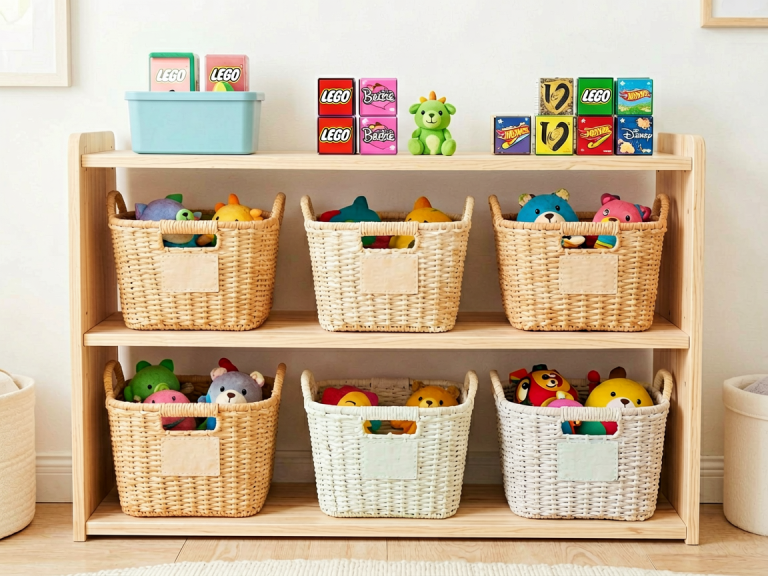
Storage: Five-year-olds can usually help clean up, but the storage system should be simple. A sturdy bin or tote that fits all pieces is essential. Magnetic tiles can be stacked flat and stored in a shallow tray. Wooden blocks can be kept in a fabric bag or a wooden crate. For plastic bricks, sorting by color or type is optional, but a large tub with a lid is fine.
Expandability: Check if the blocks you buy are compatible with other brands or future sets. For example, LEGO Duplo is compatible only with other Duplo (not standard LEGO, though adapters exist). Magnetic tiles from different brands often work together if they use the same shape and magnet polarity—but this is not guaranteed. Wooden blocks are universally compatible as long as they are similar sizes. Some high-end wooden block sets (like those from Grimm’s or PlanToys) are designed to complement each other.
Longevity: Will your child still play with these blocks at age 7 or 8? Wooden blocks often last for years, even into elementary school, especially if used for marble runs or combined with other toys. Magnetic tiles remain popular through early elementary. LEGO Duplo may be outgrown by age 6 or 7, but basic Duplo bricks can still be used alongside standard LEGO if you buy an adapter plate. Consider your child’s expected interest: some children become obsessed with LEGO and transition early, while others prefer free-form construction.
How to Evaluate a Specific Set: A Checklist
When you’re in a store or browsing online, use this checklist to decide if a particular building block set is suitable for your five-year-old.
- Age Label: Look for “3+” or “4+”. Avoid sets labeled “6+” unless your child is advanced, as they may contain small parts.
- Piece Count: For a five-year-old, 50 to 200 pieces is a good range. Too few limits creativity, too many can be overwhelming.
- Variety of Shapes: Does the set include only cubes, or also arches, triangles, wheels, and connectors? More variety encourages more complex building.
- Instructions vs. Open Play: Does the set come with a manual? If so, are the builds simple enough for a five-year-old to follow? Ideally, the set should encourage both guided and free building.
- Reviews: Look for feedback from other parents specifically about use with 5-year-olds. Comments about durability, ease of cleaning, and magnet strength are particularly valuable.
- Themes: Does the set match your child’s interests (e.g., dinosaurs, space, trains)? A themed set can be highly motivating, but ensure it includes enough generic pieces to build beyond the pictured model.
- Price per Piece: Calculate approximate cost per block. For basic plastic bricks, $0.30–$0.50 per piece is reasonable. Magnetic tiles are more expensive, often $1–$2 per tile. Wooden blocks vary widely.
Recommended Brands and Sets
While brands come and go, these are consistently praised by educators, parents, and child development experts for five-year-olds.
- Magna-Tiles (original brand) : The gold standard of magnetic tiles. The 32-piece clear colors set is a perfect starter. Add expansions like “houses” or “vehicles” later.
- LEGO Duplo : Look for the “My First” series or basic brick boxes. The “Steam Train” set (10874) and “Number Train” (10954) combine building with counting. For pure building, the “Deluxe Brick Box” (10914) is excellent.
- Melissa & Doug Wooden Unit Blocks : The 60-piece set is a classic. It includes blocks in standard unit sizes (1x, 2x, 3x) plus arches, half-circles, and triangles. Pairs well with their “Wooden Castle” or “Train” add-ons.
- PicassoTiles : A more affordable alternative to Magna-Tiles, with similar quality. Their 100-piece set offers great value but check that magnets are securely enclosed.
- Grimm’s Wooden Blocks : An aesthetic, high-end choice. Their “Large Stepped Counting Blocks” and “Rainbow” are beautiful and encourage stacking and sorting. However, they are pricey and best for families who value open-ended play.
Conclusion: Encouraging a Lifelong Love of Building
Choosing the right building blocks for a five-year-old is a decision that can influence their developmental trajectory in subtle but powerful ways. Safety, durability, and age-appropriateness are non-negotiable. Beyond that, the best blocks are those that match your child’s unique learning style and interests. Some children thrive on the precision of interlocking bricks, while others prefer the tactile freedom of wood. Many children benefit from having two different types: for example, a magnetic tile set for quick, satisfying structures and a wooden block set for more challenging, gravity-based constructions.
Remember that your involvement matters. Sitting down to build alongside your child—asking questions like “What would happen if we put this block here?” or “Can you build a bridge for your toy cars?”—turns a simple toy into a rich learning experience. Building blocks are not just about the final structure; they are about the process of planning, failing, trying again, and celebrating small victories. By choosing wisely, you give your child a tool that will grow with them, sparking curiosity and confidence that lasts far beyond the preschool years. So take your time, compare options, and when in doubt, lean toward open-ended versatility. Your five-year-old will thank you—with every tower they build and every story they tell through their creations.