Building Blocks for a 5-Year-Old: A Parents Guide to Making the Right Choice
As a parent, you are constantly navigating a sea of toys, each promising to educate, entertain, and enrich your child’s life. Among the most enduring and seemingly simple options are building blocks. But when your child turns five, a critical age of cognitive and social blossoming, the question becomes urgent: Should I buy building blocks for my 5-year-old? The short answer is a resounding yes—but the reasoning is far more nuanced than a simple affirmation. This article will explore the multifaceted benefits of building blocks for five-year-olds, addressing developmental, educational, and practical considerations to help you make an informed decision.
Cognitive Development: More Than Just Stacking
At age five, a child’s brain is undergoing remarkable growth. This is the period when logical thinking, problem-solving, and spatial awareness begin to solidify. Building blocks are not mere toys; they are tools for cognitive architecture. When a five-year-old selects a block, decides where to place it, and adjusts their plan when a tower wobbles, they are engaging in a sophisticated form of executive functioning.
Consider the concept of working memory. A child must hold in mind the shape, size, and color of each block while simultaneously planning the next move. Research in developmental psychology has shown that block play enhances spatial visualization—the ability to mentally rotate and manipulate objects. This skill is strongly correlated with later success in science, technology, engineering, and mathematics (STEM). For a five-year-old, the act of balancing a triangular block atop a square one is a miniature lesson in physics: center of gravity, stability, and cause and effect.
Furthermore, building blocks introduce early mathematical concepts naturally. Sorting blocks by size or color teaches classification. Counting blocks during construction reinforces number sense. Even the simple act of comparing two towers—"Mine is taller than yours!"—introduces comparative measurement. These experiences are far more effective than worksheets because they are embedded in playful, self-directed discovery.
Fostering Creativity and Imagination: The Open-Ended Play
Unlike many modern toys that dictate a specific narrative—a fire truck that only makes siren sounds, a doll that only says pre-recorded phrases—building blocks are the ultimate open-ended resource. A five-year-old can transform a pile of wooden cubes into a castle, a spaceship, a zoo, or a city skyline. This flexibility is critical at age five, when imagination is at its peak. Children at this age are beginning to engage in pretend play with more complex plots and multiple characters. Blocks provide the raw material for their stories.
For example, a child might build a "rocket" from blocks and then pretend to fly to the moon, using other blocks as control panels or fuel tanks. This kind of play not only exercises creativity but also strengthens language skills. As they narrate their scenarios—"The astronaut is going to fix the engine!"—they practice vocabulary, sentence structure, and narrative sequencing. Building blocks also allow for divergent thinking, the ability to generate multiple solutions to a problem. When a child’s initial tower collapses, they must think creatively: "What if I use a wider base?" or "Maybe I should put the big blocks at the bottom." This trial-and-error process is the foundation of innovation.
Social and Emotional Development: Learning Through Collaboration
Five-year-olds are increasingly interested in playing with peers, and building blocks are a social magnet. When two or more children build together, they must negotiate, share, and communicate. "I want to build the wall here, you can build the roof there." Such interactions teach essential social skills like turn-taking, compromise, and conflict resolution. If a tower falls because someone bumped it, children learn to manage disappointment and rebuild—literally and emotionally.
Additionally, building blocks offer a safe space for emotional regulation. The satisfaction of completing a structure provides a sense of accomplishment and boosts self-esteem. Conversely, the frustration of a failed attempt teaches resilience. A five-year-old who learns that a collapsed castle is not a disaster but an opportunity to try again is developing a growth mindset that will serve them in school and life. Parents can also use block play to encourage perspective-taking—for example, asking, "How do you think the other child felt when you knocked over her tower?" This builds empathy.
Educational Value and STEM Learning: Beyond the Toy Box
In recent years, the educational community has recognized block play as a powerful, low-tech precursor to formal STEM education. Building blocks are essentially three-dimensional puzzles. When a five-year-old attempts to replicate a structure from a picture or their memory, they engage in spatial reasoning and planning. For instance, a child trying to copy a simple house design must analyze the relationship between blocks: the roof needs a triangular block, the walls need rectangles. This is an early form of decoding and pattern recognition.
Moreover, many building block sets now come with elements that introduce basic engineering concepts—gears, wheels, axles, and hinges. For a five-year-old, adding a wheel to a block cart is a tangible lesson in simple machines. They see that a round object reduces friction and allows movement. Some sets even include connectors that allow for building moving parts, fostering an understanding of cause and effect. While a five-year-old won't articulate the physics of torque, their hands and minds are absorbing these principles.
It is also worth noting that building blocks support literacy development. When children describe what they are building, they use descriptive language. If you label a block structure with a sign—"Dragon's Lair"—you are connecting play to written words. Many teachers use block areas in kindergarten classrooms to inspire storytelling and writing activities.
Safety Considerations: Choosing the Right Blocks
While the benefits are clear, parents must also consider safety. For a five-year-old, the risk of choking on small parts is lower than for a toddler, but it is not zero. Some block sets include tiny pieces like miniature people or decorative elements. Always check the manufacturer’s age recommendation. For a five-year-old, blocks should be at least one inch in every dimension to prevent swallowing. Wooden blocks are generally safe, durable, and non-toxic, but ensure they are made from sustainable materials with no sharp edges or splinters.
Plastic blocks, such as those from popular interlocking brands, are also common. However, some cheap plastics may contain harmful chemicals like BPA or phthalates. Look for labels that indicate "BPA-free" and "non-toxic." Additionally, consider the weight of the blocks. Very heavy wooden blocks can cause injury if dropped on a toe or thrown in frustration. Five-year-olds are still developing impulse control; supervise play especially when blocks are used in energetic construction and demolition.
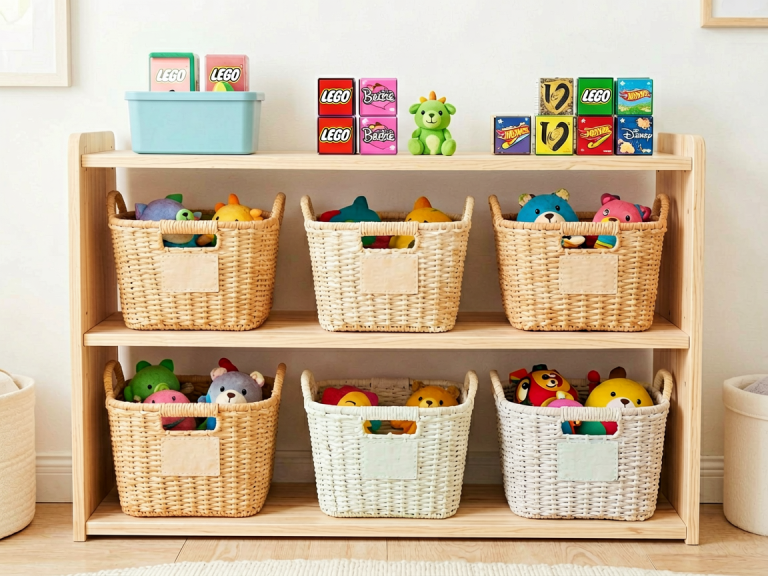
Another safety aspect is the storage and organization of blocks. A scattered pile on the floor can become a tripping hazard. Invest in a low, open shelving unit that allows the child to access blocks independently and return them. This not only promotes responsibility but also reduces clutter. Finally, inspect blocks regularly for signs of wear—cracks, splinters, or loose paint—and discard damaged pieces.
Age-Appropriateness and Types of Blocks: What to Look For
Not all building blocks are created equal. A five-year-old is past the stage of simply stacking and knocking down. They seek more complexity and purpose. Here are some types of blocks particularly suited for this age:
- Classic wooden unit blocks – These are the staple of preschool classrooms. They come in precise proportions (a half-unit, a unit, a double unit) and encourage mathematical thinking. Because they are simple, they allow for maximum creativity. A set of 50 to 100 blocks is a good starting point.
- Interlocking plastic blocks – Brands like LEGO Duplo (the larger version) are excellent for five-year-olds. The pieces are easy to manipulate but require more fine motor control than wooden blocks. They also often include themes like animals, vehicles, or buildings, which can spark imaginative play. However, be cautious: standard LEGO bricks are too small for many five-year-olds (choking hazard and frustration). The Duplo line is designed for ages 1½–5, so a five-year-old may soon outgrow them. Some brands offer "junior" lines that bridge the gap.
- Magnetic building tiles – These are increasingly popular. Blocks with magnets inside allow for quick construction of 3D shapes, including cubes, pyramids, and domes. They teach geometry and magnetism in a hands-on way. For a five-year-old, magnetic tiles are intuitive and satisfying, though they can be expensive and the magnets can become loose over time. Always choose sets with sealed, strong magnets.
- Foam blocks – Lightweight and safe, foam blocks are excellent for building large structures like forts or castles. They are quiet and won't damage floors or furniture. However, they may not offer the same precision or durability as wood or plastic. They are a good option for indoor active play.
- Natural wooden blocks with letters or numbers – Some sets incorporate letters and numbers on the blocks. These can be used for spelling simple words or counting, adding a literacy/numeracy layer to construction.
When choosing, consider your child’s existing interests. A child who loves dinosaurs might enjoy blocks that come with dinosaur figures to place on their creations. A child obsessed with trains might prefer blocks that allow building tracks and bridges. The key is to provide a set that challenges without overwhelming. A five-year-old should be able to build a simple structure on their own but may need help with more complex designs.
Practical Considerations: Cost, Space, and Longevity
Building blocks are not a one-time purchase. High-quality sets can be expensive, but they are often a worthwhile investment because they grow with the child. Classic wooden blocks can be used from age two through elementary school. A five-year-old will use them differently than a toddler, and an eight-year-old might use them to build elaborate models or even simple machines. Many families pass blocks down to younger siblings or donate them after years of use.
Space is another factor. A decent block collection takes up a fair amount of floor area. If your home is small, consider a collapsible bin or a dedicated corner. Some families rotate toys, keeping blocks out for a few weeks then storing them, to maintain novelty. Also, think about noise. Wooden blocks clatter loudly when dumped. If you live in an apartment, you might prefer quieter foam or magnetic tiles.
Finally, consider your own role. Five-year-olds benefit greatly when parents or caregivers engage in block play with them—but not by taking over. Instead, ask open-ended questions: "What do you think will happen if you put this block here?" or "Tell me about your creation." This kind of scaffolding enhances learning without stifling independence. If you are willing to occasionally sit on the floor and build alongside your child, the blocks will yield even greater rewards.
Conclusion: A Resounding Yes, With Thoughtful Selection
Returning to the original question: Should you buy building blocks for your 5-year-old? The evidence overwhelmingly supports a yes. Building blocks promote cognitive development, creativity, social skills, and early STEM learning. They are safe when chosen correctly, adaptable to a child’s evolving abilities, and offer years of value. However, the decision is not just about purchasing any blocks. It is about selecting the right type—wooden, magnetic, interlocking, or foam—based on your child’s personality, your home environment, and your educational goals.
In a world saturated with flashy electronic toys that often do the thinking for children, building blocks stand as a humble yet profound tool. They put the child in control. They invite failure, persistence, and triumph. They transform from simple shapes into castles, rockets, and dreams. For a five-year-old on the cusp of formal learning, there is no better gift than the opportunity to build their own world, one block at a time. So go ahead—buy the building blocks. Your child’s developing mind will thank you.