Beyond Blocks: Top Alternatives to Building Blocks for 9-Month-Olds
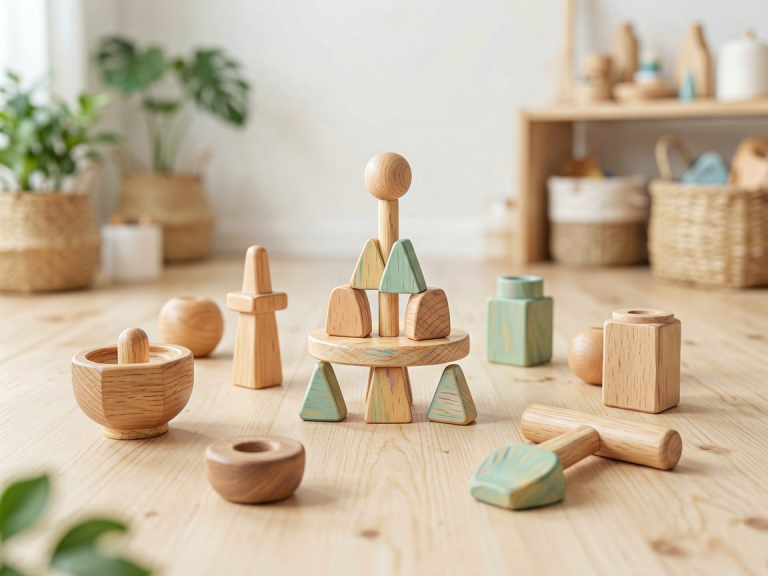
When parents think of developmental toys for babies, building blocks often come to mind. They are classic, colorful, and seem to symbolize early learning. But for a 9-month-old, traditional wooden or plastic blocks can be frustrating, even unsafe. At this age, babies are just beginning to master the pincer grasp, enjoy cause-and-effect play, and explore everything with their mouths. Standard blocks are too small for safe chewing, too hard for gentle teething, and too prone to toppling for a baby who lacks the fine motor control to stack them. Instead of forcing a toy that doesn’t fit the stage, parents can choose from a wide range of engaging, developmentally appropriate alternatives that support sensory exploration, motor skill growth, and cognitive development. Below are the best alternatives to building blocks for 9-month-olds, each carefully selected to match the unique needs of this curious age.
Why Building Blocks Fall Short at 9 Months
A 9-month-old is in a transitional phase: some are already crawling, others are pulling up to stand, and nearly all are obsessed with putting objects in their mouths. Traditional building blocks—especially the small, hard wooden cubes—present multiple problems. First, they are a choking hazard if the baby manages to fit one entirely into the mouth. Second, they offer little to no tactile variety; a smooth wooden cube feels the same all over, doing nothing to stimulate the rich sensory pathways developing in the baby’s brain. Third, the primary action encouraged by blocks—stacking—is far beyond the abilities of most 9-month-olds. A baby may knock down a tower built by an adult, but that fleeting moment of cause-and-effect is not worth the risk or the frustration. Instead, alternative toys can offer repeated, safe, and meaningful interactions that build foundational skills without bypassing the baby’s natural developmental timeline.
Sensory Balls: Texture, Grasp, and Roll
Sensory balls are perhaps the single best alternative to building blocks for a 9-month-old. Unlike the rigid, uniform shape of a cube, sensory balls come in a variety of textures—bumpy, ridged, soft-spiked, or even crinkly. They are typically made of safe, BPA-free silicone or soft rubber, ideal for gnawing on sore gums. The spherical shape also encourages a different kind of motor skill: the baby learns to cup two hands around the ball, to squeeze it, and to roll it on the floor or across a high chair tray.
From a developmental perspective, sensory balls provide rich tactile input that helps build neural connections. The different surfaces stimulate the mechanoreceptors in the baby’s palms and fingertips, refining the sense of touch. Moreover, when a baby pushes a ball and watches it roll away, they begin to grasp the concept of object permanence and cause and effect—critical cognitive milestones. Unlike blocks, which require precise hand-eye coordination to stack, balls respond immediately to even clumsy movements, giving the baby a sense of agency. Parents can roll a ball gently toward the baby and encourage them to push it back, laying the groundwork for later turn-taking and social play.
Recommended types: Look for sets that include one ball with soft nubs, one with a smooth surface, and one with ridges or a rattle inside. Avoid balls that are too small (to prevent choking) or too large for tiny hands to grasp comfortably (a diameter of about 4–5 inches works well).
Stacking Cups: The Genius of Nesting and Toppling
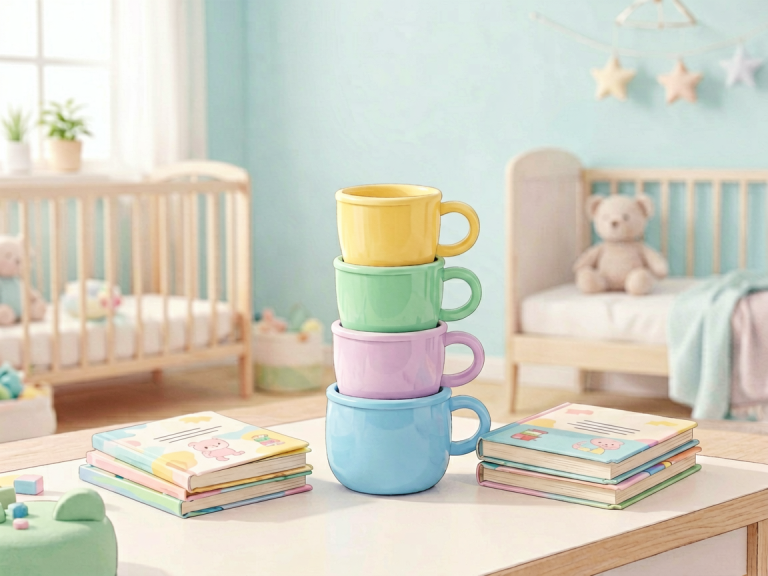
While stacks of cups may resemble a “building” activity, stacking cups are fundamentally different from traditional blocks. They are lightweight, often made of soft plastic or silicone, and designed to be nested—meaning they can be placed inside one another or stacked upside down to form a tower. For a 9-month-old, the primary value lies not in stacking but in grasping, banging, and knocking over.
A baby can pick up a single cup, examine its rim, chew on it if it’s safe, and then drop it or hit it against the floor. When an adult stacks three or four cups, the baby takes immense delight in using one swipe of the arm to send them flying. This repeated “destroy and rebuild” cycle teaches early problem-solving: the baby learns that their actions have predictable effects. Furthermore, stacking cups often have holes at the bottom or ridges that make interesting sounds when tapped. Some sets include cups with different sizes, allowing the baby to begin noticing size relationships—though true spatial understanding won’t emerge until much later, the exposure sets a foundation.
Unlike blocks, stacking cups are impossible to choke on (they are open at one end) and can be easily cleaned. They also grow with the child: at 12–15 months, the baby will start trying to stack them correctly, and by 18 months, they may begin nesting them in order. For a 9-month-old, they provide a safe, multisensory alternative that encourages both fine and gross motor exploration.
Soft Cloth Books: Multi-Sensory Storytelling
Babies at nine months are intensely interested in pictures, faces, and patterns, but board books can be heavy and hard to hold. Soft cloth books—often called “quiet books” or “fabric books”—offer a perfect alternative. These books are made of crinkly fabric, with flaps to lift, mirrors to peek into, and tags to pull. They are machine-washable, chewable, and lightweight enough for a baby to grab and shake.
Why are they a good alternative to building blocks? Because they stimulate multiple senses simultaneously. The crinkle sound engages hearing, the bright colors and high-contrast patterns engage vision, and the varied textures (fleece, denim, satin) engage touch. While blocks are purely visual and tactile in a limited way, a cloth book invites the baby to turn pages (a precursor to literacy), to grasp a small tab (pincer practice), and to see their own reflection. This type of open-ended play supports language development, as the parent can narrate what the baby is seeing.
For a 9-month-old, the best cloth books are those with simple images—a single animal, a ball, a face—and with interactive elements. The act of mouthing a corner or batting at a crinkly page is far more developmentally appropriate than trying to hold a block. The books also encourage joint attention, a key social skill, because the baby will look up at the parent and then back at the book, inviting interaction.
Activity Gyms and Play Mats: Whole-Body Engagement
While not a handheld toy, an activity gym or play mat with dangling toys is an exceptional alternative to building blocks for babies who are not yet walking. At nine months, many babies are spending time on the floor practicing crawling, sitting unsupported, or pulling up. An activity gym with soft arches, hanging rings, and detachable rattles gives the baby a full-body experience that blocks cannot offer.
The baby can lie on their back and bat at a hanging soft cube—but that cube is attached securely, so it won’t roll away. They can reach up, grab a ring, and pull it, hearing a jingle. This type of play strengthens the core, the arms, and the fingers. Unlike block play, which is stationary and seated, activity gyms encourage the baby to shift positions, rotate their torso, and eventually pull themselves up to a kneeling position. Some gyms even include a small mirror, which fascinates 9-month-olds as they begin to recognize themselves.
The key advantage over blocks is safety and freedom: the baby explores without the frustration of pieces scattering. The toys are often designed to be easy to mouth and are tethered to the mat, preventing choking hazards. Parents can rotate the hanging toys to maintain novelty, which supports sustained attention.
Musical Instruments: Rhythm, Cause, and Social Bonds
A set of baby-safe musical instruments—such as a small maraca, a soft drum, a jingle bell bracelet, or a wooden rattle—provides a far richer sensory experience than building blocks. Nine-month-olds are naturally drawn to sounds: they love to bang a spoon on a table, shake a toy, and vocalize in response. Musical instruments tap into this innate curiosity.
When a baby shakes a maraca and hears sound, they immediately learn about cause and effect—a concept that blocks teach only indirectly through stacking and knocking. Musical play also supports auditory discrimination, rhythm awareness, and eventually language rhythm. Parents can sit facing the baby, shake a maraca, and pause, encouraging the baby to imitate. This back-and-forth is the foundation of conversation.
Unlike blocks, which require precision to be satisfying (a stack that falls is often frustrating), musical instruments give instant gratification. The baby doesn’t need to achieve a goal; every shake, tap, or bang produces a pleasant result. Moreover, instruments are often easy to grip: maracas have handles, drums have mallets (supervised), and jingle bells can be worn on ankles. The sounds also invite parental participation—singing a song, tapping a rhythm—which strengthens bonding.
Teething Toys with Dynamic Features
At nine months, teething is in full swing. Many babies are cutting their first teeth or even their top incisors. Traditional blocks offer no relief for sore gums—in fact, hard wooden blocks can hurt. Teething toys that incorporate rattles, textures, and moving parts serve double duty: they soothe the gums while offering the same kind of exploratory play that blocks aim to provide.
Look for teethers shaped like keys on a ring, or a soft silicone dumbbell with different ridges. Some have beads that slide along a track inside a transparent shell, providing visual tracking practice. These toys are designed to be gnawed, twisted, and shaken. They are small enough for tiny hands, yet large enough to avoid choking. The sliding beads introduce a simple mechanical concept—objects can move along a path—that is more complex than a static block.
A baby who mouths a teething ring and then watches the beads slide is engaging in focused attention and developing hand-eye coordination. The sensory feedback (temperature, texture, movement) is richer than that of a plain block. And because these toys are explicitly designed for oral exploration, parents can relax knowing that the materials are safe.
Conclusion: Choose Play That Matches the Stage
Building blocks are wonderful for toddlers who can stack, sort, and build. But for a 9-month-old, the best alternatives are those that respect the baby’s current abilities: mouthing, grasping, shaking, turning, banging, and knocking over. Sensory balls, stacking cups, soft cloth books, activity gyms, musical instruments, and teething toys all provide safe, engaging, and developmentally appropriate play. They stimulate multiple senses, encourage movement, and lay the groundwork for future skills like problem-solving and language. By choosing these alternatives, parents are not merely avoiding the limitations of blocks—they are actively accelerating their baby’s growth in the ways that matter most at this tender age. The key is to follow the baby’s lead, offer variety, and remember that the best toy is one that invites joyful interaction between parent and child.