The Pitfalls of Over-Advanced Toys for Toddlers: Why Simplicity Reigns Supreme
In the bustling aisles of toy stores, parents are often seduced by gleaming boxes promising "STEM learning," "coding basics," or "creative engineering" for children as young as three. The marketing is persuasive: buy this toy, and your toddler will become a mini-genius. Yet a growing body of research in child development and early education suggests that buying toys that are too advanced for three-year-olds is not merely a waste of money—it can actively hinder the very learning and joy that play is meant to foster. This article explores why parents fall into this trap, what happens when toddlers are handed complex gadgets, and how to choose toys that truly support a child's cognitive, emotional, and motor development.
The Allure of Advanced Toys: Parental Aspirations and Market Manipulation
The Pressure to Accelerate Development
Modern parenting is saturated with the ideology of "optimization." From flashcard apps for infants to "baby Einstein" videos, the implicit message is that every moment of a child's early life should be leveraged for intellectual gain. This anxiety peaks around age three, when toddlers begin speaking in sentences, showing curiosity, and demonstrating problem-solving skills. Parents, eager to give their child a head start, gravitate toward toys that promise to teach counting, reading, or even basic programming. A remote-controlled robot that responds to voice commands or a tablet-based "learning system" with dozens of apps seems like a shortcut to kindergarten readiness. In reality, these toys bypass the foundational, sensory-rich, and open-ended play that three-year-olds need most.
Marketing Mirage: "Educational" Does Not Mean "Appropriate"
Toy manufacturers exploit parental aspirations by slapping buzzwords like "educational," "developmental," and "advanced" on boxes. A toy marketed as "for ages 3+" may technically be safe for a three-year-old, but its cognitive demands—multi-step instructions, abstract reasoning, symbolic representation—are often far beyond what a typical toddler can handle. For example, a magnetic building set with tiny magnets and complex blueprints for constructing a bridge might be labeled "ages 3 and up," but in practice, a three-year-old lacks the fine motor control to snap the pieces together and the spatial reasoning to follow the diagram. The child ends up frustrated, the toy is abandoned, and the parent wonders why their "investment" didn't pay off.
Cognitive Mismatch: When Toys Talk Over Children
The Gap Between Novelty and Comprehension
Three-year-olds are in the "preoperational stage" according to Piaget's theory of cognitive development. They learn primarily through direct sensory and motor exploration, not through abstract rules or sequential logic. A toy that lights up, talks, or requires following a sequence of button presses may initially captivate a toddler with its novelty, but the cognitive load quickly exceeds their capacity. For instance, consider a "coding caterpillar" where each segment represents a command. A three-year-old might enjoy pressing buttons to see the caterpillar move, but understanding that pressing "forward" twice then "turn left" produces a specific path is beyond their working memory and logical reasoning. Instead of learning coding, the child simply pounds buttons randomly, and the toy becomes a confusing electronic noise-maker.
The Loss of Active Discovery
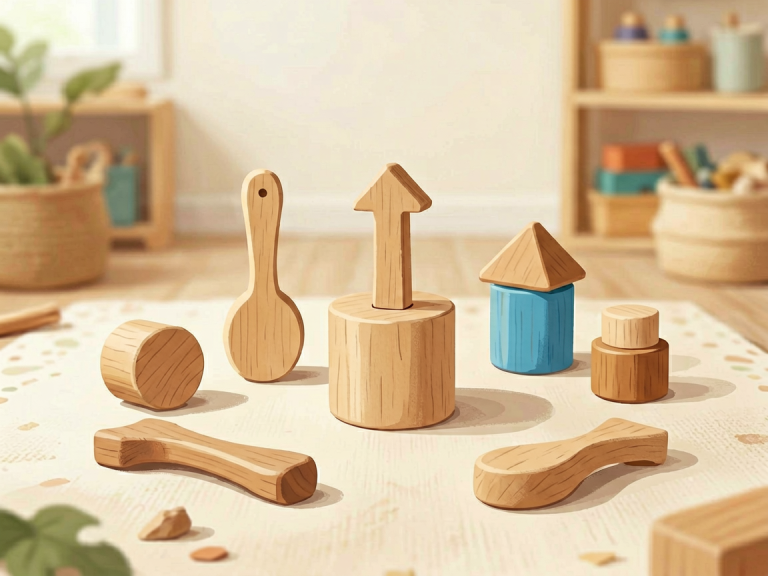
One of the most insidious effects of over-advanced toys is that they turn children from active explorers into passive responders. A simple wooden block tower allows a toddler to test balance, weight, and cause and effect through trial and error. If the blocks fall, the child learns resilience and adaptation. In contrast, an electronic toy that "teaches" shapes by lighting up a triangle when the correct shape is inserted offers a narrow, predetermined feedback loop. The child memorizes a rote association without understanding the underlying concept of shape properties. Advanced toys often perform the thinking for the child, leaving the toddler as a mere button-pusher rather than a creator of their own learning experience.
Frustration and Disengagement: The Emotional Toll
The Cycle of Failure and Tantrums
Three-year-olds have a fragile sense of competence. They are learning to regulate emotions, handle frustration, and persist through challenges. An over-advanced toy that demands skills they do not possess—like fine motor precision to align small gears, or memory to recall a sequence—inevitably leads to repeated failure. A child who cannot make the robot move as shown on the box may scream, throw the toy, or dissolve into tears. Parents, feeling their child's distress, may try to "help" by taking over, further undermining the child's sense of agency. The toy that was supposed to be fun becomes a trigger for meltdowns. Over time, the toddler associates play with frustration, potentially dampening their natural curiosity and willingness to try new things.
The Impact on Play Quality and Creativity
When a toy is too difficult, the child cannot enter the state of "flow"—that immersive, joyful concentration that characterizes high-quality play. Instead of exploring, experimenting, and creating their own rules, the child either abandons the toy or uses it in ways it was not intended (e.g., banging a complex robot against the floor). This reduces the toy's educational value to zero. Worse, it can displace simpler, more beneficial play. Time spent wrestling with an incomprehensible toy is time not spent stacking blocks, rolling a ball, pretending to cook, or scribbling with crayons—activities that build foundational skills in language, social interaction, and motor development.
The Case for Age-Appropriate Play: Simplicity as a Feature
What Three-Year-Olds Really Need
Developmental psychologists and early childhood educators consistently emphasize the value of open-ended, low-tech play for toddlers. The best toys for a three-year-old are those that respond to the child's actions in predictable, physical ways: a ball that rolls when pushed, a set of nesting cups that stack, a toy truck that can be loaded with blocks. These toys support the development of:
- Fine and gross motor skills: Grasping, stacking, pushing, pulling, and balancing.
- Cognitive skills: Cause and effect, object permanence, sorting, and classifying.
- Language and social skills: Pretend play, storytelling, and negotiation with peers or adults.
- Emotional regulation: Dealing with minor setbacks (the tower falls) and learning to try again.
No advanced technology is needed. A single cardboard box can inspire a spaceship, a house, a car, or a cave—far more versatile than a pre-programmed toy. The child's imagination, not the toy's features, is the engine of learning.
The Montessori Philosophy and "Real" Toys
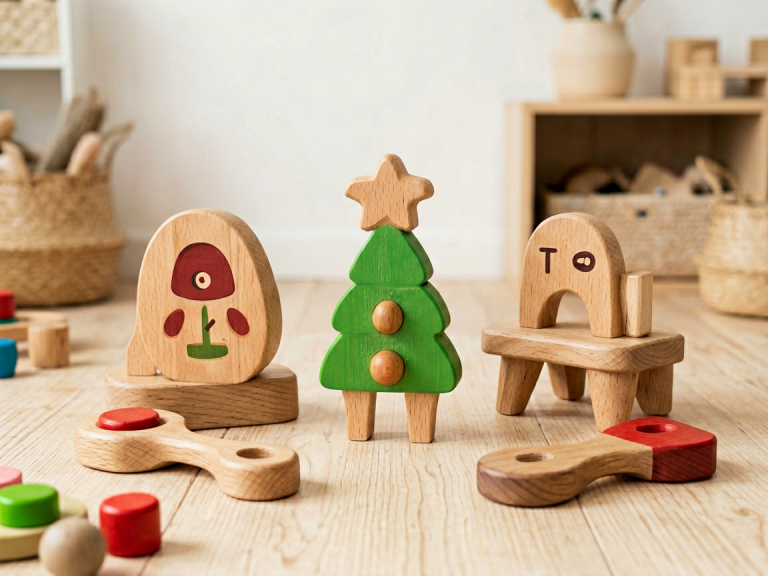
The Montessori method, which focuses on child-led, hands-on learning, offers a powerful counterexample. Montessori classrooms for three-year-olds feature simple wooden puzzles, practical life activities (pouring water, scooping beans), and sensorial materials (color tablets, sound cylinders). These toys are "advanced" only in their design precision and the way they isolate a single skill, but they are not complex in terms of required cognitive load. They allow the child to succeed through repetition and self-correction. A three-year-old using a simple knobbed cylinder block can feel the satisfaction of fitting the correct cylinder into the correct hole—a direct, tangible feedback loop that builds confidence and concentration.
Practical Tips for Parents: Choosing Toys That Grow with Your Child
Step 1: Read the Age Label—But Read It Critically
Age labels are guidelines, not guarantees. For a three-year-old, look for toys labeled "1.5–4" or "2–4." Avoid toys that are "for ages 5+" even if your child seems bright. The age range typically reflects safety (small parts) and complexity. If the box shows a child building a complex structure from a manual, assume your three-year-old will need extensive adult help—which defeats the purpose of independent play.
Step 2: Prioritize Open-Ended Over Directed Play
Toys with one clear "correct" way to play (like a puzzle with exactly one solution) are fine in moderation, but the majority of your child's toy box should consist of open-ended materials: blocks, play dough, dolls, cars, art supplies, sensory bins (rice, sand, water). These allow the child to set their own level of challenge and to progress naturally as skills develop.
Step 3: Observe Your Child's Frustration Level
A healthy challenge should cause a child to pause and try again, but should not trigger repeated crying or giving up. If your child consistently abandons a toy within minutes or asks for help with every step, the toy is too advanced. Put it away for a few months and reintroduce it later. There is no rush; three-year-olds have their whole lives to master robotics.
Step 4: Resist the "Gifted Child" Trap
Every parent wants to believe their child is exceptional, and indeed all children have unique strengths. But a three-year-old who can operate a tablet app is not necessarily more advanced—they have simply learned a specific motor pattern. True cognitive growth happens through messy, unpredictable, physical play. Do not confuse early exposure to technology with genuine understanding. The child who plays with a simple set of nesting cups learns about size, sequence, and volume far more deeply than a child who taps a screen to make a digital cup "appear."
Step 5: Remember the Role of Adult Interaction
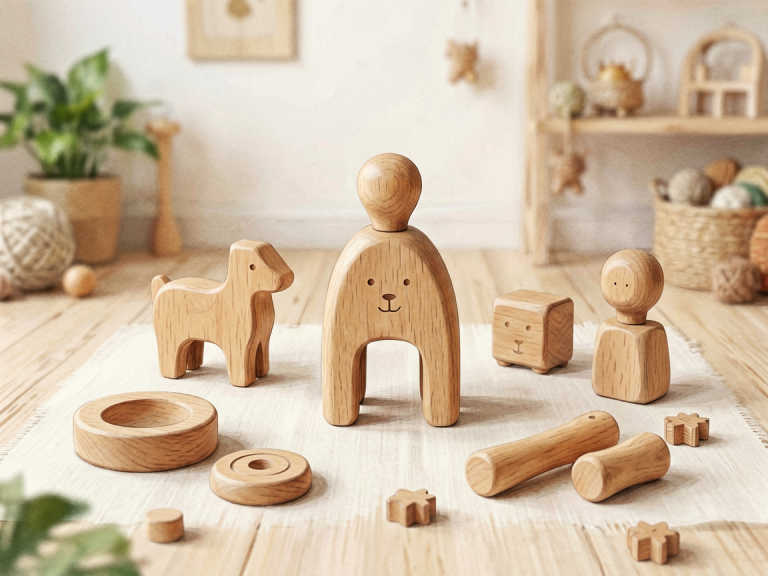
No toy, however perfectly designed, can replace the value of a parent or caregiver who engages in joint play. A simple set of animal figurines becomes a rich narrative when an adult asks, "Where is the elephant going? Is he looking for water?" The adult scaffolds the child's play, extending their language and imagination. Over-advanced toys often push adults away because they are self-contained and do not invite dialogue. In contrast, simple toys are conversation starters.
Conclusion: Less Is More in Early Childhood
The temptation to buy advanced toys for a three-year-old is understandable in a culture that prizes early achievement. But the evidence is clear: toys that exceed a toddler's cognitive, motor, and emotional capabilities do more harm than good. They breed frustration, stifle creativity, and displace the kinds of simple, repetitive, physical play that build the neural foundations for later learning. Instead of chasing the latest electronic gadget or "STEM" marvel, parents should embrace the beauty of simplicity. A set of wooden blocks, a bucket of water, a cardboard box—these are the true tools of genius for a three-year-old. In the end, the best toy for a toddler is one that lets them be a toddler: curious, messy, and free to discover the world at their own pace.