10 Essential Questions to Ask Before Buying Building Blocks: A Comprehensive Guide
Building blocks are more than just toys—they are tools for creativity, cognitive development, and hours of family fun. Whether you are a parent shopping for a toddler, a teacher stocking a classroom, or an adult enthusiast looking to expand your collection, the sheer variety of building blocks on the market can be overwhelming. Before you click “add to cart” or head to the checkout counter, it is crucial to ask yourself a series of thoughtful questions. These questions will not only save you money and frustration but also ensure that the blocks you choose truly align with the needs, safety, and developmental goals of the user. In this article, we will explore ten key questions that every buyer should consider, structured under clear secondary headings for easy reference.
Question 1: What Is the Recommended Age Range?
The most fundamental question to ask is whether the building blocks are age-appropriate. Age recommendations are not arbitrary—they are based on safety standards, cognitive abilities, and motor skill development. For infants and toddlers under three years old, blocks must be large enough to prevent choking hazards. Smaller, intricate pieces are suitable for older children who have outgrown mouthing objects. Additionally, the complexity of assembly matters: a preschooler may enjoy simple stacking and sorting, while a ten-year-old might thrive with complex interlocking systems like those found in advanced LEGO Technic sets. Always check the manufacturer’s suggested age, but also consider the individual child’s maturity and fine motor skills. Buying blocks that are too advanced can lead to frustration, while ones that are too simple may fail to engage.
Question 2: What Material Are the Blocks Made Of?
Building blocks come in a variety of materials, each with distinct advantages and drawbacks. The most common options include:
- Wood: Classic, durable, and often eco-friendly. Wooden blocks are typically non-toxic and have a pleasing tactile feel. However, they can be heavy, may splinter if poorly finished, and are less forgiving if dropped on toes.
- Plastic: Lightweight, colorful, and easy to clean. Plastic blocks (like LEGO or Mega Bloks) often feature precise interlocking systems. However, quality varies widely—cheap plastic may contain harmful chemicals like BPA or phthalates. Look for certifications such as ASTM or EN71.
- Foam or Soft Blocks: Ideal for infants, these are safe for chewing and throwing, but they lack durability and intricate design.
- Magnetic Blocks: These offer a unique building experience but require careful supervision for young children due to the risk of swallowing small magnets.
Ask yourself: Is the material non-toxic? Is it sustainably sourced? Will it withstand years of use? For children who tend to put everything in their mouths, avoid plastics with strong chemical odors.
Question 3: Are the Blocks Compatible with Existing Collections?
If you already own some building blocks, compatibility is a major consideration. Not all block systems work together. LEGO’s clutch power is legendary, but off-brand bricks may fit loosely or too tightly, causing frustration. Some brands, like Mega Bloks or Oxford Blocks, are designed to be cross-compatible with LEGO, while others are completely proprietary. Magnetic blocks often have unique connectors that only work within their own system. Before buying, check product descriptions for phrases like “compatible with major brands” or “standard size.” If you are starting from scratch, consider choosing a widely compatible system to future-proof your investment and allow for expansion.
Question 4: What Educational or Developmental Value Do They Offer?
Building blocks are not just about entertainment—they are powerful learning tools. Ask yourself what skills you want to foster:
- Fine Motor Skills: Smaller blocks require precision and hand-eye coordination.
- Spatial Awareness and Geometry: Sets that include arches, triangles, or angled pieces encourage understanding of shapes and balance.
- Creativity and Open-Ended Play: Classic wooden blocks allow infinite configurations, while themed sets (e.g., castle, space station) provide guided inspiration but may limit imagination.
- STEM Concepts: Some blocks incorporate gears, pulleys, or circuits (e.g., LEGO Technic, Brain Flakes). These are excellent for teaching physics and engineering principles.
Consider the child’s interests: a budding architect might love blocks with architectural details, while a fan of dinosaurs would appreciate themed pieces. The best building blocks strike a balance between structured play and open-ended creativity.
Question 5: How Many Pieces Do I Really Need?
More pieces do not always mean more fun. A giant bucket of 1,000 tiny blocks can overwhelm a young child, while a smaller set of 50 well-chosen pieces might provide richer play. For beginners, quality over quantity is key. Look at the variety of shapes and colors, not just the count. A set with a mix of standard bricks, special connectors, wheels, and people figurines often offers more play value than a homogeneous pile of identical cubes. Conversely, if you are buying for an experienced builder who enjoys large-scale projects, a high piece count becomes essential. Also consider storage: a large set without a container can lead to lost pieces and chaos.
Question 6: Is the Set Themed or Generic? Which Is Better?
Themed sets (e.g., a pirate ship, a fire station) have detailed instructions and specialized pieces. They can be incredibly engaging and provide a clear goal for children who struggle with open-ended play. However, once built, the set may be displayed and rarely dismantled, limiting reuse. Generic blocks, on the other hand, encourage endless deconstruction and re-imagination. A good approach is to buy one or two themed sets for inspiration, then supplement with a large collection of generic blocks. Also consider that many themed sets are tied to licensed properties (e.g., Star Wars, Harry Potter), which carry a premium price. Ask: Will the child outgrow the theme in a year? Or is it a timeless classic?
Question 7: What Are the Storage and Cleanup Requirements?
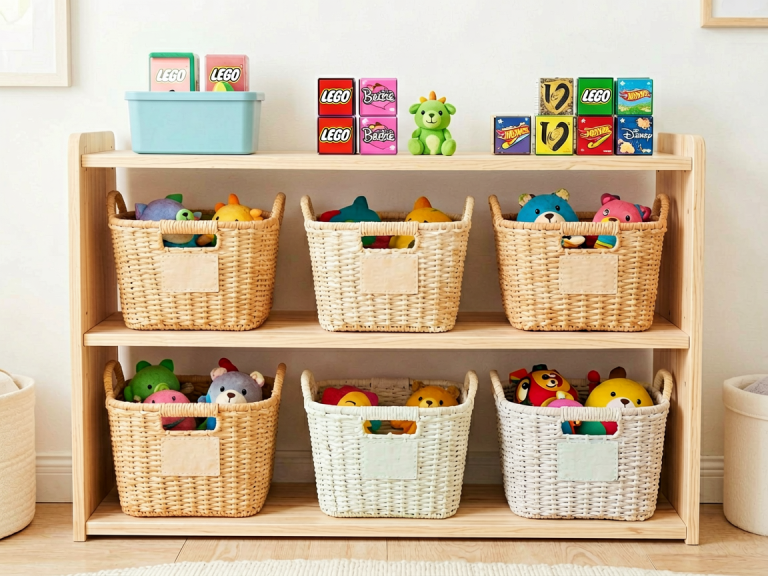
Building blocks are notorious for ending up under couches, in vacuum cleaners, and scattered across every room. Before buying, think about storage solutions. Some sets come with a storage box, bag, or tote. Others require you to purchase separate containers. For families with limited space, choose blocks that nest together or have a dedicated carrying case. Also consider the size of the pieces: tiny blocks are harder to pick up and sort. Some parents prefer blocks that are easy to wipe clean (plastic) rather than porous materials that absorb spills. If you plan to travel with blocks, look for compact, portable sets. A good rule: if the storage solution is not part of the purchase, factor in the cost and effort of organizing the pieces.
Question 8: What Is the Quality of the Instructions?
For sets that are meant to be built into specific models, clear and detailed instructions are essential. Poorly printed or confusing diagrams can turn a fun activity into a frustrating puzzle. Check online reviews or even look at sample instructions on the manufacturer’s website. Some brands, like LEGO, are famous for their step-by-step clarity, while cheaper knock-offs may use blurry images or skip steps. If the builder is a child who cannot read yet, look for sets with picture-only instructions. For advanced builders, consider whether the instructions include alternate models or encourage modifications. Also, digital instructions via an app can be a modern convenience—some brands offer interactive 3D guides.
Question 9: What Is the Price per Piece or Value?
Building block prices vary enormously. A premium LEGO set can cost hundreds of dollars, while a no-name bucket from a discount store might be under $20. But price should not be the only factor. Calculate the “price per piece” to compare value, but also consider build quality, brand reputation, and resale value. LEGO bricks, for instance, hold their value remarkably well—you can often sell used sets for a significant portion of the original price. Cheap blocks may deform, lose color, or fail to clutch properly. Also factor in the longevity: does the set offer hours of play or is it a one-time build? For budget-conscious buyers, consider buying used or surplus blocks from garage sales or online marketplaces. Just be sure to clean them thoroughly.
Question 10: Will This Set Grow with the Child?
Finally, think about the long-term relevance of your purchase. Some building block systems are designed to be “system-based,” meaning new pieces are compatible with old ones, allowing the collection to expand over years. LEGO is the prime example—a brick from 2024 will fit a brick from 1970. This future-proofing is invaluable. Other brands may change their design or go out of business, leaving you with orphan pieces. Additionally, consider whether the set offers room for increasing complexity. For example, a simple 4+ set might be outgrown quickly, while a 7+ set with advanced techniques can engage a child for several years. Look for sets that include “expansion packs” or that can be combined with other sets to create larger worlds.
Conclusion: The Power of Asking Before Buying
Buying building blocks is an investment in play, learning, and family bonding. By asking these ten questions—about age appropriateness, material safety, compatibility, educational value, piece count, themes, storage, instructions, cost, and future growth—you can make an informed decision that avoids common pitfalls. Remember that the best building blocks are not necessarily the most expensive or the ones with the highest piece count; they are the ones that match the user’s developmental stage, interests, and environment. Take the time to research, read reviews, and even test a small set before committing to a large purchase. Whether you choose classic wooden blocks, colorful plastic bricks, or innovative magnetic tiles, the joy of creating something from nothing is a gift that lasts a lifetime. So next time you stand in the toy aisle or scroll through online listings, pause and ask yourself these questions. Your future builder will thank you—one block at a time.