When Good Intentions Backfire: The Perils of Buying Toys Too Advanced for Babies
Introduction
Walk into any modern baby store, and you will be greeted by shelves stacked with blinking, buzzing, chirping, and digitally enhanced playthings. Some promise to teach Mandarin before the first birthday; others boast that they can “stimulate neural pathways” or “accelerate cognitive milestones.” In the hypercompetitive landscape of modern parenting, the pressure to give one’s baby a head start is immense. Consequently, many well-meaning parents and relatives fall into a common trap: buying toys that are far too advanced for the child’s developmental stage. While the intention is usually loving—to inspire genius, to keep pace with neighbor’s children, or simply to provide the very best—the outcome can be surprisingly counterproductive. Toys designed for preschoolers or even older children, when placed in the hands (or mouths) of infants and young toddlers, can actually hinder development, frustrate the child, and even pose safety risks. This article explores why the phenomenon of purchasing advanced toys for babies is so widespread, what the consequences are, and how caregivers can make more age-appropriate choices that truly nurture a baby’s growth.
The Allure of Advanced Toys: Parental Aspirations and Marketing Myths
The first reason parents gravitate toward advanced toys lies in a potent combination of marketing and parental anxiety. Toy manufacturers know that a parent’s deepest desire is to see their child succeed. Consequently, they package their products with labels like “educational,” “STEM-based,” “brain-building,” or “ages 3+ but suitable for curious infants.” These phrases trigger a Pavlovian response in the caregiver: buy this, and your baby will be smarter. The reality, however, is that a toy’s complexity does not automatically translate into a child’s benefit. A six-month-old does not need a tablet that teaches letter recognition; they need a simple rattle that makes a satisfying sound when shaken, because that action—grasping, shaking, listening—builds fundamental sensorimotor skills.
Moreover, social comparison fuels the fire. When parents see friends posting photos of their one-year-old playing with a remote-controlled car or a puzzle with fifty pieces, they worry that their own baby is falling behind. The fear of “missing out” on a critical developmental window drives impulse purchases. Yet this very fear overlooks a basic truth of child development: babies learn best through repetitive, concrete, and cause-and-effect experiences. A toy that is too advanced—say, a multi-step shape sorter with abstract shapes—does not provide the simple, predictable feedback a baby needs. Instead, it becomes a source of confusion. The baby cannot figure out how to make the toy “work,” and the parent, seeing the child’s lack of interest, may mistakenly conclude that the baby is not smart enough—when in fact the toy is simply inappropriate.
Developmental Mismatch: Why Babies Need Simple, Not Sophisticated
To understand why advanced toys are detrimental, it is essential to recall the basic stages of infant cognitive and motor development. For the first twelve months, babies are primarily sensory-motor explorers. They learn through mouthing, banging, dropping, and watching. A toy that requires fine motor precision, symbolic thinking, or multiple sequential steps is beyond their capacity. For example, a complex wooden train set with tiny magnets and detachable cars may look charming, but a nine-month-old cannot connect the cars; they will simply chew on a single piece or, worse, get frustrated when the magnet detaches and rolls away.
Furthermore, the concept of “a just-right challenge” is crucial in developmental psychology. A toy should be slightly beyond the child’s current ability but still achievable with effort. When the gap is too wide, the child experiences repeated failure, which can lead to disengagement, frustration, and even a learned aversion to play. A baby who constantly encounters a toy that makes sounds or lights up when they touch the wrong button (or that does nothing when they press the correct area because they don’t have the dexterity) is being set up for failure. Instead of encouraging exploration, the toy becomes a source of stress. Contrast this with a simple stacking cup: a baby can bang it, put it in their mouth, try to nest it, knock it over, and eventually, around twelve months, begin to understand that one cup fits inside another. The progression is natural, self-paced, and joyful.
The Hidden Dangers: Safety Risks and Overstimulation
Beyond developmental concerns, buying toys that are too advanced often introduces real safety hazards. Toys marked for children three and up typically contain small parts—buttons, batteries, magnets, or detachable pieces—that pose choking risks for babies who still explore the world with their mouths. Even if the parent intends to supervise closely, a moment of distraction is all it takes. Ingesting a small battery can cause severe internal burns, and swallowing multiple magnets can lead to intestinal perforation. The American Academy of Pediatrics consistently warns against giving babies toys with small parts, yet many parents ignore age labels because they assume their baby is “advanced” enough to handle them.
Equally concerning is the issue of overstimulation. Many advanced toys are electronic and feature bright flashing lights, loud noises, and rapid visual changes. While such sensory input might captivate an older child’s attention, for a baby’s developing nervous system it can be overwhelming. Studies in early childhood neuroscience show that excessive visual and auditory stimulation can lead to irritability, poor sleep patterns, and difficulty with self-regulation. A baby whose play environment is filled with noisy, flashy, complex gadgets often becomes passive, watching the toy perform rather than actively engaging. This is the opposite of what play should be: an active, exploratory process in which the baby is the agent of discovery. Simple, quiet toys like a wooden block, a fabric ball, or a mirror encourage the baby to initiate action and control their environment, fostering a sense of mastery and calm.
The Psychological Impact: Stifling Creativity and Frustrating the Caregiver-Child Bond
Another subtle but profound consequence of providing age-inappropriate toys is the dampening of creative play. Advanced toys often come with a fixed script: press this button to hear the alphabet, turn this dial to see a dancing dog. The toy dictates the activity, leaving little room for imagination. In contrast, open-ended toys such as soft blocks, cups, scarves, or simple rattles allow the baby to invent a thousand different games. A cloth can become a peek-a-boo curtain, a parachute, a hat, or a sensory texture to rub. This kind of play builds cognitive flexibility and problem-solving—skills that a pre-programmed electronic toy cannot teach.
Moreover, when a parent buys an advanced toy and then watches the baby reject it, the parent may feel disappointed or even anxious. This emotional response can inadvertently affect the caregiver-child interaction. The parent might try to force the toy on the baby, demonstrating how it works repeatedly, creating a tense dynamic. Instead of shared joy, playtime becomes a lesson in frustration. The baby picks up on the parent’s stress and may become fussy or withdrawn. The toy that was meant to bring them closer together ends up creating a wedge. Pediatric occupational therapists often note that the best toys for babies are the ones that encourage interaction with a caregiver: a simple ball to roll back and forth, a book with textures to touch together, or a set of blocks to knock down and rebuild. These activities build social-emotional bonds far more effectively than any “smart” toy.
A More Thoughtful Approach: Choosing Toys That Grow with the Baby
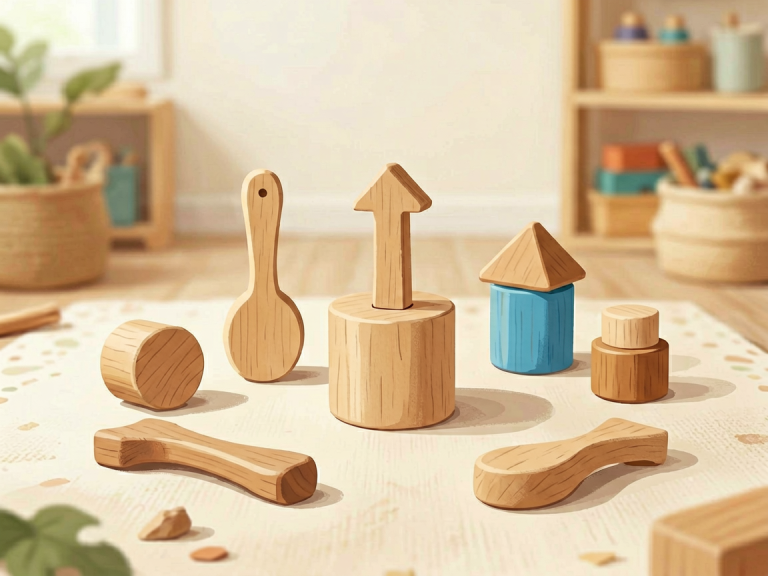
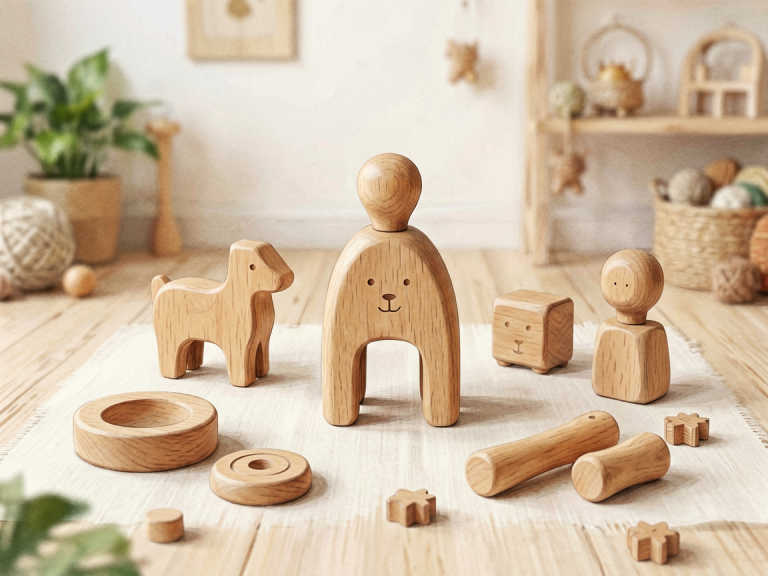
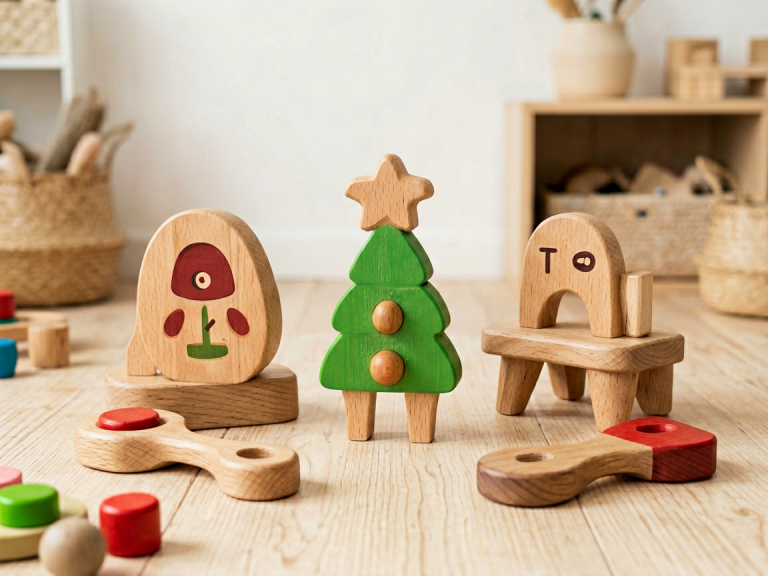
Given the risks, what should a conscientious parent do? The answer is not to avoid toys altogether, but to choose them with a clear understanding of developmental milestones. A good rule of thumb is to look for toys that are “open-ended” and “multi-sensory” but simple. For babies under six months, high-contrast black-and-white mobiles, soft rattles, and unbreakable mirrors are excellent. For six to twelve months, stacking cups, large wooden rings, activity boards with knobs to push, and soft balls are ideal. For twelve to eighteen months, simple puzzles with large knobs, push-and-pull toys, and crayons designed for toddlers become appropriate. Notice that none of these require batteries or digital screens.
Parents should also resist the urge to “accelerate” development. A baby who is exposed to letters and numbers at six months is not learning literacy; they are simply processing meaningless symbols. The brain’s wiring for abstract symbol recognition develops later, typically around age two or three. Pushing advanced content before the brain is ready can actually create frustration and interfere with the natural curiosity that leads to later learning. Instead, focus on language-rich interactions: talk to the baby while they play, describe what they are doing, sing songs, and read board books with simple illustrations. These activities build vocabulary and cognitive connections far more effectively than any flashy toy.
Finally, involve the baby in the choice. While an infant cannot point to a shelf, they do have preferences. Notice which toys they reach for, which ones make them smile, which they hold for a long time. Those are the toys that meet their current developmental need. Rotate toys to maintain novelty without overwhelming, and always prioritize safety by checking labels and avoiding small parts. Remember that the most educational toy in the world is the caregiver’s face, voice, and responsive attention. No battery-powered gadget can replace the warmth of a hug or the delight of a shared game of peek-a-boo.
Conclusion
The impulse to buy toys that are too advanced for babies is born from love, ambition, and the relentless pressure of a culture that prizes early achievement. Yet the evidence is clear: babies thrive on simplicity, repetition, and hands-on exploration. Advanced toys not only fail to deliver on their promises of cognitive acceleration but can also introduce safety hazards, stifle creativity, create frustration, and disrupt the joy of early play. The wisest approach is to resist the marketing hype, trust the science of child development, and choose toys that match the baby’s current abilities while offering a slight (but not overwhelming) challenge. In doing so, parents give their babies the greatest gift of all: the freedom to learn at their own pace, through play that is genuinely meaningful, safe, and joyful. After all, the most advanced toy for a baby is not the one with the most features—it is the one that invites them to wonder, to try, to fail, and to try again, with a loving adult by their side.