The Pitfall of Premature Complexity: Why Buying Overly Advanced Toys Is a Mistake Parents Often Make
In the modern landscape of parenting, few decisions are as laden with both hope and potential misstep as the choice of toys for a child. Walk into any toy store, and you are confronted by a dazzling array of electronic gadgets, robotic kits, and STEM-focused sets that promise to boost IQ, foster creativity, and prepare even a toddler for the rigors of a future career in engineering. The shelves are lined with boxes that shout “Ages 3+” but contain components that would baffle a high school student. In their well-intentioned desire to give their children a head start, parents frequently fall into a common trap: buying toys that are far too advanced for their child’s developmental stage. This mistake, while born of love, can inadvertently hinder rather than help a child’s cognitive, emotional, and social growth. Understanding why this happens, what the consequences are, and how to choose more wisely is essential for every parent who wants their child to truly benefit from play.
The Allure of "Advanced" Toys: Why Parents Fall into the Trap
The first question we must ask is: why do parents so consistently purchase toys that are beyond their child’s current abilities? Several psychological and cultural forces conspire to make this an almost irresistible error.
One powerful driver is the pervasive “pressure to accelerate.” In a society that venerates early achievement – reading by age four, solving algebra by age eight – parents internalize a sense of urgency. They see a “smart” toy labeled with learning outcomes – “Teaches coding fundamentals!” “Builds logical reasoning!” – and they feel that if they do not provide it, their child will fall behind. The toy becomes a proxy for parental competence: buying an advanced set feels like investing in the child’s future success. The marketing industry, of course, exploits this anxiety brilliantly, using words like “genius,” “gifted,” and “award-winning” to trigger a sense of scarcity and necessity.
Another factor is a simple misreading of the child’s momentary interest. A four-year-old who sees a six-year-old playing with a remote-control car or a complex Lego Technic set may express fascination and even demand the same. The parent, seeing that flicker of attention, mistakenly assumes the child is ready for the complexity. But a passing curiosity is not the same as developmental readiness. The child may be drawn to the lights and sounds but lacks the fine motor control, patience, or sequential reasoning to actually engage with the toy in a meaningful way. The parent, eager to nurture that spark, buys the advanced toy – only to watch it gather dust after the novelty fades.
Furthermore, there is a subtle element of nostalgia and projection involved. Parents see a toy and imagine the child they wish they had – the child who can build a functioning robot, who can program a video game, who can solve puzzles meant for middle schoolers. In buying an advanced toy, the parent is often buying a fantasy of the child’s future self, rather than meeting the child where they actually are. This emotional investment blinds the parent to the practical mismatch between the toy’s demands and the child’s current capabilities.
The Hidden Costs: How Overly Advanced Toys Hinder Development
The mistake of buying too-advanced toys is not merely a waste of money. It carries real, often overlooked, consequences for a child’s development. The most immediate effect is frustration. A child who cannot figure out how to operate a toy feels a sense of failure. Repeated failure erodes self-confidence and can create a lasting aversion to challenging activities. Instead of building resilience, the overly complex toy teaches the child that play is a source of anxiety, not joy. This is especially damaging in early childhood, when the primary purpose of play is to build a secure sense of mastery over the environment.
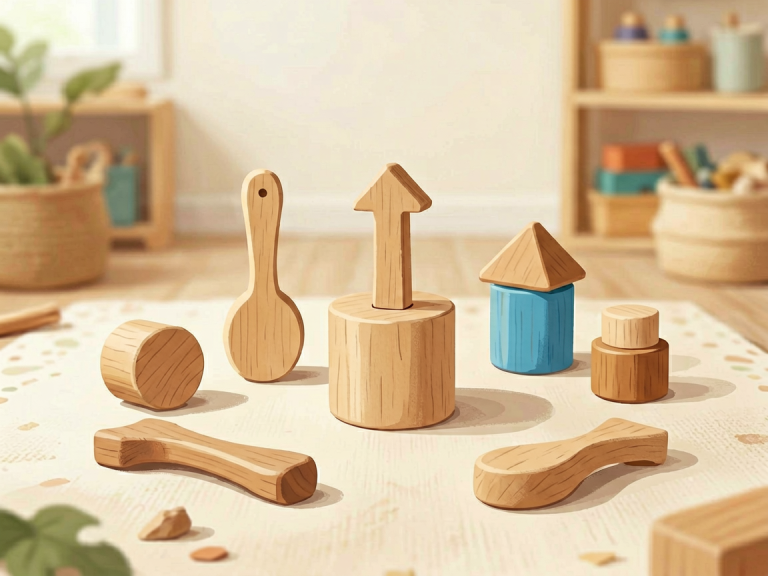
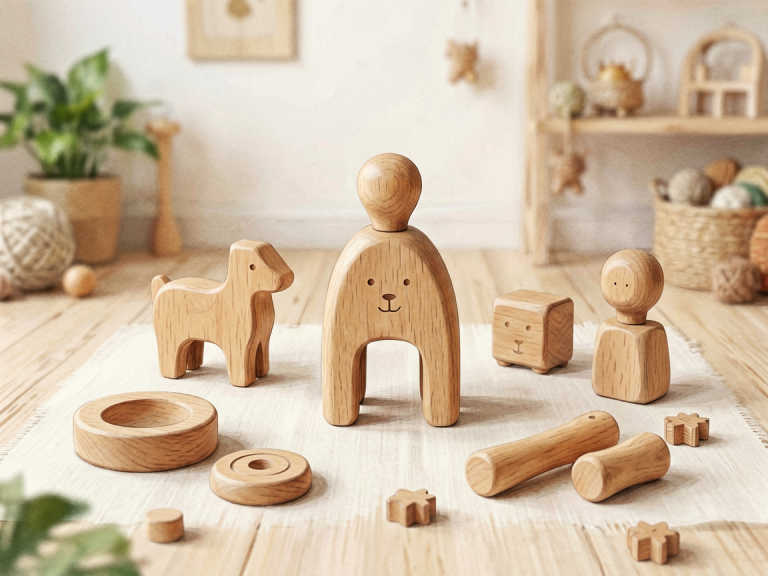
Moreover, developmentally inappropriate toys stifle creativity. Consider a sophisticated electronic tablet that offers pre-programmed games. It dictates what the child can do, limiting exploration. In contrast, a simple set of wooden blocks encourages open-ended building, problem-solving, and imagination. When a toy is too advanced, it often comes with a rigid structure – instruction manuals, limited functions, prescribed outcomes. The child becomes a passive operator of someone else’s design rather than an active creator of their own experience. The very feature that makes the toy seem “smart” – its complexity – can actually suppress the child’s own cognitive initiative.
There is also a social dimension. Advanced toys are often designed for solitary play: a child plugged into a headset, manipulating a screen, or assembling intricate parts alone. This reduces opportunities for cooperative play, turn-taking, and negotiation – skills that are best learned through simple, shared interaction with caregivers or peers. A toy that requires a four-year-old to follow multi-step instructions without help is likely to be abandoned or to lead to tears. In contrast, a simpler toy like a ball, a doll, or a set of cups invites social engagement, language development, and emotional bonding.
Cognitive development is not a linear race to be won by having the most sophisticated tools. The brain develops in stages, and each stage requires specific types of stimulation. For example, a twelve-month-old learns best through sensory exploration – touching, tasting, shaking, dropping objects. A complex shape-sorting puzzle with many identical pieces offers no advantage over a simple rattle for this age. A three-year-old benefits from pretend play and simple cause-and-effect interactions; introducing a kit that requires soldering or coding is not only futile but can actually overwhelm the developing neural pathways that are still forming the basics of attention and sequencing.
One of the most insidious consequences is the theft of wonder. A child who receives a toy that does exactly what it is supposed to do – with flashing lights and automatic responses – has no reason to ask “why?” or “how does this work?” The mystery is stripped away. But a child playing with a simple ramp and a marble must wonder about gravity, angle, speed, and friction. The simpler toy invites the child to be a scientist. The advanced toy presents an answer, not a question.
The Joy of Simplicity: Why Age-Appropriate Toys Are Better
Once we recognize the pitfalls, the solution becomes clear: parents should prioritize age-appropriate toys that match the child’s current developmental stage, not the stage they hope for in the future. The benefits of this approach are profound.
Age-appropriate toys foster a sense of accomplishment. A child who can successfully stack a few blocks or complete a simple puzzle experiences a genuine thrill of mastery. That success builds intrinsic motivation and a positive attitude toward learning. The child learns that effort leads to reward – a lesson far more valuable than any skill a complex toy might try to teach. Moreover, these toys allow for repeated practice, which is how the brain strengthens neural connections. A toddler who knocks down a tower and rebuilds it a hundred times is doing essential work in hand-eye coordination, spatial reasoning, and pattern recognition.
Simplicity also encourages imagination. A cardboard box can become a spaceship, a castle, or a submarine. A simple doll can be a friend, a patient, or a student. When a toy does not dictate its own purpose, the child must create the purpose – and that act of creation is the very essence of creativity and problem-solving. The most advanced toy in the world cannot compete with the raw power of a child’s mind when it is given room to run free.
There is also a practical benefit: simpler toys are often more durable, safer, and less likely to break or require batteries. They are also easier to share, clean, and adapt. A set of simple, high-quality building blocks can be used from age one through elementary school, growing with the child as their play becomes more sophisticated. In contrast, an electronic toy designed for a narrow age range quickly becomes obsolete.
Play should be a joyful, low-pressure exploration of the world. When we give a child a toy that is too advanced, we are imposing our agenda onto their play. We are saying, “You must learn this now.” But children learn best when they are in control, when they can set their own pace, and when the activity is intrinsically rewarding. A simple toy gives them that control. A complex toy takes it away.
Practical Advice: How to Choose the Right Toys
So how can parents avoid the trap of over-advanced toys? Here are several concrete strategies.
First, resist the marketing hype. Ignore the age ranges on the box if they seem inflated – many manufacturers deliberately understate the recommended age to attract younger buyers. Instead, observe your child. What can they do with their hands? Can they turn a page, stack two blocks, twist a knob? Choose a toy that is just slightly above their current ability – a “zone of proximal development” that challenges without overwhelming. If a toy requires skills the child does not yet have (e.g., reading, fine-motor precision, multi-step planning), it is too advanced.
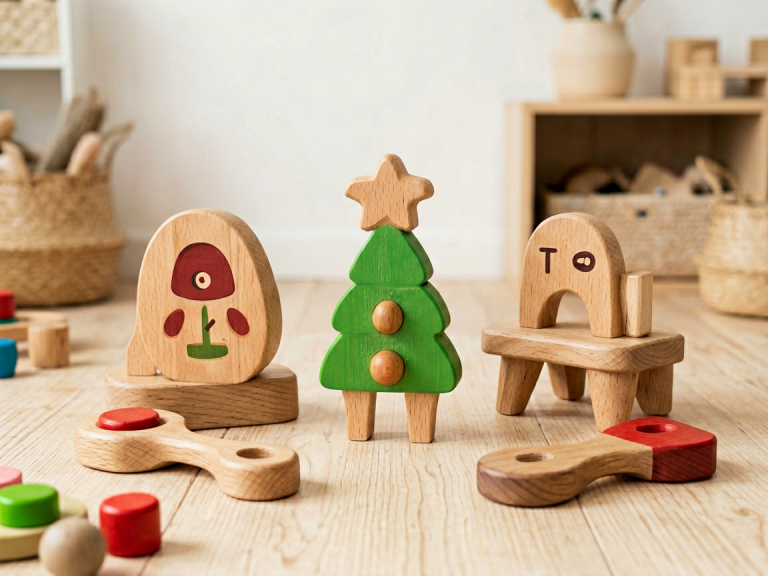
Second, prioritize open-ended play. Look for toys that can be used in multiple ways: blocks, play dough, sand and water toys, art supplies, simple dolls and action figures, balls, and dress-up clothes. These “low-tech” toys have been proven to support cognitive development better than most electronic alternatives. They also allow for social play and caregiver interaction.
Third, watch for signs of frustration. If your child is consistently angry, crying, or giving up when playing with a particular toy, do not assume they are “lazy.” They may simply be overwhelmed. Put the toy away and reintroduce it in six months. Many advanced toys become appropriate later, but pushing them early does more harm than good.
Fourth, consider the context of play. Is the toy meant for solitary or cooperative play? For a young child, cooperative play with a parent or sibling is far more valuable. If a toy is so complex that it requires the parent to constantly step in and “fix” things, it is not serving its purpose. A toy should be a tool for the child to use, not a puzzle for the parent to solve.
Finally, trust your gut. Parents often have an intuitive sense of what their child is ready for, but they override it with anxiety. If a toy feels too complex, it probably is. The best toys are those that spark curiosity, invite repetition, and allow for mistakes without catastrophic failure. The simplest toys – a set of wooden rings, a stack of cardboard bricks, a plain ball – have educated children for millennia.
Conclusion
Buying advanced toys is an understandable mistake, rooted in a parent’s deep love and ambition for their child. But it is a mistake nonetheless. When we rush children toward complexity, we risk crushing their natural love for learning, stifling their imagination, and undermining their confidence. The true gift of play is not the brilliance of the toy, but the freedom it gives the child to explore, fail, try again, and discover their own capabilities. The most advanced toy a parent can offer is not a robot or a tablet, but the space for a child to play at their own pace, with materials that respect where they are today – not where we hope they will be tomorrow. In choosing simplicity, we choose wisdom. And in that choice, we give our children the greatest gift of all: the joy of learning through their own hands, at their own speed, on their own terms.