Are Magnetic Tiles Worth It for 1-Year-Olds? A Comprehensive Guide for Parents
Introduction
As a parent of a curious one-year-old, you may have noticed the explosion of open-ended toys on the market, with magnetic tiles being one of the most popular. These colorful, geometric building pieces snap together with hidden magnets, promising endless creativity and developmental benefits. But when your child is still putting everything in their mouth, wobbling on unsteady feet, and exploring the world through their senses, you have to ask: *Are magnetic tiles worth it for a 1-year-old?*
The answer is not a simple yes or no. It depends on the specific product, your child’s developmental stage, your supervision habits, and what you hope to gain from the toy. In this article, we will explore the benefits and risks of magnetic tiles for toddlers, compare them with age-appropriate alternatives, and provide practical guidance to help you make an informed decision. By the end, you will know exactly whether this trendy toy deserves a spot in your one-year-old’s playroom.
Understanding Magnetic Tiles: What Are They?
Before diving into the worthiness of magnetic tiles for a one-year-old, it’s essential to understand what they are and how they work. Magnetic tiles are typically made from durable, transparent or translucent plastic, with small but strong neodymium magnets embedded along the edges. The tiles come in various shapes—squares, triangles, rectangles, and sometimes arches or windows—and can be connected to form 2D patterns or 3D structures like houses, towers, and animals.
Most popular brands, such as Magna-Tiles or PicassoTiles, target children ages 3 and up. However, some manufacturers now offer “junior” or “larger” sets designed for younger toddlers, with oversized pieces that reduce choking hazards and weaker magnets that are easier for small hands to manipulate. The key distinction for a one-year-old is the size of the tiles and the strength of the magnets: standard sets have tiles around 3 inches (7.6 cm) square, while junior sets may be 4–5 inches (10–13 cm) across.
For a one-year-old, the appeal of magnetic tiles lies in their sensory qualities: the satisfying click when two pieces connect, the bright colors, the ability to stack and knock down. But whether these features translate into meaningful learning or just a frustrating (or dangerous) experience depends on several factors.
The Developmental Benefits for 1-Year-Olds
At first glance, one might assume a one-year-old is too young to benefit from building toys. However, developmental psychologists and occupational therapists often highlight that even simple manipulation of objects can support key milestones. Here are the potential benefits of magnetic tiles for a one-year-old, assuming the tiles are age-appropriate and used with supervision.
Fine Motor Skill Development
A one-year-old is refining their pincer grasp—the ability to pick up small objects between thumb and forefinger. Magnetic tiles, especially those with slightly textured edges or large enough to require a palmar grasp, encourage hand-eye coordination and the strengthening of small muscles in the hands and fingers. The act of bringing two tiles together so that the magnets “snap” requires a degree of precision and bilateral coordination (using both hands together). Even if the child cannot intentionally build a structure, the repeated grasping, lifting, and connecting motions are excellent practice.
Cause-and-Effect Learning
One of the most profound cognitive leaps around age one is understanding cause and effect. Magnetic tiles offer immediate, predictable feedback: when you bring two tiles close, they attract and click together; when you separate them, they resist slightly before releasing. This tangible cause-and-effect relationship is more engaging than many other toys. A one-year-old may stack a tile on top of another and watch it stick, then knock it over and observe the pieces tumble. Each repetition reinforces the concept that their actions produce results—a foundational lesson for later problem-solving.
Sensory Stimulation and Exploration
One-year-olds are sensory explorers. They love seeing bright colors, hearing sounds, and feeling different textures. Magnetic tiles provide visual stimulation (translucent colors that allow light to pass through), auditory feedback (the distinct click), and tactile input (smooth plastic surfaces with embedded magnets). Some tiles can even be used on a light table or against a window, creating a mesmerizing glow that captivates a toddler’s attention. This multi-sensory experience can promote focused attention—a skill that is still developing at this age.
Encouraging Independent Play (Briefly)
While no one-year-old will play independently for long, giving them a safe, engaging toy can buy you a few precious minutes. Magnetic tiles, when presented in a confined space (like a highchair tray or a play mat), can hold a toddler’s interest longer than many other toys because they offer a simple, repeatable action: pick up, connect, drop, repeat. This can be a small but meaningful step toward self-directed play.
Critical Safety Considerations
The benefits outlined above are real, but they come with caveats. Safety is the number one concern for any toy intended for a one-year-old. Magnetic tiles, depending on their design, can pose several risks that parents must evaluate carefully.
Choking Hazard
Standard magnetic tiles are typically too large to fit inside a toddler’s mouth, which is why they are often labeled for ages 3+. However, the magnets themselves are small components. If a tile cracks or breaks—which can happen if a child bites down on it or drops it repeatedly—the small magnets inside may become exposed. A one-year-old could then put a loose magnet in their mouth. Ingesting even a single neodymium magnet is dangerous because it can attract another magnet or a metal object through the intestinal walls, causing perforations, blockages, or life-threatening internal injuries. This is not a theoretical risk; there have been documented cases of children requiring emergency surgery after swallowing magnets from toys.
Mitigation: To use magnetic tiles safely with a one-year-old, you must:
- Choose tiles that are specifically labeled for toddlers (usually with larger pieces and sealed, recessed magnets).
- Inspect tiles before each use for cracks, chips, or loose magnetic elements.
- Never leave a one-year-old unattended with magnetic tiles, even for a moment.
- Remove any tiles that show signs of wear.
Magnet Strength and Pinch Hazards
Standard magnetic tiles contain strong magnets that can snap together quickly. If a one-year-old’s finger gets between two tiles as they connect, it can cause a painful pinch. While a pinch is unlikely to cause serious injury, the sudden surprise and discomfort can frighten a toddler, making them reluctant to play with the tiles in the future.
Mitigation: Look for toddler-specific sets with weaker magnets that require more deliberate positioning to connect, reducing the speed and force of the snap. Also, demonstrate to your child how to bring tiles together slowly, using your own hands as a model.
Mouthing and Chemical Safety
One-year-olds explore with their mouths. Even if tiles are too large to swallow, a toddler may chew on them. Some cheap magnetic tiles may contain BPA, phthalates, or other harmful chemicals in the plastic. Additionally, the paint or coating may peel off when chewed.
Mitigation: Only purchase magnetic tiles that are explicitly labeled BPA-free, phthalate-free, and made from food-grade or non-toxic materials. Look for certifications like ASTM (American Society for Testing and Materials) and CPSIA (Consumer Product Safety Improvement Act) compliance. Wipe tiles clean after each play session, especially if they have been mouthed.
Overstimulation and Frustration
While the sensory feedback of magnetic tiles can be engaging, some one-year-olds may become overstimulated by the bright colors and clicking sounds, leading to fussiness or crying. Others may become frustrated because they cannot yet coordinate the fine motor movements required to connect tiles intentionally. A one-year-old who has difficulty stacking blocks may find magnetic tiles even more challenging because the magnets require precise alignment.
Mitigation: Introduce only a few tiles at a time (three to five) rather than a whole set. Watch your child’s cues. If they seem frustrated, switch to a simpler toy. The goal is joyful exploration, not skill mastery.
Age-Appropriate Alternatives and Recommendations
Given the safety considerations, some parents may decide that traditional magnetic tiles are not worth the risk for a one-year-old. Fortunately, there are excellent alternatives that provide similar developmental benefits with lower risk.
Large Magnetic Building Blocks
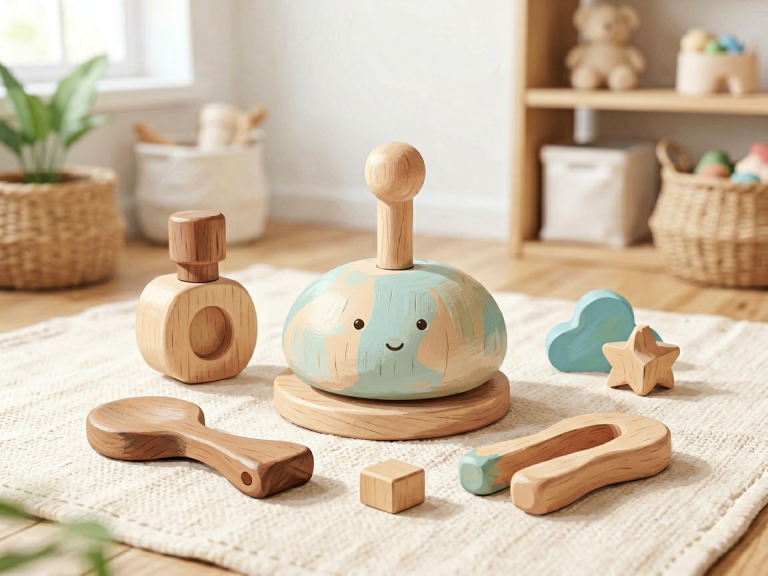
Several brands produce extra-large magnetic building blocks (often 5–6 inches wide) made of soft, squishy silicone or hard plastic with recessed, child-proof magnets. These are explicitly designed for ages 1–3. Because the pieces are too large to swallow and the magnets are weaker, they are much safer. Examples include the “Magna-Tiles Clear Colors 100-Piece Set” (but only the larger “Magna-Tiles” Junior sets) or “Tegu” magnetic wooden blocks (which have magnets fully embedded in wood and are available in larger sizes). Wooden magnetic blocks are particularly nice because they are durable, non-toxic, and have no small parts.
Simple Stacking Toys
For many one-year-olds, traditional stacking cups, nesting blocks, or large wooden blocks offer comparable fine motor and cause-and-effect benefits without any magnet-related risks. Stacking toys also teach size discrimination, balance, and spatial awareness. They are often more forgiving when knocked over and do not require precise alignment.
Sensory Play Alternatives
If your goal is the sensory aspect of magnetic tiles (bright colors, clicking sounds), consider sensory bins filled with colored rice, water beads (with caution), or textured balls. Light tables or glowing toys can provide visual stimulation without the choking hazard. A simple set of large, colorful plastic rings that snap together can mimic the connection experience of magnetic tiles without the magnets.
The Verdict for Most 1-Year-Olds
For the average one-year-old who is still mouthing objects, unsteady on their feet, and prone to throwing or dropping toys, standard magnetic tiles (those labeled for 3+) are not worth the risk. The potential benefit—a few extra minutes of fine motor practice—does not outweigh the danger of magnet ingestion, pinched fingers, or toxic materials.
However, if you are willing to invest in a toddler-specific set (larger pieces, weaker magnets, non-toxic materials) and you commit to constant, close supervision, then yes, magnetic tiles can be a worthwhile addition to your one-year-old’s toy rotation. The key is to use them as a parent-facilitated activity rather than an independent play toy. Sit with your child, model how to connect two tiles, and let them explore under your watchful eye.
How to Choose Safe Magnetic Tiles for a 1-Year-Old
If you decide to proceed, here are concrete criteria to guide your purchase:
- Look for “Ages 1+” on the packaging. Not all brands make toddler-specific sets, but those that do will clearly state the age range. Avoid sets that say “3+” even if you think you can supervise.
- Check the size of the tiles. Each tile should be at least 4 inches (10 cm) across its longest side. Circle or triangle shapes should be even larger to prevent mouthing.
- Examine the magnet housing. The magnets should be fully embedded inside the plastic or wood, with no seams or edges that could open if the toy is dropped. Some toddler sets have magnets that are “shuttered” behind a plastic barrier.
- Ensure non-toxic materials. Look for ASTM F963, CPSIA, and EN71 certifications. Avoid cheap, unbranded sets sold on marketplace sites without clear safety claims.
- Read reviews from other parents. Real-world feedback can reveal if a set breaks easily, has weak magnets that lose their grip, or if toddlers find it too frustrating.
Conclusion: Are They Worth It?
Magnetic tiles are a brilliant toy for older toddlers and preschoolers who have outgrown mouthing and can build with purpose. For a one-year-old, however, the question of worth hinges entirely on safety and supervision.
If you choose a toddler-safe set made for ages 12–24 months and use it as a guided activity, magnetic tiles can support fine motor development, cause-and-effect understanding, and sensory exploration. They are worth the investment if you are prepared to sit beside your child, engage with them, and retire the tiles the moment they show signs of chewing or rough handling.
But if you are looking for a toy your one-year-old can play with independently while you prepare dinner or answer emails, magnetic tiles are not the right choice. Opt for safer alternatives like stacking cups, large wooden blocks, or soft building bricks. Your child will gain similar developmental benefits with far less risk—and you will have greater peace of mind.
Ultimately, the worth of magnetic tiles for a one-year-old is not measured in dollars or minutes of entertainment, but in the confidence that your child is safe, engaged, and learning in a way that matches their delicate stage of development. With thoughtful selection and responsible use, they can be a small but powerful tool in your parenting toolkit. Without those precautions, they are simply not worth it.