The Toy Avalanche: Why Buying Too Many Toys for a 4-Year-Old Does More Harm Than Good
Introduction
Walk into the bedroom of a typical 4-year-old in many middle-class households today, and you might feel as if you have stepped into a miniature department store. Shelves groan under the weight of brightly colored plastic bins. The floor is barely visible beneath a sea of action figures, building blocks, puzzles, stuffed animals, and battery-powered gadgets that beep, flash, and whir. The scene is not unique—it is the norm.
Parents, grandparents, and well-meaning relatives often fall into the trap of believing that more toys equal more happiness, more learning, and more stimulation. After all, a 4-year-old is at a magical age of curiosity, imagination, and rapid cognitive development. What could be wrong with giving them plenty of tools to explore the world?
Plenty, as it turns out. Research in child development, neuroscience, and environmental psychology consistently suggests that an overabundance of toys can actually hinder a child’s growth rather than foster it. This article explores why we buy too many toys, the hidden costs of excessive playthings, and what a 4-year-old truly needs for healthy development.
—
The Illusion of More: Why We Buy Too Many Toys
1. Parental Guilt and Consumer Culture
The first driver of toy overabundance is emotional. Many parents work long hours and feel guilty about the time they cannot spend with their children. Buying a new toy becomes a quick and tangible way to compensate—a “sorry I was late” gift, a “because you are special” treat. Retailers and advertisers know this well. They craft messages that equate love with material abundance: “Give them the best start,” “Unlock their potential,” “Don’t let your child fall behind.”
Moreover, social comparison fuels the fire. When a neighbor’s child receives a popular new playset, when a friend posts a picture of a beautifully organized playroom overflowing with educational toys, the subtle pressure to keep up creeps in. The fear that one’s child might miss out—on learning, on joy, on social acceptance—is a powerful motivator.
2. The Marketing Machine for Preschoolers
The toy industry is a multi-billion-dollar machine, and 4-year-olds are a prime target. Cartoon characters, movie tie-ins, and “educational” labels are everywhere. A toy branded as “STEM” or “Montessori-inspired” instantly seems more justifiable. Parents are led to believe that each new toy brings a unique developmental benefit. In reality, many of these products are merely variations on the same basic concepts—sorting, stacking, pretending—packaged with different colors and characters.
3. The Generosity of Extended Family
Grandparents, aunts, uncles, and family friends love to spoil the little ones. Birthdays and holidays become floodgates. The intention is pure affection, but the cumulative effect is that a 4-year-old may own dozens of toys they barely touch. Without anyone meaning to, a loving network can create a cluttered, overwhelming environment.
—
The Hidden Costs: How Overabundance Harms Development
1. Reduced Depth of Play
The most significant cost of too many toys is the erosion of deep, sustained play. A 4-year-old’s brain is wired to explore, but it also needs focus. When a child is surrounded by dozens of options, their attention fragments. They pick up a doll, drop it for a fire truck, abandon that for a puzzle, and then wander to a set of markers. What looks like constant activity is actually shallow engagement.
Research by psychologist Elinor Ochs and others has shown that children with fewer toys tend to play with each item for longer periods, inventing more complex narratives and experimenting more creatively. A study published in *Infant Behavior and Development* (2017) found that toddlers played more creatively and with greater focus when given four toys rather than sixteen. For 4-year-olds, the principle is similar: fewer choices lead to deeper cognitive processing.
2. Diminished Creativity and Problem-Solving
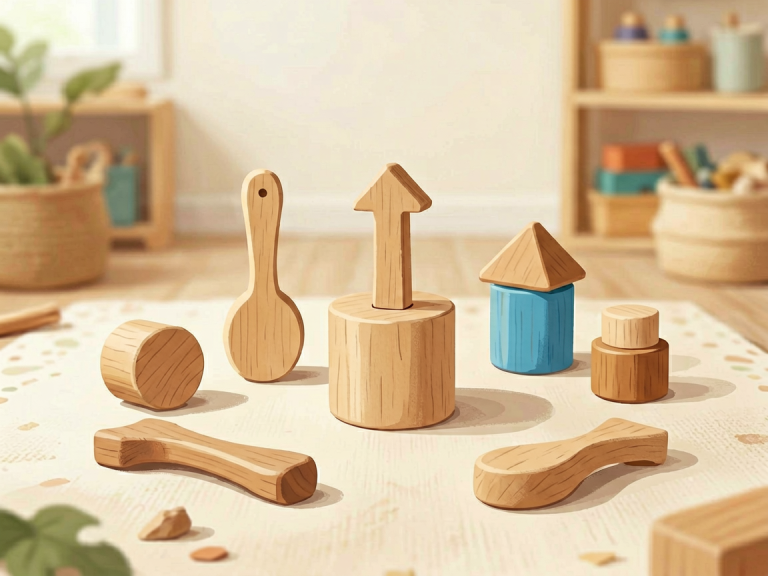
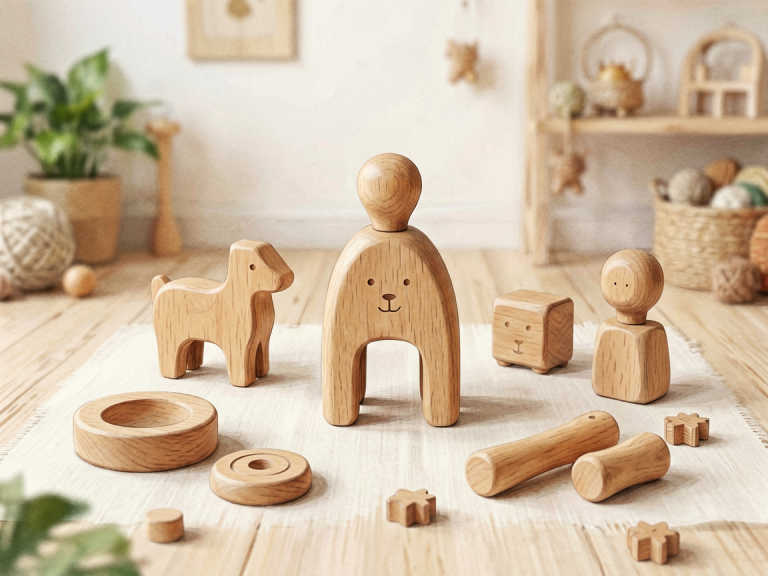
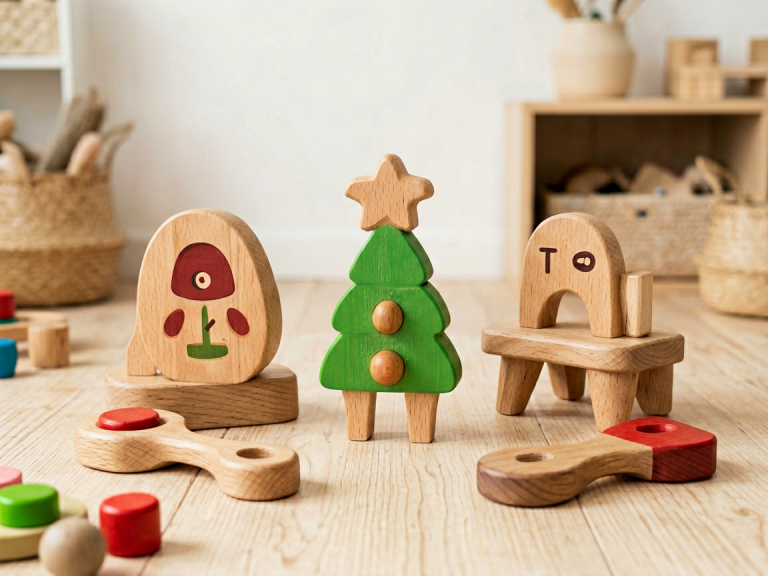
Toys that do everything—sing, talk, move, light up—require little from the child. They are passive entertainment, not active play. A 4-year-old who pushes a button to hear a song has not created anything. In contrast, a simple set of wooden blocks, a cardboard box, or a pile of scarves can become a castle, a spaceship, a cave, or a magic forest. Open-ended toys demand imagination.
When a child is overwhelmed with predefined playthings, the muscles of creativity atrophy. They learn to expect entertainment rather than to generate it. Problem-solving skills also suffer because many modern toys come with instructions, pre-set challenges, or single “correct” uses. The child does not need to figure out how to make something work—the toy already does the work for them.
3. Increased Frustration and Less Persistence
A 4-year-old’s emotional regulation is still developing. Too much choice can lead to decision fatigue and irritability. Have you ever seen a child surrounded by toys complain, “I’m bored!”? This paradox arises because the abundance makes it harder to commit. When nothing feels special, nothing satisfies.
Furthermore, when a toy is difficult (a puzzle piece that won’t fit, a tower that keeps falling), a child with many alternatives will simply abandon it and move to something easier. Persistence—a key predictor of academic and life success—is not practiced. In a minimalist environment, the child has only a few options, so they are more likely to push through frustration and solve the problem.
4. Social and Emotional Costs
Play is the work of childhood, and it is also how children learn to share, negotiate, and manage emotions. With too many toys, sharing becomes less necessary—each child can have their own. As a result, opportunities for cooperation, turn-taking, and conflict resolution diminish.
Additionally, an overabundance of toys can send an unintended message: that happiness comes from acquiring things. A 4-year-old’s brain is highly impressionable. When gifts are frequent and abundant, the child learns to equate love and success with material goods. This can set the stage for materialism and dissatisfaction later in life.
5. Environmental and Financial Waste
Finally, buying too many toys is wasteful. Most plastic toys are not recyclable. They end up in landfills, where they take centuries to decompose. Financially, the average American family spends hundreds of dollars per year on toys, much of which goes toward items that are forgotten in weeks. That money could be redirected toward experiences—a zoo membership, a music class, a weekend camping trip—which have been shown to contribute more to a child’s happiness and development.
—
Quality over Quantity: What 4-Year-Olds Really Need
1. Open-Ended Materials
The best toys for a 4-year-old are those that can be used in many ways. Building blocks, magnetic tiles, play dough, art supplies, dress-up clothes, sand and water table sets, and simple dollhouses allow children to create their own worlds. These toys grow with the child—they do not become “boring” after a few weeks.
2. Books and Quiet Spaces
A 4-year-old’s brain craves stories and language. A small, curated library of picture books is far more valuable than a room full of noisy gadgets. Reading together builds vocabulary, empathy, and attention span. A quiet corner with a soft mat and a few books invites calm reflection—a counterbalance to the overstimulation of modern life.
3. Outdoor and Physical Play Equipment
At this age, gross motor skills are developing rapidly. A tricycle, a ball, a jump rope, a climbing structure, or even a simple hill to roll down provide crucial sensory and physical stimulation that no indoor toy can replicate. Outdoor play also improves mood, sleep, and attention.
4. Time, Not Things
What a 4-year-old truly needs is not another toy but the gift of time: time with a parent who is fully present, time for unstructured play, time to be bored (which is the mother of invention). Unstructured time allows children to explore their own interests and develop intrinsic motivation. It is the most underrated resource in child development.
—
Practical Strategies for Parents
1. The Toy Rotation System
Instead of putting all toys out at once, store most of them in bins out of sight. Rotate a small selection (say, 8–10 items) every two to three weeks. This keeps play fresh without overwhelming the child. When a toy reappears, it feels new again. This method also reduces clutter and makes cleanup easier.
2. The One-In, One-Out Rule
When a new toy enters the house (for a birthday or holiday), ask the child to choose one old toy to donate. This teaches the value of giving and limits accumulation. For very young children, the parent can guide the process gently.
3. Gifting Guidelines for Relatives
Communicate with family members: “We love that you want to give to our child. This year, we are focusing on experiences and open-ended toys. Perhaps a musical class, a puzzle, or a board game we can play together?” A shared gift (money for a trampoline, a membership to a children’s museum) can replace multiple individual presents.
4. Observe and Curate
Take a close look at what your 4-year-old actually plays with for more than a few minutes. Remove the rest. You will likely find that they gravitate toward a few favorites. Keep those. Donate or sell the rest. A curated collection of 15–20 high-quality toys is more than enough for a preschooler.
5. Prioritize Experiences over Objects
Make a list of activities that bring joy: baking together, going to the park, visiting the library, building a fort with blankets. Spend money on these instead of on toys. The memories will last far longer than any plastic gadget.
—
Conclusion
The impulse to buy toys for a 4-year-old comes from a place of love. But love, when expressed through excess, can inadvertently stifle the very development we hope to nurture. Too many toys fragment attention, dull creativity, reduce persistence, and teach the wrong lessons about happiness.
A simpler play environment, on the other hand, invites depth, imagination, and connection. It allows a child to become an architect of their own play, not a passive consumer. It frees parents from the endless cycle of organizing, cleaning, and spending. Most importantly, it creates space for what really matters: time together, storytelling, outdoor adventures, and the quiet joy of a child lost in a world they built themselves, with nothing more than a few blocks and a whole lot of imagination.
Less, it turns out, is truly more—especially when that child is four years old.