Beyond the Tiles: Rethinking Creative Construction with Educational Alternatives to Magnetic Tiles
Introduction
Magnetic tiles have become a staple in homes and classrooms around the world, praised for their ability to foster spatial reasoning, fine motor skills, and creative problem‑solving. Their colorful, modular design allows children to build everything from simple towers to elaborate castles, while the satisfying “click” of magnets connecting offers instant gratification. Yet, for all their appeal, magnetic tiles are not the only—or always the best—tool for nurturing young minds. Educators and parents increasingly seek alternatives that offer deeper cognitive challenges, more diverse sensory experiences, and stronger connections to real‑world concepts. This article explores several rich educational substitutes that can complement or, in many cases, surpass the learning value of magnetic tiles. From the tactile warmth of wooden blocks to the open‑ended possibilities of loose parts, each alternative brings unique opportunities for discovery, collaboration, and growth.
Wooden Blocks: The Timeless Foundation of Geometry and Physics
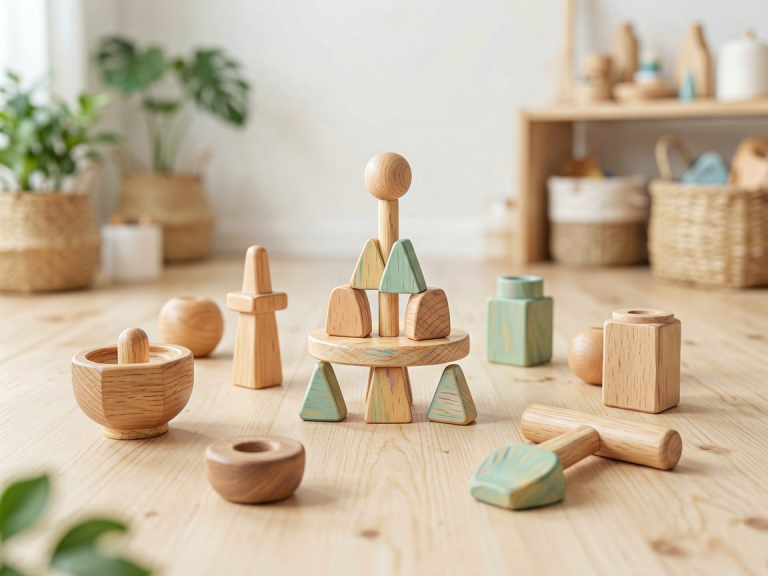
Wooden unit blocks have been a cornerstone of early childhood education for over a century, and for good reason. Unlike the uniform, magnetically bonded pieces of magnetic tiles, wooden blocks come in a wide range of shapes, sizes, and weights. This variety forces children to engage in serious problem‑solving: they must consider balance, gravity, and structural integrity without the aid of magnetic assistance. When a child places a rectangular prism on top of two smaller cubes, or tries to create an arch using two ramps and a cylinder, they are not merely playing—they are intuitively learning the principles of statics, weight distribution, and symmetry.
What sets wooden blocks apart from magnetic tiles is the role of failure. A magnetic tile tower rarely collapses because the magnets hold pieces together; a wooden block tower, however, can topple with a single misaligned piece. This gentle frustration is a powerful teacher. Children learn to experiment, adjust, and try again, developing resilience and a deeper understanding of cause and effect. Moreover, the natural texture and weight of wood provide a rich sensory experience that plastic tiles cannot replicate. The slight grain, the solid feel, and the soft sound of blocks clacking together engage multiple senses, grounding the child in a more mindful, tactile learning process. From a STEM perspective, wooden blocks also allow for early exploration of fractions (e.g., a half‑unit block vs. a full unit), measurement, and even basic algebra as children figure out how to make a structure level by combining different lengths.
Recycled and Loose Parts: Unleashing Imagination Through Found Materials
One of the most under‑rated alternatives to magnetic tiles is the use of recycled materials—cardboard tubes, bottle caps, fabric scraps, corks, and plastic containers. Sometimes called “loose parts” play, this approach transforms everyday objects into infinite building components. Unlike magnetic tiles, which come with predetermined shapes and magnetic polarity, loose parts have no fixed rules. A cardboard box can become a wall, a roof, a tunnel, or a vehicle. A yogurt cup might serve as a tower turret or a container for marbles. This open‑endedness is educationally powerful because it places the child in complete control of the meaning and function of each object.
The cognitive benefits are immense. When children use loose parts, they engage in symbolic thinking—representing a bottle cap as a wheel, for instance—which is a foundational skill for literacy and mathematics. They also develop executive functions like planning, flexibility, and inhibition, as they must continually adapt their designs when pieces don’t fit or fall apart. Additionally, working with recycled materials fosters environmental awareness and resourcefulness. Children learn that play doesn’t require expensive toys; creativity can spring from the recycling bin. Teachers and parents can enhance the experience by adding simple tools like tape, string, and scissors, allowing children to engineer more complex connections. This kind of construction is also highly cooperative: groups of children must negotiate roles, share materials, and combine their ideas, building social‑emotional skills as well as spatial ones.
Digital‑Analog Hybrids: Coding Blocks and Augmented Reality Kits
In our increasingly digital world, some of the most exciting educational alternatives to magnetic tiles blend physical building with digital feedback. Products like Cubetto, Kibo, or the LEGO SPIKE Essential kits introduce children to the principles of programming without requiring a screen. Instead, they use tangible blocks or cards that represent commands (e.g., forward, turn left, loop). Children physically arrange these blocks to create a sequence, then watch a robot or character execute their program. This bridges the gap between concrete construction and abstract logic.
Why is this a compelling alternative to magnetic tiles? First, it teaches computational thinking—a skill that is becoming as fundamental as reading and math. Children learn to break down a problem into small steps, recognize patterns, debug errors, and think sequentially. Moreover, because the blocks are physical, children can touch, move, and reorder them, which makes abstract concepts like “algorithm” tangible and memorable. Some kits, like Osmo’s Coding Awbie, combine physical coding blocks with a tablet app, where the child’s real‑world arrangement directly controls an on‑screen character. This immediate feedback loop is highly motivating and reinforces cause‑and‑effect thinking.
Another hybrid alternative is augmented reality (AR) construction sets, such as MERGE Cube or certain educational sandbox apps that project digital objects onto physical markers. While these require a device, they allow children to build structures that can be viewed from all angles in 3D, adding a layer of spatial visualization that magnetic tiles alone cannot offer. These tools are especially valuable for older elementary students (ages 6–10) who are ready to explore geometry, engineering design, and even basic physics simulations. They also provide a natural path from free play to structured STEM learning, making them a versatile addition to any classroom or home.
Natural Materials: Bringing Outdoor Wonder into Building Play
Stepping away from the manufactured entirely, nature offers some of the most profound educational alternatives. Sticks, stones, leaves, pinecones, sand, and mud can become the building blocks of castles, bridges, and imaginary worlds. Outdoor construction using natural materials engages children in a completely different way than magnetic tiles do. It requires them to work with irregular shapes, differing weights, and friction instead of magnetic attraction. A stick bridge must be balanced carefully; a stone tower must be built with an understanding of pressure and stability. This kind of play is inherently multidisciplinary—it involves physics, biology (e.g., which sticks are strong enough?), and even art as children arrange patterns and textures.
The educational value of natural‑material construction is also deeply rooted in sensory development and nature connection. Children’s hands learn to feel the roughness of bark, the smoothness of river stones, and the cool dampness of mud. They develop fine motor strength by lifting, carrying, and positioning objects of various sizes. Furthermore, building outdoors encourages gross motor movement, as children walk around, bend, and stretch to gather materials and assemble their creations. Unlike the relatively static play of magnetic tiles, natural‑material construction often happens in groups, with children running, calling out ideas, and physically collaborating to lift a heavy branch or to dig a foundation in the dirt.
From a scientific standpoint, children engaged in nature‑based construction are practicing authentic inquiry. They ask questions like: “Why does this stick break?” or “How can I make this stone stay on top?” They also learn about environmental stewardship when they use fallen branches rather than live plants, or when they observe how water changes mud’s consistency. Many educators now incorporate “mud kitchens” and “loose parts” sheds filled with natural treasures, allowing children to cycle through seasons and discover how materials change—snow becomes a different building material than dry leaves. This kind of play is especially valuable in an age of screen‑dominance, offering a grounding, low‑tech alternative that is both physically active and intellectually stimulating.
Conclusion: The Value of Diversity in Construction Play
Magnetic tiles remain a wonderful tool for early construction, but they are far from the only option. By introducing children to wooden blocks, recycled loose parts, digital‑analog hybrids, and natural materials, we extend their learning far beyond the magnetic click. Each alternative nurtures different cognitive, social, and physical skills: wooden blocks teach physics through failure; loose parts spark symbolic thinking and resourcefulness; coding blocks build logical sequencing; and natural materials connect children to the physical world in a deeply sensory way. The best educational environment is one that offers a diverse palette of building materials, allowing children to choose the medium that matches their curiosity and developmental stage. As parents and educators, we should embrace these alternatives not as replacements, but as rich complements—each one a gateway to a different kind of understanding, creativity, and joy.