The Toy Trap: Why Buying Too Many Toys for Babies Does More Harm Than Good
In the modern era of parenting, few experiences are as intoxicating as the first trip to the baby toy aisle. The shelves overflow with blinking lights, soft plush animals, rattling keys, and brightly colored stacking rings, all promising to stimulate your infant’s developing brain. Marketers whisper that this rattle will boost cognitive skills, that play mat will enhance motor coordination, and those sensory blocks will unlock creativity. The result? A cascade of well-meaning purchases, often long before the baby can even sit up unsupported. But behind the cheerful packaging and the cultural pressure to “give your baby every advantage” lies a growing body of evidence that suggests otherwise: buying too many toys for babies is not just a waste of money—it can actively hinder their development, stress their caregivers, and harm the environment. This article explores the hidden costs of the modern toy glut and offers a simpler, more effective approach to early play.
The Allure of the Toy Aisle: Why We Overbuy
To understand why parents buy far too many toys, we must first examine the psychological and social forces at work. For many new parents, toys feel like a tangible expression of love. When you cannot yet hold a conversation with your child or understand their needs, buying a toy is a concrete way to demonstrate care. The toy industry, valued at tens of billions of dollars globally, capitalizes on this vulnerability. Advertisements frame toys as essential tools for hitting developmental milestones—the “must-have” teether, the “expert-recommended” activity center. Furthermore, social media amplifies this trend. Instagram and Pinterest feeds showcase perfectly curated nurseries with bins overflowing with wooden blocks, Montessori mobiles, and color-coded sensory kits. The implicit message is clear: a good parent provides abundant stimulation. The guilt of not buying that flashy toy, or of having a “boring” playroom, drives many to overstock.
Another factor is the sheer volume of hand-me-downs and gifts. Grandparents, aunts, friends—everyone wants to contribute. Baby showers alone can yield dozens of toys, many of which duplicate each other. The result is that by the time a baby is six months old, they may own more than 50 toys. Yet, studies in developmental psychology consistently show that babies are not miniature adults with ever-growing attention spans. Their brains are wired for depth, not breadth. A single rattle explored for twenty minutes teaches them more about sound, texture, and cause-and-effect than twenty different rattles each played with for one minute. The allure of the toy aisle, therefore, is a trap: we buy for our own emotional satisfaction, not for the baby’s genuine needs.
The Hidden Costs of Overabundance: What Too Many Toys Do to a Baby’s Developing Brain
The most serious consequences of toy overabundance occur in the baby’s cognitive and emotional development. Contrary to popular belief, more toys do not equal better learning. In a landmark 2017 study published in *Infant Behavior and Development*, researchers observed toddlers playing in rooms with either four toys or sixteen toys. The results were striking: children in the four-toy room played with each toy for twice as long, engaged in more varied and creative play, and demonstrated deeper concentration. Conversely, the children in the sixteen-toy room flitted from one object to another, rarely settling into sustained play. This phenomenon, known as “attention fragmentation,” is especially harmful for babies, whose developing executive function networks need practice focusing on one thing at a time.
Babies learn best through repetition and active exploration. A toy that requires them to make something happen—like a shape sorter that demands problem-solving—is far more valuable than a toy that does the work for them, such as a battery-powered light show. When a nursery is cluttered with dozens of choices, the baby’s brain becomes overstimulated. They cannot process the sensory overload, leading to fussiness, shorter naps, and even signs of stress such as crying or turning away. Over time, this constant state of high external stimulation may dampen a baby’s natural curiosity and intrinsic motivation. Why try hard to shake a rattle when a new, flashier toy is always within arm’s reach? The habit of novelty-seeking replaces the habit of deep exploration—a pattern that can persist into childhood, manifesting as difficulty concentrating in school or an inability to entertain oneself.
Moreover, too many toys can impair the development of social and emotional skills. Babies need face-to-face interaction with caregivers far more than they need plastic gadgets. When a room is filled with toys, parents often feel pressure to sit the baby down and “play” with the toys, turning interaction into a product-oriented activity rather than a relational one. The most valuable brain-building activity for a baby is not playing with a toy—it’s talking, singing, making eye contact, and responding to the baby’s cues. An excess of toys can inadvertently reduce these vital moments of connection, as the toys become a distraction for both parent and child.
The Environmental and Financial Toll: Why Less Is Truly More
Beyond the baby’s well-being, the culture of excessive toy buying carries hidden costs for the planet and the family budget. Most baby toys are made of plastic, and many are designed to be used for only a few months before the baby outgrows them. According to the United Nations Environment Programme, the toy industry produces over 40 million tonnes of plastic waste annually, and a vast percentage ends up in landfills or oceans. Baby toys are especially problematic because they often contain small batteries, loud electronics, and mixed materials that are difficult to recycle. The “disposable” nature of modern toys—where a teether that cost $20 is tossed after a few weeks—reflects a consumer mindset that is deeply unsustainable.
Financially, the burden is equally heavy. A 2022 survey by the financial website NerdWallet found that the average American family spends over $700 per year on toys for children under two. When this money could be redirected toward experiences (such as swimming lessons, music classes, or simply a family outing), the opportunity cost becomes clear. Many parents report feeling guilty when they see unused toys gathering dust, yet they continue buying because of social pressure or the fear of “missing out” on a developmental tool. The irony is that the most effective toys for babies are often free: a cardboard box, a wooden spoon, a soft scarf. These open-ended objects encourage imagination and problem-solving in ways that most commercial toys cannot match.
Quality over Quantity: A Practical Guide for Parents and Caregivers
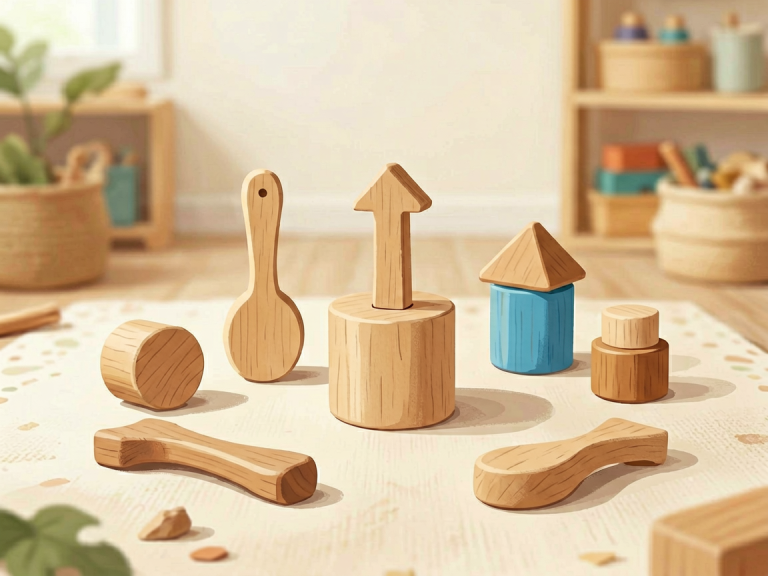
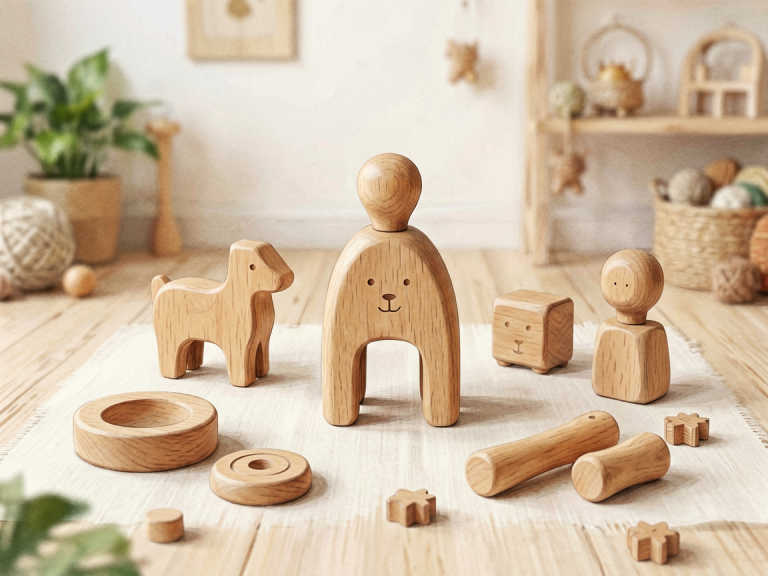
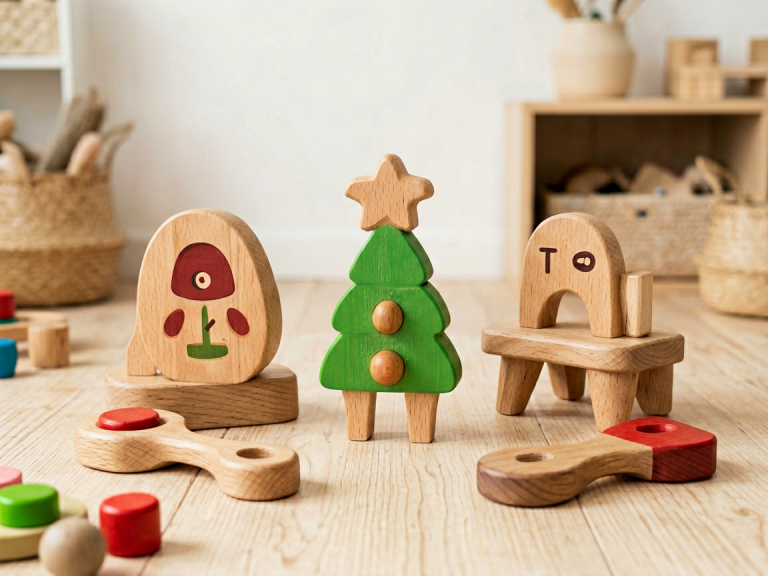
Given the evidence, what is the right approach? The key principle is “less but better.” Instead of loading the nursery with dozens of objects, focus on a small selection of high-quality, developmentally appropriate toys that grow with the baby. For infants up to six months, the best toys are simple: a black-and-white high-contrast card, a soft rattle, a mirror. These engage their limited visual and motor skills without overwhelming them. From six to twelve months, introduce stacking cups, simple puzzles, and fabric books. The emphasis should be on manipulable, non-electronic toys that require the baby to act, not just watch.
Equally important is the concept of toy rotation. Instead of putting all toys out at once, store most of them in a closet or bin and rotate a small set every week or two. This keeps the toys novel without flooding the baby’s environment. Rotation also reduces clutter, making it easier for the baby to focus. Many Montessori-inspired parents use a simple shelf with six to eight items, changing them seasonally. The result is calmer play and deeper engagement.
Finally, parents should resist the urge to buy toys as a quick fix for boredom. Babies do not need to be constantly entertained. In fact, boredom is a powerful driver of creativity. When a baby has no toys immediately available, they will watch the world around them—a flickering shadow, the sound of a bird, the feel of a carpet. They will learn to entertain themselves by wiggling their fingers, babbling, or playing peek-a-boo with a blanket. These self-initiated activities are foundational for later executive function and emotional regulation.
Conclusion: Reclaiming Simplicity for the Sake of Our Babies
The impulse to buy an armload of toys for a baby comes from a good place—love, hope, and the desire to provide the best start in life. But good intentions do not always lead to good outcomes. The evidence is clear: too many toys fragment attention, stifle creativity, burden the environment, and strain family budgets. The most precious resource a baby has is not a toy, but a calm, connected adult who speaks, smiles, and responds with patience. When we replace the toy trap with simplicity, we give our babies the greatest gift of all: the freedom to explore one thing at a time, to learn the joy of mastery, and to grow at their own pace in an uncluttered world. So the next time you reach for that flashing, singing, plastic wonder, pause. Ask yourself: does my baby need this, or do I? The answer will guide you toward a more sustainable, loving, and truly developmental approach to play.