Science Toys vs Engineering Toys for Kids: Building Minds, One Plaything at a Time
Introduction: The Power of Play in Shaping Young Minds
Play is the language of childhood. Through play, children explore the world, test boundaries, and develop cognitive, social, and emotional skills. Among the vast array of toys available today, two categories stand out for their educational potential: science toys and engineering toys. While these terms are often used interchangeably, they represent fundamentally different approaches to learning and problem-solving. Science toys emphasize discovery, observation, and understanding natural phenomena, whereas engineering toys focus on design, construction, and functional creation. Both are indispensable for a child’s holistic development, yet they nurture distinct aspects of the young mind. This article delves into the differences, similarities, and ultimate value of science toys versus engineering toys for kids, offering parents, educators, and toy designers a nuanced perspective on how to choose the right tools for fostering curiosity, creativity, and critical thinking.
Understanding Science Toys: The Path of Discovery
What Are Science Toys?
Science toys are playthings designed to introduce children to scientific concepts through observation, experimentation, and exploration. They often involve chemistry sets, microscopes, telescopes, crystal-growing kits, magnetism experiments, and simple biology models. The core purpose of a science toy is to help a child understand *how the world works*—from the behavior of light and sound to the life cycle of a butterfly. These toys are grounded in the scientific method: asking questions, forming hypotheses, conducting experiments, and drawing conclusions.
Key Characteristics of Science Toys
First, science toys emphasize *process over product*. A child using a chemistry set may not end up with a tangible object; instead, they witness a chemical reaction that produces bubbles, color changes, or precipitates. The joy comes from the “aha” moment of understanding a natural law. Second, science toys often require patience and observation. Growing crystals takes days; watching a seed sprout into a plant takes weeks. This teaches delayed gratification and attention to detail. Third, many science toys encourage open-ended exploration. A set of magnets can be used in a hundred different ways, allowing a child to discover magnetic fields, polarity, and attraction independently.
Developmental Benefits of Science Toys
Science toys nurture a child’s innate curiosity. They transform abstract concepts—like gravity, electricity, or photosynthesis—into tangible, hands-on experiences. This builds a strong foundation for later academic success in STEM fields (science, technology, engineering, and mathematics). Moreover, science toys foster critical thinking. When a baking soda volcano fails to erupt, a child must ask: “Did I use enough vinegar? Is the ratio wrong?” They learn to troubleshoot without a predetermined answer. Emotionally, science toys teach resilience. Experiments often fail, and that is part of the learning process. Children learn that not knowing something is the starting point for discovery, not a sign of failure. This growth mindset is invaluable.
Common Examples and Age Appropriateness
For younger children (ages 3–6), simple science toys include color-mixing sets, bug viewers, and water table experiments. For elementary school children (ages 7–10), rock and mineral kits, basic chemistry sets, and solar system models work well. For pre-teens and teens (ages 11+), advanced microscopes, electronics kits with sensors, and robotics science kits (which blend science and engineering) become appropriate. Importantly, science toys should be safe and accompanied by adult supervision for more complex activities.
Understanding Engineering Toys: The Path of Creation
What Are Engineering Toys?
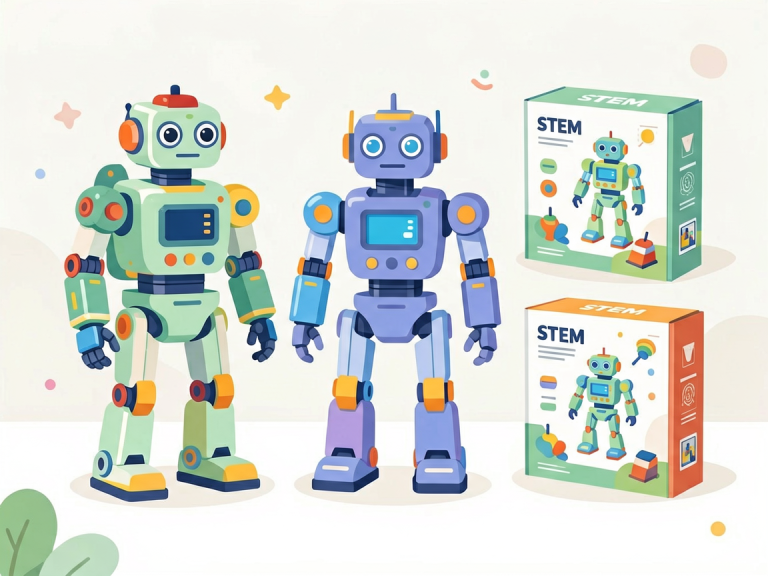
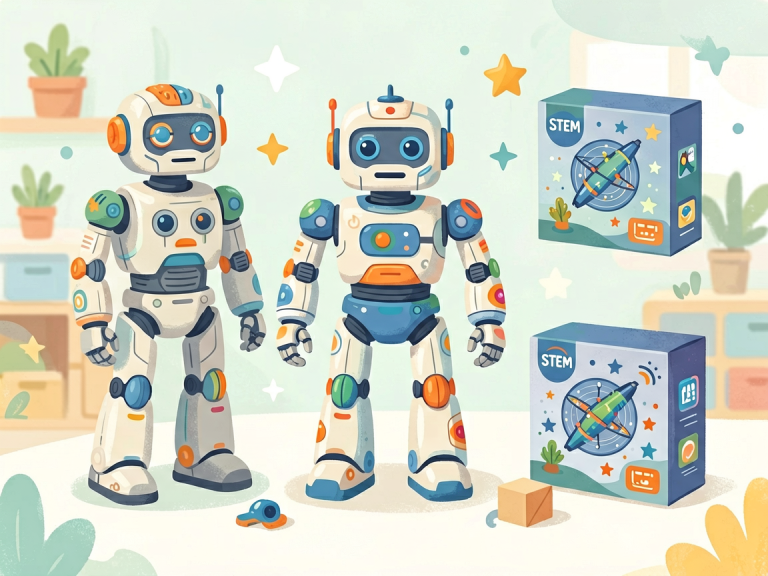
Engineering toys, in contrast, are centered on building, designing, and solving practical problems. They include construction sets like LEGO, K’NEX, Marble Runs, Meccano, popsicle-stick bridges, and 3D-printing pens for kids. Modern engineering toys also encompass coding robots, building blocks with motors, and structural engineering kits. The essence of engineering toys is *functionality*: the child creates something that works—a bridge that holds weight, a car that moves, a machine that performs a task.
Key Characteristics of Engineering Toys
Engineering toys are goal-oriented. A child receives a set of components and instructions (or they invent their own design) to build a specific structure or mechanism. The success is measurable: the robot spins, the tower stands, the marble travels from start to finish. This provides immediate, concrete feedback. Engineering toys also emphasize *iterative design*. If a bridge collapses, the child must analyze the weakness—too much weight on one side, insufficient support, weak joints—and rebuild. This process mirrors real-world engineering: prototype, test, refine, repeat. Additionally, engineering toys often involve spatial reasoning and fine motor skills. Connecting pieces, aligning gears, and balancing loads all require hand-eye coordination and three-dimensional thinking.
Developmental Benefits of Engineering Toys
Engineering toys excel at teaching problem-solving under constraints. A child building a tower with limited blocks must decide how to optimize stability. This is a foundational skill for engineering thinking. They also promote creativity in a structured way. While the goal is predefined (build a car that rolls), the methods are not. Children can experiment with different wheel sizes, weights, and axle placements. Engineering toys also build resilience—a collapsed tower is not a failure but a clue. Furthermore, they indirectly teach physics principles like leverage, torque, and structural integrity without formal instruction. Finally, engineering toys often encourage collaboration. Building a large LEGO city or a marble run with friends fosters communication and division of labor.
Common Examples and Age Appropriateness
For toddlers (ages 1–3), large interlocking blocks and simple stacking toys are engineering starters. For ages 4–7, basic LEGO sets with instructions, magnetic tiles, and simple gear kits. For ages 8–12, more complex LEGO Technic, robotic kits (like LEGO Mindstorms or VEX), and structural engineering kits with real screws and beams. For teenagers, programmable robot kits, 3D printers, and advanced mechanical engineering sets are ideal. Engineering toys often have recommended age ranges due to small parts, but many are adaptable with adult supervision.
Comparing Science Toys and Engineering Toys: A Tale of Two Mindsets
Focus: Understanding vs. Creating
The most fundamental difference lies in the cognitive orientation. Science toys ask: *“What happens if I do this?”* They are about understanding natural phenomena. Engineering toys ask: *“How can I make this work?”* They are about solving a human problem. A child using a science toy might investigate why the sky is blue; a child using an engineering toy might design a color-changing lamp. Science explains the world; engineering changes it.
Process: Open-ended Discovery vs. Goal-directed Design
Science toys are more open-ended. A single chemistry kit can lead to hundreds of different experiments, each with unpredictable outcomes. Engineering toys are more structured—even when creative, they are anchored to a functional target. A child building a bridge knows success means the bridge stands. This difference affects how children experience frustration. In science, an unexpected result may be exciting (“Wow, the liquid turned green instead of red!”). In engineering, an unexpected failure is usually a problem to be solved (“My car didn’t roll; I need to fix the axle.”).
Skills Developed: Observation vs. Application
Science toys primarily enhance observation, hypothesis formation, and data interpretation. They teach children to notice patterns, ask “why,” and document results. Engineering toys develop spatial reasoning, planning, and iterative refinement. They teach children to break a big problem into smaller steps, test solutions, and improve. Both are essential for future STEM success, but they address different facets. A scientist might discover a new material; an engineer uses that material to build a bridge.
Learning Style: Why versus How
Children with a natural inclination toward science might enjoy the mystery of discovery—“Why do magnets attract?” Children with an engineering bent might prefer the concrete—“How do I build a magnet-powered car?” Neither is superior; they represent complementary ways of thinking. Ideally, children should experience both to develop a balanced problem-solving toolkit.
The Synergy: Combining Science and Engineering Toys
Why Integration Matters
In the real world, science and engineering are deeply interconnected. Engineers rely on scientific principles to design solutions; scientists use engineering tools to conduct experiments. When children play with toys that blend both, they gain a more holistic understanding. For example, a robotics kit that involves building a robot (engineering) and then programming it to respond to light (science) teaches the synergy. A marble run that requires understanding gravity (science) and designing efficient tracks (engineering) is another example.
Practical Recommendations for Parents and Educators
To maximize benefits, adults should introduce both categories at appropriate developmental stages. For a preschooler, start with simple science explorations (e.g., mixing colors) and basic building blocks. As the child grows, gradually introduce more complex engineering kits and advanced science experiments. Create opportunities for cross-pollination: after building a LEGO crane, ask the child to test how much weight it can lift (turning engineering into a science experiment). Similarly, after a baking soda volcano, challenge the child to build a scaffolding to hold the bottle upright (turning science into engineering).
It’s also important to avoid stereotyping. Science toys are often marketed as “for curious kids,” while engineering toys are sometimes “for builders.” In reality, children of all genders and temperaments can thrive in both domains. The key is to follow the child’s interests. Some children gravitate toward the methodical process of engineering; others toward the open-ended wonder of science. Provide both, and let the child choose.
Overcoming Common Pitfalls
One common mistake is over-reliance on screen-based or pre-programmed toys. True engineering toys should involve hands-on manipulation, not just pressing buttons. Similarly, science toys should encourage real experiments, not just watching videos. Another pitfall is expecting perfection. Children need the freedom to fail. A science experiment that spills is a learning opportunity; an engineering project that crumbles is a chance to redesign. Parents should resist the urge to step in with the “right” answer.
Conclusion: A Balanced Play Diet for Lifelong Learning
Science toys and engineering toys are not rivals; they are partners in children’s intellectual growth. Science toys ignite wonder and teach the discipline of observation, while engineering toys channel creativity into functional design and problem-solving. Together, they cultivate a mindset that is both curious and capable, imaginative and methodical. In an increasingly complex world, children need to understand not only how nature works but also how to harness that knowledge for human benefit.
When selecting toys for a child, consider their current interests, but also offer gentle exposure to the opposite category. A child who loves LEGO may discover a passion for geology through crystal-growing kits. A child who adores chemistry may find joy in building a distillation apparatus. The goal is not to label a child as a “scientist” or an “engineer” at age seven, but to provide a rich environment where both seeds can grow.
Ultimately, the best toy is one that sparks a question or a creation in the child’s mind. Whether it is a microscope revealing the hidden universe of pond water or a set of gears that turns a cardboard box into a moving machine, the magic lies in the interaction between the child and the world. Science toys and engineering toys, in their distinct yet complementary ways, empower children to become active explorers and creators. In doing so, they lay the foundation for a lifetime of learning, innovation, and joy.