The 5 Costly Mistakes to Avoid When Buying STEM Toys (And How to Choose Wisely)
STEM toys—those designed to teach Science, Technology, Engineering, and Math—have become the holy grail of modern parenting. Walk into any toy store, and you’ll see shelves overflowing with coding robots, chemistry kits, and building blocks promising to turn your child into the next Einstein. But here’s the uncomfortable truth: most STEM toys end up gathering dust in a corner within a week. Why? Because parents often fall into predictable traps. Buying STEM toys isn’t just about picking the most advanced kit; it’s about understanding your child’s developmental stage, interests, and learning style. In this article, I’ll walk you through the five most common mistakes people make when purchasing these educational toys—and how to avoid them. By the end, you’ll know exactly what to look for, so your investment actually pays off in curiosity, creativity, and genuine learning.
—
Mistake #1: Ignoring the Child’s Age and Developmental Stage
One of the most frequent errors is buying a toy that is either too simple or, more often, too advanced. Parents see a “STEM” label and assume it must be beneficial, regardless of the recommended age. But a 5-year-old cannot grasp the logic behind a programmable robot just as a 12-year-old will be bored by a simple stacking puzzle.
Why this happens: Marketing often exaggerates a toy’s suitability. A kit labeled “Ages 4–12” is usually a red flag—no single toy can meaningfully engage such a wide range. Also, parents want to “challenge” their children, overlooking that frustration kills curiosity faster than anything else.
The solution: Stick to the manufacturer’s age recommendations, but also consider your child’s individual readiness. A 7-year-old who never builds with blocks might struggle with a 7+ engineering set, while a 6-year-old obsessed with taking things apart might thrive with a slightly advanced kit. Observe your child: if they can follow 2–3 step instructions, they’re ready for a toy that requires sequencing. If they get bored easily, choose open-ended toys with multiple difficulty levels. Remember, the goal is not to push them into frustration but to place them in the “zone of proximal development”—challenging but achievable.
—
Mistake #2: Prioritizing Screen-Based Gadgets Over Tangible, Hands-On Play
In the race to make learning “cool,” many STEM toys now rely heavily on apps, tablets, or screens. While a coding robot that connects to a smartphone app seems impressive, it often reduces the child to a passive observer of animations rather than an active builder.
Why this is a problem: Children learn STEM best through physical manipulation. Building a bridge with real blocks teaches balance, gravity, and structural integrity in a way no simulation can. When a child taps a screen to make a virtual gear turn, they miss the tactile feedback—the resistance of the gear, the sound of clicking, the need to align teeth precisely. Moreover, screen-based toys can undermine the very purpose of STEM play: developing fine motor skills, spatial reasoning, and patience.
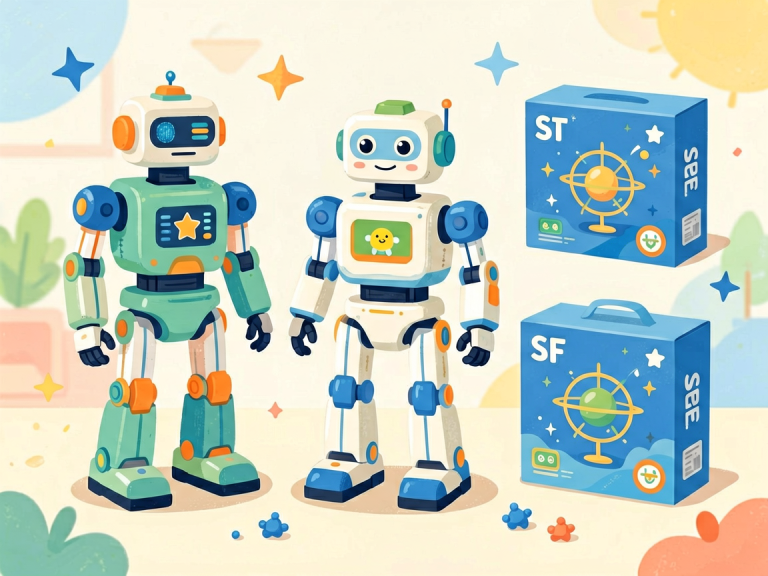
The solution: Look for toys that are primarily unplugged. Classic examples: wooden marble runs, magnetic building tiles (like Magna-Tiles), simple gears sets, or snap-circuit kits. If you want to introduce coding, choose tangible coding languages like those from the “Robot Turtles” board game or a robot that is programmed via physical command blocks (e.g., Cubetto). Screens should be a supplement, not the main event. A good rule of thumb: if the toy requires a screen for every single interaction, it’s probably not the best choice for younger children (under 8).
—
Mistake #3: Choosing Complexity Over Open-Endedness
Another pitfall is buying a toy that has one “correct” outcome—a single model to build, a single experiment to run. These are often called “close-ended” toys. A chemistry kit that prescribes exactly three experiments and no room for variation will be finished in an afternoon. A robot that can only follow a pre-set line will lose its charm quickly.
Why this matters: True STEM learning is not about following recipes but iterating, failing, and trying again. Open-ended toys—those that can be used in countless ways—foster creativity and problem-solving. A set of plain wooden blocks, for example, can become a castle, a bridge, or a spaceship. A bag of gears can spin in endless configurations. In contrast, a toy that says “build one car, then you’re done” teaches a child that success is a single destination, not a journey.
The solution: Prioritize toys that allow for multiple solutions and “low floor, high ceiling” design. Low floor means easy to start; high ceiling means complex enough to grow with the child. Think LEGO bricks (but not themed sets—instead get a classic box of basic bricks), K’NEX, Tinkertoy, or simple marble track sets. For older kids, consider microcontrollers like the Makey Makey or littleBits, which allow infinite combinations. Check reviews: look for phrases like “my child spent hours reconfiguring it” rather than “we built the model in 20 minutes and were done.”
—
Mistake #4: Overlooking the Gender and Interest Factor (But Not in the Way You Think)
Many parents unconsciously steer boys toward engineering and robotics and girls toward chemistry or craft-based STEM kits—or worse, they buy toys that are aggressively “gender-neutral” but completely fail to engage a child’s personal passions. The mistake here is not about stereotyping per se, but about ignoring what actually lights up your child’s eyes.
Why this is critical: A child who loves dinosaurs will be more motivated to learn measurement and scale if the toy involves building a life-size T-Rex footprint. A child who adores cooking will engage more with a kit about food chemistry (acid-base reactions in baking) than with a standard physics set. Forcing a “one-size-fits-all” STEM approach often feels like homework.
The solution: Map the STEM subject to your child’s existing interests. There are countless thematic options now: space exploration kits for kids who love stars, underwater robotics for ocean lovers, gardening-and-solar-power kits for nature enthusiasts. Also, don’t be afraid of pink or blue packaging if that’s what your child prefers—but also don’t assume girls only want sparkly chemistry sets. The key is to ask: “What does my child already enjoy doing? How can STEM be a tool to deepen that enjoyment?” For example, if your child loves drawing, a toy that teaches perspective and geometry through art (like a geometric drawing compass set) can be golden.
—
Mistake #5: Focusing Only on the Toy, While Ignoring the Environment and Adult Involvement
Even the best STEM toy is worthless if it sits in a box untouched. The final and perhaps biggest mistake is believing the toy will teach by itself. Parents buy a coding robot expecting the child to learn programming overnight—then get disappointed when the child plays with the box instead. The truth is: STEM toys are tools, not teachers. They require scaffolding, modeling, and co-play (at least initially).
Why this happens: Parents are busy. We often hope that “educational” stamped on a box means the toy will automatically occupy the child for hours while we cook dinner. But young children especially need an adult or older peer to demonstrate how to use the toy, ask guiding questions, and celebrate small failures.
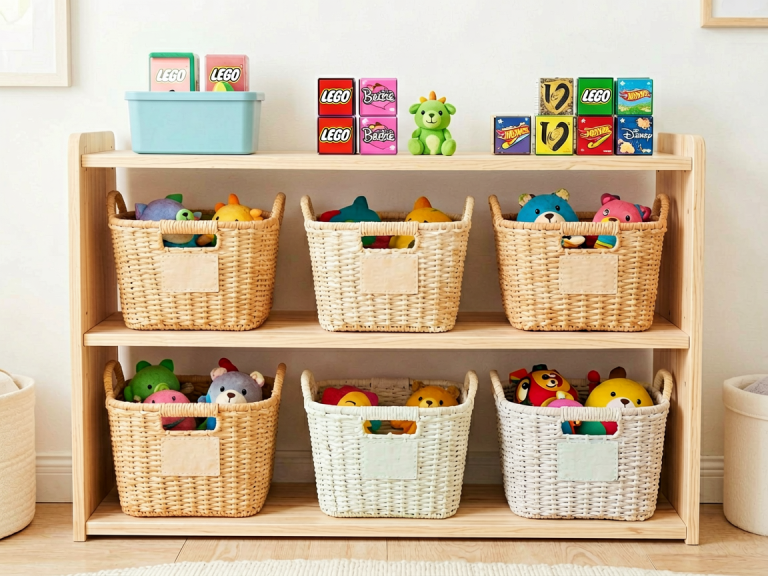
The solution: When buying a STEM toy, also invest your time. Plan to spend the first 15–30 minutes playing alongside your child. Ask open-ended questions: “What do you think will happen if we change that?” “How can we make this stronger?” Model persistence when something doesn’t work. For example, if a bridge collapses, don’t fix it—say “Hmm, interesting. Let’s try adding a triangle support.” Also, create a dedicated space for STEM play—like a shelf where the toy is always accessible, not hidden in a closet. Rotate toys every few weeks to keep novelty alive. And remember: sometimes the best STEM learning doesn’t come from a store-bought toy at all—it comes from household items like cardboard boxes, rubber bands, and paper clips. So don’t feel pressured to buy the most expensive kit. A simple roll of masking tape and some straws can teach more engineering than a $100 robot if you are engaged.
—
Conclusion: The Bottom Line
Buying STEM toys is not about finding a magic wand that turns playtime into a classroom. It’s about choosing tools that spark curiosity, allow for open-ended exploration, and match your child’s unique stage and passions. Avoid the five mistakes we’ve covered: ignore age labels, choose screen-free hands-on play, prioritize open-ended over one-shot toys, follow your child’s interests, and most importantly, be an active participant in the learning process. Do that, and you’ll not only save money and avoid clutter, but you’ll also nurture a lifelong love of discovery. And in the end, isn’t that the real goal of STEM? Not to raise a mini-engineer, but to raise a thinker who isn’t afraid to ask “Why?”—and then build an answer.